品

Corea든 Korea든, 품격은 이름보다 먼저다
Whatever the name—Corea or Korea—dignity comes first.
Whatever the name—Corea or Korea—dignity comes first.
Now
지금
751 Diaspora
Heritage
유산
Humanity
인문
Mirengsi
未冷尸
Politics
정치
Media
언론
이 글은 LA의 이승우 변호사가 기고해 주신 글입니다.

뉴욕 컬럼
칼럼
blueSky
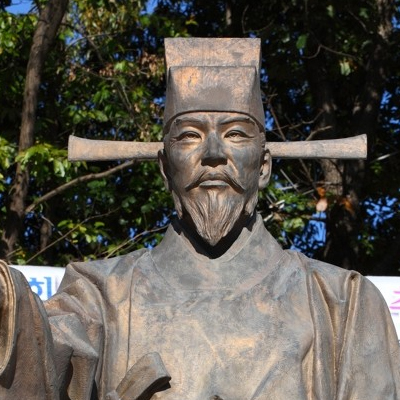
Seo Hui's pragmatic diplomacy in negotiations with Khitan

0
2026. 09. 06
- Seo Hui, amidst the threat of Khitan invasion, discerned the strategic intentions hidden beneath their superficial demands, leading to a diplomatic victory that maximized Goryeo's national interests.
- His diplomacy demonstrated a pragmatic approach, preserving the nation's identity and justification while flexibly compromising on diplomatic formalities to gain the tangible benefit of territorial expansion.
- While alliances are crucial in international relations, each nation ultimately acts in its own self-interest, making proactive diplomacy essential to accurately understand and leverage the needs of others.
- Seo Hui's success was not merely due to his eloquence, but a combination of accurate grasp of international affairs, military strength to defend the nation, and insight to penetrate the opponent's intentions, offering a direction for Korean diplomacy in today's complex international society.
Look at the eyes, not the tip of the sword
In October 993 (the 12th year of King Seongjong's reign), Xiao Sun-nyeong, the governor of Donggyeong in Khitan, led a large army across the Yalu River. The Khitan army boasted of being an 800,000-strong force. It was natural that the Goryeo court was greatly shaken. There were calls for surrender and arguments for ceding land north of Seogyeong to make peace (haljiron).
King Seongjong also seemed to have considered the worst-case scenario. He ordered the granaries in Seogyeong to be opened to distribute grain to the people, and any remaining grain to be thrown into the Daedong River so it would not become enemy provisions. He even considered abandoning the land north of Seogyeong. At this time, Seo Hui, the Junggunsa (Commander of the Central Army), stepped forward. He opposed the haljiron, arguing that with sufficient food, they should not cede land without even fighting. He then volunteered to meet Xiao Sun-nyeong himself.
The result is well known to us. Goryeo did not lose any territory. Instead, it secured the six provinces of Gangdong, east of the Yalu River. The discussion began with the idea of ceding territory to end the war, but after the negotiations, the territory had expanded. This is a rare scene in our diplomatic history. However, I do not want to see Seo Hui's victory as merely the result of his excellent eloquence.
While the court officials were looking at the Khitan army's swords right before their eyes, Seo Hui saw something else. He considered why Khitan had brought its army this far, and where Khitan's gaze was actually directed. In diplomacy, what the other party demands verbally is important, but understanding why they demand it is even more important. That is precisely what Seo Hui saw.
Who was Khitan's real opponent?
To understand the situation at the time, it's necessary to look at a broader map of East Asia in the 10th century. The Khitan, founded by Yelü Abaoji in 916, grew rapidly. In 926, they destroyed Balhae, expanding their influence into Manchuria, and in 936, they received the Sixteen Prefectures of Yan-Yun from the Later Jin, extending their reach south of the Great Wall. In contrast, the Song dynasty, founded in 960, had largely unified China by 979 but did not fare well in its conflicts with the Khitan. In the same year, they were defeated at the Battle of Gaoliang River, and their northern expedition in 986 also failed. For Emperor Shengzong of Liao and Empress Dowager Chengtian, the most important strategic adversary was ultimately the Song. So, what was Goryeo's position from the Khitan perspective?
Goryeo pursued a northern expansion policy from the time of King Taejo Wang Geon. Its feelings towards the Khitan, who had destroyed Balhae, were also not good. In 942, when the Khitan sent 50 camels as a gesture of goodwill, Goryeo tied them under Manbu Bridge, starved them to death, and exiled the envoys, symbolically showing the nature of the relationship between the two countries. In contrast, Goryeo was close to the Song. King Gwangjong sent envoys to Song in 962 and received investiture from Song the following year. Goryeo also used Song's era names. However, it is difficult to understand this relationship as something akin to a military alliance today. There was no mutual defense treaty between Goryeo and Song as we understand it now. Under the guise of investiture and tribute, books and Buddhist scriptures were exchanged, students and monks traveled between them, and trade also occurred. It was a relationship maintained because both countries had something to gain from it.
For Gwangjong, being enfeoffed by the Central Plains dynasty also held significance in domestic politics. As he sought to curb the power of local gentry and strengthen royal authority through the Slave Review Act and the national civil service examination system, Song's enfeoffment could lend external legitimacy to his reforms and royal power. From Song's perspective, there was ample reason to maintain friendly relations with Goryeo, located to the east of the Khitan. The problem was how the Khitan viewed this relationship. In 985, Emperor Taizong of Song sent Inspector-General Han Guk-hwa to Goryeo to request cooperation in attacking the Khitan. This was just before the northern expedition planned for the following year. King Seongjong formally promised to dispatch troops, but he did not actually send any. From Goryeo's perspective, it was a cautious choice. However, from the Khitan's perspective, it would have appeared differently, as the possibility of Goryeo moving from the east if they engaged in an all-out war with Song had actually appeared in diplomatic documents.
There was also the existence of Jeonganguk and the Jurchens. Jeonganguk, established by Balhae refugees in the Yalu River basin, sent a memorial to Song via Jurchen envoys, proposing a joint attack on the Khitan, and Emperor Taizong of Song responded favorably. From the Khitan's perspective, the possibility of Song, Goryeo, Jeonganguk, and the Jurchens connecting was difficult to ignore. Before invading Goryeo, the Khitan first consolidated their surroundings. In the mid-980s, they attacked the Jeonganguk region, and in 991, they conquered the Jurchens in the Yalu River area to secure their strongholds. Then, in 993, Xiao Son-nyeong's army entered Goryeo. Viewed this way, the Khitan invasion of Goryeo appears entirely different. What the Khitan truly wanted was not a few Goryeo villages. It was far more important to prevent Goryeo from moving behind their backs when fighting Song. This must have been why Xiao Son-nyeong argued in the negotiations, “You serve Song across the sea, while ignoring us, who share a border.”
Seo Hui understood the purpose of the war.
Xiao Son-nyeong claimed to have brought an army of 800,000. However, there was something strange. After defeating the Goryeo vanguard at Bongsan-gun, the Khitan army did not continue to push south. After being defeated by the Goryeo forces led by Jungrangjang Daedosoo and Nangjang Yu Bang while attacking Anyungjin, they urged the Goryeo court to send surrender envoys rather than engaging in active combat. Seo Hui did not miss this point.
If the goal was to conquer Goryeo, there would have been no reason to stop the advance and rush negotiations. It could be judged that the greater purpose was to change Goryeo's diplomatic stance through military pressure. In the negotiations, Xiao Sunning put forward two arguments. The first was that Goryeo was a nation that arose from Silla territory, and the old territory of Goguryeo belonged to Khitan, which Goryeo had invaded. The second was why Goryeo served Song, which was across the sea, while bordering Khitan. Seo Hui overturned the first claim. He countered that Goryeo inherited Goguryeo, which is why its national name was Goryeo and it made Pyeongyang its capital. He argued that if based on the old territory of Goguryeo, Goryeo could even claim the Donggyeong region of Khitan as its territory.
This is not mere wordplay. It was a direct counter to the historical logic Xiao Sunning used as a pretext for war. The response to the second issue is even more interesting. He stated that Goryeo could not interact with Khitan not because it disliked Khitan, but because the Jurchens were blocking the way in between. Therefore, he said, if the Jurchens were driven out and Goryeo's old lands were returned, allowing them to build fortresses and open roads, there would be no reason not to interact with Khitan. This is where the direction of the negotiations completely changed. Initially, Khitan demanded that Goryeo give something up. However, through Seo Hui's logic, a structure was created where Khitan now had to give something to Goryeo to get what they wanted. Khitan wanted Goryeo to distance itself from Song. Goryeo wanted to expand its territory to the Amnok River. Seo Hui exchanged these two interests.
As a result, Goryeo began building fortresses east of the Amnok River in 994, securing Heunghwajin, Yongju, Tongju, Cheolju, Guju, and Gwakju, known as the Gangdong 6 (six) Garrisons. What Goryeo accepted was to use the Khitan's era name and establish tributary relations with the Khitan. Official diplomatic relations with Song were eventually severed. However, Goryeo did not immediately cut off all contact with Song. Here, I see an important characteristic of Seo Hui's diplomacy. He did not back down from the nation's identity and historical justification of succeeding Goguryeo. On the other hand, he compromised on diplomatic formalities such as whose era name to use and with which country to establish tributary relations. In return, he secured territory east of the Amnok River. He distinguished between what must be protected and what could be negotiated.
Alliances ultimately move in the face of national interest.
What happened after the negotiations is also interesting. In 994, while Goryeo began using the Khitan's era name, it also sent secret envoys to Song, requesting a joint attack on the Khitan. However, Song refused. Song, which had requested Goryeo to attack the Khitan according to its own needs, did not respond to Goryeo's request this time. In 985, Song asked Goryeo to send troops, and Goryeo avoided actually dispatching them. In 994, conversely, Goryeo requested military cooperation from Song, but Song did not move.
I believe this scene clearly illustrates the nature of international politics. Friendship and alliances between nations are important. However, they do not supersede a nation's own interests. No matter how close countries are, at critical moments, they calculate their own costs and benefits. This does not mean that alliances are unnecessary. Rather, it means that to maintain an alliance for a long time, one must calmly understand the other party's national interests. Believing that the other party will act because of our needs and making the other party act with us because of their own needs are entirely different forms of diplomacy.
The value of Gangdong 6-ju was proven not long after. The Khitans, realizing the strategic importance of this region, demanded its return and invaded Goryeo again in 1010 and 1018. However, Goryeo's defense line established east of the Yalu River played a crucial role in subsequent wars. Gwijuju, where Gang Gam-chan decisively defeated the Khitan army in the Battle of Gwijuju in 1019, was also one of the Gangdong 6-ju. The diplomatic choice made in 993 created the space for Goryeo to endure the war later. Seo Hui's negotiation and Gang Gam-chan's Battle of Gwijuju are therefore not separate events. The military victory of the next generation was achieved in the space secured by the diplomacy of a generation earlier.
What a thousand-year-old negotiation asks of us today
I revisit Seo Hui's story not simply because it is a diplomatic success story from a thousand years ago. The Korean Peninsula today is also not free from great power competition. As the strategic rivalry between the United States and China deepens, there are many issues that Korea must choose. Security and economy, advanced technology and supply chains are intertwined, making it difficult to separate diplomacy and economy as in the past. Of course, it is dangerous to directly equate the Khitans and Song of the 10th century with today's United States and China. The national power of Goryeo and the Republic of Korea are different, the international order is different, and today's ROK-US alliance is completely different in nature from the tributary relationship between Goryeo and Song at that time. Nevertheless, there is something to learn from Seo Hui's judgment.
It is not enough to just look at what great powers demand of us. We must also look at why they demand it. The Khitans demanded that Goryeo cut ties with Song. However, behind that demand was a more desperate need to stabilize their eastern flank before going to war with Song. Seo Hui discovered that very need and turned it into a bargaining chip to get what Goryeo wanted.
The same will be true in today's diplomacy. What does the United States want from us? What are China's concerns? What does Japan need? What does North Korea fear? And what should the Republic of Korea gain at the intersection of these interests? What's important is not a vague theory of balance that suggests not taking sides. Sometimes, there are clear choices to be made. However, before making a choice, we must first be clear about what our national interest is. We should not assume that the strategies of our allies always perfectly align with the national interests of the Republic of Korea, nor should we believe that maintaining an unconditional distance from powerful nations constitutes independent diplomacy.
The diplomacy Seo Hui demonstrated was not that simple. He did not compromise because he liked the Khitan, nor did he change relations because he disliked the Song. He read the needs of the other party based on what Goryeo had to protect, and used those needs to obtain what Goryeo wanted. And behind his negotiations was military power. If the Goryeo army had not been able to stop the Khitan army at Anyungjin, Seo Hui's words would not have carried the same weight. Diplomatic autonomy is not created by good words alone. It requires the power to protect oneself, accurate information, and the ability to read international affairs. Seo Hui had experience as an envoy to Song in 972. He was a diplomat who had directly observed and experienced international affairs. That is why he was able to think about why that army came, instead of being overwhelmed solely by the number 800,000 before his eyes.
I believe this is the most important lesson Seo Hui's negotiation leaves us with today. In diplomacy, it's not just the power of a strong nation that is to be feared. What's more dangerous is being overwhelmed by that power, failing to understand the opponent's intentions, and narrowing our own options. In 993, there were those in the Goryeo court who advocated surrender, and others who suggested ceding territory. Seo Hui chose neither. He first sought to find if there was another path. A thousand years later, the nations surrounding the Korean Peninsula have changed. The international order has also become incomparably more complex. However, the fact that diplomacy ultimately involves understanding the opponent's interests and securing one's own national interests within that framework has likely not changed. Even while looking at the Khitan's sword, Seo Hui did not just stare at the sword. He looked at what the person holding the sword wanted. Our diplomacy today needs such insight.
댓글
( 0 / 500 )
88Lee
6
서희의 담판을 단순한 말싸움의 승리로 보지 않고, 거란이 왜 침공했는지 읽어낸 전략적 판단으로 설명한 점이 인상적입니다. 지켜야 할 명분과 거래할 수 있는 외교적 형식을 구분했다는 분석에 공감합니다. 오늘의 외교도 강대국의 요구만 바라볼 것이 아니라 그 요구 뒤의 이해관계를 읽어야겠습니다.
( 0 / 500 )
marinboy
8
“칼끝이 아니라 눈을 보다”라는 제목이 글의 핵심을 정확히 짚었습니다. 서희는 거란의 군사력에 압도되지 않고 그 군대가 무엇을 얻으려는지 살폈습니다. 외교는 상대를 무조건 믿거나 무조건 경계하는 일이 아니라, 상대의 필요를 읽고 우리의 국익으로 바꾸는 일이라는 점을 다시 생각하게 됩니다.
( 0 / 500 )
모란
5
강동 6주를 확보한 서희의 담판과 훗날 강감찬의 귀주대첩을 하나의 흐름으로 연결한 부분이 특히 좋았습니다. 외교적 성과가 군사적 방어 공간으로 이어졌다는 점에서, 외교와 국방은 따로 떨어진 영역이 아니라는 사실을 보여줍니다. 오늘도 외교적 선택이 훗날 어떤 전략적 공간을 만들어낼지 깊이 생각해야겠습니다.
( 0 / 500 )
kang59
5
송과의 관계를 무조건적인 동맹으로 미화하지 않고, 각국이 결국 자국의 이해관계를 기준으로 움직였다는 점을 짚은 것이 현실적입니다. 우방의 협력을 기대하되 그 협력이 당연하다고 믿어서는 안 된다는 교훈이 분명합니다. 국익을 중심에 둔 실용외교가 왜 필요한지 잘 설명한 글입니다.
( 0 / 500 )
박나경
4
서희에게서 배워야 할 것은 어느 한쪽을 무조건 선택하는 외교가 아니라, 선택의 기준을 우리 국익에 두는 태도라고 생각합니다. 강대국 사이에서 중요한 것은 목소리를 높이는 일이 아니라 상대의 의도를 정확히 읽고, 우리의 힘과 카드를 냉정하게 계산하는 일입니다.
( 0 / 500 )
moon82
4
“무엇을 요구하는가보다 왜 요구하는가가 중요하다”는 대목이 오래 남습니다. 외교에서 상대의 말만 듣고 움직이면 결국 상대가 정한 의제에 끌려갈 수밖에 없습니다. 서희처럼 상대의 전략적 필요를 읽고 우리가 원하는 협상 구조를 만들어야 한다는 교훈이 분명합니다.
( 0 / 500 )
김기태
3
오늘날의 한미동맹이나 미·중 경쟁을 10세기 국제관계와 그대로 비교하지 않으면서도, 국익을 중심에 둔다는 공통된 교훈을 끌어낸 점이 좋습니다. 외교적 자율성은 구호가 아니라 힘과 정보, 판단력이 뒷받침될 때 실현됩니다.
( 0 / 500 )
理想
1
서희가 지킨 것은 단순한 영토만이 아니라 고려의 역사적 정체성이었다는 설명에 공감합니다. 반면 연호와 조빙관계 같은 외교적 형식에서는 유연하게 타협했습니다. 원칙을 지키는 것과 모든 사안에서 양보하지 않는 것은 다르다는 점을 잘 보여주는 사례입니다.
( 0 / 500 )
신고내용
신고내용을 선택해주세요
회원비난/비하/욕설글 및 댓글도배성 게시물저작권 침해/불법자료 유출허위사실유포개인정보 유출.사생활 침해무단광고/홍보음란물 및 도박 불법 광고물범죄행위 관련 글불법행위 관련 소개물품 판매 및 사기글악성코드 및 스파이웨어 유포기타 사유 및 운영진 판단


비밀번호를 잊으셨나요?
Sign in with Google
All information provided by us is free of charge and is for the public good.