品

Corea든 Korea든, 품격은 이름보다 먼저다
Whatever the name—Corea or Korea—dignity comes first.
Whatever the name—Corea or Korea—dignity comes first.
Now
지금
751 Diaspora
Heritage
유산
Humanity
인문
Mirengsi
未冷尸
Politics
정치
Media
언론

뉴욕 컬럼
칼럼
飛上
Why do American conservatives interfere in Korean politics?

0
2026. 08. 07
- A Wall Street Journal op-ed characterizes the South Korean government's independent foreign and security policy as a "leftward shift," expressing concern about weakening the ROK-US alliance, but this appears to be an interventionist attempt to subordinate Korea's sovereign actions to US strategic interests.
- The op-ed goes beyond criticizing specific policies of the Korean government to labeling it "radical left" and distrusting Korea's democratic choices, revealing a Cold War-era mindset that views the alliance as hierarchical and applies a double standard.
- As a sovereign nation, no longer a US protectorate, Korea has the right to determine policies based on its own interests, and the US conservative establishment must respect Korea's democratic choices and re-establish an equal alliance.
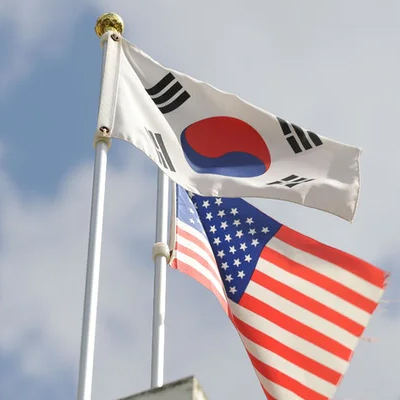
An op-ed criticizing the Lee Jae-myung administration was published in the conservative American newspaper, The Wall Street Journal (WSJ). The op-ed claimed that South Korea is shifting leftward against the United States, and that the Lee Jae-myung administration is weakening the ROK-US alliance. Citing the search and seizure at Osan Air Base, the investigation into Coupang's personal information leak, and statements by the Minister of Unification, it criticized the South Korean government's foreign and security policy for clashing with American strategic interests. The authors of the op-ed characterized the Lee Jae-myung administration as 'radical left' and expressed strong concerns about the future direction of Korean politics.
However, if one carefully examines this op-ed, it sounds as if South Korea is acting like a bully, making things difficult for the United States, which is the weaker party. It whines and acts petulantly, as if there were South Korean troops stationed in the US, or as if the Korean company Coupang had made the mistake of leaking American citizens' information. At least, if one is an author writing an op-ed, how can they not notice the contradiction where the logic not only flows strangely but also leads to a text where hegemony is reversed? Why does it feel this way when it's not actually the case? It seems the US is in a hurry.
However, to what extent are these claims truly justified? The attitude shown by American conservative forces towards Korean politics goes beyond mere advice or concern for an ally; it is virtually akin to interference in internal affairs. This controversy should, therefore, serve as an opportunity to question how much American conservative media and political circles respect Korea's sovereignty and democracy, and whether their own political conduct is appropriate.
Although the Republic of Korea is not a protectorate of the United States, the beginning of the USFK's political involvement after liberation has served as an administrative body reminiscent of another colonial government-general. However, that was 81 years ago. Time has passed, the Korean people have sacrificed and strived, and there is no reason whatsoever for them to be subjected to excessive American interference. The Korean people are citizens of an independent sovereign state, and the government is formed by the choice of the Korean people. Who will elect the President of Korea, which party will take power, and what policies will be pursued are matters for Korean voters to decide. For the American conservative establishment to label a specific regime as 'radical left' and question its very existence is less about respecting democratic principles and more about imposing their ideological standards on another country.
Moreover, the double standard shown by the United States towards Korean politics has been repeated for a long time, but no Korean government in history has been able to resist or correct it. They failed in both practice and ability, or rather, they had no intention of challenging it. The quality of National Assembly members, which began with the Syngman Rhee regime, deteriorated under Park Chung-hee, producing truly incompetent, self-serving, third-rate politicians. Politicians from the democratization movement, observing them, followed suit and were indifferent to correcting politics and history. Taking advantage of this internal corruption, the United States has freely enjoyed its status. It was easy to deal with Korea, which, with just a pat on the head of self-serving Korean politicians, would readily bow and act as an obedient dog.
When the Korean government aligns with America's strategic interests, it is praised as a model democracy, but as soon as it begins to voice its own opinions, it is immediately branded as pro-China, anti-American, or leftist. This is a remnant of Cold War thinking that perceives alliances as hierarchical rather than horizontal relationships. An alliance is a cooperative relationship, not a subordinate one. Disagreeing with American policy does not automatically make a country anti-American.
Let's look at the issue of the search and seizure at Osan Air Base. It is a natural right of a sovereign nation for Korean investigative agencies to conduct investigations according to domestic law. The conservative faction in the United States has portrayed this as if it were an act threatening the ROK-US alliance, but law enforcement and alliances are separate issues. The United States also does not defer to foreign governments on matters that occur within its own country. Therefore, Korea also has the right to conduct investigations according to its own laws. If this is problematic, it is not an issue of alliance but an issue of sovereignty.
The investigation into Coupang's personal information leak is also the same. A company cannot be exempt from investigation simply because it is connected to American capital. Personal information protection and consumer rights are important values in any democratic country. If American companies were an exception, that would be a violation of the rule of law. Nevertheless, some conservative figures in the United States connect these issues with the Korean government's anti-American tendencies. If legal issues are interpreted through a political framework, the Korean judiciary will sort it out on its own, and it will lead to thorough isolation in diplomatic circles. Until now, patriots could not survive in the Ministry of Foreign Affairs, nor are there any patriots in the National Intelligence Service. In this reality, it is impossible to expect a leader who will change the nation's constitution to emerge. No one would have expected a moment to come when we would try to overcome that impossibility, and especially, third-rate lives and low-class lives who follow the United States and Japan cannot distinguish between dung and doenjang.
But now that distinction has begun. Through the destruction of the global environment and the realistic data resulting from it, the way of looking at the world is changing, questioning the sustainability of the system Koreans have built. Is democracy the most ideal system for humans? Is it desirable for humans with double-digit IQs to vote as constituents? These are questions one would not dare to think, but humans are not that smart. We live in an era where we must decide whether to accelerate the decline of current human civilization, so we have the right to reject political interference from those responsible for the massacres of the last century and the century before, who instilled the illusion that all humans think with the same depth. Only then can we overcome the next mountain.
The problem is that the conservative camp in the United States is uncomfortable with South Korea's political choices. Whatever party the South Korean people choose, it is the result of democracy. However, claiming that the ROK-US alliance is endangered when a specific party comes to power and even questioning discussions about constitutional amendments is, in effect, interference in internal affairs. It has always been this way, but in the past, due to immature self-esteem, we didn't realize it, and now we can question the attitude of American conservatives who doubt the choices of South Korean voters. The United States, which emphasizes democracy, shows distrust in the democratic choices of its allies, and at the same time, it must be able to accurately calculate the risks of waging war.
This phenomenon is also related to how the conservative camp in the United States views Northeast Asia. For American conservatives, South Korea is often perceived not as an independent actor but as an outpost for implementing America's strategy against China. Therefore, if the South Korean government adjusts its policies based on its national interests, it immediately becomes an object of suspicion. However, South Korea's diplomacy should not be a means to serve American interests, but rather a means to serve South Korea's interests. Just as the United States prioritizes its own interests, so too should South Korea.
In fact, the United States has long changed its alliance policy according to its own needs. There have been times when it demanded an increase in defense cost sharing from South Korea, and times when it pressured South Korean companies on trade issues. In the semiconductor and battery industries, the U.S. has also pursued policies unfavorable to South Korean companies to protect its own industries. In that process, the U.S. did not prioritize South Korea's position. However, to define South Korea's pursuit of its own interests as a departure from the alliance is a one-sided logic.
The attitude of conservative American media is also problematic in that it internationalizes political conflicts within South Korean society. The conflict between the ruling and opposition parties in South Korea is a problem that the South Korean people must resolve. However, when foreign media effectively represent the logic of a specific political faction and take sides, it can have an unnecessary impact on domestic politics. This does not help a healthy alliance relationship.
A true alliance begins with a relationship that respects the autonomy of the other party. If the United States considers South Korea a true ally, it can criticize the South Korean government's policies, but it should not question the choices of the South Korean people themselves. Moreover, the attitude of interpreting South Korea's internal affairs as subservient to America's strategic interests is not appropriate for relations between democratic nations in the 21st century. Even citizens with a two-digit IQ should now understand that there are no eternal allies or eternal enemies. A world is coming where it will be difficult to endure with low-quality politicians and low-quality politics.
The recent controversy over the WSJ op-ed is not just a media debate. It is an anachronistic event that shows that some conservative forces in the U.S. still view South Korea not as an independent sovereign state, but as an object of management and control. Just as South Korea is not a weak nation from the Cold War era, the U.S. is also not the U.S. of the past. It is a democratic nation, a divided country by half, with the world's 10th largest economy, and a sovereign state with the right to decide its own future.
If the American conservative forces are perceived as 'troublemakers,' on par with the level of Korean conservatives, it will not meet the standards of the 'alliance' that America truly desires. If that happens, America's 'alliances' everywhere in the world will become temporary, and the situation will devolve into one where America itself is stabbed in the back, ultimately strangling itself.
The Korean government must move beyond outdated political sensibilities that wish for Korea to be subservient, and instead learn to respect the choices of the Korean people. This is because an alliance is not a relationship of command and obedience, but one of mutual respect and equality. It is time for America, which has taught freedom and equality to the world, to acknowledge that determining the direction of Korean politics is not the role of Washington, nor the Wall Street Journal, but solely the responsibility of the people of the Republic of Korea.
댓글
( 0 / 500 )
김은우
10
정말 핵심을 짚었습니다. 동맹은 상호 존중 위에서 유지되는 것이지, 한쪽이 다른 쪽의 정치까지 간섭하는 구조라면 그것은 동맹이 아니라 종속입니다. 이제는 한국도 주권 국가답게 행동해야 합니다.
( 0 / 500 )
dooms
8
한국 정치가 외부 시선에 지나치게 흔들려 온 역사도 분명 존재합니다. 미국이든 중국이든 일본이든, 결국 중요한 것은 어느 편이 아니라 한국 스스로의 전략과 역량이라는 점을 다시 생각하게 됩니다.
( 0 / 500 )
kooho
8
미국이 자국의 이익을 위해 움직이는 것은 당연합니다. 그렇다면 한국도 한국의 국익을 우선하는 것이 당연한데, 그 순간 반미나 친중이라는 낙인을 찍는 태도는 분명 문제가 있습니다. 공감합니다.
( 0 / 500 )
Red99
6
이 글이 던지는 질문은 의미 있습니다. 동맹을 유지하면서도 주권과 자율성을 어떻게 확보할 것인가, 그리고 한국 정치가 외부 세력보다 내부의 무능과 분열을 먼저 극복해야 하는 것 아닌가 하는 점은 계속 논의할 가치가 있습니다.
( 0 / 500 )
leesungwoo
5
가장 와닿는 부분은 한국 국민이 선택한 정부를 외부에서 이념으로 재단하는 모습이었습니다. 민주주의를 말하면서 동맹국의 민주적 선택을 의심하는 태도는 모순이라는 지적에 깊이 공감합니다.
( 0 / 500 )
박광혁
5
읽는 내내 불편하지만 필요한 이야기라는 생각이 들었습니다. 외부의 간섭보다 더 큰 문제는 우리가 그것을 너무 오래 당연하게 받아들여 왔다는 점일지도 모릅니다. 주권 의식을 다시 생각하게 만드는 글입니다.
( 0 / 500 )
제임스K
4
글의 문제의식은 이해하지만, WSJ 기고문 하나를 미국 전체의 입장으로 확대 해석하는 것은 조심해야 한다고 봅니다. 미국 보수 언론의 시각과 미국 정부의 공식 입장은 구분해서 볼 필요가 있습니다.
( 0 / 500 )
Jasmine
4
공감합니다. 동맹은 협력 관계이지 종속 관계가 아니라는 말이 핵심이네요. 미국도 자국 이익을 우선하듯 한국도 국익을 기준으로 판단해야 한다는 점은 누구도 부정하기 어렵습니다.
( 0 / 500 )
東方77
4
한국이 더 이상 원조를 받던 시대의 나라가 아니라는 사실을 잊지 말아야 합니다. 세계 10위권 경제와 민주주의를 가진 국가를 여전히 관리 대상으로 보는 시각이 있다면 그것이야말로 시대착오입니다.
( 0 / 500 )
89철민
3
우리 사회가 오랫동안 외부의 시선에 지나치게 민감했던 것도 사실입니다. 이제는 눈치를 보는 외교가 아니라, 국익과 원칙을 기준으로 판단하는 외교가 필요하다는 말씀에 전적으로 동의합니다.
( 0 / 500 )
신고내용
신고내용을 선택해주세요
회원비난/비하/욕설글 및 댓글도배성 게시물저작권 침해/불법자료 유출허위사실유포개인정보 유출.사생활 침해무단광고/홍보음란물 및 도박 불법 광고물범죄행위 관련 글불법행위 관련 소개물품 판매 및 사기글악성코드 및 스파이웨어 유포기타 사유 및 운영진 판단


비밀번호를 잊으셨나요?
Sign in with Google
All information provided by us is free of charge and is for the public good.