品

Corea든 Korea든, 품격이 먼저다
Whether Corea or Korea, dignity comes first.
Whether Corea or Korea, dignity comes first.
Now
지금
751 Diaspora
Heritage
유산
Humanity
인문
Mirengsi
未冷尸
Politics
정치
Media
언론
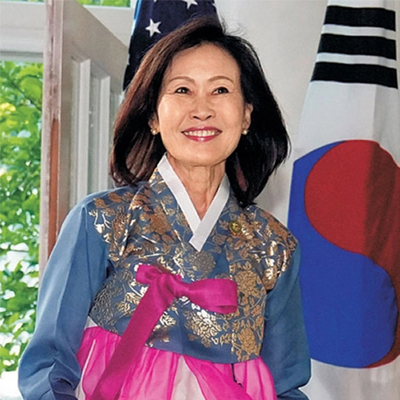
2026년 6월 17일 미국 상원은 미셸 스틸(한국명 박은주, 전 연방 하원의원)을 주한 미국대사로 인준

뉴욕 컬럼
칼럼
飛上
Michelle Steel, the appointment of Park Eun-joo as the US Ambassador to Korea, and US-Korea relations

0
2026. 07. 13
- While Michelle Steel's appointment as US Ambassador to Korea was an inevitable choice for American interests, it's criticized in Korea as a "suspicious process" that "disregards the feelings of the Korean people."
- Ambassador Steel, a far-right figure aligned with Trump's ideology, raises concerns about potential ties with South Korea's far-right, including support for former President Yoon Suk-yeol, which could negatively impact US-Korea relations.
- The Korean government's swift approval of the agrément is seen as capitulation to US pressure, risking deepened political polarization in Korea and friction in coordinating North Korea and China policies.
- America's unilateral insistence on the appointment could provoke South Korea's pursuit of strategic autonomy and, in the long run, weaken the social foundation of the US-Korea alliance, harming a trust-based relationship.
- Steel's appointment reveals America's disregard for the Korean people's sovereignty and national interests, potentially becoming a new turning point in US-Korea relations and a seed of conflict stemming from Koreans' defeatist success-oriented values.
On June 17, 2026, the U.S. Senate confirmed Michelle Steel (Korean name Park Eun-joo, former federal congresswoman) as the U.S. Ambassador to South Korea with 55 votes in favor and 39 against. This result came two months after President Trump's nomination on April 13, 2026 (U.S. time). The vote largely followed party lines, with most Democratic senators casting dissenting votes. However, this vote is judged to be a mere formality, and appointing a Korean-American to the position of Ambassador to Korea was likely essential given the paramount objective of U.S. interests. The U.S. will likely no longer be able to appoint white ambassadors to Korea.
Subsequently, the Korean government also granted agrément, a diplomatic consent procedure, and Michelle Steel completed her oath of office at the State Department, presided over by Assistant Secretary of State for Political Affairs, Alison Hooker. She is now scheduled to arrive in Seoul and present her credentials to President Lee Jae-myung, but these two months must have been an intense game of psychological warfare for both leaders. Officially, the vacancy for the U.S. Ambassador to South Korea, which had lasted for over a year and a half, is finally being filled, but it was a vacancy that could have lasted even longer. This is true when considering the objective of regaining wartime operational control, and when looking at the nonsensical protest performance of another Korean-American, Moss Tan.
However, a significant voice within South Korean society views this as a 'suspicious procedure' and 'disregard for the sentiments of the Korean people.' Skepticism is rampant, with expressions like 'black agent' even appearing. Should Korea have allowed her to serve as ambassador through agrément? It is necessary to calmly examine her political trajectory, the possibility of her ties to far-right forces in Korea, and the negative repercussions that an appointment pushed through by the U.S., ignoring Korean public opinion, will have on Korea-U.S. relations. This is not merely a personnel issue, but a matter intertwined with the essence of the alliance and Korea's sovereignty and national interests.
Steel is a Korean American who was born in Seoul in 1955, spent her adolescence in Japan, and then immigrated to the United States in the 1970s. She is a Republican congresswoman who entered the federal House of Representatives in 2020 after serving in the California State Assembly and as an Orange County Supervisor, and she shared ideological and political views with Trump. She spearheaded typical American conservative agendas such as opposing COVID-19 mask mandates, opposing abortion, and opposing same-sex marriage. Her extremely hardline stance on China and North Korea was also prominent. Those who act as avatars for the U.S. government on North Korean issues are thoroughly trained—this training does not mean Mossad training. It means their lifestyle and cultural values are completely American. Such people, who have no Korean sentiment whatsoever, are a special breed who abandon the culture of their biologically identical genes for their own success. There are plenty of such figures to be found from Syngman Rhee and Seo Jae-pil, both in earlier and later eras.
A notable aspect is her public support for former President Yoon Suk-yeol. During former President Yoon's state visit to the U.S. in 2023, she attended the state dinner wearing a hanbok and boasted of her partisan closeness, saying, “I am much closer to the Yoon Suk-yeol administration.” Even as former President Yoon was on trial for charges related to the 'December 3rd insurrection,' her past actions were interpreted in Korea as being part of the 'pro-Yoon' and 'far-right network.' Therefore, Korean media and civil society often categorize her as 'far-right' rather than 'conservative.' In a joint statement of opposition signed by over 400 civic organizations, it was pointed out that she has maintained an extremely anti-China and anti-North Korea stance and is closely linked to domestic far-right forces, including 'Yoon Again.' Connections to supporting the screening of the 'Birth of a Nation' documentary, suspicions of complicity in election fraud conspiracy theories, and ties to transnational far-right networks such as the Unification Church and CPAC Korea were also raised. While she is regarded as a mainstream Republican congresswoman in the U.S., in the Korean political landscape, she is seen as a symbol of the conservative camp, which has become extremely polarized since former President Yoon's misgovernance and attempted insurrection.
Against this backdrop, the South Korean government's swift granting of agrément was a regrettable decision in many ways. While agrément is often considered a mere formality in diplomatic practice, it is predicated on the sovereign judgment of the receiving state. There have been numerous instances in the past where the receiving state expressed concerns or delayed the process for controversial appointees. In Steele's case, opposition within South Korea was systematically expressed immediately after his nomination in April, with professors, legal professionals, and peace organizations issuing public appeals. Despite this, the government's proceeding with the process without 'careful consideration' is highly likely to be perceived as succumbing to U.S. pressure or the logic of alliance management. As a result, the narrative of 'forcing an appointment that disregards the sentiments of the Korean people' has become even more entrenched.
The negative impact of the U.S. forcing an appointment while ignoring South Korean public opinion will be multifaceted. First, there is a high risk of deepening political polarization within South Korean society. When Ambassador Steele takes office, some far-right YouTube channels and groups are likely to welcome him, saying, “A hardline conservative has arrived,” and “Yoon Suk-yeol is back.” Conversely, the majority of citizens and progressive-to-centrist groups will interpret this as the U.S. disregarding South Korea's democracy and judicial procedures (referring to former President Yoon's trial) and siding with a specific political faction. This is not an emotional issue. The moment the ROK-U.S. alliance degenerates from a 'national alliance' supported by the majority of the Korean people to a 'political alliance' linked to a specific political faction, the social foundation of the alliance will weaken in the long run.
Second, friction in coordinating North Korea and China policies is inevitable. During his time as a congressman, Steele was negative about dialogue with North Korea and efforts for an end-of-war declaration, and consistently advocated for a hardline stance against China. This has the potential to clash with the pragmatic and flexible approach to North Korea and the economic-benefit-oriented China policy currently pursued by the Lee Jae-myung administration in South Korea. If the ambassador exerts internal pressure on the South Korean government under the pretext of 'ROK-U.S. cooperation' or strongly pushes for transactional demands from the U.S. (such as fulfilling the promise of $350 billion in investment and eliminating discrimination against U.S. companies), this could be perceived not as an 'alliance' but as 'pressure.' This is where the transactional diplomatic style of the Trump administration is directly projected onto South Korea.
Third, it could stimulate South Korea's pursuit of strategic autonomy in the long term. Discussions about regaining wartime operational control (OPCON) and withdrawing USFK, which are remembered by many Koreans as the 'absolute task of the nation,' gain more traction whenever the United States disregards South Korea's domestic political sentiments. If the perception spreads that 'the United States does not respect South Korea as a partner,' there is room for extreme self-reliance theories, such as nuclear armament or a neutral stance, to gain strength. This does not align with America's strategic interests either, as a stable partner based on trust is more useful in the long run than an unstable alliance.
Of course, there are counterarguments. Steele is Korean-born, fluent in Korean language and culture, and could be active in Korea-US economic cooperation and attracting investment. There is also the practical meaning of filling the long-vacant ambassadorial position. However, these advantages are largely offset by her political stigma and the potential for division within Korean society. There is even a risk that her Korean heritage could be seen as 'the face of America intervening in Korea's internal politics.'
If we truly consider Korea's national interests, it is not desirable to allow the US to unilaterally push through an appointment or to accept it without criticism. National interest is not about short-term alliance management or economic transactions, but a sustainable security and diplomatic environment built upon the Korean people's sense of sovereignty and social consensus. Even if the agrément process has already been completed, the Korean government and National Assembly should closely monitor Ambassador Steele's activities and, if necessary, systematically convey their dissatisfaction to the US side through official and unofficial channels. At the same time, Korea must further concretize its roadmap for strengthening its self-defense capabilities and regaining wartime operational control, thereby laying the foundation for an independent diplomacy that is not swayed by any US personnel decisions.
The relationship between Korea and the US is not one of blood alliance or permanent subservience. It is now time to repay the humiliation of 81 years under the pretext of a strategic partnership, which the US favors, maintained on mutual respect and a balance of interests. This does not mean institutional or administrative revenge by Korea, but rather various challenges to the limits of American hegemony, which once dominated the era with materialistic ideologies. This is the natural order of things, and it will be a boomerang that reveals the true face of the US, which has eroded trust by indiscriminately using the word 'alliance' and fanning internal discord in Korea, all while ignoring the sentiments of the Korean people and playing the 'Korea card.' The appointments of Ms. Moss Tan and Park Jin-joo could mark a new turning point in Korea-US relations—the first year of a new definition of 'black-haired foreigners'—and reveal to the world what fruits the seeds of conflict, stemming from a success-oriented value system based on Korean defeatism, will bear.
댓글
( 0 / 500 )
석훈
8
한국계라는 사실을 앞세우면서 정작 한국 사회의 민심과 현실은 외면한다면, 그건 다리를 놓는 외교관이 아니라 갈등을 키우는 정치인일 뿐입니다. 자신의 정치적 성공을 위해 한국을 이용했다는 비판에서 자유로울 수 없습니다.
( 0 / 500 )
sarang91
7
한미동맹은 특정 정권이나 특정 정치세력의 것이 아니라 국민 모두의 동맹이어야 합니다. 대사의 정치적 이미지가 국내 갈등을 키우는 방향으로 작용하지 않기를 바라며, 정부도 국익 중심으로 냉정하게 대응했으면 합니다.
( 0 / 500 )
Hangi7
7
주한 미국대사는 미국의 국익을 대변하는 자리라는 것은 당연합니다. 하지만 한국 사회의 갈등을 더 키우는 인물이라면 동맹에도 도움이 되지 않습니다. 외교보다 이념이 앞선다는 인상을 주는 순간 신뢰는 무너집니다.
( 0 / 500 )
sarang88
6
외교는 상대국 국민의 신뢰를 얻는 것에서 시작됩니다. 부임 전부터 정치적 논란과 거부감이 이렇게 큰 인사가 과연 한미관계를 안정적으로 관리할 수 있을지 의문입니다. 미국도 이 점을 가볍게 봐서는 안 됩니다.
( 0 / 500 )
아리아리
5
동맹은 존중 위에서 유지되는 것이지 일방적인 인사 강행으로 유지되는 것이 아닙니다. 한국을 진정한 파트너로 생각한다면 국민 여론과 사회적 분위기까지 고려하는 것이 성숙한 동맹의 자세라고 생각합니다.
( 0 / 500 )
進化
4
외교관은 특정 진영의 대변인이 아니라 양국 관계를 안정적으로 관리하는 역할을 해야 합니다. 그런데 과거의 정치적 행보와 발언을 보면 편향성 논란을 자초했고, 이런 인사가 주한 미국대사가 된 것은 한국 국민 입장에서는 우려스러운 일입니다.
( 0 / 500 )
김민혁
4
동맹은 상호 존중이 있어야 오래갑니다. 한국 국민의 여론과 감정을 고려하지 않는 인사는 결국 한미관계에도 부담으로 돌아올 수 있다는 지적에 공감합니다.
( 0 / 500 )
Tomson
4
이번 일을 계기로 우리도 미국만 바라보는 외교에서 벗어나 전략적 자율성을 더 키워야 한다는 생각이 듭니다. 전작권 문제나 자주국방 논의도 더 진지하게 추진할 필요가 있습니다.
( 0 / 500 )
바바리안
3
한국에서 태어났다는 이유만으로 한국을 잘 이해한다고 착각해서는 안 됩니다. 한국인의 신뢰를 얻지 못한 채 정치적 논란만 안고 부임한다면, 결국 '동맹의 얼굴'이 아니라 '불신의 상징'으로 기억될 가능성이 큽니다.
( 0 / 500 )
동해
2
주한 미국대사는 미국의 국익을 대변하는 자리라는 것은 당연합니다. 하지만 한국 사회의 갈등을 더 키우는 인물이라면 동맹에도 도움이 되지 않습니다. 외교보다 이념이 앞선다는 인상을 주는 순간 신뢰는 무너집니다.
( 0 / 500 )
신고내용
신고내용을 선택해주세요
회원비난/비하/욕설글 및 댓글도배성 게시물저작권 침해/불법자료 유출허위사실유포개인정보 유출.사생활 침해무단광고/홍보음란물 및 도박 불법 광고물범죄행위 관련 글불법행위 관련 소개물품 판매 및 사기글악성코드 및 스파이웨어 유포기타 사유 및 운영진 판단


비밀번호를 잊으셨나요?
Sign in with Google
All information provided by us is free of charge and is for the public good.