品

Corea든 Korea든, 품격은 이름보다 먼저다
Whatever the name—Corea or Korea—dignity comes first.
Whatever the name—Corea or Korea—dignity comes first.
Now
지금
751 Diaspora
Heritage
유산
Humanity
인문
Mirengsi
未冷尸
Politics
정치
Media
언론
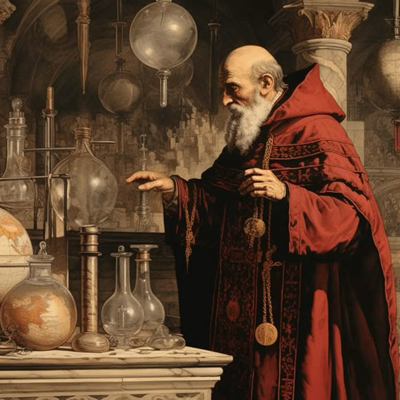
동서양 철학 사조의 갈림길 / 이 글은 이승우 변호사가 기고해 주신 글입니다.

뉴욕 컬럼
칼럼
blueSky
The dream of the saint and the seed of science

0
2026. 06. 30
- Western philosophy, through the rivalry of idealism and empiricism, explored the nature of the material world, applied it to real life, and advanced scientific civilization.
- Eastern philosophy, with the ultimate goal of becoming a sage, used the study of natural phenomena as a means of ethical self-cultivation, leading to a relative stagnation in the development of material civilization.
- This fundamental difference in academic interests between East and West led to the advancement of scientific civilization in the West and the disregard for material civilization in the East, historically resulting in the East's helpless subjugation to Western invasion.
- For Eastern civilization to lead the world, it needs a new intellectual movement that expands the concept of a 'sage' to include those who contribute to scientific and technological development, and builds scientific civilization upon the ethical foundations of Eastern thought.
“Why did scientific civilization blossom in the West but not in the East?”
Looking at the history of European philosophy, objective idealism on the European continent and subjective empiricism in England developed in competition. Idealism, starting with Plato's theory of Forms, is the belief that there is an objective reality beyond human experience. It is the view that a transcendent being exists in an objective form. This transcendent being is not experienced by the sense organs but is grasped through human thought processes. There is no way to verify it in the real world. One merely believes in and pursues an ideal existence. It is close to a religion that places a creator at its apex. Through Plato, we can see that the philosophical foundation of Western civilization reveals that Westerners, who appear empirical and scientific, have religious dogma underlying their thought. This tendency cannot be overlooked even in the 21st century, where scientific civilization has developed. This is because dogmatic ideologies that ignore scientific facts can emerge at any time. The current White Supremacy and Racism in the United States are evidence of the unscientific tendencies of Westerners. It has not been scientifically proven that white people are genetically superior to other races.
The French philosopher Descartes preaches rationalism. He doubts the existence of a transcendent God. Philosophy must be rational, and the way to embody that rationality is doubt. He argues that it is rational to think starting from an existence that can no longer be doubted, even after doubting. He also doubts the question of whether a creator God exists. And the famous saying he left behind is 'I think, therefore I am.' He doubted not only God but also the reality of everything visible. He even doubted mathematical truths like '2+3=5'. Nevertheless, Descartes acknowledges the existence of God. His God is not the blind faith of the Middle Ages forced through the authority of the church, but a God discovered through reason. He says that finite and imperfect humans can never create the concepts of infinity and perfection themselves. He argues that because a perfect and good God exists, mathematical truths or the external world that we perceive clearly and distinctly through reason are guaranteed to be real, not fake. He acknowledged the existence of God again even while doubting God through rational skepticism. However, he did not empirically confirm God. It seems to be the result of preferring conceptual certainty over empirical confirmation through sensory organs. It seems to be the reason why he could not acknowledge and look at the fundamental limitations of human reason, that is, the fact that we cannot know the beginning and end of the universe. And it seems to be because the Creator in the Bible speaks of that beginning and end. However, in that he believes in an existence that has not been empirically confirmed, I think he is at least a follower of Plato in a philosophical sense. However, I believe that his rejection of the blind view of God in the Middle Ages and his establishment of a view of God through reason and thought greatly contributed to the development of modern science. In fact, through rational doubt based on reason, he developed Western mathematics, physics, medicine, physiology, and optics.
In contrast, British empiricism denies an objective reality beyond experience. Everything is experienced subjectively. Ultimately, each person's experience is bound to be different. Therefore, to solve the problem of 'what is real,' it had to be proven through experimentation. Proof is obtaining the consent of many people, and agreed-upon proof is what is real. This foundation of empiricism inevitably involves a process of discussion. Ultimately, the spirit of consensus emerges. The basis of consensus is the principle of majority rule. At the same time, it does not ignore the opinions of the minority. This presupposes that the content of the consensus can change later. Considering these intellectual trends, it seems natural that modern democracy blossomed in Britain. The 20th-century philosopher Karl Popper limited science to verifiable propositions and excluded unverifiable propositions from the realm of science. When a specific verifiable proposition is accepted as truth, a margin of error (statistical significance level) is always presupposed. In his friend Wittgenstein's assertion, 'Whereof one cannot speak, thereof one must be silent,' what cannot be spoken is what cannot be confirmed as fact, and this refers to unverifiable, unscientific things. What is verifiable must be empirically confirmable one by one. Subjective empirical facts cannot be identical. The process of discovering truth always presupposes discussion among experimenters. The process of scientific truth also inevitably goes through democratic discussion. Karl Popper's statement in his 'The Open Society and Its Enemies' that the enemies of the open society are those who do not allow dialogue and discussion is a remark that grasped the essence of British empirical philosophy and democratic thought.
The development of democracy in ancient Greece occurred before the establishment of continental idealism, when there was no certainty about truth, and it inevitably required much dialogue. This was because there was no concept of the Mandate of Heaven, which spontaneously recognized the authority of the king, as in China, and no spontaneous culture that could sacralize political power. I believe that the spirit of democratic consensus has sprouted from a current of thought that does not recognize vague concepts but rather keeps the door open for dialogue in the search for truth.
The reason why the Hundred Schools of Thought in China's Spring and Autumn and Warring States periods were able to establish their ideas through numerous debates was that new ideas could flourish during the process of the Zhou dynasty's royal family collapsing and the Mandate of Heaven concept for the king disintegrating. This demonstrates how much the irrational, spontaneous, and empirically unfounded Mandate of Heaven concept of China's Zhou dynasty suppressed people's thoughts. The East did not experience a democratic revolution until the 20th century due to the Mandate of Heaven concept for royal power. While artificial concepts can be debated, I believe that the a priori Mandate of Heaven concept could not be a subject of discussion among the common people. It is a tragedy for the East that it never experienced any political system other than the dynastic system until the Western invasion in the 20th century.
대륙의 관념론이나 영국의 경험론이 객관주의와 주관주의라는 측면에서 기본적인 차이가 있으나 그들의 관심이 사물의 본질에 있었다는 점에서는 같다. 그것은 다르게 말하면 물질에 관한 관심을 꾸준히 가져왔다는 점에서 동일합니다. 서구의 사상이 사물의 본질을 파악해서 활용하려는 의식은 꾸준히 싹트고 있었던 것입니다. 그것은 필연적으로 대상에 대한 분석이 필요했으며 물질과 자연의 법칙을 발견해서 실생활에 이용하는 쪽으로 발전해 왔다. 대륙이든 영국이든 물적인 진보는 과학적인 혁명으로 싹을 피우게 되는 것입니다. 결국은 실재성에 대한 관념론보다는 경험론적인 시각을 가진 영국이 과학적 사실을 실생활에 적용함으로써 산업혁명(産業革命)이 일어나고 결국 세계의 패권(覇權)을 쟁취하게 된 것이다.
On the other hand, Confucianism in the East, centered on China, ideologically dominated Northeast Asia from the 12th century Song Dynasty. It began when Zhu Xi systematized Neo-Confucianism. Based on this, it explained the universe with the theory of Li and Qi and sought answers to how humans should live ethically. As a concrete method for this, it advocated Geungmulchiji (格物致知). This means observing things to discover principles and arrive at true knowledge. Zhu Xi's initial interest was in natural objects. However, it ultimately culminated in the question of how to learn human behavioral norms from natural phenomena. Starting with natural objects, it led to the theory of human cultivation. The fact that it explored truth with natural objects as its subject and yearned for a perfect moral human being, a sage, is similar to the objective idealism of the European continent in that it accepted the existence of a complete God. This is because both philosophies presuppose an ethical complete being. I believe that the Western God is similar to the sage of Neo-Confucianism in terms of ethics.
In contrast, Wang Yangming of the Ming Dynasty in the 15th century did not focus on external objects but on his own mind. He sought to gain certainty about truth through the realization of the mind. The purpose of his practice was the unity of knowledge and action (知行合一). Knowing is the beginning of action, and acting is the completion of knowing. Not acting despite knowing is not truly knowing. For him, knowing refers to innate knowledge (良知), which is knowledge acquired without being taught. Its object is conscience (良心). He stated that this conscience encompasses benevolence (仁), righteousness (義), propriety (禮), and wisdom (智). This is why he is considered a Confucian scholar despite his Buddhist-like thinking. He also spoke of the investigation of things to extend knowledge (格物致知), but his interpretation differed from that of Zhu Xi. He interpreted it as rectifying one's desires for material things to attain true knowledge. This interpretation, which presupposes desirelessness (無慾) and speaks of the universal human path, the Dao (道), is very similar to Taoism, or to Buddhism, which presupposes greed as the beginning of suffering (煩惱) and seeks enlightenment through practice. However, he is undoubtedly a Confucian scholar in that he emphasized social relationships and sought to build human relationships based on Confucian ethics. Yangming defined his scholarship as the study of becoming a sage (聖人). In this respect, he is identical to Zhu Xi, who also sought to become a morally perfect person, a sage (聖人), based on the investigation of things to extend knowledge (格物致知).
From the 12th century, when Zhu Xi's Neo-Confucianism dominated all of Northeast Asia, until its colonization by the West in the 20th century, the academic and political mainstream of Northeast Asia was Neo-Confucianism, which aimed to become a sage (聖人) based on the investigation of things to extend knowledge (格物致知). Yangming in the 15th century is significant for preventing the sole dominance of Neo-Confucianism and broadening the interpretation of Confucianism. If Zhu Xi separated knowing and practicing, Wang Yangming's view that knowing and practicing are one must have been like a mace striking down corrupt officials of the time. I believe that his spirit of the unity of knowledge and action (知行合一) is still very valid in this era. The saying by President Kim Dae-jung, 'A conscience that does not act is on the side of evil,' I believe, aligns with Wang Yangming's philosophy of the unity of knowledge and action.
Here, we can see how vastly different the developmental trajectories of Eastern Neo-Confucianism (성리학) and Yangmingism (양명학) were compared to European Rationalism and British Empiricism. Both Eastern and Western intellectual currents developed within the tension between idealism and empiricism regarding reality. However, while the Western goal was to analyze and uncover the essence of matter, progressively revealing unknown facts to ultimately apply them to practical life, the Eastern approach used natural objects as a starting point for study, but its ultimate concern was how to become a sage (聖人). From this perspective, the fundamental concerns of these academic traditions were entirely different. If the two Western currents of idealism and empiricism, which formed the axis of Western thought, were interested in matter itself, the two Eastern currents used the study of natural objects as a means to become a sage (聖人). Zhu Xi sought to discover moral principles within material phenomena, while Wang Yangming aimed to use matter as a means of self-cultivation (수양) to eliminate desires. Eastern scholarship was a struggle to become a sage (聖人), an ethical perfecter. Considering these intellectual currents, it is entirely predictable that the East could not achieve the same level of material prosperity and scientific development as the West.
Western material civilization eventually led to the development of military weapons, and the East was left helpless against Western aggression. The East's obsession with saints led to a disregard for material civilization, and ultimately, the inevitable result of Western aggression spearheaded by cannons could not be avoided. As long as Confucianism, which pursues saints, remains the major social and political philosophy of the East, the East's position in the global power structure will never change. I believe the current problem with Confucianism lies in how it can transform from a discipline that seeks to become a saint into one that emphasizes scientific civilization. I think this is impossible unless a new concept of a saint emerges from Confucianism. A new movement should arise that defines a saint not as an ethical human being, but as a human being who creates things useful in real life. It is clear that scientists should be at the forefront of this. The 2500 years of accumulated Eastern ethical thought regarding the process of creating new things, the morality of means and methods, and the non-destruction of the natural environment by new inventions should form the foundation of a scientist's character.
Instead of developing Western civilization, which has been steadily followed since the 20th century, without a philosophical foundation, I wonder if it would be better to build it upon the ethical foundation of Eastern thought. I believe it is time to dedicate ourselves to creating an ethical philosophy that can further develop material civilization based on the rationalism of science and enlighten the masses, rather than being bound by the ethical constraint of becoming a saint, a perfected human being, or focusing on the personal cultivation of a few practitioners. I believe that the main trend in the Confucian cultural sphere of this era should be to confirm that anyone who creates science and technology that makes human life convenient can be a respected saint, not just a special ethical being. This is because only then can a subjective and world-leading moral scientific civilization be born in Northeast Asia.
댓글
( 0 / 500 )
Platon
9
주희의 격물치지와 왕양명의 지행합일이 결국 인간 수양으로 귀결된 점을 명확히 분석한 글이네요. 서구는 ‘실재’를 분석·활용하는 데 집중했지만, 동양은 자연을 도덕 교훈의 거울로 삼았습니다. 이 때문에 물질문명에서 뒤처졌다는 진단에 공감합니다. 이제는 ‘과학 기술로 인류를 편리하게 하는 사람’을 성인으로 보는 새로운 유학 운동이 필요합니다. 김대중의 ‘행동하지 않는 양심은 악’처럼 실천적 지성이 핵심이 될 수 있겠네요.
( 0 / 500 )
dongbang
7
동양 철학이 성인(聖人)을 목표로 삼은 탓에 군사·과학력 열위가 불가피했다는 결론이 설득력 있습니다. 주희와 양명의 공통점인 윤리 완성 추구가 물질 경시로 이어졌죠. 이제 동양 윤리를 바탕으로 한 도덕적 과학 문명을 만들어야 할 때입니다.
( 0 / 500 )
토트넘
7
서구의 경험론이 실험과 합의를 통해 과학을 꽃피운 반면, 동양의 주자학은 성인 추구로 자연 탐구를 윤리 수단으로 삼았다는 분석이 날카롭습니다. 이 때문에 물질문명에서 뒤처졌다는 진단에 동의합니다. 이제 과학자를 새로운 성인으로 재정의하는 유학의 변형이 절실합니다.
( 0 / 500 )
poly
6
서양 철학의 종교적·초월적 뿌리(플라톤, 데카르트)조차 과학 발전의 동력이 되었다는 점이 흥미롭습니다. 반면 동양은 성인(聖人)이라는 이상적 인격 완성에 매몰되어 실증적 탐구가 윤리 수양의 하위 수단으로 전락했습니다. 이 글의 결론처럼, 과학자를 존경받는 성인으로 재정의하고 동양의 윤리 축적을 과학 발전의 저변에 깔아야 동북아가 세계를 주도할 수 있습니다. 철학적 전환이 시급합니다.
( 0 / 500 )
kkb
5
이 글은 동서양 철학의 본질적 차이를 날카롭게 지적합니다. 서구의 관념론-경험론 긴장이 물질 탐구로 이어진 반면, 동양 성리학은 ‘성인’이라는 윤리적 완성에 초점을 맞춰 과학 발전을 도구화했습니다. 결과적으로 19세기 서구 침략에 속수무책이었던 역사는 뼈아픈 교훈입니다.
( 0 / 500 )
산들바람
4
왕양명의 지행합일은 여전히 유효하지만, 결국 성인(聖人) 중심 사상이 과학 발전을 가로막았다는 점이 인상적입니다. 서양처럼 물질 본질 탐구에 집중했다면 동양의 역사가 달라졌을 것입니다. 윤리와 과학을 융합한 새로운 성인상이 필요합니다.
( 0 / 500 )
냥냥이님
3
데카르트의 이성적 회의와 영국 경험론이 과학·민주주의의 토대를 마련한 반면, 천명사상과 주자학이 동양의 사상적 틀을 굳힌 비교가 인상적입니다. 특히 ‘성인 추구’가 물질 경시로 이어져 군사력 열위로 직결되었다는 분석은 설득력 있습니다.
( 0 / 500 )
Robert_j
3
동양 사상이 ‘어떻게 성인이 될까’에 집중한 반면 서양은 ‘사물의 본질은 무엇인가’에 몰두했다는 대조가 명쾌합니다. 이 차이가 산업혁명과 제국주의 시대의 승패를 결정지었다는 역사적 통찰이 날카롭네요. 이제 유학은 과거의 성인 숭배에서 벗어나, 자연환경과 조화되며 인간을 이롭게 하는 혁신을 이루는 과학자를 새로운 성인으로 세워야 합니다.
( 0 / 500 )
Whiskey79
1
플라톤·데카르트의 관념론과 영국 경험론의 경쟁이 과학 문명을 낳은 데 비해, 동양 유학은 인간 수양에 치중해 실증성을 놓쳤습니다. 천명사상과 성리학의 억압적 측면도 잘 지적했습니다. 과학 기술로 인류를 이롭게 하는 이를 성인으로 보는 전환이 중요합니다.
( 0 / 500 )
신고내용
신고내용을 선택해주세요
회원비난/비하/욕설글 및 댓글도배성 게시물저작권 침해/불법자료 유출허위사실유포개인정보 유출.사생활 침해무단광고/홍보음란물 및 도박 불법 광고물범죄행위 관련 글불법행위 관련 소개물품 판매 및 사기글악성코드 및 스파이웨어 유포기타 사유 및 운영진 판단


비밀번호를 잊으셨나요?
Sign in with Google
All information provided by us is free of charge and is for the public good.