品

Corea든 Korea든, 품격은 이름보다 먼저다
Whatever the name—Corea or Korea—dignity comes first.
Whatever the name—Corea or Korea—dignity comes first.
Now
지금
751 Diaspora
Heritage
유산
Humanity
인문
Mirengsi
未冷尸
Politics
정치
Media
언론
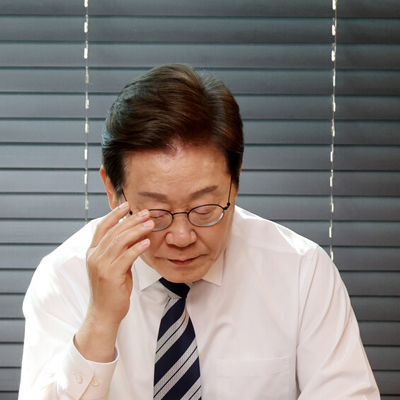
이재명 대통령의 국정 수행 지지율이 취임 이후 처음으로 부정 평가에 역전당했다는 결과가 나오면서 정치권이 술렁이고 있다

뉴욕 컬럼
칼럼
jeffrey
People shaking the president, and the people being shaken

0
2026. 06. 23
- The decline in President Lee Jae-myung's approval rating is a complex result of internal party power struggles, Election Commission failures, and incitement by far-right forces.
- The defection of voters in their 50s, a core demographic for the Democratic Party, carries political significance beyond mere numbers, as internal party conflicts hinder national governance.
- The public's susceptibility to political incitement is also a crucial factor determining the level of democracy, making critical thinking and mature civic engagement essential for Korea's political development.
- Ultimately, the quality of politicians does not surpass that of the public; true democracy stems from a civic consciousness that can critically evaluate facts, transcending partisan lines.
The political circles are abuzz with the recent poll results showing that President Lee Jae-myung's approval rating for state affairs has fallen below his disapproval rating for the first time since his inauguration. Some media outlets are defining this as a crisis for the administration, and the opposition party claims it is the beginning of public disaffection. On the other hand, the ruling party interprets it as a complex result of the Election Commission controversy, internal party conflicts, and organized political attacks.
What is clear is that this decline in approval ratings is not just a change in numbers. In particular, the significant drop among those in their 50s, who have been classified as a core support base for the Democratic Party, has considerable political implications. However, more important than the approval rating itself is examining why this phenomenon occurred. The approval rating is merely a result. If we don't see the cause, we cannot solve the problem.
There are three main factors behind the current political turmoil. First is the internal power struggle within the Democratic Party, second is the distrust triggered by the poor management of the Election Commission, and third is the frame of election fraud and political agitation by the far-right camp that amplifies these issues. However, we should not stop here. Criticizing politicians alone will not solve the problem. The attitude of the public, who are swayed by agitation, is just as important as the agitating politicians in determining the level of democracy.
The biggest enemy of the ruling party may not be external but internal.
At a time when the administration has just begun, the most important thing is stability in state affairs. The people have granted power through elections, and the government must take responsibility for people's livelihoods and the economy based on that power. However, looking at the Democratic Party internally recently, the power struggle within the party seems to be receiving more attention than state administration. The ruling party is an organization that should support the success of the president. If the president fails, the administration ultimately fails, and the party also fails. However, in reality, this is often not the case. This is because power always moves towards the future. As soon as the administration is launched, some politicians already begin to calculate the next power structure and their influence within the party.
In particular, some of the pro-Moon political forces formed during the Moon Jae-in administration still hold considerable influence within the party. Of course, not everyone under the name of 'pro-Moon' thinks alike. However, it is clear that there are movements that prioritize their political standing and influence over the success of the Lee Jae-myung administration. The competition between forces unwilling to relinquish party leadership even after creating a government and those seeking to become the new center of power inevitably leads to conflict. The problem arises when this conflict manifests as factional competition rather than policy competition. From the public's perspective, the Democratic Party then appears not as a party discussing public welfare, but as a group squabbling over positions.
Ultimately, no matter how hard the president works, conflicts arising within the party become a burden on the president. The media reports on conflict rather than policy, and the public sees division before achievement. It may be a natural consequence that approval ratings falter.
Distrust created by the incompetence and irresponsibility of the National Election Commission
Recent controversies surrounding the National Election Commission are also cited as a significant factor behind the decline in approval ratings. Elections are the foundation of democracy. The public trusts election results, which is why even the losing side accepts the outcome. Therefore, the institution managing elections must operate under stricter standards than anyone else. However, the various problems recently revealed about the NEC have caused considerable disappointment among the public. Issues such as some employees' dereliction of duty, controversies over poor management, and repeated administrative errors have led the NEC to erode its own credibility. The problem does not end there.
The NEC's mistakes must certainly be criticized. However, the NEC's poor operation and electoral fraud are completely different issues. Administrative incompetence and systematic manipulation must be distinguished. Yet, some political forces are intentionally blurring that distinction.
The incitement structure of the Taegeukgi forces and far-right politics
The far-right, represented by the Taegeukgi forces, has long used the theory of electoral fraud as a political driving force.
When defeated in an election, it is democracy to analyze the causes of defeat and respect the choice of the people. However, some far-right forces do not accept the election results themselves. The logic that if they win, it is a fair election, and if they lose, it is a fraudulent election, is repeated. This attitude is no different from denying democracy.
The biggest problem with the fraudulent election theory is that it demands belief rather than evidence. It stimulates emotions and anger rather than verification and facts. In reality, unproven claims are repeated through YouTube and social media, consumed like a political faith. In this process, some pro-American far-right forces attribute all problems in Korean politics to a specific camp, reproducing Cold War thinking. Ideological hostility takes precedence over Korea's national interest, and camp logic takes precedence over policy. What is important to them is not the development of the nation, but the maintenance of hatred for hostile forces. This is because hatred is necessary to rally supporters.
However, the bigger problem is not those who instigate, but those who are instigated.
Here we must ask an uncomfortable question. Is all the responsibility really on politicians alone? Politicians originally move to gain votes. The media makes sensational reports to attract attention. YouTubers tell extreme stories for views. The problem is the people who consume it. Instigation only succeeds when there are people who accept it.
The reason fake news continues to be created is that there are people who believe it. The reason conspiracy theories are repeated is that there are people who share them. In a democratic society, the people are both victims and responsible agents.
We must remember the Yoon Suk-yeol administration. At that time, countless citizens were swept away by political instigation. Some believed that Yoon Suk-yeol was a savior who would solve all problems, and others were convinced that the opposing camp would ruin the country. What was the result? Reality was different from the claims of the instigators.
The economy was complex, diplomacy was difficult, and political conflicts continued. The grand slogans of the election were mostly revised or disappeared in the face of reality. However, the politicians who incited them did not take much responsibility. The people bore the responsibility. The people bore the burden of prices, and the people had to endure the economic recession.
Yet, many people repeat the same mistakes. Rather than verifying the words of politicians, they only listen to what they want to believe. They react to emotions rather than facts. They justify what their side does and get angry at what the opposing side does. As long as this attitude continues, the level of Korean politics can never improve.
The level of politicians ultimately does not exceed the level of the people.
Politics resembles the people. If voters evaluate policies, politicians propose policies. If voters react to incitement, politicians choose incitement. The reason politicians keep using extreme language is because it is effective. The reason conspiracy theories do not disappear is because there are people who believe them. Before blaming politicians for their low standards, the people themselves need to reflect on their political consciousness.
Democracy is not simply a system of voting. Even after elections, the attitude of citizens who can monitor power, verify the media, and even criticize the politicians they support sustains democracy. However, in Korean society, supporting politicians often degenerates into something like cheering for a sports team. If you point out a mistake, you become a traitor, and if you criticize, you are treated as an enemy. In such a culture, no government can succeed.
What is needed now is not factionalism, but civic consciousness.
Whether the Lee Jae-myung administration will succeed or fail is yet unknown. However, what is clear is that the current crisis is not a personal crisis for the president. It is a crisis created by the power struggles within the Democratic Party, the incompetence and negligence of the National Election Commission, the incitement of election fraud by the far-right, and a political culture that uncritically consumes it. If the government fails, the people suffer. If the government succeeds, the people benefit. Therefore, the people are not spectators. It is not enough to criticize the incitement of politicians. We must also ask why such incitement repeatedly succeeds.
What is needed for South Korea to develop into a true democratic nation is not the victory of a specific politician. Regardless of which administration is in power, it is a mature civic consciousness that can verify facts, be wary of falsehoods, and even criticize its own side. This was true during the Yoon Suk-yeol administration and remains true now. Politicians can change. Governments can also change. However, if the people do not change, politics will not change either. Ultimately, the final responsibility for democracy rests with the people.
There will always be those who try to undermine the president. There will be politicians seeking power, and agitators spreading conspiracy theories. However, whether they can succeed ultimately depends on how calmly and wisely the people make their judgments. It is not a specific politician who determines the future of South Korea. It is a civic consciousness that prioritizes facts over incitement, reason over hatred, and the nation over factions. That is the foundation of a democracy more powerful than any government, and the most important challenge for Korean politics to overcome.
댓글
( 0 / 500 )
Sanghyuk
9
맞는 말입니다. 정치인들만 탓할 것이 아니라 결국 그 정치인을 선택하고 지지하는 국민의 책임도 함께 있다는 점을 잊어서는 안 됩니다. 선동 정치가 반복되는 이유는 그것이 효과가 있기 때문이고, 효과가 있는 이유는 믿고 따라가는 사람들이 있기 때문입니다. 진영 논리에 갇히지 않고 사실을 확인하는 시민의식이 절실합니다.
( 0 / 500 )
남강82
7
윤석열 정부 시절에도 그랬고 지금도 마찬가지입니다. 정치인들은 바뀌어도 국민이 사실보다 감정을 우선하고, 검증보다 믿고 싶은 것만 믿는다면 정치 수준은 달라지지 않습니다. 불편하지만 꼭 필요한 지적이라고 생각합니다.
( 0 / 500 )
녹두꽃
6
대통령을 흔드는 세력은 어느 시대에나 존재합니다. 문제는 국민이 얼마나 냉정하게 사실을 판단하느냐겠죠. 진영논리에 갇혀 상대를 적으로만 보는 정치문화가 계속된다면 누가 집권해도 같은 문제가 반복될 것입니다.
( 0 / 500 )
kang5
6
특히 "선동하는 사람보다 선동당하는 사람이 더 큰 문제"라는 부분이 인상 깊었습니다. 유튜브 몇 개 보고 모든 것이 음모라고 믿어버리는 사회는 건강한 민주주의 사회라고 보기 어렵습니다. 결국 시민의 판단력이 국가의 미래를 결정합니다.
( 0 / 500 )
namunara
5
정말 공감되는 글입니다. 정치권의 책임을 지적하는 글은 많지만, 정작 선동에 쉽게 휘둘리는 우리 자신의 모습까지 돌아보게 만드는 글은 드뭅니다. 민주주의는 권리만이 아니라 책임도 함께 따른다는 사실을 다시 생각하게 됩니다.
( 0 / 500 )
김형석
4
이재명 정부의 지지율 하락 원인을 단순히 한 가지로 설명할 수는 없을 것입니다. 당내 갈등도 있고 선관위 논란도 있으며 경제 문제도 있습니다. 중요한 것은 어느 진영이든 자신에게 유리한 해석만 하지 말고 냉정하게 원인을 분석하는 자세라고 생각합니다.
( 0 / 500 )
이동혁
3
"정치인의 수준은 결국 국민의 수준을 넘지 못한다"는 문장이 가장 인상 깊네요. 선거 때만 정치에 관심을 갖고 이후에는 진영 싸움만 반복한다면 어떤 정권이 들어서도 결과는 비슷할 것입니다. 대한민국 정치가 발전하려면 정치인보다 먼저 유권자가 성숙해져야 한다는 지적이 뼈아프지만 현실적인 이야기라고 생각합니다.
( 0 / 500 )
park72
2
이 글은 특정 정당을 옹호하는 것이 아니라 민주주의의 본질을 이야기하는 데 있는 것 같습니다. 자신의 지지 정당과 정치인도 비판할 수 있는 시민이 많아질 때 비로소 정치도 발전할 수 있습니다. 결국 민주주의를 지키는 힘은 시민의 성숙함에서 나온다는 말에 깊이 공감합니다.
( 0 / 500 )
K_maria
1
윤석열 정부 시절에도 많은 국민들이 정치적 구호와 선동에 휩쓸렸고 결국 그 대가는 국민이 치렀습니다. 그런데 지금도 같은 방식의 정치가 반복되는 것을 보면 참 답답합니다. 정치인은 바뀌어도 정치 문화는 쉽게 바뀌지 않는다는 점에서 시민의 역할이 중요하다는 주장에 공감합니다.
( 0 / 500 )
신고내용
신고내용을 선택해주세요
회원비난/비하/욕설글 및 댓글도배성 게시물저작권 침해/불법자료 유출허위사실유포개인정보 유출.사생활 침해무단광고/홍보음란물 및 도박 불법 광고물범죄행위 관련 글불법행위 관련 소개물품 판매 및 사기글악성코드 및 스파이웨어 유포기타 사유 및 운영진 판단


비밀번호를 잊으셨나요?
Sign in with Google
All information provided by us is free of charge and is for the public good.