品

Corea든 Korea든, 품격은 이름보다 먼저다
Whatever the name—Corea or Korea—dignity comes first.
Whatever the name—Corea or Korea—dignity comes first.
Now
지금
751 Diaspora
Heritage
유산
Humanity
인문
Mirengsi
未冷尸
Politics
정치
Media
언론
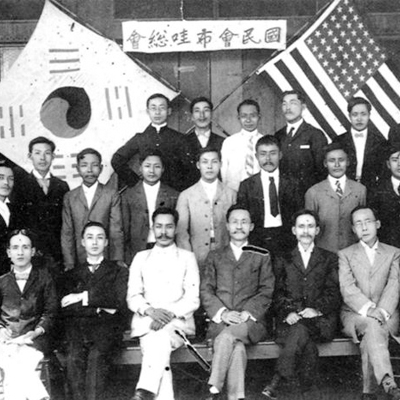
國民會布哇總會

아픈 손가락
칼럼
jeffrey
Diaspora 48. The Goals of Hawaiian and Mainland US Immigrant Organizations

0
2026. 10. 03
- Korean immigration history is intertwined with the independence movement, rooted in Western religion and education, which formed the foundation of modern Korea, but the unavoidable circumstances of early immigrants and international dynamics should not be overlooked.
- Early immigration to Hawaii was not merely a voluntary exercise of rights, but a forced migration driven by the grim domestic political situation and the geopolitical interests of major powers, with the involvement of Western capital and missions interpretable as part of the oppression of colonized peoples.
- Diaspora organizations formed by immigrants served as a focal point for the independence movement beyond mere survival, but their activities were conducted with limited information about the international situation at the time, and the Korean Empire ultimately lost its sovereignty due to secret agreements and treaties among powerful nations.
- The fact that South Korea does not commemorate August 22nd is due to forces fearing the revelation of historical truth; we must confront the reality that all modern Asian treaties were unequal and illegal, and rectify the course of history.
The History of Korean Immigration, Starting from Involuntary Migration
A point to note in the Korean diaspora in the Americas is the history of the independence movement based on Western religion (Christianity). Although the new Western education, which evolved from Western learning (Catholicism), and the Japanese imperial education for imperial subjects were all mixed up both domestically and internationally, the independence movement born from it is connected to the present in that it became the foundation for the birth of the Republic of Korea. Therefore, modern Korea can be interpreted as an independent nation reborn with Western culture. However, this alone cannot fully explain the hardships of modern Koreans. By re-examining the early immigration to Hawaii and the mainland U.S., we must reflect on the life and death of each immigrant group, and the results of their perception and acceptance of others—Westerners and Japanese—in education and religion.
From the perspective of early immigrants who left their hometowns, Christianity and modern education were necessary and sufficient conditions, but could they not have realized modern education and the independence movement while maintaining traditional values domestically? The answer is no. Was this irreversible situation solely the result of internal problems? Absolutely not. From a modern perspective, viewing this period's immigration as a voluntary exercise of rights during the enlightenment period is an excessive generalization and may merely conceal the era when Western education and Western religion, which distorted past history, took on the momentum of independence and rushed towards some goal.
The domestic political situation at the time was far more bleak than generally known, making it impossible to find the identity of an independent government's role. However, we must trace the theory that an entity like the 'Korean Empire,' akin to a phantom trace, was performing the functions of the existing government. With such a colonial historical perspective, it is difficult to properly grasp the great clashes and shocks immediately preceding the birth of the Republic of Korea. Therefore, early modern immigration challenges the official historical argument that government organizations and forms were applied as they were in the pre-modern political system, and I would like to propose the major premise that immigration proceeded under the judgment of irresistible international geopolitics.
In other words, it is a perspective that views the history of a group of people who immigrated to Hawaii as having intervened in a period when a giant Big Brother was adjusting the world's political landscape. It's easy to talk about conspiracy theories, but isn't it difficult to believe that a world-historical conspiracy wasn't involved when a branch of a large ethnic group, healthy in body and mind, who loved nature, were simple and good... and still faithful to human nature, residing in the remote coastal areas of Incheon, a hub for foreign arrivals, boarded Western ships carrying foreigners and traveled thousands of miles to a foreign land, body and soul? If we can confirm with data, not just conjecture, the circumstances where Western businessmen created local banks and recruitment agencies for their movement and earned money under the name of missionary work, then the beginning of immigration is part of the oppression of colonized peoples.
The cultural shock and unimaginable hardships experienced by the immigrants from the remote areas of Joseon in their new land show how much human selfishness and jealousy can inflict suffering on others. War, ultimately, exploits the vulnerability where both perpetrators and victims suffer, and the 'Ethnic Koreans' history of suffering has yielded multi-layered diaspora data spanning across eras, and it continues to be an excellent subject for research even now.
The birthplace of organizations that united diaspora and immigration
From the late 18th century, Western learning, or Catholicism, which gradually encroached upon the entire territory of Joseon (the name Joseon was for domestic use; the name of that land, which hegemonic powers communicated internationally, will be a future research topic), ultimately brought uncontrollable chaos to Joseon. There is even a folk tale that Joseon people could not be defeated by swords and guns, but their minds were converted to Catholicism. Thus, like clothes getting wet in a drizzle, the territory of Joseon eventually lost its defense against the quiet, centuries-long wave of Western religion.
Immigration to Hawaii and the US mainland seems similar yet different in its patterns and characteristics, and there are many aspects that are difficult to judge. I believe the reason for this is that the know-how from the diaspora experience of many ethnic migrations in Victorian Europe was gathered and applied to Hawaiian immigration. There was a stage where, under the long-ingrained influence of Western learning, conditions were established to turn Koreans into international people, or what would now be considered international slaves. Although voluntary and involuntary cases for immigration were combined, and legitimate documents were also prepared, the reality was that most had to work like slaves, being whipped in a foreign land from which they could not return, until they died. This, ironically, serves as evidence that the legality of the immigration cannot be asserted.
The religious perspective on 'early Hawaiian immigration,' which was dominated by Christianity, often misrepresents the gravity of the matter and the facts within the context of world history at the time. The 'Sinminhoe (新民會)' was Hawaii's first Korean community organization, established in Honolulu in 1903 by Hong Seung-ha and others. However, there is disagreement over whether the founder was Im Chi-jeong (林蚩正, 1880~1932) or Hong Seung-ha (洪承河, 1863~1918), and both individuals later returned to Korea. It is possible that Hong Seung-ha, who received religious training in Korea and obtained missionary qualifications to help the innocent people of a fallen nation who were being sold as laborers to a foreign land, or Im Chi-jeong, a Protestant who studied classical Chinese, were dispatched as an advance party to promote 'faith and a better environment.' The reason it is difficult to find descendants of successful Koreans among today's Hawaiian immigrants who established roots at that time is that the presence of Western faith provided belief in extremely poor conditions, not that welfare benefits provided a desirable environment as a result of faith. Considering that Jason Lee (이민석 (한자 표기 미상), 1896?~1971), who supported Ahn Chang-ho's family business and the independence movement with funds raised from operating gambling establishments with mafias in Chicago on the US mainland, was a World War I veteran, it is meaningless to search for the hardships of 'Joseon people-Daehan Empire people-Koreans' solely through records. Where exactly were the battlefields where he was active, and where was his hometown?
Perhaps due to the influence of the labor-intensive environment, the Shinminhoe disbanded due to internal strife in 1904, just over a year after Korean immigration to Hawaii began. The founder returned home and the founding organization dissolved, but the remaining members would have needed a system to run their organization. Who is responsible for the fact that these people, who left their homeland entrusting their fate to a Western God, after the disappearance of traditional Korean community self-governance regulations like 'Hyangyak and Dure,' had to devise self-help measures to promote self-governance among overseas Koreans and anti-Japanese sentiment in their new land? The individual? The nation? Whose responsibility is it, really? What was the nation doing in this unprecedented situation where the Koreans, whose natural and spiritual essence had long been ingrained in their genes, chose a Western God instead of the traditional Gods embodied in their bodies, and chose their livelihood within the realm of their new faith? Perhaps our traditional community was the first to face a situation where it could not protect them, and perhaps the system paralysis came even before it affected the common people. That is, the operators of the national system—the aristocrats, officials, and public servants—might have been the first to die or betray their country. Regardless, those who had gone to a distant foreign land needed a leader for their survival.
After the outbreak of the Russo-Japanese War, the 'Gongnip Hyeophoe (共立協會)' was founded in San Francisco on April 5, 1905. The Encyclopedia of Korean Culture states that the founders of the Gongnip Hyeophoe were Ahn Chang-ho, Song Seok-jun, Jeong Jae-gwan, Im Jun-gi, Lee Kang, Im Chi-jeong, and Bang Hwa-jung, among others. Approximately 49 promoters are identified in the records, most of whom had moved from Pyeongnam, Pyeongbuk, and Hwanghae regions to San Francisco via Hawaii between 1902 and 1903, before the Russo-Japanese War. Their immigration route was from various regions in the North → Jemulpo → various parts of Japan → Honolulu → San Francisco → Riverside. During a voyage of about twenty days, they crossed the Pacific from Nagasaki, Kobe, and Yokohama in Japan (it should be noted that this voyage route was not necessarily the same as current locations, but here we only emphasize that modern and historical place names were not always identical). Meanwhile, the homeland was stained with the blood of compatriots, and the colonial hegemony of the strong preying on the weak began to secure territories in lands where indigenous people had disappeared. It must be kept in mind that they did not turn their backs and leave because their hometowns were peaceful and problem-free.
As the Russo-Japanese War (February 1904 - September 1905) and the Eulsa Treaty (Second Japan-Korea Agreement, November 1905) began to threaten the lives and survival of civilians, immigrants trained and inclined towards Protestant faith and education chose to immigrate to the US mainland after arriving in Hawaii due to various unfavorable circumstances. This choice likely became a survival route for scholars with a classical Chinese education who had nowhere to go in Korea. It was a period of about 10 years during the Russo-Japanese War, following the Sino-Japanese War, a time that saw the 'Donghak Revolution - Gabo Reform - Eulmi Incident'! At this point, it might be fair to say that the entire country had already fallen into the hands of imperial Japan, making it difficult to lead a normal life in one's birthplace. Of course, the events and wars of this period were not set on the Korean Peninsula.
The homeland was ruined, and the scattered compatriots, seeking their own way to survive, agreed to organize diaspora groups as a self-help measure. However, they did not realize which force had taken away the civilization of their thousands-year-old nation. Whatever the nature of the organization, survival must have been the goal in the early days, so they had to focus on making a living and educating their children. But in Hawaii and San Francisco, neither they at the time nor we in modern times had the luxury of realizing the significant regional differences that prevented them from providing physical resistance and material support to the civil war-like situation under colonial rule in their homeland. The claim that Korean Americans and their organizations served as a kind of 'overseas supply base' is a difficult idea to conceive even now, when airplanes freely carry travelers. If this idea had been put into practice, that space would not be today's Hawaii. If the political identity of the Republic of Korea is to be rooted in the past Joseon, the policy foundation based on colonial historiography will have to be reconsidered.
The Gongnip Hyeophoe (Public Association) took it upon itself to act as an autonomous organization replacing the Korean Empire consulate. In May 1906, it held a general council meeting and selected Song Seok-jun as president, Jeong Jae-gwan as secretary, and Ahn Chang-ho for educational affairs. Recognizing the need for unity among Korean Americans to restore national sovereignty, they decided in January 1907 to establish a unified organization. Ahn Chang-ho, Lee Kang, Lim Jun-gi, Shin Dal-yun, and others gathered in Riverside, California, to initiate the 'Daehan Shinminhoe' (Korean New People's Association). Although the Korean Empire appeared to have self-strengthening power, in reality, within the country, the Gaehwapa (pro-Japanese faction) and pro-Russian factions were vying for power, and national affairs were overwhelmed. Even then, with no clear understanding of how things were being run, politics was being taken over by overseas forces fighting over an ownerless land.
Looking back at the history of how Koreans in immigrant communities have each found their voice, the framework of the international environment surrounding the early history of immigration, limited to 'Korean Peninsula-Japanese Archipelago-Hawaii-San Francisco,' feels far removed from reality. The premise that such a small land became a battleground for various countries is an unacceptable absurdity, and the reason why the people of that land would become like orphans in the international community, like borrowed sacks of barley, is not clear, which is a question mark in Hawaiian immigration.
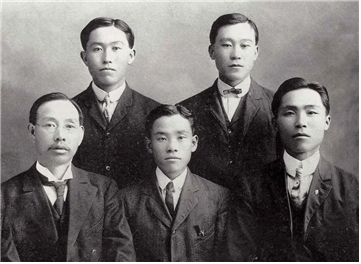
Back row, from left: Lim Jun-ki, Jeong Jae-gwan; front row: Song Seok-jun, Lee Gang (李綱), Ahn Chang-ho.
We can see that Korean diaspora established a considerably global network, with organizations like the 'Daehanin Gukminhoe (大韓人國民會)' formed in San Francisco in 1910, as well as others such as the Korean Mutual Assistance Association and the Gukminhoe, actively collecting funds for the independence movement and supporting independence efforts in Manchuria and the Maritime Province. If this expansion continued, one cannot help but wonder why the Korean will to serve common values and goals could not resist the powers of the West and Imperial Japan. Before liberation, more than 45 mixed or women's organizations spread across the American mainland, various parts of Hawaii, and even South America. At this point, the Korean diaspora might not have been a coincidence but a necessity in the international community. However, a different perspective is needed to interpret the locations of each region and the changes in organizations.
While social clubs and anti-Japanese movements were based on Western education and religion, Korean Americans, separately, took on a leading role in the independence movement of their homeland. Among Korean Americans, around 1907, public opinion was reportedly growing that a war between the United States and Japan was imminent, and this should be seized as an opportunity to restore Korea's national sovereignty and wage a war of independence. This is not a simple matter. Although radio and telegraph played a role in uniting Korean Americans at the time, the commercial use of submarine cables as a global communication network was not an easy service to use without funds. How did the Korean community obtain information about the conflict between the United States and Japan for the sake of independence?
In 1905, the 'Gongnip Sinbo,' the official newspaper of the 'Gongnip Hyeophoe,' a social club in San Francisco, quickly reported on domestic news, often publishing critical editorials that criticized Korean enlightenment activists for only advocating for self-strengthening theories, such as promoting education and industry, and not participating in the righteous army war. As Japan, victorious in the Russo-Japanese War, expanded its influence into Manchuria, conflicts grew with the United States, which was pursuing economic interests in China. In the American West (including other regions beyond the current American West), issues of Japanese immigrant exclusion and the segregation of Japanese students in schools escalated into diplomatic friction. The pressure on Japan led Koreans to hope that a US-Japan conflict could be an opportunity to shake Japan's control over Korea. That war would manifest a generation later, in the 1941 Attack on Pearl Harbor. Unraveling where the roots of this conflict lie is a task for the future.
The resolution of an incident begins with identifying its origin.
While Koreans' overseas migration and anti-Japanese movements were actively unfolding abroad, the following agreements were made in neighboring countries that invaded Joseon.
August 22, 1904: The Japan–Korea Protocol of August 1904
July 29, 1905: Taft–Katsura agreement
November 17, 1905: The Japan–Korea Treaty of 1905
February 15, 1907: The Gentlemen’s Agreement of 1907
July 24, 1907: The Japan–Korea Treaty of 1907
November 30, 1908: Root-Takahira Agreement
August 22, 1910: The Japan–Korea Treaty of 1910
Leading up to the loss of the Korean Empire's sovereignty, or national governing power, on August 22, 1910, Japan and the international community first signed an agreement for the employment of foreign advisors for Korea (The Japan–Korea Protocol of August 1904, on August 22, 1904). For reference, Japan signed a similar foreign employment treaty on July 29, 1958, known as the 'Treaty of Amity and Commerce (United States–Japan) or Harris Treaty.' Long before the Meiji Restoration, which boasted Japan's opening, modernization, and civilization, foreigners freely stamped their approval on the remodeling of Japan, and that learned effect was directly applied to the Korean Empire.
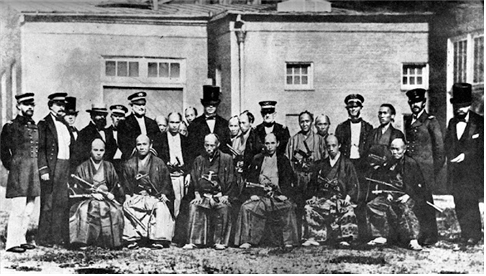
On March 31, 1854, the Japan-US Treaty of Peace and Amity (or Kanagawa Treaty) between Perry and the Edo Shogunate
Next is the Katsura-Taft Agreement. It's a secret agreement, not a treaty, because Japan's primary desire was to 'seize diplomatic power so that Korea could not attract other great powers again,' and America's primary desire was to 'secure its rule over the Philippines while maintaining the balance of power in the Chinese market and East Asia.' This ambiguous mutual claim between the US and Japan is the reason. This Katsura-Taft Agreement, often known as the US giving Korea to Japan in exchange for the Philippines, is easier to understand if interpreted as the US installing Japan as the practical ruler of the Korean Empire, while the US would oversee its Asian colonies from the Philippines. However, this is not the whole story of this secret agreement.
The Eulsa Treaty (Second Japan-Korea Convention) was a treaty that stripped the old Joseon, now the Korean Empire, of its diplomatic rights. And the US and Japan, through an unofficial agreement, the Gentlemen's Agreement, agreed to prohibit Japanese labor immigration to the US and not take any action against Japanese immigrants already residing in the US. This part is easily understood as the implementation process of the Katsura-Taft Agreement. It can be seen as a series of transactions between the US and Japan over territories in the Pacific region. At this time, Korean residents must have diligently tried to assess the international situation, but further verification is needed to determine how much quality information they were able to obtain.
Following this, after the Japan-Korea New Agreement (Jeongmi 7-Article Treaty) which dissolved the administrative power and military of the Korean Empire, there was the Root-Takahira Agreement, which officially recognized the territorial arrangements between the US and Japan, and approved the independence and free trade of Qing, the US annexation of Hawaii and administration of the Philippines, and Japan's control over Manchuria. At this time, the symbolic terms 'Korean Empire,' 'Joseon,' and 'Korea' officially disappeared from the stage of treaties. Finally, leading up to the Japan-Korea Annexation, countless Joseon public officials—nobles, yangban, and imperial family members—were completely sacrificed, and righteous armies did not hesitate to give their lives. Conversely, traitors volunteered to be puppets of foreign powers, and their third-rate culture is still at work today.
August 22nd is a tragic anniversary for a civilization that completely disappeared from the face of the earth over six years, from the first Korea-Japan agreement, which began with the recognition of special privileges for foreigners, to the loss of sovereignty. The reason why the Republic of Korea does not commemorate this day is that there are still forces in the three branches of government who fear that many historical secrets will be exposed.
All treaties in modern Asia are unequal treaties and are illegal, so the government of the Republic of Korea needs to set the historical record straight.
댓글
( 0 / 500 )
최병철
8
초기 한인 이민을 단순히 ‘더 나은 삶을 찾아 떠난 자발적 이주’로만 설명해서는 당시의 국제정세와 식민지화 과정을 제대로 이해하기 어렵다고 봅니다. 하와이와 미주 한인사회가 어떻게 독립운동의 조직적 기반으로 변해갔는지, 이민·종교·교육·국제정세를 함께 놓고 살펴볼 필요가 있다는 문제의식에 공감합니다.
( 0 / 500 )
Jenny
6
미주 한인의 역사를 미국에서 성공한 이민자의 이야기로만 쓰면 가장 중요한 부분을 놓치게 됩니다. 초기 이민자들에게 미국은 꿈의 땅이기 전에 생존을 위해 선택한 낯선 땅이었습니다. 농장과 사탕수수밭에서 힘겹게 일하면서도 동포들이 돈을 모아 고국의 독립운동을 지원했다는 사실을 기억해야 합니다.
( 0 / 500 )
komando
4
특히 하와이 이민을 종교사나 노동이민의 관점에만 가두지 않고 러일전쟁, 가쓰라-태프트, 미일관계, 을사늑약과 연결해서 보자는 시도가 흥미롭습니다. 다만 당시 이민을 ‘국제적 음모’로 단정하기보다는 실제 모집 과정과 계약서, 선박 기록, 금융·인력회사 자료를 하나씩 대조한다면 훨씬 강력한 역사적 논증이 될 것 같습니다.
( 0 / 500 )
花無十日紅
5
미국에서 태어난 후손의 입장에서 보면 할아버지 세대가 왜 그렇게 교회와 한인회, 학교를 중요하게 생각했는지 이제 조금 이해할 것 같습니다. 낯선 나라에서 언어와 문화가 다른 사람들 사이에 살아남으려면 공동체가 필요했을 것입니다. 그런데 그 공동체가 단순한 친목을 넘어 고국의 독립을 위해 움직였다는 점에서 초기 미주 한인의 역사는 특별합니다.
( 0 / 500 )
모란
5
우리 할아버지 세대가 미국으로 건너온 이야기를 들으면 ‘기회를 찾아 떠났다’는 말만으로는 부족합니다. 고향에서는 나라가 흔들리고 있었고, 타국에서는 말도 문화도 낯선 노동자로 살아야 했습니다. 그런데 그곳에서 교회를 세우고 학교를 만들고 동포끼리 서로 돕고 독립운동까지 이어갔다는 사실이 오늘의 미주 한인사회가 어디에서 시작됐는지를 말해줍니다.
( 0 / 500 )
marinboy
4
흔히 미국 이민을 성공의 역사로 이야기하지만, 처음 이 땅을 밟은 한인들에게는 낯선 언어와 인종차별, 고된 노동이 먼저였습니다. 그럼에도 서로 의지하며 한인 공동체를 만들고 학교와 교회를 세우고 독립운동까지 이어갔습니다. 미주 한인의 역사는 단순한 이민사가 아니라 나라를 잃은 사람들이 타국에서 정체성과 공동체를 지켜낸 역사라고 생각합니다.
( 0 / 500 )
pixel89
4
사람들이 고향을 떠났다는 사실보다, 떠난 뒤 스스로 공동체를 만들고 독립운동의 네트워크를 구축했다는 데 있다고 생각합니다. 공립협회와 대한인국민회 같은 조직이 교육·생계·자치와 독립운동을 동시에 수행했다는 점을 보면 초기 이민사는 대한민국의 해외 기원을 이해하는 중요한 창구가 됩니다.
( 0 / 500 )
joonggil
3
글에서 가장 생각하게 만드는 대목은 ‘누구의 책임인가’라는 질문입니다. 국가가 제대로 작동하지 못하는 상황에서 백성들이 생존을 위해 국경 밖으로 밀려났고, 그곳에서 다시 공동체와 지도체계를 만들어야 했다는 사실은 오늘날의 디아스포라 개념으로도 다시 볼 만합니다.
( 0 / 500 )
에델바이스
2
어느 농장에서 일했는지, 누가 교회를 세웠는지, 누가 독립운동 자금을 냈는지 같은 이야기가 집안마다 전해집니다. 그래서 초기 한인 이민사를 제대로 이해하려면 정부 문서뿐 아니라 이민자들의 편지와 사진, 교회 기록과 후손들의 구술도 함께 살펴봐야 한다고 생각합니다.
( 0 / 500 )
신고내용
신고내용을 선택해주세요
회원비난/비하/욕설글 및 댓글도배성 게시물저작권 침해/불법자료 유출허위사실유포개인정보 유출.사생활 침해무단광고/홍보음란물 및 도박 불법 광고물범죄행위 관련 글불법행위 관련 소개물품 판매 및 사기글악성코드 및 스파이웨어 유포기타 사유 및 운영진 판단


비밀번호를 잊으셨나요?
Sign in with Google
All information provided by us is free of charge and is for the public good.