品

Corea든 Korea든, 품격이 먼저다
Whether Corea or Korea, dignity comes first.
Whether Corea or Korea, dignity comes first.
Now
지금
751 Diaspora
Heritage
유산
Humanity
인문
Mirengsi
未冷尸
Politics
정치
Media
언론
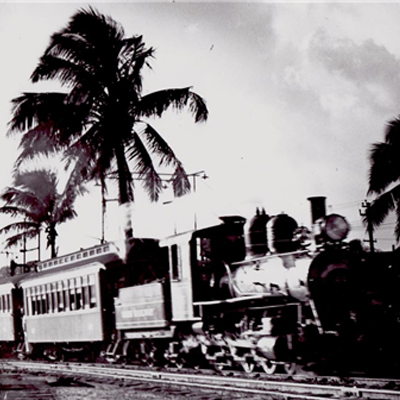
사탕수수 철도 시대, Benjamin Franklin Dillingham이 설립한 Oahu Railway & Land Company(OR&L)

아픈 손가락
칼럼
jeffrey
46. Why the Korean Diaspora in the Americas Became a Base for the Independence Movement

0
2026. 07. 23
- The Korean diaspora's independence movement in the Americas leveraged the U.S. as a developed nation and a diplomatic hub, focusing on fundraising and diplomatic activities as an "overseas supply base."
- Koreans in the U.S. organized groups like the Korean National Association to pursue independence, but this must be understood within the complex geopolitical context of U.S.-Japan relations and the background of Korean immigration.
- The author argues that "restoration movement" is a more appropriate term than "independence movement," urging a critical re-examination of colonialist historical errors and Rhee Syngman-centric interpretations in historical narratives.
- The Korean independence movement in the Americas saw figures like Park Yong-man attempt armed struggle, only to be sacrificed amidst conflict with Rhee Syngman, illustrating the complex internal dynamics of the movement.
- Despite unfamiliar surroundings, the Korean community in the Americas showed strong solidarity by forming organizations like the Shinminhoe and Gonglip Hyeophoe, which led to public support for an independence war and criticism of the enlightenment movement back home.
Three key aspects of the Korean diaspora in the Americas that deserve particular attention are education, religion (Christianity), and the independence movement. Before delving into education and religion, I would like to first examine the independence movement, which was the most passionate endeavor of the first Korean immigrants to the United States.
The nature of overseas ethnic organizations before 1919 was
Koreans who immigrated to China or the Maritime Province also engaged in independence movements in foreign countries, but their nature and activities differed significantly when compared to the United States. At the time, the United States was the most advanced nation, a hub of Western civilization, and the main stage where fierce diplomatic competition among major powers unfolded. Furthermore, as a direct party to the later war with Japanese imperialism, the United States was the country that most influenced Korea's independence. Before accepting the established theory that the United States was hostile to imperial Japan, one must also understand the history of Koreans who moved to China, the Maritime Province, and Gando, but that is a top secret of modern geopolitics. Unless one doubts the history of the US, Soviet Union, China, and Japan surrounding this small divided Korean Peninsula, no individual or nation will voluntarily and clearly explain it. There is no way to recover history other than for Koreans themselves to seriously re-examine historical issues.
While the independence movements in China and the Maritime Province were fierce battlegrounds involving direct combat with the Japanese army, Korean Americans in the United States, unable to directly encounter the Japanese army, focused more on serving as an 'overseas supply base.' Although it requires individual comparison to understand what other advanced colonial empires were doing while Japan advanced into China, we should carefully examine historical narratives that focus on how Korean Americans, who had established themselves early in the United States, actively raised funds for the independence movement and supported the independence movements in Manchuria and the Maritime Province. A representative ethnic organization of Korean Americans is the Korean National Association (대한인국민회), formed in San Francisco on May 10, 1910. It was a leading overseas independence organization that organized Koreans in the Americas, Hawaii, Mexico, Manchuria, and Siberia, and was the most organized Korean community institution among the ethnic organizations that emerged after the loss of national sovereignty. I will introduce the organization of overseas ethnic groups before the establishment of the Korean National Association in the next installment.
The fact that the United States and Japan were hostile, and we were able to indirectly assist the anti-Japanese movement within US territory, naturally leads one to assume that the US and we shared a common enemy in Japan. However, we need to examine whether the formation of these Korean organizations in the Americas was overlooked by the US and Japan with the intention of having them engage in a war of attrition against Japan. Of course, this is a simplistic interpretation. A more complex interpretation, as mentioned at the outset, would require delving into the fundamental reasons why Koreans had to scatter to China, Manchuria, the Maritime Province, Russia, and other places due to successive invasions by Western powers and imperial Japan. We need to ask ourselves whether Japan's enlightenment theory, which preemptively opened up to Western military pressure, is truly all we know and the complete truth, and what is the basis for our unquestioning trust that it contains no falsehoods. The current situation, where we uncritically accept the claims and logic of the aggressors, could be due to the flawed understanding of historians and the cognitive errors of all of us who learned it through public education. All events and data require individual or comprehensive critical analysis of historical sources. I wonder which institutions in South Korea discuss the various issues of modernization.
Why Koreans in the Americas wore suits while Koreans in China engaged in armed struggle
The independence movement of Koreans in the Americas has another aspect distinct from the independence movements in China or the Maritime Province, in that it continuously and long-term waged a 'diplomatic war' for Korea's independence on the largest 'diplomatic stage' that was the United States. However, the interpretation that there is no need to re-evaluate the nature of the 'independence movements' of the Chinese, Maritime Province, and American diasporas from the perspective of 'contribution theory' – which asks which 'overseas region' contributed more to Korea's independence – is overly simplistic and smacks of official control. It is merely an excuse to disparage the histories of activists who engaged in activities during the years of oppression, whether it was an independence movement or an anti-Japanese armed struggle, and to justify a climate that does not research them. Rather, it is more important to accept that the role and patterns of the Korean independence movement inevitably varied depending on the geographical location and political situation of specific overseas regions.
However, fundamentally, the nature of activities of Koreans abroad, outside their home territory, differs significantly between the United States and China, so it is necessary to understand these differences. What does the historical record mean when it states that Koreans in the U.S., without an enemy like imperial Japan to fight, focused on diplomatic warfare, political issues, education, and publishing, while Koreans in China engaged in armed uprisings? According to colonial historians, given the limited scope of action in China, a country that has been subservient for thousands of years, why were Koreans able to acquire guns so easily or with such difficulty?
In 1909, Park Yong-man (朴容萬, 1881(?)~1928), also known as Woosung (又醒), a leader who established the Korean Youth Military School to train armed activists on that desolate Nebraska farm and founded the 'Great Joseon National Army Corps (大朝鮮國民軍團: a military training camp for the Korean National Association on Oahu, Hawaii, abbreviated as National Army Corps or National Army),' traveled between Nebraska, Honolulu, and San Francisco, encountering Syngman Rhee. However, in 1927, he was assassinated in Beijing (北京), framed as a pro-Japanese collaborator due to Japanese machinations. He, who traveled from the U.S. to China, ultimately failed to achieve his goals and was killed. Few national leaders who were involved with Syngman Rhee lived well. It's fair to say that the shadow of death followed Syngman Rhee.
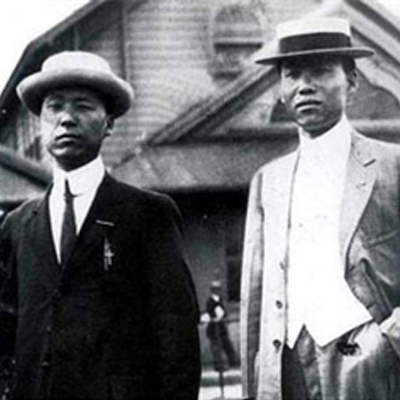
In February 1913, Syngman Rhee (left) and Park Yong-man posed side-by-side at the Honolulu train station in Hawaii. History has a script, and photos are taken focusing on figures who are meant to be recorded. Although parts of the Honolulu railway opened in 1889, it was all dismantled by 1947. Currently, in addition to restored trains for tourism, the Honolulu light rail operates. On August 8, 2023, the Maui wildfires thoroughly burned thousands of old town buildings. When necessary, fire is an essential element for the restoration (?) of human civilization or the construction of a new divine realm.
No Paek-rin (盧伯麟, 1874(?)~1925), who created the Great Joseon National Army with Park Yong-man, also did not have a good relationship with Syngman Rhee. By the 1920s, the armed anti-Japanese front faced extreme difficulties due to financial problems. While modern girls and modern boys in Gyeongseong (京城) were dancing joyfully and dressed in Western clothes, parading as fashionable figures, the educated class, who worked on the anti-Japanese front until the end of their lives, never experienced a comfortable life abroad. Only one person, Syngman Rhee, can be seen as an exception, which I will explain later. Thus, nationalist figures who used all sorts of means, both in America and China, gradually faded away. Nevertheless, permission for anti-Japanese armed leadership and spiritual enlightenment education continued to be granted. Perhaps the best way for America, in its own way, and China, in its own way, to identify anti-Japanese Koreans was to grant permission and assistance, thereby exposing facilities and personnel. Even if they wore Western suits or qipaos, the work of identifying Koreans who had shed their traditional hats and cut their hair continued.
The regions where many nationalist organizations outside of Asia were established all had place names written in Chinese characters, revealing a long history of exchange between the West and the Chinese civilization sphere. How should we interpret the fact that even the United States and Russian territories once had place names written in Chinese characters? Classical Chinese was a powerful tool of the strict class system we once used as a written language. Although the history written in Classical Chinese was scattered with the destruction of the class system, and for some it was a good thing, while for others it was a time when the heavens collapsed along with thousands of years of ancestral shrines, why did history record that all our compatriots who went abroad uniformly engaged in an 'Independence Movement'? We must remember that the result of this consistent record was the thesis that 'Syngman Rhee is the father of independence.' Before the Japanese invasion, Western empires such as Britain, France, the United States, and Germany (and others) all collaborated to accelerate the downfall of Joseon, and we struggled to survive. That struggle ultimately led to colonization by Japan, so the correct term should be 'recovery' (收復, recover country), not independence. If something was taken, it should be reclaimed, so why is the term 'independence' solidified as the official language? The work of moving beyond colonial historiography begins with identifying the hidden meanings within wordplay.
The culture of ethnic group organization within the United States is influenced by others
As soon as Korean Americans arrived in the United States, they poured their passion and soul into the 'independence movement' rather than 'food,' even though they were busy adapting to a foreign country. It was a life of slavery where they were whipped, let alone fed, so it was a time when the best they could do was survive without starving to death, whether they were commoners or descendants of nobles. At this time, the meaning of 'independence movement (獨立運動)' rather than 'restoration movement (收復)' is different in nature, so it is not easy for it to become a common slogan unless it is government-sponsored. If we add the concept of space, restoration can be interpreted as reclaiming one's original homeland, and independence can be interpreted as moving or relocating to another place, leaving the old land. In 1897, the year when nationalist intellectuals and ordinary immigrants alike were all engrossed in the word 'independence' and even built the 'Independence Gate,' it is not interpreted as a situation where people leaving their homeland could uniformly achieve independence. The situation where I pack my bags and leave is independence, and reclaiming the lost land has the meaning of restoration, so we should carefully consider what our independence means.
After January 1903, Koreans who arrived in Hawaii were assigned to sugarcane plantations in Hawaii and had to work more than 10 hours a day. It was so difficult to endure the harsh labor of the collective farms that 938 people gave up midway and returned home. Records that can prove the thousand people who returned midway have not yet been found. It is necessary to first verify whether all of them returned properly or were sold to a third country. Foolish Koreans who trust colonial data cannot even fathom how much colonial historiography makes people fools.
Anyway, Korean Americans in Hawaii formed independence movement organizations almost immediately after arriving in an unfamiliar America. Koreans staying in Hawaii formed community groups centered around each plantation camp to promote fellowship and unity. The first ethnic movement organization formed in Hawaii was the 'Shinminhoe,' established in Honolulu in 1903 by Hong Seung-ha and others. Subsequently, more than 20 organizations were formed, including the Ewa Friendship Association, Hyeolseongdan, Jaganghoe, Gongjinhoe, Euiseonghoe, and Buheunghoe. Although the Shinminhoe was disbanded in 1904 due to internal strife, the 'Ewa Friendship Association,' formed at the Ewa plantation, engaged in activities to strengthen member solidarity and promote patriotism, such as publishing a newsletter.
Meanwhile, in San Francisco on the mainland U.S., about 20 Korean ginseng merchants and international students lived there in 1903. To foster fellowship and mutual aid, they formed a friendship association in September 1903. Key figures in the association included Ahn Chang-ho, Lee Kang, and Lim Jun-gi. The friendship association later played a role in finding employment for Koreans migrating from Hawaii to the mainland U.S., and it established night schools for them, teaching English, the Bible, history, and geography. Such a level of solidarity and action among Koreans would require an unimaginable number of people and capital to achieve. What kind of place was Hawaii that Koreans chose to make it their new stage in life?
After the Russo-Japanese War in 1904, Koreans in the Americas keenly felt the need for a self-governing Korean organization. Consequently, 49 individuals, including Ahn Chang-ho, Song Seok-jun, Im Jun-gi, Lee Kang, Im Chi-jeong, and Bang Hwa-jung, founded the 'Gongnip Hyeophoe' (Korean National Association) in San Francisco on April 5, 1905, advocating for mutual aid among compatriots, support in times of hardship, and anti-Japanese movements. This Gongnip Hyeophoe was a crucial organization that must be noted when examining the independence movement activities of Koreans in the Americas, and it led the Korean community on the American mainland at the time. When Japan began to control Koreans in the Americas after the Eulsa Treaty of 1905, the Gongnip Hyeophoe took on the role of a self-governing body to replace the consulate of the Korean Empire to prevent this. In May 1906, the Gongnip Hyeophoe held a general assembly council and elected Song Seok-jun as president, Jeong Jae-gwan as secretary, and Ahn Chang-ho for educational affairs. Furthermore, recognizing the need for unity among Koreans in America to restore national sovereignty, the Gongnip Hyeophoe decided to establish a 'Unified Alliance Organization' in January 1907. Thus, Ahn Chang-ho, Lee Kang, Im Jun-gi, Shin Dal-yun, and others gathered in Riverside, California, to initiate the 'Daehan Shinminhoe' (Korean New People's Association).
Koreans in the Americas played a leading role in the independence movement of their homeland. Among Koreans in the Americas, public opinion was already growing around 1907 that a war between the United States and Japan was imminent, and that this should be seized as an opportunity to restore Korea's national sovereignty and prepare for an independence war. At the time, the Gongnip Hyeophoe's official newspaper, 'Gongnip Shinbo,' frequently published editorials criticizing domestic enlightenment activists for only promoting theories of strengthening national capabilities, such as education and industrial development, and not participating in the righteous army war. It is said that the Gongnip Hyeophoe established branches in the Maritime Province of Siberia and Manchuria first to build independence army bases using these branches ('History of the Korean Independence Movement: The Struggle Towards Liberation and Nation-Building' by Park Chan-seung, Yeoksa Bipyeongsa, 2014).
How did the atmosphere of Korean Americans in unfamiliar foreign lands like Hawaii, San Francisco, and Nebraska, advocating for independence, creating periodicals, and encouraging participation in war rumors, spread locally and become public opinion? Although telegraph lines reached even those distant places, what was the real reason America granted land for Joseon's independence and encouraged immigration? Readers must have the courage to ascertain the facts about the reality of history. If it were New York or Chicago, it would be proven with skyscraper photos, but was it because they couldn't afford expensive land? How tragic and miserable the modernity of our ancestors ended... All these organizations swirled within one large net, changing for Syngman Rhee. In the next installment, we will explore the nature of numerous other organizations that evolved after the Gongnip Hyeophoe.
댓글
( 0 / 500 )
honghong
9
미주 한인들이 총을 든 대신 외교와 모금을 맡았다는 점이 특히 인상 깊었습니다. 만주와 연해주의 무장투쟁만큼이나 해외에서 독립자금을 모으고 국제 여론을 만드는 일도 중요한 역할이었다는 사실을 다시 생각하게 됩니다.
( 0 / 500 )
eunjung
6
공립협회와 대한인국민회가 어떻게 발전했는지 흐름을 이해하는 데 도움이 되는 글이었습니다. 다만 일부 해석은 기존 학계의 견해와 차이가 있는 만큼, 다양한 사료와 연구를 함께 비교해 보면 더 균형 있게 볼 수 있을 것 같습니다.
( 0 / 500 )
purple
8
하와이 사탕수수 농장에서 고된 노동을 하면서도 교육과 단체 조직, 독립운동을 이어갔다는 점이 가장 감동적이었습니다. 생존조차 쉽지 않은 환경에서 공동체를 만들고 조국을 위해 헌신했던 선조들의 의지가 존경스럽습니다.
( 0 / 500 )
最强
6
독립운동을 무장투쟁만으로 바라보지 말고 외교·교육·언론 활동까지 함께 살펴봐야 한다는 문제의식에는 공감합니다. 미주 한인 사회가 남긴 신문, 회보, 모금 기록 등도 더 많이 연구되고 알려졌으면 좋겠습니다.
( 0 / 500 )
南海
6
글이 던지는 여러 질문들이 흥미로웠습니다. 특히 미국 한인 사회가 어떻게 그렇게 빠르게 조직화될 수 있었는지, 당시 국제정세와 미국의 정책은 어떠했는지 앞으로 이어질 다음 편도 기대됩니다.
( 0 / 500 )
leesungwoo
4
미주 한인 디아스포라를 단순한 이민사가 아니라 독립운동의 해외 거점으로 조명한 점이 인상적이었습니다. 그동안 잘 알려지지 않았던 공립협회와 초기 한인단체들의 활동을 더 깊이 공부해 보고 싶어졌습니다.
( 0 / 500 )
namunara
4
안창호, 박용만, 노백린 등 서로 다른 노선을 걸었던 독립운동가들의 관계를 함께 살펴볼 수 있어 흥미로웠습니다. 독립운동은 한 사람의 업적이 아니라 수많은 인물들의 희생과 갈등, 협력이 함께 만든 역사라는 사실을 잊지 말아야겠습니다.
( 0 / 500 )
U2king
3
하와이에 도착한 이민자들이 먹고사는 문제보다 먼저 학교를 세우고 단체를 만들고 기관지를 발행했다는 사실이 놀랍습니다. 오늘날 해외 한인사회가 교육과 공동체를 중시하는 문화도 이 시기부터 이어져 온 것이 아닐까 생각됩니다.
( 0 / 500 )
AI-74
2
근대사를 바라보는 시각은 하나로 고정될 수 없다는 점을 다시 느꼈습니다. 새로운 문제 제기를 계기로 기존 연구와 반론, 국내외 자료들을 함께 읽어보면서 스스로 판단하는 자세가 가장 중요하다고 생각합니다.
( 0 / 500 )
KYM71
0
역사는 다양한 해석이 가능하지만 결국 가장 중요한 것은 사료를 얼마나 치밀하게 검토하느냐라고 생각합니다. 기존 통설이든 새로운 주장이나 가설이든 모두 객관적인 자료를 통해 검증하는 과정이 필요하다는 점을 다시 느꼈습니다.
( 0 / 500 )
신고내용
신고내용을 선택해주세요
회원비난/비하/욕설글 및 댓글도배성 게시물저작권 침해/불법자료 유출허위사실유포개인정보 유출.사생활 침해무단광고/홍보음란물 및 도박 불법 광고물범죄행위 관련 글불법행위 관련 소개물품 판매 및 사기글악성코드 및 스파이웨어 유포기타 사유 및 운영진 판단


비밀번호를 잊으셨나요?
Sign in with Google
All information provided by us is free of charge and is for the public good.