品

Corea든 Korea든, 품격이 먼저다
Whether Corea or Korea, dignity comes first.
Whether Corea or Korea, dignity comes first.
Now
지금
751 Diaspora
Heritage
유산
Humanity
인문
Mirengsi
未冷尸
Politics
정치
Media
언론
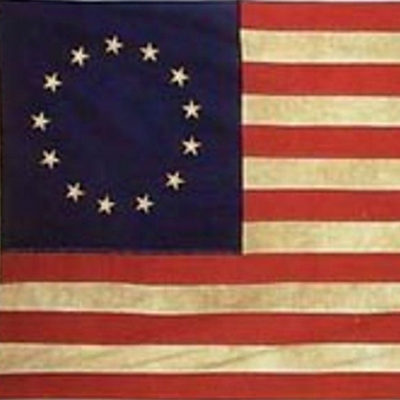
Betsy Ross flag 1777

아픈 손가락
칼럼
jeffrey
44. Starting the Korean American Diaspora

0
2026. 03. 10
I have a sense of self-reproach, unsure if the 'aching finger' series we've looked at so far has deeply depicted the painful wounds of Korean society around the time of the Korean War, when poverty was commonplace and war orphans were adopted overseas—starting with the lives of 'Yanggongju' (Korean women who worked for the U.S. military), maids, and female factory workers, and extending to Koreans from the Goryeo and Joseon dynasties. However, we are now moving on to a new diaspora, Korean Americans. To escape the shock of discovering the existence of over 8 million Korean diasporas, we must delve into it.
Positioning the Korean Diaspora
'Miju' is a Chinese transliteration of America. In an era when all world history was recorded in Chinese characters, the United States was written as '亞墨利加 (Amukliga)' or '美洲 (Miju).' The character '洲 (ju)' with the water radical refers to a continent. Manchuria is also written as '滿洲 (Manju).' I wonder how readers perceive the essence of the Korean migration, the Korean diaspora, which had to cross continents and scatter in both Miju and Manju. Perhaps, due to the establishment of modern immigration culture, moving one's livelihood is considered natural. Experts believe that the history of the Korean diaspora began around 1860, towards the end of the Joseon Dynasty, with the migration and settlement of poor farmers in areas such as Northwest Gando (西北間島), across the Amnok and Tumen Rivers, as well as in Southern and Northern Manchuria and the Russian Far East (윤병석 2005). In the same year, looking at the Annals of the Joseon Dynasty, it is not difficult to imagine a dual world where records and reality follow completely different paths. Amidst the changes in the civilization system, where place names changed from Chinese to English, from English to Russian and Japanese, Koreans scattered to various parts of the world. At this time, the 'livelihood diaspora' was dominant, with people exhausted by poverty and hardship at the end of the Joseon Dynasty crossing borders in search of 'food.'
However, the invasion of Japanese imperialism became a decisive opportunity to change the history of the Korean diaspora from a livelihood-based diaspora to one of ideology and struggle. This means that Japanese imperialism can be seen as having emerged to complete the Korean diaspora. If the Jews, the originators of the diaspora, were expelled from Jerusalem by the Roman army and forced to wander for thousands of years, our Korean people had no choice but to be trampled under the boots of the Japanese army and pushed overseas. In the meantime, we have naturally taught the Israeli diaspora as a tragedy in human history, but as we can see from the ongoing US-Israeli attack on Iran, the US is maintaining its hegemony, and Israel is the originator of war provocation aimed at a holy war. Why are we not a war-provoking country, but we have been deprived of the status of the diaspora by Israel and become a nation scattered around the world? Why have we learned about Israel as a victim country or a victim nation? This is because the Protestant church preached Israel's arbitrary interpretation of history. How much did Christianity sing about the suffering of Israel in the 19th century? Regardless of whether it is true or not, why did Koreans have to empathize with Israeli history as if they were solely responsible for reason, emotion, theory, and ideology? Whatever it is, the Protestant method of preaching the diaspora has functioned as a defense mechanism to cover up and dilute the Japanese colonial rule. That doesn't mean Japan is grateful to Israel either.
Initially, the "livelihood diaspora" of Koreans, which spread mainly around the borders of China and Russia, transformed into an "ideological diaspora" seeking national independence as it expanded worldwide due to Japanese imperialism, including China, Japan, Hawaii, the American mainland, and Mexico. As a result, the number of diaspora wanderers soared to 1 million around the time of the "Gyeongseong Gugchi" (庚戌國恥, Japan-Korea Annexation) on August 29, 1910 (The Origin of Overseas Koreans, p17, Yoon Byeong-seok, Jipmundang, 2005). Just as Israel volunteered to be a scapegoat in human history and recorded history that way, but its reality was revealed in modern history, the Korean diaspora is an event that has limits to how much it can be hidden or reduced. The official occurrence of 1 million initial diaspora and the data of 2 million deaths due to the Korean War are just another expression of massacre. The pettiness of modern geopolitics, which has left so many wanderers wandering around the world for so long and ultimately left them as a divided nation, is a dirty affair that, once known, will make Koreans clutch their stomachs and throw up everything they have eaten. But, what can we do! It's all in the past. What is needed now is the effort of Koreans themselves to know that past. The beginning starts with knowing the locations of the Americas, Primorsky Krai, Manchuria, and Gando. It is a big mistake to think that the longing for home started far away from the Korean Peninsula.
The Re-enactment of the Korean Diaspora and the Government's Acquiescence
The keyword of the Korean diaspora is the forced migration of 1937. The first diaspora, which left beyond the Yalu and Tumen Rivers around 1860 (setting aside the issue of interpreting which river it was), restarted after two or three generations. We often encounter people who say they are from a fifth-generation Catholic or Christian family. It must be what their families say, so it can't be a lie. In the Korean diaspora, this Western learning (西學), referring to Catholicism, played the role of the starting point for ethnic migration. Why did they risk taking ships to distant foreign lands, preach their religion and theories, teach us to call for independence, and ultimately take away the status of the archetype of the diaspora? Didn't they oppress Koreans as if they were the archenemies of a wandering fate chased by Rome, and make us learn their religious doctrines and their ancestors' stories as if they were our own? How did this meticulously and thoroughly prepared operation, which changed the fate of Koreans to the point where no one even suspects this strange law of equivalent exchange, come about?
Currently, there are cases on Earth where nations that once prospered have become stateless peoples. Ethnic groups are displaced, and territories are taken away. When territories are taken, records, culture, and language are inevitably taken away as well. Is Korea an exception? We must look back at the past history that has been brainwashed to the point where our minds cannot function. If the United States is thinking of deploying the Kurds in a ground war against Iran, it should at least not betray them five times. Although not yet declared, the declaration that Trump's America truly wants to shout may be white supremacy. They were perpetrators who thoroughly plundered and oppressed people of color in the past, and no matter how much time passes, they cannot escape that attribute and sense of guilt. Therefore, for a victimized people to be alive and walking around is no different from a dead ghost coming back to life. Israel, obsessed with religious prophecies, and the United States, swayed by Israel, were afraid and carried out preemptive strikes. However, an attack that killed 165 elementary school students is not normal.
Initially, the Koreans, who had been building their own base centered on Primorsky Krai, used their native language in their settlements and lived independent and prosperous lives. However, in 1937, Stalin of the Soviet Union forcibly put about 170,000 Koreans from Primorsky Krai on the Trans-Siberian Railway and threw them into Central Asia for the absurd reason that they were difficult to distinguish from Japanese spies. If, at this point, Primorsky Krai had to move much further west from the Korean Peninsula to appear, it would be logical to assume that the Japanese were flying, crawling, raping, killing, and mixing blood somewhere in the middle of Eurasia while waging war. This becomes an unimaginable thing that is not even funny.
In this process, Koreans could not protect their ethnic language and lineage for survival. Even now, the descendants of Koreans are suppressing the identity remaining in the genes of the people, and the reality is that most of their language and cultural life are close to 'Russian'. It is also uncertain whether the descendants of Koreans are proud of the 'history' that their ancestors engaged in the independence movement in Primorsky Krai and Manchuria. The fact that their ancestors were intellectuals or activists who fought on the anti-Japanese front was a target of surveillance and oppression, not something to be proudly displayed. People's thoughts and actions change even if only the environment of their birth changes. Since humans harmonize in the ensemble created by the natural and cultural environment, it is impossible to blame or criticize them. The important thing is not whether they have changed or not, but to know why they were forced to make such sacrifices.
This also applies to the issue of adopted children. Why were Korean adoptees adopted en masse around the world, and why did governments around the world streamline administrative procedures as if they had promised to do so? Currently, there are tens of thousands of stateless Korean adoptees. We need to know why they were left unrescued administratively, allowing them to be illegally exploited for labor and even become targets of sexual exploitation. It is very cowardly to remain silent about the administrative connivance practices of the West while concealing the fact that Koreans themselves were victims of the disgraceful global cycle of racism in the past, and not teaching or acknowledging it. No foreign government will reach out first to the issue of adoptees and diaspora that their own government does not take care of.
Draft a Joseonjok policy as meticulous as the North Korean defector policy.
The fact that Koreans forcibly abandoned in the wastelands of Central Asia by Stalin of the Soviet Union successfully pioneered settlements with their unique diligence and excellent labor force is not a positive example of the Korean diaspora, but a desperate measure to survive. To attribute being dragged away and surviving to the diligent characteristics of the race or the Korean people is not self-objectification, but merely a narrative of neglect and connivance. It is the determination of relevant public officials and institutions not to take responsibility for the history of the diaspora. However, they do not even place orders to conduct proper research. At the same time, they package it as if the descendants of Koreans are living with the proud independence movement of their ancestors and the successful reclamation of the wastelands of Central Asia as important motives for stable settlement in their home country.
It seems like the legal wife is cowering in front of the mistress. Why can't I claim to be the legal wife, and why can't we, as victims, tell the perpetrators to reveal the truth? Of course, a crime will not be confessed unless it is investigated. The perpetrator will not confess unless the crime is caught. Even if they do, there is a high possibility that they will list falsehoods. But for some reason, Koreans tremble as victims when interrogating perpetrators. They have already handed over clear and public investigation practices to the perpetrators, and due to the passage of over a hundred years of physical time, they cannot handle the beginning and end of the matter step by step. Are Koreans an incapable people when it comes to handling affairs? Absolutely not. However, concealment and cover-up have become internal practices in some matters, and this is because internal and external spies have been rampant within Korean society. In that sense, the reason why the current reform plan of the 이재명 government seems sluggish may be because those forces that are still running this society are still strong.
Internal turncoats, they are the people, that is, they look like us and exercise their votes as voters. We don't know if their votes are in the tens of thousands or hundreds of thousands. That is the trap of democracy. Democracy is by no means the 'flower' of human coexistence. It is just one of the various ideologies created by the forces that created communism. If humanity is to go to a future where it does not perish, it must look back on the past, grasp the duality of democracy, one of the dirty brainwashing ideologies, and systematize new promises. It is foolish to be deceived by both capital and democracy at the same time, but it is designed that way. The attribute of capital is to tame the masses as slaves to consumption and distance them from politics. Democracy includes the entertainment industry and the sex industry. We must realize that we ourselves are the ones carrying out the industry that covers the Korean diaspora before we become more numb.
The core of the diaspora of Chinese Korean compatriots lies in the identity confusion they experience between 'China' and 'Korea' while contributing to the Chinese Civil War and the establishment of the Chinese Communist Party government, and experiencing the Korean War. There are approximately 1.7 million Koreans living in China, and about 700,000 of them live in Korea. Most Koreans residing in Korea are 'citizens' with Chinese passports, and therefore suffer discrimination and contempt from Koreans. There are limitations to the data based on this number. Considering the semi-extraterritorial situation of the Korean-Chinese street in Daerim-dong, Seoul, that is, the reality that there is a space where Korean public power does not have influence, it cannot be assumed that only legal Koreans have entered the country, and it cannot be guaranteed that they have Korean genes. Regarding the identity of Korean-Chinese with citizenship cards, we should examine their group as much as the National Intelligence Service organization that investigates and supervises North Korean defectors, rather than being indifferent or colluding. Perhaps we may obtain an ecological sample of many racial data that make up Korean society.
Since we're on the subject, the war criminal countries of the last century collected, researched, and classified all racial data on the planet. But it is questionable why Koreans, who were victims of that era, cannot get close to that information. Why are we not questioning the last century, when we were the subject of discrimination and were classified as subjects of information by those who had the information to discriminate and their power? We should also question the racial composition within the political color of the Korean government.
We must start by examining the origin of the naive idea that Korean-Chinese compatriots are the best at understanding the political situations and real lives of South and North Korea, and that they could become excellent human intermediaries in the future process of reunification. Otherwise, Korean public officials may lose their jobs to them in the near future. There is no reason why Korean society should unconditionally and actively embrace Korean-Chinese, and we must find out who the scholars, media, and broadcasters are who put forward such a thesis. Spies, informants, and defectors within us come in many forms.
I hope that the Lee Jae-myung government will reflect in its policies that the National Intelligence Service should manage Korean-Chinese in the same way that the Agency for National Security Planning investigated civilians, in order to accept Korean-Chinese, who are like immigrants who are already heterogeneous in language and culture. Otherwise, we cannot quell the public's suspicion and the anxiety that the Democratic Party of Korea is siding with China. It is far-fetched to issue visas to Korean-Chinese who do not know the roots, even though we thoroughly screen North Korean residents, who are of the same ethnicity, for spies. Can't we talk about Korean-Chinese as human resources only after policy-based discrimination of Korean-Chinese is preceded?
Even now, the children of Joseonjok or wealthy Chinese from the Gangnam academy district are loudly chattering in English and Chinese without manners, peeking into Korean society. Is the disorder of these children due to being Joseonjok, or is it a gene that uses the illegalities of nouveau riche Chinese as power? I don't know who is drafting the policy that wants to spread the logic of capital in the academy district, where money is everything, as a gene throughout Seoul, but it cannot be the beginning of overcoming the low birth rate.
Is the beginning different for Korean Americans?
If so, what characteristics of a diaspora do Korean Americans have? Compared to Chinese Joseonjok and 'former Soviet Union' Koreans, the Korean American diaspora can be seen as having gone through a relatively successful and smooth process. At least, it seems so. If not, and its beginning was filled with miserable, unequal, and anti-human rights incidents, who would recognize the current global superpower, the United States? Naturally, it must be a narrative that recognizes the United States as the self-proclaimed strongest country on Earth, boasting the world's best military power. Otherwise, who would treat the history of Korean Americans favorably? And if it is not favorable, who would recognize the history of making Syngman Rhee, the first generation of the Korean American diaspora, the founding president of the Republic of Korea? Just looking at this one thing, we must now acknowledge the fact that the diaspora history of Korean Americans is planned and directed to be seen as relatively successful, and that this production is biased political propaganda.
When you think of Korean Americans in the Americas, you think of Hawaii, and when you think of Hawaii, you think of Syngman Rhee. Also, Syngman Rhee is the father of the founding of the Republic of Korea and the father of independence. Therefore, Hawaii is the home of Korean Independence. If you take a closer look at this perfect logic, you will see that Hawaii, a remote area, not the mainland United States, is the historical space where the problem begins, the middle process, and the end. Originally, in the past, the place (space) targeted for war for colonies was not properly recorded in history. This means that it was not well known who destroyed where and in what way. The top priority for the construction of colonial cities is the port. The goal is to build a port city and build the front line of war and defense well. In this regard, what does Hawaii mean? Hawaii plays the role of a buffer space that psychologically separates the crimes of countries from each other by instilling the image that it is far from the US mainland. Can we say that the machinations of Western powers are natural, given that the beginning of the history of Korean immigration to the Americas, sent to this buffer zone, is due to the mistakes of the Joseon Dynasty and the royal family, which deserved to fail? The next topic is the story of the beginning of that immigration.
댓글
( 0 / 500 )
Riz_au_curry
6
코리안 디아스포라의 시작을 단순한 가난의 문제가 아니라 식민지와 전쟁, 국제정치의 산물로 본 시각에 공감합니다. 우리가 그동안 개별 사건처럼 배워온 역사들이 사실은 하나의 연결된 흐름이라는 점을 다시 생각하게 됩니다.
( 0 / 500 )
보라아빠
6
고려인의 1937년 강제이주와 입양아 문제를 같은 ‘국가가 보호하지 못한 디아스포라’라는 관점에서 묶은 부분이 특히 충격적입니다. 한국 사회가 아직도 제대로 마주하지 못한 역사라는 느낌이 듭니다.
( 0 / 500 )
byoungkook
5
글을 읽다 보니 ‘디아스포라’라는 단어가 단순한 이주가 아니라 한국 현대사의 가장 깊은 상처라는 생각이 듭니다. 특히 전쟁고아, 양공주, 여공의 삶에서 시작해 고려인과 조선족, 그리고 미주 한인까지 이어지는 흐름을 하나의 서사로 묶어낸 점이 인상적입니다.
( 0 / 500 )
Caesar79
4
글 전체에서 느껴지는 것은 ‘왜 우리는 우리의 디아스포라 역사를 제대로 배우지 못했는가’라는 질문입니다. 해외동포가 800만 명이 넘는데도 정작 한국 사회에서는 그들의 역사와 삶을 깊이 이해하려는 노력이 부족했던 것 같습니다.
( 0 / 500 )
candyboy
4
미주 한인 디아스포라가 ‘성공 서사’로만 소비되어 왔다는 지적은 흥미롭습니다. 하와이를 중심으로 한 이민사의 출발을 다시 들여다보자는 문제 제기는 다음 글을 기대하게 만듭니다.
( 0 / 500 )
Augustine
3
디아스포라를 단순히 ‘근면한 민족의 성공 이야기’로 포장하는 서사에 대한 비판도 생각할 거리를 줍니다. 생존을 위한 고통의 역사였다는 점을 잊지 말아야 한다는 메시지로 읽힙니다.
( 0 / 500 )
Aipha
3
미주 한인 이야기가 앞으로 이어진다고 하니 특히 1903년 하와이 사탕수수 농장 이민 같은 초기 이민사와 독립운동 네트워크가 어떻게 연결되는지 궁금해집니다.
( 0 / 500 )
madness
2
이스라엘 디아스포라 서사와 코리안 디아스포라를 비교한 부분은 다소 논쟁적이지만, 우리가 다른 민족의 역사에는 익숙하면서 정작 우리의 해외 이주 역사는 잘 모른다는 점을 지적한 문제의식은 의미가 있습니다.
( 0 / 500 )
747DB
0
전체적으로 보면 이 글은 완성된 결론이라기보다 ‘코리안 디아스포라를 다시 읽기 위한 문제 제기’에 가깝다고 느껴집니다. 다음 글에서 미주 한인 디아스포라의 실제 역사와 구조를 어떻게 풀어낼지 기대됩니다.
( 0 / 500 )
신고내용
신고내용을 선택해주세요
회원비난/비하/욕설글 및 댓글도배성 게시물저작권 침해/불법자료 유출허위사실유포개인정보 유출.사생활 침해무단광고/홍보음란물 및 도박 불법 광고물범죄행위 관련 글불법행위 관련 소개물품 판매 및 사기글악성코드 및 스파이웨어 유포기타 사유 및 운영진 판단


비밀번호를 잊으셨나요?
Sign in with Google
All information provided by us is free of charge and is for the public good.