品

Corea든 Korea든, 품격이 먼저다
Whether Corea or Korea, dignity comes first.
Whether Corea or Korea, dignity comes first.
Now
지금
751 Diaspora
Heritage
유산
Humanity
인문
Mirengsi
未冷尸
Politics
정치
Media
언론
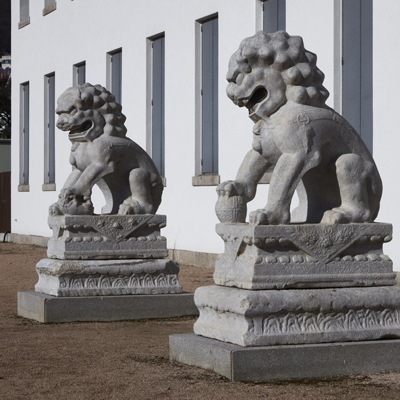
간송미술관 보화각 앞 지킨 사자상 한 쌍, 중국 돌아간다. 中 국가문물국과 기증 협약

아픈 손가락
칼럼
jeffrey
43. To change the perception of Joseonjok

0
2026. 01. 22
Forget the Failed Establishment of Diplomatic Relations between Korea and China
Around the establishment of diplomatic relations between Korea and China on August 24, 1992, about 1.92 million Korean-Chinese compatriots were living in China. Most of them were people who had left for China (the mainland) during the Japanese colonial period for the independence struggle of Korea, or to protect their individual right to survival, or their descendants. When PUM was just beginning its meetings with Koreans living at home and abroad and the Korean diaspora, I remember that nearly 9 million Koreans were scattered around the world. However, Korean population statistics are not accurate because each country has different counting methods. In the case of Japan, there is a difference of nearly double between the statistics of the Korean Overseas Koreans Agency and the statistics of the Japanese government. This proves that there has been a long-term history of change in which the names and nationalities of the Korean people have changed, symbolizing the long and long history of the Korean diaspora, and at the same time, it tells us that our existence has been erased.
In the meantime, the 'invasion of foreign powers - Japanese colonial rule - 6.25 War - military dictatorship government' accelerated, incited, and encouraged the movement of Koreans. At this point, Koreans are a deliberately disintegrated people. Without this premise, the establishment of diplomatic relations between Korea and China was a policy failure in the true sense, and I believe that it is difficult to get closer to solving the problem in its current state due to the wrong buttoning. The attitude of trying to discuss the tragic history of misfortune from the perspective of the perpetrator is because Koreans themselves have not organized their values. It is not acceptable to be conscious of others, curious about their opinions, and take a low profile by taking advantage of their plans. The way for Koreans, including Korean-Chinese compatriots, to pioneer the future themselves is to confirm the confusion of identity as a historical trend and to recognize it positively and inclusively.
Face the Reality of China Phobia
Korean-Chinese compatriots originated from the wandering people who were scattered all over the place as the country known as Joseon collapsed. They cannot deny the reality that they have been through all sorts of hardships such as the Chinese Communist Revolution, the Korean War, and the Cultural Revolution, and have been driven to the outskirts of the continent to establish a base and live as 'citizens' of the newly formed China. In this process, Korean-Chinese compatriots inevitably had two different identities regarding the nation and the country, and it coiled in their reality like a hermaphrodite, and their dual life became an inevitable choice for survival, and they themselves take duality for granted.
However, the establishment of diplomatic relations between Korea and China became a public stage where Koreans, who had forgotten history, recognized '중공' (Jungong) as '중국' (China) and proved to the world that they were fools. There was no country called China in history. Before World War II, present-day China was at least 支那 (Jina) in Asia and China in the West. The foolishness of the establishment of diplomatic relations between Korea and China in 1992, which gave this title as nationality, is a product of misguided brainwashing from the very beginning, as it recognizes Communist China and starts recognizing Korean-Chinese with a two-faced duality that beats its own people with internal anti-communism. It was not unreasonable to critically view the 'view of the fatherland' of the Korean-Chinese compatriots who poured in with the establishment of diplomatic relations between Korea and China, which ignored the Chinese sentiment in Korea, as a dual attitude. There is an attitude that Koreans resent such 'dual identity' of Korean-Chinese compatriots, but there is also a view that defends their dual choice.
정판룡 (Jeong Pan-ryong) (former Vice President of Yanbian University, died in 2002 at the age of 70) ignited the debate over the identity of the Korean-Chinese by defining them as daughters-in-law who came to China from Korea. The 'daughter-in-law theory' likens the Korean-Chinese to women who came from Korea (the Korean Peninsula) to China as daughters-in-law, implying that they should treat their Chinese husbands and parents-in-law well. Regarding this, Jeong Pan-ryong explains, "Immigration life for over 100 years has taught us a life lesson." Although his analogy is based on his life experience, history cannot be explained by such a simple 'daughter-in-law theory.' If we were to make such an analogy, it would be more like a child bride.
Jeong Pan-ryong mentioned that the Korean-Chinese have developed a dual culture or dual psychology in the process of building the People's Republic of China. He argued that the Korean-Chinese have a dual identity, aiming for both China (fatherland) and Korea (Korean Peninsula/motherland or homeland), which led to the 'bat theory' and 'apple pear theory.' He attempted to describe the dualistic (?) aspect of the Korean-Chinese from bats, which have different behavioral patterns during the day and night, and 'apple pears,' a specialty of Yanbian (a fruit that has a reddish color like an apple but tastes like a pear). Meanwhile, the 'daughter-in-law theory' has been expanded and reproduced as the argument that the daughter-in-law's life in her husband's family is difficult because the parents (South and North) of her home (Korea/Korean Peninsula) are fighting each other after their divorce (from 'Korean-Chinese, Who Are They?' p359, written by Kwak Seung-ji, Human Love, 2023). Such life-related comparisons do not help explain history. It is also ambiguous to develop beyond this. 'A bat daughter-in-law carrying an apple pear' is a story that lacks the most important history and misses the point.
The dual identity of the Korean-Chinese, as argued by Jeong Pan-ryong, has since been used as a major theme in literature, and the Korean-Chinese themselves began to confirm their identity. Korean-Chinese writer 허련순 (Heo Ryeon-soon) published the novel 'Wind Flower' in South Korea in 1996. This was at a time when diplomatic relations between Korea and China were established in 1992 and the Korean-Chinese advance into Korea was drawing attention. The author set up two worlds: the place where the wind blew (Joseon/Korean Peninsula) and the place where the wind sleeps (China), and described the situation of the Korean-Chinese who could not stay in either world, longing, resenting, and struggling. It depicts the inevitable survival choices and conflicts of the Korean-Chinese, who have feet in two spaces and times, China and Korea.
This literary rhetoric hides a secret. The fact that the place where the wind blows and sleeps are recognized as different places, and that a work that the Chinese Communist Party would like has come out by a Korean-Chinese writer. The Korean Peninsula is not the ancient territory of the Korean people from the beginning. The novel and theory that the descendants of Dangun fried and stirred on the Korean Peninsula for thousands of years, became a colony of the island country, were driven to the land, and were pushed to the outskirts as they were, is a lie. Sometime ago, Korea, China, and Japan were attached. You can notice the problem by looking at the records of Westerners' travels. Under some purpose, the foundation of the Korean people endured hundreds of years of threats, and in the end, Japan dominated the Korean people as their vanguard and rewrote history. Borderlines were originally ambiguous. The space that was peacefully traveled before the line of territory was clearly drawn became a place where it could not be traveled without weapons due to Western modern geopolitics, and that time was a period when the dissolution and extermination of the Korean people continued for generations. This premise is a negated sentence. The best way to eliminate a civilization is to erase its memory, a law that should not be mentioned or known.
Don't make policies based on novels
There is also an argument that there is no need to view the identity confusion and anguish of the Korean-Chinese, as depicted in 허련순's novels, in a negative light. In the early 2000s, Kim Kang-il, a professor at Yanbian University in China, took a forward-looking stance, positively accepting the Korean-Chinese identity 'confusion' as the emergence of a new identity, rather than the anguish of their floating diaspora. He argued against the trend of recognizing the Korean-Chinese identity as existing between the fatherland (China) and the motherland (Korea/Korean Peninsula), arguing that it should be understood as a cultural phenomenon through the 'Marginal Culture Theory' (邊緣文化論).
His argument is that "the culture and identity of the Korean-Chinese is a new culture and identity created by the fusion of the cultures and identities of China and Korea (Korean Peninsula)." The Korean-Chinese are geographically and culturally isolated between China and Korea (Korean Peninsula), and are therefore special beings who embrace both Chinese culture and ethnic culture. Kim Kang-il's logic was followed by Professor Hwang Yu-bok of the Central University for Nationalities, who emphasized the uniqueness of '100% Chinese Korean-Chinese' ('Korean-Chinese, Who Are They?' p360, written by Kwak Seung-ji, Human Love, 2023).
At this point, the identity of the 'Chinese Joseonjok' had already secured, guaranteed, and determined its duality. The premise that the Korean Peninsula is the Joseonjok's homeland has been continuously expanded and reproduced by Joseonjok researchers, establishing itself as an accepted fact. At the time of the establishment of diplomatic relations between Korea and China in 1992, Korea was better off than impoverished China, but Korea's human rights situation and the living standards of Koreans were not in a position to embrace the Joseonjok. Emotionally, the age group that still remembers the colonial period would have watched the establishment of diplomatic relations between Korea and China with mixed feelings. Like Hong Gil-dong, who could not call his father 'father,' as time passed, they could not call their homeland 'homeland,' and they would have watched the pathetic state of the establishment of diplomatic relations between Korea and China, longing for their hometown as if looking at a distant mountain. It was a geopolitical misjudgment by the military dictatorship of the Roh Tae-woo regime.
If we had looked a little deeper into history at that time, the Chinese Communist Party would not have been able to steal Korean technology as they do now, establish themselves in Daerim-dong, and form a corrupt third force that takes Korea's public power as their own. Now, that land, the continent, hides the communist image that Korea has diluted and has achieved government-led extreme economic growth in many places. As a result, Shenzhen and Guangzhou are enjoying futuristic cities that cannot be seen even in Seoul. It is not a poor China, but a place that continues to function even when tens of millions of people leave overseas, creating cities that are better off than Seoul. The only reason for stimulating the taboo of a long history is the minimum amount of information to let you know that low-profile diplomacy that does not know its place will one day backfire on us.
Like this, the Korean-Chinese compatriots also accepted their identity confusion as conflicting currents like literary narratives. In Heo Ryeon-soon's Wind Flower, the Korean-Chinese described the confusion of identity that inevitably wanders at the border between China and Korea. However, Korean-Chinese scholar Kim Kang-il's "Marginal Culture Theory" views the identity confusion in which Korean-Chinese people wander and conflict between Korea and China not necessarily as negative, but as a positive perspective of creating a new "identity of fusion" that only Korean-Chinese can have. Fusion, in other words, is conversion, compromise, or collaboration. In human history, it is interpreted as the meaning of blood mixing and identity change and value inversion crossing borders, but in reality, it was a scene where everyone bled and died in those days. Blood price must be paid. One should not dare to misjudge the attitude of being satisfied with a hybrid Korean-Chinese in a novel as a policy.
Identity of 'Chinese Korean-Chinese'
The identity of 'Korean Chinese' who came to Korea and lived with certain values is not the identity of 'Joseon'. However, the identity of modern South Korean citizens does not fully guarantee loyalty to the nation either. Various ideologies, religions, and materials are replacing that value. Once a buttonhole is twisted, it is difficult to find its place again. In the past, there was old China, and the view of diluting the Communist Party of China, which became new China, and bringing descendants who received their spiritual education, calling them brethren or whatever, is not an attitude of truly restoring ethnic homogeneity.
If the focus is on the 'passive' aspect of Korean Chinese who have to experience identity confusion, 'Marginal Culture Theory' regards the identity conflict of Korean Chinese as a search for 'active' change for new creation, treating it as marginal, peripheral, and leftover culture. Marginal Culture Theory views the fusion identity of Korean Chinese not from a 'defeatist' perspective that exposes confusion and conflict, but from a developmental interpretation that their cultural hybrid advantages will become excellent human resources in the future. You have to think about who it is developmental for. Like this, even among Korean Chinese compatriots, the identity conflict and confusion after entering Korea are received in conflicting ways. The fused hybrid theory has side effects even when it is a machine, let alone a theory that is easy to apply to people. Even with such bizarre tones, trying to judge the duality of Korean Chinese in any way is like insisting that a wrongly fastened button is a style, art, or trend.
However, Korean scholars dealing with the Korean-Chinese problem are also presenting new perspectives or third-party perspectives through Heo Ryeon-soon's Wind Flower. Wind Flower depicts the identity confusion and concerns that Korean-Chinese people experience as they travel between China and Korea. Professor Kang Jin-gu of Chung-Ang University analyzes how visiting Korea affects the identity formation of Korean-Chinese people, focusing on Korean-Chinese writer Heo Ryeon-soon's novel Wind Flower in his paper 'A Study on the Impact of Motherland Experience on Korean-Chinese Identity' (Chung-Ang University Institute of Cultural Contents Technology, 2009). In this paper, Professor Kang argues that in order to overcome cultural conflicts between Korea and Korean-Chinese people, exchanges on 'new identities' are required. Koreans have begun to fasten strange buttons. Let's follow his argument for a moment.
"Heo Ryeon-soon's 'Wind Flower' is a work that clearly shows the reality of Korean-Chinese people who have been driven into survival competition due to China's reform and opening policies, and the desire of Korean-Chinese people to overcome the crisis by entering Korea. Korean-Chinese people newly construct their identity through the Korean experience, which is as follows. First, Korean-Chinese people who identified their father's hometown as their own realize through the Korean experience that the hometown they dreamed of is only their father's hometown and has nothing to do with them. Second, they try to pass on the responsibility for the confusion and anxiety they are currently experiencing to the Korean government or Koreans. Third, through exchanges with Korea, Korean-Chinese people reorganize themselves into humans suitable for the capitalist system. The above identity reflects the current position and desires of Korean-Chinese people. Therefore, in order to overcome cultural conflicts between Korea and Korean-Chinese people, it is necessary to move away from exchanges based on identities formed from the existing nationalist perspective and to exchange based on new identities ('Abstract of A Study on the Impact of Motherland Experience on Korean-Chinese Identity', Kang Jin-gu 2009)."
An interesting point in Professor 강진구's interpretation of "Wind Flower" is that, unlike the general view that the identity confusion of Korean-Chinese people is a unilateral victimhood stemming from discriminatory experiences following their entry into Korea, although Korean-Chinese people are discriminated against due to the lack of policies and inclusiveness of the Korean government and Koreans, it may be unreasonable to unconditionally embrace Korean-Chinese people simply because of the irreversible condition of being "one Korean people." In fact, the wrong button should have been unbuttoned at this point. Ignoring the sense of alienation upon encountering Korean-Chinese people armed with the spirit and education of the Communist Party and anti-communist education after losing important territory, it may seem like there is some progress in the political aspect where economic interaction was necessary, but the public sentiment is already that of unfamiliar strangers.
The identity confusion of Korean-Chinese compatriots is an inevitable conflict they experience in Korea. Koreans do not go to China, lie down, and protest, claiming that it is their land. Illegal brokers try to buy buildings in Incheon Chinatown, but Koreans generally do not struggle to live in China. I would like to point out to Korean politicians that Chinese people, who do not hesitate to damage that vast land, and the Korean-Chinese people who are part of them, must live in Korea in mutual understanding and cooperation between Koreans and Korean-Chinese people. In China, until 1947, there were our ancestors who refused to migrate to the Korean Peninsula to protect their hometowns. While they adopted policies that completely abandoned that history, Korea's dictatorial governments have avoided historical responsibility, forcing only their own citizens to be inclusive and forcing compromise.
There is nothing that Joseonjok can gain here. Nevertheless, it is absurd to argue that we should move towards 'exchange based on a new identity, moving away from exchange based on identity formed from the existing nationalist perspective' (Kang Jin-gu) and give legal benefits and privileges in any way. They should either fight the Communist Party in a vast land or stand on an equal footing with other foreigners who want to be naturalized as Koreans in Korea. Regarding Joseonjok, Roh Tae-woo, Kim Dae-jung, and Roh Moo-hyun all failed. Koryo-saram or Central Asian workers who went to Koryo-saram are much less likely to be exposed to crime. Those who went far away are the descendants of anti-Japanese activists, and the current Joseonjok in the three northeastern provinces are the product of ethnic migration reorganized after the massacre policy of the Cultural Revolution. You can compare the crime rate in the Koryo-saram Central Asian Mongolian streets in Seoul and Daerim-dong. It is also necessary to consider who the actual owners of Korean and Chinese restaurants in Seoul are. As national wealth is leaked from within rather than outside, Koreans go outside and leak national wealth. In this way, even the evidence that a nation that has lost its history was once a civilized country disappears.
Kim Gu's speech is saying
In Kim Gu's speech at the ceremony commemorating the 1st anniversary of Liberation Day on August 15, 1946, he said, "Independence is heading west, but if we just 'become independent' and walk eastward while living, that independence is useless..." He revealed that much of his sincerity in a public speech while being deceived, manipulated, and monitored. He was assassinated like all anti-Japanese activists. What kind of land is that... A place where countless patriots sacrificed their lives, but instead of learning and teaching, the government, not the people, eliminated the fatherland and hometown, acted as Japanese collaborators, produced elites for generations, and made people recognize China as someone else's land, a market to be developed, and an economic power. First, we must reflect on how many victims the anti-communist ideology of the Republic of Korea has forced, and then consider how long the demands of large corporations that want to discuss business with the Chinese Communist Party, which has lost human rights and morality, can be met.
Today's Joseonjoks, who are aware of the political and economic situation in China and Korea, have blood as thin as their 'hybrid identity'. It is the result of Korean policy that they take only practical gains by exploiting the naivety of the South Korean civil service, which believes that they will be an excellent human foundation for the development of Sino-Korean or inter-Korean relations, not that they demanded it first. Vague stereotypes without knowledge of past history do not provide answers to the Joseonjok problem. It is said that the Chinese who are free to travel to Korea today are mainly Joseonjoks, not the so-called Han Chinese. They speak the dialects of Hamgyeong-do and Pyeongan-do, but they are also fluent in Chinese. They receive Chinese pensions and have been driving taxis in Korea for nearly twenty years. They say they will return whenever they make a lot of money.
Who could possibly know the story of someone from Gyeongsang Province who lived in Yanbian via Yongjeong for generations? It's not fiction, but reality that Moon Jae-in, whose origin is Hamgyeong Province, speaks the Yangsan dialect. As history plummeted, they disguised themselves as Han Chinese, and China also went through several disguises wearing the mask of the Communist Party. My house, hometown, wife, and children were scattered, so the establishment of diplomatic relations between Korea and China in 1992 was just a cannon shot into empty space, devoid of meaning. Wrong historical perceptions and misguided policies cannot have a positive impact on the public. The Joseonjok identity does not unconditionally lean on the wall of 'nationalism' but rather pulls the hybrid situation in a direction that is advantageous to them.
In fact, if there had not been the 'historical encounter' of Korean advancement, which began in earnest after the establishment of diplomatic relations between Korea and China in 1992, Joseonjok Koreans might not have experienced much confusion or concern about their identity. The biggest issue with the establishment of diplomatic relations between Korea and China is that it recognized the Communist Chinese regime as an abstract view of China. Because a part of that Chinese land was Joseon, the Korean Empire, which Japan called old Korea, the Chinese Communist Party, which hesitated for a moment because it did not know what to do with the Joseonjok issue, treated them specially instead of treating them like other ethnic minorities, which was a liberation that was one step freer. Watching the vicissitudes or transformations of a people being dragged around, dispersed, mixed, and sorted out amidst the annihilation of civilization, and then driven into a corner, is also a page in political policy.
Being Korean-Chinese is not a Free Pass
As Korean-Chinese people began to advance into Korea, where the culture and economic system are completely different, they also began to look at their own identity objectively. In the beginning, Korean-Chinese felt a sense of kinship with Koreans, calling them "one Korean people," but as they encountered "capitalism," which they had never experienced before, they pondered a new identity and also became newly aware of their other "homeland," China. Korean-Chinese, who are of the same Korean ethnicity but are "Chinese," discovered a huge barrier between "capitalism" and "socialism" as they encountered Koreans and Korean society, and perhaps they also felt that the two worlds were so starkly different that they did not communicate with each other.
However, the gap gradually narrowed. Communism or capitalism, in its extreme form, is just a political propaganda that only benefits a very small number of classes, and cities like Shenzhen and Guangzhou are proving that the Communist Party is better at realizing social democracy. If you take off the pretense, break down stereotypes, and look at the world, this formalistic society in which Koreans are placed is just a pretentious curtain that is dragged around by others who know history after losing it.
In this process, Korean-Chinese compatriots would have experienced significant discrimination in South Korea's working conditions and felt an invisible hierarchical wall with Koreans. Naturally, the place they leaned on and sought out was inevitably their familiar home, 'China.' While taking advantage of South Korea's foolishness in recognizing the Communist Party of China (支那), which has never been a national name, as a country, Korean-Chinese compatriots would have had no choice but to resolve their severe identity confusion by profiting from both sides. In the end, Koreans and Korean society implicitly 'agreed' to push Korean-Chinese compatriots, who are a social minority, 'outward,' but from the perspective of the Chinese Communist Party, it is a success. The positioning of the Korean-Chinese has become what they wanted, and they have become, in name and reality, the great power of China.
It does not help either side for Korean-Chinese compatriots to live resenting Korean society with a nationalistic 'victim frame,' but it cannot be denied that South Korea created the breeding ground. Koreans now face a new challenge. If neither Korean-Chinese nor Koreans themselves try to escape the 'marginal, peripheral, or frontier culture' identity and strive to raise their own status and secure independence, it is also a consideration to let them return to Communist China as soon as possible. It is time for the Korean government and Koreans to think about why Koreans, who were deprived of their homes, land, families, and household goods and driven to the Korean Peninsula over the past hundred years, are only looking at others' faces for whose sake. We must think about who benefits from the continuation of division and conflict.
There is no one on Earth as ‘special’ as Koreans right now. A strange people who give to others without knowing their history will be eternal pushovers unless they realize this reality. It is the Koreans themselves who have ‘sacrificed.’ It is not the time to heal and embrace the sad and arduous Korean diaspora of 조선족 compatriots who have overcome the history of hardship with their whole bodies as a political narrative, but to look back on why the victim has to understand and give. The world does not want Korea's development or even the reunification of North and South Korea, and is just waiting for Korea to fail. Being overwhelmed is only temporary. The screwed up past is gone. It's time to wake up.
댓글
( 0 / 500 )
ssabi
7
이 글은 조선족 문제를 감정이나 도덕의 영역이 아니라, 역사·정책·지정학의 결과로 정면에서 다루고 있다는 점에서 불편하지만 외면하기 어려운 질문을 던집니다. 특히 한중수교 이후 형성된 ‘중국 조선족’ 정체성이 자연발생적이기보다 정책적 선택의 산물이라는 지적은 깊이 생각해 볼 대목입니다.
( 0 / 500 )
diamond
7
조선족을 무조건적인 피해자나 동포 프레임으로만 바라보는 기존 담론에 균열을 낸다는 점에서 의미가 큽니다. 공존과 포용이 미덕이 되기 위해서는 먼저 역사 인식과 국가의 책임이 분명해야 한다는 주장에 일정 부분 공감하게 됩니다.
( 0 / 500 )
grand_k
6
다만 서술 전반에 분노와 단정이 강해 독자가 동의 여부를 떠나 감정적으로 압도될 수는 있겠습니다. 그럼에도 불구하고 이 글이 던지는 핵심 질문, 즉 “왜 피해자가 끝없이 이해해야 하는가”라는 문제 제기는 한국 사회가 회피해온 주제임은 분명합니다.
( 0 / 500 )
DinDin
5
조선족 문제를 둘러싼 논의가 더 이상 도덕적 훈계나 감상적 동포애에 머물러서는 안 된다는 점을 분명히 보여주는 글입니다. 동의하든 반대하든, 이 글은 최소한 한국 사회가 이 문제를 다시 사유하게 만드는 계기는 충분히 됩니다.
( 0 / 500 )
doong_A
4
문학과 학술 담론이 정책 판단을 대신해온 과정에 대한 비판은 상당히 설득력이 있습니다. ‘변연문화론’이나 하이브리드 정체성이 누구에게 유리하게 작동했는지를 묻는 대목은 지금의 정책 현실과 정확히 맞닿아 있습니다.
( 0 / 500 )
64Marco
4
조선족 정체성을 둘러싼 논쟁을 ‘누가 더 불쌍한가’의 문제가 아니라, 누가 어떤 선택을 했고 그 비용을 누가 치르고 있는가의 문제로 전환한 점이 인상 깊습니다. 특히 국가 정책의 책임을 개인 윤리로 떠넘겨 온 구조에 대한 비판은 날카롭습니다.
( 0 / 500 )
모모짱
4
이 글은 조선족을 옹호하거나 배척하려는 글이라기보다, 한국 사회가 스스로에게 던져야 할 질문을 조선족 문제를 통해 드러낸 글로 읽힙니다. 불편함이 느껴진다면 그 자체가 핵심을 찔렸다는 증거일지도 모릅니다.
( 0 / 500 )
pixel89
4
한중수교를 ‘경제적 성과’가 아닌 ‘역사 인식의 실패’로 규정한 관점은 쉽게 보기 어려운 문제 제기입니다. 지금의 갈등들이 우발적 사건이 아니라 누적된 정책 오류의 결과라는 주장에는 충분한 설득력이 있습니다.
( 0 / 500 )
kimyoon
3
조선족 담론에서 반복돼 온 문학적·학술적 미화가 현실 정책을 왜곡해왔다는 지적은 매우 중요합니다. 감정적 연대가 아니라 제도와 원칙 위에서 관계를 재정립해야 한다는 메시지가 분명합니다.
( 0 / 500 )
신고내용
신고내용을 선택해주세요
회원비난/비하/욕설글 및 댓글도배성 게시물저작권 침해/불법자료 유출허위사실유포개인정보 유출.사생활 침해무단광고/홍보음란물 및 도박 불법 광고물범죄행위 관련 글불법행위 관련 소개물품 판매 및 사기글악성코드 및 스파이웨어 유포기타 사유 및 운영진 판단


비밀번호를 잊으셨나요?
Sign in with Google
All information provided by us is free of charge and is for the public good.