品

Corea든 Korea든, 품격은 이름보다 먼저다
Whatever the name—Corea or Korea—dignity comes first.
Whatever the name—Corea or Korea—dignity comes first.
Now
지금
751 Diaspora
Heritage
유산
Humanity
인문
Mirengsi
未冷尸
Politics
정치
Media
언론

Education Story
칼럼
chris_Jung
The collapse of teaching authority and the shadow of selfish parents

0
2026. 07. 05
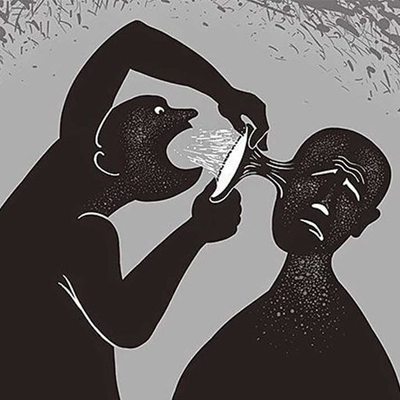
- The incident of a Jeju parent threatening a teacher symbolically reveals a societal ill where eroded teaching authority meets extreme individualism.
- Individual selfishness and excessive competitiveness are undermining the essence of public education, reducing teachers to 'service providers' and transforming the educational environment into a hotbed of distrust and conflict.
- This phenomenon instills in the next generation a distorted value system that justifies selfishness, ultimately leading to serious consequences that threaten the future of society as a whole.
- Alongside society-wide efforts to restore teaching authority and improve the educational system, strict law enforcement by prosecutors will be a crucial turning point in restoring the educational ecosystem.
Deep-rooted societal ills threatening the future of a society
A recent incident reported on Jeju MBC Newsdesk starkly reveals a deep wound in our society. The video, titled “Investigation into Parent Who Threatened Teacher Stalls… Must Be Strictly Punished” (2026.07.02), covers a case where a parent collectively accused over 10 elementary school staff members of child abuse, and even made death threats such as “I’ll kill you” and “I’ll blow you up.”
Although the police already sent the parent to the prosecution without detention last September on charges of false accusation and threats, the prosecution's investigation has been stalled for nearly a year. Despite national teacher unions submitting petitions and holding press conferences, the victimized teachers are still suffering from extreme mental distress. This incident is not a personal conflict. It symbolizes the collapse of teacher authority, the extreme selfishness of 'only my child matters,' and the pathological state of a society marred by competition and distrust.
The collapse of teacher authority was a foregone conclusion long ago. In the past, teachers were 'mentors' who taught and nurtured students, and pillars of the community. However, they have now been reduced to 'service providers.' It is common for teachers to face disciplinary action due to a single parent complaint, and they are often unable to properly respond to student violence during class. If false accusations, like in the Jeju incident, become rampant, teachers will abandon their fundamental role in education and adopt a purely defensive stance. In fact, many teachers are under such mental pressure that they consider depression, burnout, and even extreme choices. The educational field is no longer a place of learning, but a battlefield of lawsuits and threats.
At the root of all this is the extremely selfish parental mindset that 'I can threaten anyone for my child.' In modern society, parental love is instinctively strong, but when it is distorted into love 'only for my child,' it becomes a poison that erodes society as a whole. The act of suing teachers, claiming that one's child developed a chronic illness due to school life, is an attitude that disregards objective evidence or procedures and judges everything through the emotional framework of 'my child's harm.' The mindset that 'if my child is uncomfortable, the teacher is at fault' denies the essence of public education, which is communal upbringing and discipline. Defining teachers who educate other people's children as 'enemies' and pressuring them with threats and lawsuits is not love, but violence.
This selfish mindset is not just an individual problem. It is a result of our entire society being steeped in competition, anxiety, and achievement-orientation. In an era of low birth rates, over-investment in 'only children,' extreme competition for university admissions, and the 'perfect parent image' flaunted on social media drive parents to extremes. The mindset of 'as long as my child does well' makes them ignore the children of others, the suffering of teachers, and social norms. In parent communities and online spaces, teacher criticism has become commonplace, and cases where teachers are replaced due to a single complaint accelerate the decline of teachers' authority. In this process, parents excessively assert their rights as 'consumers' and degrade teachers to 'education service workers.' As a result, the educational field transforms into a place of distrust and conflict rather than trust.
What is more serious is that these changes are passed on to the next generation. Children learn the lesson that 'selfishness is justified' through their parents' behavior. At school, they naturally develop an attitude of interpreting a friend's mistake or a teacher's criticism as 'harm,' and if they are uncomfortable, they try to resolve it through lawsuits or protests. If teachers' authority collapses, respect and discipline among students also disappear. This is why assault cases, bullying, and disrespect towards teachers are increasing. In the end, education becomes an extension of the struggle for survival, not the transmission of knowledge. It is impossible for children raised in such a society to lead the future.
Without restoring teachers' authority and improving the education system, there is no future for the country. This is not an exaggeration. Teachers are not just knowledge transmitters; they are key agents responsible for children's character formation, social skills development, and value establishment. If teachers' authority is weakened, teachers will focus only on avoiding complaints and formal management instead of creative classes or individualized student guidance. This directly leads to a decline in the quality of public education and ultimately shakes the foundation of national competitiveness. Developed countries legally and strongly protect teachers' professionalism and autonomy. We have also established institutional devices such as the 'Four Laws for Teacher Protection,' but they are still ineffective in practice. Strong punishment for false accusations, mandatory parent education, and measures to prevent secondary harm to teachers are urgently needed.
Parents must realize this: if your child is precious, other people's children are also precious, and teachers are also someone's precious children. Teachers are someone's sons and daughters who work day and night to teach your child. Threatening and suing them is ultimately an act of self-harm that destroys the entire community. We need to broaden our perspective from 'my child-centered' to 'our children's community.' School is a place where parents and teachers cooperate, not a place of conflict. When parents respect and support teachers, children learn true respect and responsibility.
This incident is not just a problem in one area of Jeju. It is a cross-section of the nationwide spread of teacher's rights infringement and selfish parental culture. The prosecution must send a social message through strict indictment and punishment without further delay. False accusations and threats are not simple crimes, but serious crimes that threaten the educational ecosystem and future generations. At the same time, society as a whole must engage in public discourse and institutional improvement to restore teacher's rights. The Ministry of Education, local governments, parent organizations, and teacher organizations must put their heads together to come up with effective measures.
The future of the nation begins in the classroom. If an environment where teachers can confidently teach and students can learn with respect is not restored, any economic growth or technological development will be hollow. Beyond selfish psychology and excessive competition, we must return to education as a 'community that raises children together.' I hope that all parents will deeply reflect on this Jeju incident. If you truly want a bright future for your child, you should not burden the teacher's shoulders, but carry the burden together. Only then can our children grow into true adults.
댓글
( 0 / 500 )
edu91
8
교권은 교사 개인의 권위가 아니라 아이들이 안전하게 배우고 성장할 수 있는 교육 질서입니다. 일부 학부모의 무분별한 고소와 협박이 반복된다면 결국 피해를 보는 것은 모든 학생들입니다. 교사와 학부모가 서로를 적으로 보는 문화부터 바뀌어야 합니다.
( 0 / 500 )
윤대원
9
내 아이를 사랑하는 마음은 당연하지만, 그 사랑이 타인의 권리와 공동체를 짓밟는 순간 사랑이 아니라 이기심이 됩니다. 교사를 존중하는 모습을 부모가 먼저 보여줄 때 아이들도 존중과 책임을 배우게 된다는 점에 깊이 공감합니다.
( 0 / 500 )
booboo
7
무고성 고소와 협박은 단순한 감정 표현이 아니라 교육 현장을 무너뜨리는 심각한 범죄입니다. 선량한 교사들이 소송을 걱정하며 방어적으로 수업하는 현실은 결국 공교육의 경쟁력을 떨어뜨립니다. 법과 제도가 실질적으로 교사를 보호해야 합니다.
( 0 / 500 )
최남규
6
교권 회복은 교사만을 위한 요구가 아니라 학생들을 위한 투자입니다. 교실에서 교사의 정당한 생활지도조차 어려운 환경이 계속된다면 아이들의 인성과 규범 의식도 함께 흔들릴 수밖에 없습니다. 균형 있는 권리와 책임이 필요합니다.
( 0 / 500 )
woojoo
6
이번 사건을 특정 지역의 예외적인 일로만 볼 것이 아니라 우리 사회가 교육을 어떤 시각으로 바라보고 있는지 돌아보는 계기로 삼아야 합니다. 학교는 서비스 업체가 아니라 아이들을 함께 키우는 공동체라는 사실을 모두가 다시 기억했으면 합니다.
( 0 / 500 )
nam_m9
5
아이는 부모의 말을 듣기보다 부모의 행동을 따라 배운다고 합니다. 부모가 교사를 존중하면 아이도 존중을 배우고, 부모가 협박과 비난으로 문제를 해결하면 아이 역시 그런 방식을 당연하게 받아들일 가능성이 큽니다. 결국 가장 큰 피해자는 우리 아이들입니다.
( 0 / 500 )
blue777
5
권리에는 반드시 책임이 따라야 합니다. 학부모의 정당한 문제 제기는 보장되어야 하지만, 허위 고소와 협박까지 용인된다면 학교는 교육 공간이 아니라 갈등과 법적 분쟁의 현장이 될 뿐입니다. 법의 엄정한 적용이 필요한 이유입니다.
( 0 / 500 )
最强
4
모든 학부모를 일반화해서는 안 되겠지만, 일부의 과도한 민원과 협박이 묵묵히 교육에 헌신하는 교사들을 지치게 만들고 있습니다. 선생님도 누군가의 소중한 가족이라는 가장 기본적인 사실부터 다시 생각했으면 합니다.
( 0 / 500 )
이동혁
1
교사가 존중받지 못하는 사회에서 아이들이 타인을 존중하는 법을 배우기는 어렵습니다. 교권 회복은 교사의 체면을 세우는 문제가 아니라 미래 세대의 인성과 공동체 의식을 지키는 일이라는 점을 잊지 말아야 합니다.
( 0 / 500 )
신고내용
신고내용을 선택해주세요
회원비난/비하/욕설글 및 댓글도배성 게시물저작권 침해/불법자료 유출허위사실유포개인정보 유출.사생활 침해무단광고/홍보음란물 및 도박 불법 광고물범죄행위 관련 글불법행위 관련 소개물품 판매 및 사기글악성코드 및 스파이웨어 유포기타 사유 및 운영진 판단


비밀번호를 잊으셨나요?
Sign in with Google
All information provided by us is free of charge and is for the public good.