品

Corea든 Korea든, 품격이 먼저다
Whether Corea or Korea, dignity comes first.
Whether Corea or Korea, dignity comes first.
Now
지금
751 Diaspora
Heritage
유산
Humanity
인문
Mirengsi
未冷尸
Politics
정치
Media
언론
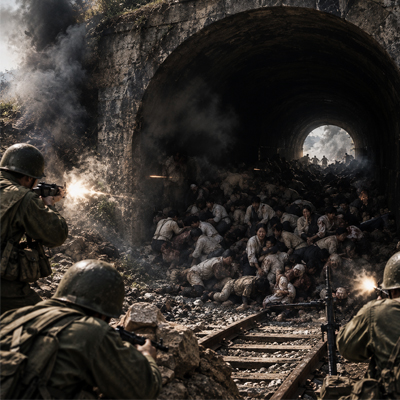
1950년 7월 충청북도 영동군 황간면 노근리에서 발생한 민간인 학살 사건은 이러한 문제를 보여주는 대표적인 사례

코리안 제노사이드
칼럼
狂奴者
The No Gun Ri Massacre and Civilian Sacrifices in War

0
2026. 11. 16
- The No Gun Ri Massacre during the Korean War was not collateral damage from frontline combat, but an intentional attack on unarmed civilians, stemming from military fear, uncertain intelligence, and disregard for civilian protection principles.
- The U.S. military, fearing North Korean infiltration, viewed refugees as potential threats and controlled their movement, leading to massive casualties as civilian safety was subordinated to military necessity.
- Even with military threats, treating an entire group of refugees as enemy combatants or engaging in indiscriminate firing violates civilian protection principles, demonstrating the tragic consequences when military fear overrides rational judgment.
- Uncovering the truth and acknowledging responsibility for the incident does not undermine the value of the ROK-U.S. alliance; rather, it demonstrates the maturity of the alliance and remains a historical task for preventing recurrence.
- The No Gun Ri incident reminds us of the universal principle that civilian lives and rights should not be sacrificed for military convenience even during war, emphasizing that documenting past harms and assigning responsibility is a crucial task for the future.
The massacres of civilians during the Korean War cannot be explained solely as collateral damage from battles on the front lines. A combination of military judgment, fear of the enemy, uncertain intelligence, and disregard for the principles of civilian protection sometimes led to unarmed residents becoming targets of intentional attacks. The massacre of civilians that occurred in Nogun-ri, Hwanggan-myeon, Yeongdong-gun, Chungcheongbuk-do, in July 1950, is a representative example of these issues.
Immediately after the outbreak of the war, refugees moving south were fleeing the advance of the North Korean army. However, to the US military, refugees were not only civilians who needed to be protected but also perceived as potential risks where enemy soldiers could infiltrate. As concerns grew that North Korean soldiers might infiltrate disguised as civilians, military measures were taken to control or block the movement of refugees. In this process, the safety of civilians was subordinated to military necessity.
The Nogun-ri incident occurred precisely in this situation. Refugees, moving under the guidance and control of the US military, gathered near the Gyeongbu Line railway and were exposed to US aerial attacks and machine gun fire. Survivors later testified that numerous residents were sacrificed in the continuous firing for several days in and around the twin underpass beneath the railway. Among the victims were many women, children, and the elderly. A large number of casualties occurred when residents not participating in combat became targets of military suspicion.
The core of the Nogun-ri incident lies in how the military judged and treated civilians in a wartime situation. At the time, the US military was under pressure to stop the southward advance of the North Korean army and maintain the front lines. However, the urgency of war cannot justify indiscriminate attacks on civilians. The possibility that enemy soldiers might be mixed among refugees and the judgment that it is permissible to attack civilians actually in front of them are entirely different issues. When this distinction collapses, the distance between military vigilance and civilian massacre rapidly narrows.
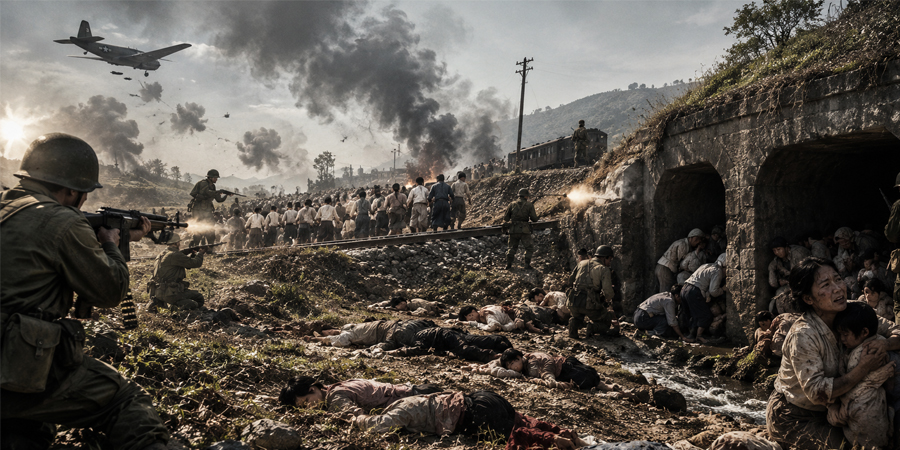
Military fear and the failure to protect civilians
To understand the No Gun Ri incident, it is necessary to distinguish between the military situation the U.S. forces faced at the time and the civilian casualties that actually occurred. In July 1950, U.S. forces were repeatedly retreating and defending in response to the rapid southward advance of the North Korean army. Among the deployed troops, there were soldiers with insufficient combat experience, and it was difficult to distinguish between enemy soldiers and civilians amidst the chaos of the front lines. Concerns were raised within the U.S. military that the North Korean army might infiltrate using refugees, and guidelines for controlling civilian movement or being wary of approaching refugees were actually discussed.
However, this situational background is information that explains the cause of the incident, not a reason for immunity from civilian killings. Even if there is a military threat, attacks on civilians must be judged based on individual threats and specific circumstances. Considering an entire group of refugees as an enemy infiltration route, or indiscriminately firing at them because their identities cannot be confirmed, goes against the principle of civilian protection.
The No Gun Ri incident shows what happens when military fear replaces rational judgment about the enemy. The U.S. military's decision to view refugees as a threat at the time was based on the deteriorating war situation and lack of information. However, the fact that such a judgment led to an actual attack, resulting in the large-scale sacrifice of unarmed residents, must be evaluated separately.
Civilian casualties at the twin underpasses
Around July 25, 1950, residents of nearby villages moved south under the control of the U.S. military. The next day, the 26th, the refugees arrived near the No Gun Ri railway. According to survivor testimonies, they were subjected to U.S. aerial attacks and machine-gun fire, and the surviving residents took refuge in the underpass and twin underpasses beneath the railway. Subsequently, U.S. firing continued inside and outside the underpasses, killing many people. Differences remain between the investigations and testimonies of South Korea and the U.S. regarding the detailed circumstances of the incident, the existence of firing orders, and the number of casualties.
The twin underpass where refugees sought shelter later became a symbol of the No Gun Ri incident. Civilians not involved in combat had gathered there. They were not soldiers fighting a war, nor were they troops attempting to break through the front lines or attack military facilities. Most were people trying to move to a safe place to escape the war. Nevertheless, the refugees became subject to military control, which ultimately led to a large number of casualties. A key issue in this incident is not just whether there was a specific commander who ordered the shooting. It is also necessary to examine what judgments and command systems enabled the attack on a civilian group, what measures soldiers on the ground took to protect civilians, and what the command post did to prevent casualties.
Issues of accountability and the scale of casualties
The No Gun Ri incident was not publicly investigated immediately after it occurred. The testimonies of victims and their families did not receive sufficient social attention for a long time, and the true nature of the incident became internationally known through an Associated Press report in 1999. Subsequently, the US and Korean governments each conducted investigations, and the US government announced its findings in 2001, acknowledging that Korean refugees were killed or injured during US military operations. Then-US President Bill Clinton expressed deep regret to the victims.
However, the US government's investigation could not determine the exact number of fatalities, nor could it definitively conclude whether there was an order to fire on the refugees. In contrast, during Korea's victim screening process, 218 out of 235 reported individuals were recognized as victims of the No Gun Ri incident. This number includes not only the deceased but also those missing and those with lasting disabilities. Therefore, while the total number of fatalities in the incident is sometimes estimated at around 200-300, this should not be taken as the confirmed number of deaths.
These differences do not diminish the historical significance of the incident. Rather, they show that the truth was delayed for a long time, and there were limitations in comparing the victims' testimonies with military records. This is why efforts to accurately determine the number of victims, as well as to clarify how civilian casualties occurred and who was responsible, must continue.
The ROK-US alliance and historical responsibility are separate issues.
Discussions surrounding the No Gun Ri incident sometimes treat the historical significance of the ROK-US alliance and the responsibility of the US military for civilian massacres as opposing issues. However, the two issues need to be evaluated separately. The fact that the US military fought against the North Korean invasion in the Korean War and the fact that Korean civilians were sacrificed by the US military in the process can both be true simultaneously.
The value of an alliance is not confirmed by covering up past mistakes. Rather, it is important whether an alliance can investigate damages that occurred within the relationship, acknowledge responsibility, and establish standards to prevent recurrence. Whatever the purpose of war, civilian lives cannot be a means to military achievement. Evaluating responsibility lightly because it is the military of an allied nation, or conversely, simplifying the entire history of the alliance based on a single incident, can both obscure historical judgment. The No Gun Ri incident shows that the ROK-US relationship should be evaluated not only on past military cooperation but also on the standards of human rights and responsibility. The US government's expression of regret and commemorative measures are meaningful, but they have not resolved all the issues of truth-finding and responsibility that victims and their families have demanded.
Why should we remember the No Gun Ri incident?
The No Gun Ri incident is an example of how easily war can threaten civilian lives and rights. In particular, this incident clearly reveals the consequences of judging civilians as potential enemies in a military crisis. In a battlefield, information can be incomplete and decision-making time can be limited. However, precisely because of this, clear principles and command structures for civilian protection, and mechanisms to control unlawful orders, are necessary.
Examining the No Gun Ri incident alongside the Jeju 4·3, Yeosu–Suncheon 10·19, and Mungyeong Seokdal incidents broadens our understanding of civilian sacrifices in modern Korean history. The background, perpetrators, and military and political conditions of each incident differ. Therefore, they should not be simplified to a single cause. However, we can examine the common problem where the state and military power designated specific groups as enemies, and in the process, failed to adequately protect the lives and rights of civilians.
The victims of No Gun Ri were not the ones who started the war. They were residents displaced by the war. What they needed was a safe evacuation route and protection, but what they actually received was military suspicion and attack. This fact should be remembered separately from discussions about the justification of war.
Remembering history is not merely about unilaterally blaming a specific nation or military. It involves distinguishing confirmed facts from remaining questions, examining victims' testimonies, and identifying where responsibility lay. The No Gun Ri incident demonstrates the dangers that arise when military necessity takes precedence over civilian protection, and it asks what principles must be upheld even during war.
This is also why the No Gun Ri incident must be remembered. Civilian lives should not be sacrificed for the convenience of military judgment. This principle cannot change based on the nature of the war or the relationship between the belligerents. Accurately documenting past damages and identifying responsibility is a process of restoring the honor of the victims, and at the same time, a practical task to prevent the same events from recurring in future wars.
댓글
( 0 / 500 )
88kda
8
노근리 사건은 전쟁이라는 이유로 민간인의 생명을 얼마나 쉽게 경시할 수 있는지를 보여주는 비극입니다. 군사적 공포와 작전상의 혼란이 있었다고 해도 무장하지 않은 피난민을 향한 공격까지 정당화될 수는 없습니다. 역사적 사실을 정확히 기록하고 기억해야 합니다.
( 0 / 500 )
한상길
6
한미동맹의 역사적 의미를 인정하는 것과 미군이 저지른 민간인 희생에 책임을 묻는 것은 전혀 모순되지 않습니다. 진정한 우방이라면 불편한 역사도 함께 직시하고 책임을 인정할 수 있어야 합니다. 균형 잡힌 접근이 돋보이는 글입니다.
( 0 / 500 )
kangwoo
5
노근리 사건에서 더욱 안타까운 것은 전쟁을 피해 살길을 찾아 나선 평범한 주민들이 오히려 군사적 의심의 대상이 되어 희생되었다는 사실입니다. 여성과 어린이, 노인까지 피해를 입은 비극을 단순한 전쟁의 부수적 피해로 치부해서는 안 됩니다.
( 0 / 500 )
wonderland
5
제주 4·3, 여순 10·19, 문경 석달 사건과 노근리 사건을 함께 살펴보는 것은 한국 현대사의 민간인 희생을 입체적으로 이해하는 데 큰 의미가 있습니다. 가해 주체와 역사적 배경은 다르지만, 희생자의 목소리를 복원하고 국가와 군의 책임을 묻는 작업은 계속되어야 합니다.
( 0 / 500 )
park_SJ
4
1999년 AP통신 보도를 통해 비로소 국제적인 관심을 받았다는 사실 자체가 피해자와 유족들이 얼마나 오랫동안 고통과 침묵을 견뎌야 했는지를 말해 줍니다. 희생자 숫자와 명령 체계에 대한 논란이 남아 있는 만큼 더 철저한 자료 공개와 진상 규명이 필요합니다.
( 0 / 500 )
lovepoem
4
역사를 기억하는 일은 과거의 잘못을 반복하지 않기 위한 사회적 책임입니다. 우방의 잘못이라고 외면해서도 안 되고, 동맹이라는 이유로 피해자의 고통을 축소해서도 안 됩니다. 노근리의 비극을 인권과 민간인 보호라는 보편적 기준에서 다시 생각하게 하는 좋은 글입니다.
( 0 / 500 )
Min_lee
2
전쟁 중에도 지켜야 할 원칙이 있습니다. 민간인과 전투원을 구분하고, 무장하지 않은 주민의 생명을 보호하는 것은 군사적 상황과 관계없이 지켜야 할 기본 의무입니다. 노근리 사건은 군사적 판단이 인권과 인도주의를 앞지를 때 어떤 참극이 벌어지는지 보여줍니다.
( 0 / 500 )
신고내용
신고내용을 선택해주세요
회원비난/비하/욕설글 및 댓글도배성 게시물저작권 침해/불법자료 유출허위사실유포개인정보 유출.사생활 침해무단광고/홍보음란물 및 도박 불법 광고물범죄행위 관련 글불법행위 관련 소개물품 판매 및 사기글악성코드 및 스파이웨어 유포기타 사유 및 운영진 판단


비밀번호를 잊으셨나요?
Sign in with Google
All information provided by us is free of charge and is for the public good.