品

Corea든 Korea든, 품격이 먼저다
Whether Corea or Korea, dignity comes first.
Whether Corea or Korea, dignity comes first.
Now
지금
751 Diaspora
Heritage
유산
Humanity
인문
Mirengsi
未冷尸
Politics
정치
Media
언론
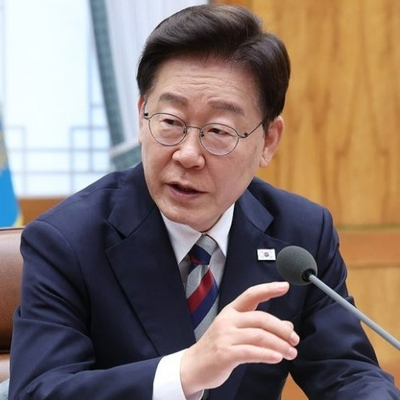
2026년 11월 23일, 이재명 대통령은 국가정보원장과 외교·통일·행정 안전·문화체육관광부 장관을 동시에 교체하는 중폭 개각을 단행했다.

단상斷想
칼럼
深山
A signal of 'self-reliance' adjustment and strengthened alliance management

0
2026. 11. 24
- As the Lee Jae-myung administration approaches its second year, it aims to create a turning point in state affairs by completely overhauling its diplomatic and security lines.
- This reshuffle, amidst real-world pressures like limited ROK-US intelligence sharing and stalled inter-Korean relations, signals a shift towards a pragmatic diplomatic strategy, adjusting its 'autonomy-focused' stance and prioritizing the restoration of the ROK-US alliance.
- The nomination of Kang Geum-sil as NIS Director candidate reveals a commitment to reforming powerful institutions, while the appointment of experts and close aides like Lim Woong-soon and Hong Ik-pyo indicates an intention to accelerate and enhance the execution of state affairs.
- However, controversies surrounding Kang Geum-sil's expertise, ideological tensions within the ruling party, and the uncertain ROK-US relationship under a potential Trump administration will be key variables determining the success or failure of this reshuffle.
What the complete overhaul of the Lee Jae-myung administration's diplomatic and security lineup signifies
On November 23, 2026, President Lee Jae-myung carried out a mid-level cabinet reshuffle, simultaneously replacing the Director of the National Intelligence Service and the Ministers of Foreign Affairs, Unification, Interior and Safety, and Culture, Sports and Tourism. This appointment, which nominated former Minister of Justice Kang Kum-sil as the candidate for NIS Director, Lim Woong-soon, the 2nd Deputy Director of the National Security Office, as the candidate for Minister of Foreign Affairs, Hong Ihk-pyo, former Senior Secretary to the President for Political Affairs, as the candidate for Minister of Unification, and selected Representative Han Jun-ho as Minister of Interior and Safety and Senior Spokesperson Kang Yu-jung as Minister of Culture, Sports and Tourism, goes beyond a typical personnel change. It is a decision that effectively 'swept clean' the first diplomatic and security lineup since the launch of the Lee Jae-myung administration, and an attempt to realign both diplomatic and security strategies and the method of state administration ahead of the second year of his term.
The most prominent feature of this appointment is the combination of symbolism, expertise, and political trust. If candidate Kang Kum-sil passes the confirmation hearing, she will become the first female NIS Director in 65 years since the establishment of the Central Intelligence Agency in 1961. She is a former judge who served as the first female Minister of Justice in the Roh Moo-hyun administration, leading prosecutorial reform. Subsequently, she served as the Ambassador for Women's Rights and the Ambassador for Global Climate and Environment at the Ministry of Foreign Affairs, also active on the international stage. She also has a connection to President Lee Jae-myung, having served as the head of his supporters' association during the presidential election. The Blue House evaluated her as “the right person to strengthen democratic control over the NIS with her conviction in upholding the neutrality of power institutions and to respond to new security challenges such as cyber threats through international cooperation.”
Lim Woong-soon, the candidate for Minister of Foreign Affairs, is a traditional diplomat from the 22nd class of the foreign service examination. As an expert in diplomacy with the United States, having served as a minister at the Korean Embassy in the U.S. and as Ambassador to Canada, he has been instrumental in materializing the concept of 'national interest-centric practical diplomacy' as the 2nd Deputy Director of the National Security Office in the current administration. Hong Ihk-pyo, the candidate for Minister of Unification, is a politician who served as the floor leader of the Democratic Party and Senior Secretary to the President for Political Affairs, and his synergy with President Lee Jae-myung has been proven. He also possesses policy expertise, having worked at the Korea Institute for International Economic Policy. Furthermore, the forward deployment of aides who closely assisted the President in the presidential campaign and the Blue House, such as Han Jun-ho and Kang Yu-jung, into the cabinet clearly demonstrates the will to enhance policy execution and the speed of state administration.
Strong practical pressures played a significant role in the background of these appointments. Since former Unification Minister Jeong Dong-young mentioned 'Gusung' in North Pyongan Province as the location of North Korea's uranium enrichment facility in the National Assembly last March, the U.S. has restricted the sharing of sensitive information (especially satellite imagery) for about eight months. Although former NIS Director Lee Jong-seok virtually acknowledged this fact during the National Assembly's audit of state affairs, he drew a line by stating that 'it can be supplemented with our own reconnaissance assets,' but the crack in South Korea-U.S. intelligence cooperation put a burden on the entire diplomatic and security line. There was no clear progress in inter-Korean relations, and the North Korea-U.S. dialogue, which was promoted on the occasion of the APEC summit in mid-November, also failed to materialize. The Blue House officially stated that it was 'personnel to maximize national interests by responding to the rapidly changing international situation with new leadership,' but the prevailing view in political circles and the media interprets this as a signal to adjust the 'self-reliance faction' represented by Lee Jong-seok and Jeong Dong-young and to focus on restoring trust between South Korea and the U.S.
Of course, it is difficult to conclude this as a 'victory for the alliance faction.' The tension between the 'self-reliance faction' and the 'alliance faction,' which has continued since the Roh Moo-hyun administration, is a long-standing structural problem in South Korean progressive diplomacy. At that time, the self-reliance faction centered on the NSC and the alliance faction centered on the Ministry of Foreign Affairs clashed over issues such as the dispatch of troops to Iraq, the relocation of U.S. forces in Korea bases, and the transfer of wartime operational control. Former NIS Director Lee Jong-seok was a representative figure of the self-reliance faction during that period, and he was appointed as a strategist to open a breakthrough in the strained inter-Korean relations when the Lee Jae-myung administration was launched. However, as North Korea's nuclear and missile capabilities advanced and its 'hostile two-state' policy strengthened, and cracks appeared in intelligence cooperation with the U.S., the effectiveness of that policy was put to the test. This personnel reshuffle is interpreted not as a choice between self-reliance and alliance, but as a pragmatic adjustment to maintain the goal of peaceful coexistence while seeking a breakthrough through coordination with the United States.
The direction the Lee Jae-myung administration will pursue in the future can be summarized into three pillars.
First, the restoration and expansion of the ROK-U.S. alliance. Ambassador Lim Woong-soon's experience with the U.S. and the Blue House's explanation that "we will broaden the scope of diplomacy to security, trade, industry, and high-tech fields based on a strong ROK-U.S. alliance" are interpreted as an intention to go beyond the restoration of a traditional security alliance and strengthen practical cooperation in economic security areas such as semiconductors, AI, and energy. The most urgent task is to resolve the restrictions on information sharing from the U.S. side (especially sensitive information such as satellite imagery), which have continued for about eight months since former Minister Chung Dong-young's remarks about "Gusong nuclear facilities." Without restoring this, responses to North Korea's nuclear program or joint responses to cyber threats will be difficult to operate properly. At the same time, given Korea's share in the global semiconductor supply chain and the acceleration of AI technology competition, there is a high possibility that Korea will take a pragmatic stance to reduce uncertainties in trade and technology cooperation between Korea and the U.S. while coordinating excessive unilateral demands based on national interests. However, with the Trump administration's transactional approach continuing, it remains to be seen how the rhetoric of an "ironclad alliance" will actually be implemented in policy.
Second, a pragmatic readjustment of North Korea policy. Candidate Hong Ihk-pyo's political experience, responsible for coordination between the party and government and internal persuasion, is likely to shift the focus towards creating conditions for inter-Korean and North Korea-US dialogue through prior coordination with the United States, rather than unilateral attempts at dialogue. The Lee Jae-myung administration, in its early days, emphasized a breakthrough in the strained inter-Korean relations and attempted an independent approach, but failed to achieve results due to North Korea's advancement of nuclear weapons and missiles, its "hostile two states" stance, and the collapse of North Korea-US dialogue on the occasion of APEC. This appointment is interpreted as a signal to maintain the goal of peaceful coexistence itself, but to adjust the methods of its realization more realistically. However, an independent approach to North Korea without prior coordination with the United States risks re-igniting friction, such as restrictions on information sharing. Ultimately, substantive progress in North Korea policy is inextricably linked to the speed of restoring trust between South Korea and the United States.
Third, it's about strengthening the speed and execution of state administration. The forward deployment of aides such as Han Jun-ho and Kang Yu-jeong to the cabinet signals a faster push for domestic policies such as locally-led growth, a cultural powerhouse, and administrative reform in the second year of the administration. By placing individuals who directly assisted the president in the presidential campaign and the Blue House into the cabinet, there is a clear intention to narrow the gap between policy planning and execution. At the same time, strengthening democratic control over the National Intelligence Service through Kang Kum-sil extends the Lee Jae-myung administration's core principle of reforming power institutions into the intelligence domain. Based on her experience as a judge leading prosecutorial reform, this can be seen as an attempt to build a system where intelligence agencies maintain political neutrality while responding to new threats such as cyber security.
However, it remains to be seen whether this appointment will smoothly yield results.
Controversy over candidate Kang Kum-sil's expertise in intelligence agencies may arise during the confirmation hearing. While her background as a judge and Minister of Justice carries strong symbolic significance for reform, it is highly likely that criticisms will emerge regarding her relative lack of experience in practical areas such as intelligence gathering, analysis, and external cooperation. If the restoration of trust between South Korea and the U.S. does not lead to the actual resumption of intelligence sharing and economic security cooperation, the rhetoric of 'pragmatic diplomacy' could become hollow. Furthermore, adjusting the self-reliance stance could also provoke ideological tensions within the ruling party. This is because there is a gap between factions that prefer an independent approach, represented by former NIS Director Lee Jong-seok and former Minister Jeong Dong-young, and those who prioritize a more realistic approach and alliance management.
Nevertheless, this cabinet reshuffle appears to be a process in which the Lee Jae-myung administration seeks a pragmatic balance between 'ideal self-reliance' and 'realistic alliance management.' It reflects the understanding that without trust between South Korea and the US, breakthroughs in North Korea relations and economic security cooperation could face limitations. At the same time, it involves a political calculation to maintain internal momentum by appropriately placing close associates and reform-minded individuals. The attempt to maximize national interests by acknowledging the realistic constraints of alliances while not abandoning self-reliance may be an unavoidable choice for a progressive government. Ultimately, the actual achievements in improving South Korea-US relations and the progress in inter-Korean relations after the confirmation hearings will be the key variables determining the success or failure of this reshuffle.
댓글
( 0 / 500 )
guidance73
8
이번 인사는 외교·안보 정책의 현실을 다시 점검하는 계기가 될 것입니다. 자주외교도 한미 동맹이라는 현실적 기반 위에서 추진해야 합니다. 중요한 것은 어느 한쪽의 노선을 선택하는 것이 아니라 국익을 중심에 놓고 균형을 잡는 일입니다.
( 0 / 500 )
정영무
6
남북 관계 개선도 한미 간 신뢰와 정보 협력이 뒷받침되지 않으면 한계가 분명합니다. 자주라는 명분만으로 국제정치의 현실을 넘어설 수는 없습니다. 이번 인사가 대북 정책의 실질적인 변화로 이어지는지 지켜볼 필요가 있습니다.
( 0 / 500 )
전원일기
7
강유정 후보자의 문화정책과 한준호 후보자의 행정 개혁이 어떤 변화를 가져올지 지켜보겠습니다. 문화체육관광부와 행정안전부는 국민의 일상과 직접 연결된 부처인 만큼, 정치적 메시지보다 현장 중심의 정책과 행정 혁신으로 능력을 보여주기를 기대합니다.
( 0 / 500 )
kinders66
6
외교·안보 진용을 한꺼번에 교체한 것은 그만큼 기존 정책에 대한 재검토가 필요했다는 의미로 읽힙니다. 특히 정보 공유 문제는 단순한 외교적 마찰이 아니라 국가 안보와 직결되는 사안입니다. 원인과 책임을 분명히 짚고 신뢰를 회복해야 합니다.
( 0 / 500 )
Jincheon
5
자주파와 동맹파라는 낡은 구도로 이번 인사를 해석하는 것은 경계해야 합니다. 외교에는 이념보다 국익과 현실적 판단이 우선입니다. 미국과 협력할 것은 협력하고, 우리의 독자적 판단과 권한은 지켜내는 것이 진정한 실용외교입니다.
( 0 / 500 )
choco
5
인물 교체만으로 외교·안보 정책이 달라지는 것은 아닙니다. 강금실 후보자의 국정원 민주적 통제, 임웅순 후보자의 한미 관계 관리, 홍익표 후보자의 대북 정책 조율이 실제 성과로 연결되는지가 중요합니다. 이제는 인사의 의미보다 결과로 평가받아야 합니다
( 0 / 500 )
nabida
4
북한의 태도 변화도 없이 남북 대화만 강조한다고 평화가 만들어지는 것은 아닙니다. 북핵 문제와 한미 정보 협력, 국제사회의 대북 공조를 종합적으로 고려해야 합니다. 현실을 직시하면서 대화의 가능성을 열어두는 접근이 필요합니다.
( 0 / 500 )
mok77
4
정동영 전 장관의 발언 이후 불거진 한미 정보 공유 문제는 결코 가볍게 넘길 사안이 아닙니다. 외교적 수사보다 중요한 것은 신뢰를 회복하는 구체적인 조치입니다. 국가 안보를 책임지는 자리에 정치적 판단보다 전문성과 책임감이 우선되어야 합니다.
( 0 / 500 )
tongtong
2
강유정·한준호 두 사람의 내각 기용은 대통령의 국정 방향과 정책을 잘 이해하는 참모들을 실행의 중심에 배치했다는 의미가 있습니다. 다만 국정 운영은 정치적 신뢰만으로 되는 것이 아닙니다. 각 부처의 전문성을 얼마나 확보하고 실질적인 정책 성과를 만들어 내느냐가 중요합니다.
( 0 / 500 )
동방삼협
1
대통령의 국정 철학을 잘 아는 인물을 기용하는 것도 필요하지만, 외교와 안보는 측근 중심의 의사결정만으로 풀 수 있는 분야가 아닙니다. 전문 관료의 경험과 다양한 의견을 정책 결정 과정에 반영해야 합니다. 소통과 견제가 함께 작동하는 체제가 중요합니다.
( 0 / 500 )
신고내용
신고내용을 선택해주세요
회원비난/비하/욕설글 및 댓글도배성 게시물저작권 침해/불법자료 유출허위사실유포개인정보 유출.사생활 침해무단광고/홍보음란물 및 도박 불법 광고물범죄행위 관련 글불법행위 관련 소개물품 판매 및 사기글악성코드 및 스파이웨어 유포기타 사유 및 운영진 판단


비밀번호를 잊으셨나요?
Sign in with Google


All information provided by us is free of charge and is for the public good.