品

Corea든 Korea든, 품격이 먼저다
Whether Corea or Korea, dignity comes first.
Whether Corea or Korea, dignity comes first.
Now
지금
751 Diaspora
Heritage
유산
Humanity
인문
Mirengsi
未冷尸
Politics
정치
Media
언론
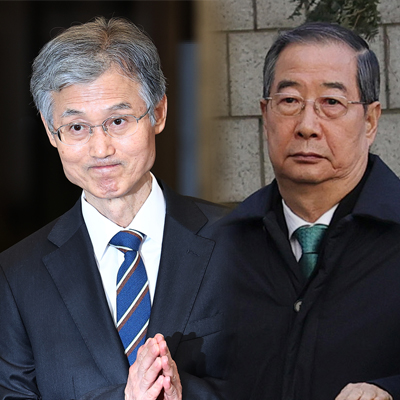
2026년 11월 19일 대법원 전원합의체의 한덕수 전 국무총리에 대해 일부 무죄 취지로 파기환송했다.

단상斷想
칼럼
HumanX
The Jo Hee-dae Judiciary's Insurrection Ruling and the Democratic Party's Responsibility

0
2026. 11. 20
- The Supreme Court confirmed the 12.3 emergency martial law as insurrection, but is criticized for downplaying former Prime Minister Han Duck-soo's involvement and leaving room for sentence reduction, thus avoiding substantial punishment.
- This lenient interpretation, ostensibly based on strict legal principles, is seen as excessively considering political context, and could be interpreted as Chief Justice Cho Hee-dae signaling compromise to insurrectionary forces and the establishment.
- While suspicions grow that the judiciary is abandoning its duty to uphold the Constitution, the Democratic Party, due to internal conflicts and political calculations, is failing to effectively exercise its oversight functions, such as impeaching the Chief Justice.
- Consequently, the judiciary's lenient judgment combined with the political sphere's passive response is weakening accountability for insurrection, which could lead to a serious institutional crisis undermining the foundations of democracy.
The Supreme Court en banc's ruling on November 19, 2026, regarding former Prime Minister Han Duck-soo and Kim Keon-hee, was formally a historic decision that for the first time confirmed the 12.3 emergency martial law as insurrection under criminal law. However, the practical effect of this confirmation was to partially narrow the scope of responsibility for insurrection and reopen the door to sentence reductions. The majority opinion in the Han Duck-soo case, which remanded the case with a partial acquittal for the act of recommending the cabinet meeting before the declaration of martial law, stating that 'it is difficult to prove the purpose of disturbing the constitutional order beyond a reasonable doubt,' emphasized the strict principle of proof in criminal law. The logic was that fulfilling the quorum of cabinet members is a procedural necessity, and given that former President Yoon Suk-yeol unilaterally declared martial law as soon as the quorum was met, before other members arrived, it was difficult to conclude former Prime Minister Han's intent to participate.
However, this interpretation is inevitably criticized as a result of viewing the essence of the crime of insurrection too narrowly. The position of Prime Minister is not merely an assistant in administrative procedures, but a position with the constitutional duty to check and control the President's constitutional powers. As the dissenting opinion pointed out, in a situation where a grave unconstitutional and illegal act of a coup d'état was imminent, the inaction of merely focusing on meeting the quorum and not taking any substantive obstructive action had ample room to be evaluated as an act contributing to the disturbance of the constitutional order. The path chosen by the Supreme Court was closer to a lenient interpretation that excessively considered the political context under the guise of strict legal principles.
Ultimately, this ruling can be interpreted as a signal from Cho Hee-dae to the forces of rebellion and the vested interests, saying, 'I have done my part sufficiently.' While acknowledging martial law as rebellion, the decision to remand a significant portion of the key actions with a view to acquittal and to leave room for sentence reduction appears to be the result of a compromise that avoids full condemnation while fulfilling minimal formal responsibility. At the same time, it is also possible that it acts as an implicit signal to the Democratic Party, saying, 'Since rebellion has been acknowledged, now reduce your attacks on the judiciary.' This interpretation suggests a strategic intention to leverage the confirmation of rebellion to alleviate additional judicial reform or impeachment pressure. This dual signal, while the judiciary attempts to maintain political balance, ultimately has the effect of weakening the substantive pursuit of accountability for rebellion.
This trend, which has been remanded again after 23 years in the first trial and 15 years in the second, is perceived by the public as a repetitive pattern of 'continuously creating conditions for sentence reduction for rebels.' Attempts to seize departments after the declaration, discussions of institutional blockades, and orders to cut off power and water to media outlets were upheld as guilty, but the exclusion of pre-declaration acts significantly expanded the scope of overall sentence recalculation. The fact that detention was maintained is a minimal check, but its meaning is limited given the possibility of further sentence reduction in the remand trial. In the Kim Keon-hee case, the Deutsch Motors stock manipulation and Unification Church bribery parts were upheld as guilty, resulting in a confirmed sentence of 4 years in prison, but the Myung Tae-gyun free public opinion survey part was solidified as innocent. While the judgment that proving agreement and intent under the Political Funds Act is difficult may be an evaluation of evidence in individual cases, the contrast between partially overturning key actions in the rebellion case with a view to acquittal and confirming another key suspicion as innocent on the same day makes one doubt the consistent strictness of the judiciary. The fact that the Supreme Court declared 'the December 3rd martial law is rebellion' is progress, but if that declaration does not lead to substantive accountability for the highest-ranking participants, the weight of the declaration is significantly diminished.
The question of whether the judiciary under Chief Justice Cho Hee-dae is making rulings based purely on legal principles has now expanded into an issue of institutional trust. Treason is a grave crime that denies the constitutional order of the state itself. The Supreme Court's decision to remand a case where lower courts had already recognized the intent to disrupt the constitutional order, citing 'insufficient proof of intent,' goes beyond a mere difference in legal interpretation and gives the impression that the judiciary has relatively downplayed the importance of upholding the Constitution. The dissenting opinion, which clearly defined the nature of the act as a coup d'état and emphasized the defendant's responsibility for inaction, proves that the path chosen by the majority opinion was not the only legal conclusion.
Judicial independence must be free from external pressure, but it cannot be free from the responsibilities bestowed by the Constitution. When judgments that repeatedly narrow the scope of responsibility for treason-related incidents and pave the way for reduced sentences accumulate, it inevitably comes to be seen as a trend of the entire judiciary, beyond mere differences in interpretation by individual courts. In a situation where controversy has persisted regarding the personnel composition and judgment trends within the judiciary since Chief Justice Cho Hee-dae took office, this ruling has added another layer of weight to that controversy. If the judiciary repeatedly produces outcomes that are detached from the constitutional consensus of the people, its independence risks degenerating into a self-protective mechanism that has lost its democratic legitimacy.
Regarding the question of whether the public can accept this judgment, the current trend makes it difficult to give a positive answer. The attitude of confirming martial law as treason while seemingly partially exempting the highest-ranking officials involved in its execution gives the impression that the judiciary, which should uphold the constitutional order, is instead delaying its restoration. The claim that the judicial establishment is implicitly colluding with the forces of treason to maintain its own power is difficult to assert definitively as no concrete evidence proving organized conspiracy has yet been disclosed. However, the resulting imbalance and distrust felt by the public are, in themselves, serious signals of an institutional crisis. While the judiciary's self-protection is strengthened, public trust continues to decline, which acts as a factor undermining the foundation of the rule of law.
At the same time, the Democratic Party's responsibility for failing to substantially pursue the impeachment of Chief Justice Cho Hee-dae up to this point cannot be lightly dismissed. The Democratic Party has put forward judicial reform and the checks and balances on prosecutorial and judicial power as key tasks. However, despite repeated controversies and judicial trends under the Cho Hee-dae system, they failed to properly rally political support and persuade the public for impeachment. Impeachment is not partisan retaliation; it is a constitutional mechanism that should be activated when public suspicion accumulates that the judiciary is neglecting its duty to uphold the Constitution. The Democratic Party's failure to activate this mechanism in a timely manner, being bogged down by internal factional conflicts, election strategies, and political calculations to avoid direct confrontation with the judiciary, has, as a result, contributed to creating an environment where current judicial decisions can persist.
The demand for the “Democratic Party to come to its senses” goes beyond emotional appeal; it is about holding them politically accountable for failing to properly perform their oversight function as an opposition party. The Democratic Party's passivity and internal divisions during past discussions on judicial reform contributed to the judiciary securing a relatively free space for judgment. As a result, the public has witnessed a reality where the judiciary's lenient interpretations and the political sphere's passive responses are intertwined. If the Democratic Party truly desires judicial reform, it should not merely consume impeachment discussions as a tool for political debate. Instead, it must propose concrete alternatives that institutionally guarantee increased transparency in judgments, consistency in sentencing standards, expanded public participation, and a responsible attitude from the judiciary regarding its duty to uphold the Constitution, and gather public support. Simultaneously, it must accurately analyze the issues of legal interpretation demonstrated by this ruling and publicize what standards should be applied in the remand proceedings and related cases. When the judiciary's lenient interpretations and the political sphere's passive responses intertwine, the damage falls not on a specific political party but on the constitutional order itself.
Whether South Korea maintains its identity as a democratic nation depends on how far the judiciary can hold people accountable for insurrection and how the political sphere checks that judiciary. The result of the Han Duck-soo case's remand will provide further answers to this question. However, even before that result, the public is already demanding stricter accountability from both the judiciary and the political sphere. Legal principles must be strict, but that strictness should not operate in a way that ignores the weight of upholding the constitution, and the responsibility of politics for allowing that ignorance cannot be lightly dismissed. When the judgments of the Cho Hee-dae judiciary continue to diverge from the public's constitutional expectations, and when the Democratic Party fails to check that divergence, South Korea's democracy risks falling into a cycle that weakens its own foundations. Breaking this cycle is the responsibility of both the judiciary and the political sphere.
댓글
( 0 / 500 )
andrea72
10
내란을 내란이라고 인정하는 것과 그 책임을 끝까지 묻는 것은 별개의 문제입니다. 법리의 엄격함이 권력자들에게만 유독 관대하게 적용된다는 의심을 사법부가 스스로 해소해야 합니다. 국민이 원하는 것은 형식적인 역사적 선언이 아니라 헌법 질서를 무너뜨리려 한 행위에 대한 실질적인 책임입니다.
( 0 / 500 )
U2king
7
조희대 대법원장의 판결도 문제지만, 더 답답한 것은 민주당의 대응입니다. 사법 개혁을 외칠 때는 언제고 정작 중요한 순간에는 내부 갈등과 정치적 계산에 발목이 잡혀 있습니다. 국민이 만들어 준 정치적 책임과 권한을 제대로 행사하고 있는지 민주당 스스로 돌아봐야 합니다.
( 0 / 500 )
無名
7
이번 판결에서 주목해야 할 것은 내란을 인정했다는 선언보다 그 책임을 어디까지 인정했느냐는 대목입니다. 법의 잣대가 권력의 크기에 따라 달라진다는 의심을 받는 순간 사법부의 권위도 흔들립니다. 조희대 사법부는 판결의 정당성을 국민에게 충분히 설명해야 하며, 민주당도 더 이상 방관자로 남아서는 안 됩니다.
( 0 / 500 )
Omegaman
6
대법원장은 법률의 문구 뒤에 숨는 자리가 아니라 헌법 질서를 수호할 최후의 책임을 지는 자리다. 내란의 실체를 인정하면서도 핵심 가담 행위의 책임을 좁히는 판단을 내놓았다면 그에 대한 비판도 감수해야 한다. 사법부의 권위는 직위가 아니라 판결의 공정성과 설득력에서 나온다.
( 0 / 500 )
진달래
6
내란 청산이 사법부의 판단에만 맡겨져서는 안 됩니다. 사법부가 헌법 수호의 책무를 다하고 있는지 정치권이 감시하고 견제하는 것도 민주주의의 중요한 원리입니다. 민주당은 계파 간 유불리를 따질 것이 아니라 사법 개혁이라는 본래의 책무로 돌아가야 합니다. 역사는 내란 세력뿐 아니라 그 책임을 제대로 묻지 못한 정치권도 함께 평가할 것입니다.
( 0 / 500 )
Youngcheol
5
조희대에게 묻는다. 내란을 막아야 할 국가 최고위 공직자의 책임은 어디까지인가? 법리의 엄격한 잣대를 강조하면서 헌법 수호의 적극적 의무는 왜 그토록 좁게 해석하는가? 국민이 납득하지 못하는 판결이 반복된다면 사법부에 대한 불신은 더욱 깊어질 수밖에 없다.
( 0 / 500 )
civilization
4
내란을 인정하면서도 가담자들의 책임을 부분적으로 덜어주는 판결이 나온다면 국민 입장에서는 혼란스러울 수밖에 없습니다. 법률적 판단과 국민의 법 감정 사이에 괴리가 왜 발생하는지 사법부가 설명해야 합니다. 민주당 역시 논평만 반복하지 말고 구체적인 사법 개혁으로 답해야 합니다.
( 0 / 500 )
GD79
3
민주당은 더 이상 사법부 눈치 보기와 계파 싸움으로 시간을 허비해서는 안 됩니다. 탄핵이든 제도 개혁이든 헌법과 법률에 근거한 책임 추궁의 기준을 명확히 세워야 합니다. 내란 청산은 정권의 과제가 아니라 대한민국 민주주의의 과제입니다. 국민이 지켜보는 것은 사법부의 판결뿐 아니라 정치권의 책임 있는 행동입니다.
( 0 / 500 )
대동단결
3
조희대 대법원장은 이번 판결이 역사에 어떻게 기록될지 생각해야 한다. 내란의 위헌성과 불법성을 인정하면서도 국무회의 관련 행위의 책임을 좁게 판단한 것은 두고두고 논쟁의 대상이 될 것이다. 사법부의 독립을 말하기 전에 국민이 왜 사법부를 불신하는지부터 돌아봐야 한다. 대법원장의 권위가 국민의 비판 위에 있을 수는 없다.
( 0 / 500 )
CJY
2
사법부의 독립은 존중받아야 하지만 그것이 사법부의 무책임이나 자기 보호를 의미하지는 않습니다. 판결은 존중하되 법리적 모순과 판단의 문제는 얼마든지 비판하고 검증해야 합니다. 국민의 신뢰를 회복하는 길은 권위가 아니라 납득할 수 있는 판결에 있습니다.
( 0 / 500 )
신고내용
신고내용을 선택해주세요
회원비난/비하/욕설글 및 댓글도배성 게시물저작권 침해/불법자료 유출허위사실유포개인정보 유출.사생활 침해무단광고/홍보음란물 및 도박 불법 광고물범죄행위 관련 글불법행위 관련 소개물품 판매 및 사기글악성코드 및 스파이웨어 유포기타 사유 및 운영진 판단


비밀번호를 잊으셨나요?
Sign in with Google


All information provided by us is free of charge and is for the public good.