品

Corea든 Korea든, 품격이 먼저다
Whether Corea or Korea, dignity comes first.
Whether Corea or Korea, dignity comes first.
Now
지금
751 Diaspora
Heritage
유산
Humanity
인문
Mirengsi
未冷尸
Politics
정치
Media
언론
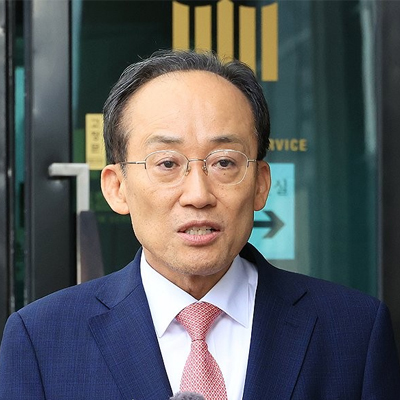
2026년 11월 18일 오후 한성진 부장판사가 추경호 대구시장에게 내란중요임무종사 혐의로 무죄를 선고했다.

단상斷想
칼럼
jeffrey
Choo Kyung-ho's First Instance Acquittal and the Judiciary

0
2026. 11. 19
- The first-instance acquittal of Daegu Mayor Choo Kyung-ho on charges of engaging in important duties during a rebellion, while cited by the court as lacking proof of 'intent and specific requests,' is not accepted as normal legal reasoning by many citizens.
- Contrary to the court's judgment, the public perceives Representative Choo Kyung-ho's actions to induce non-attendance at the National Assembly plenary session during the December 3rd emergency martial law as a grave dereliction of constitutional oversight duties, leading to distrust in the judiciary.
- This ruling amplifies doubts about the political neutrality and fairness of the judiciary under Chief Justice Cho Hee-dae's leadership, and the disparity in sentencing compared to other trials related to the December 3rd incident deepens public distrust.
- When the court focuses solely on evidence and intent, overlooking the 'position and outcome' during a moment of crisis, judicial trust collapses, extending to fundamental questions about the qualifications of National Assembly members, voter choices, and the overall functioning of the system.
- Ultimately, regardless of legal acquittal, this case reveals a gap between politicians' responsibilities, the judiciary's role, and civic consciousness during a constitutional crisis, suggesting that future political and historical evaluations must be more rigorous.
On the afternoon of November 18, 2026, Presiding Judge Han Seong-jin of the 34th Criminal Division of the Seoul Central District Court acquitted Daegu Mayor Choo Kyung-ho of the charge of engaging in important duties related to rebellion. The case, for which the special prosecution team for rebellion had sought a 20-year prison sentence, was concluded in the first trial due to insufficient proof of intent and specific requests. If a phone call between the leader of the rebellion and the party leader of the rebellion cannot be considered a crime, it is as if no rebellion occurred.
The reason this appalling brazenness works is that the core of political economy is a system where power that communicates with these rebellious forces can disregard the entire will of the people. As a result of over a hundred years of a world where claiming there was no rebellion, no dictatorship, no war, and no colonization makes it so, we now live in a world where no one rises up.
The sentiments of a significant number of citizens who remember the night of the December 3rd emergency martial law were still completely ignored. Although the court put on a show focusing on evidence and intent, many citizens do not consider an acquittal that devalues the status of the floor leader of the rebellious party in this way to be normal legal reasoning. This disconnect remains as a difference in perception regarding the role expected of a member of the National Assembly during a moment of national crisis.
Recalling the scene of that night makes the gap even clearer. On December 3, 2024, after emergency martial law was declared, the National Assembly was in a situation where it had to quickly process a resolution demanding its lifting. Choo Kyung-ho, who was then the floor leader of the People Power Party, changed the location of the general assembly of lawmakers several times between the National Assembly and the party headquarters in Yeouido. In that process, 90 out of 108 affiliated lawmakers could not attend the plenary session vote. However, the remaining 190 lawmakers present, including those from the People Power Party, unanimously passed the resolution demanding the lifting of martial law. The special prosecutor viewed this change of location as an act of tying up the votes of ruling party lawmakers and argued that it constituted participation in the rebellion, having accepted a request for cooperation from former President Yoon Suk-yeol's side.
On the other hand, the court found it difficult to conclude that former President Yoon made a specific request to prevent the vote itself, and that there was insufficient evidence to rule out reasonable doubt that Choo Kyung-ho intentionally complied. The change of venue was assessed as a measure taken amidst police control and confusion. In a criminal trial, an acquittal means that guilt has not been proven, not that the act was justified or politically appropriate. However, for many citizens, that distinction sounds hollow. The floor leader is not just an internal communication channel for the party. It is the position that can most directly and quickly exercise the duties of checks and balances and oversight granted to members of the National Assembly by the Constitution. In a situation where martial law was declared and the military and police were deployed around the National Assembly, the act of deciding how and where to gather the members inevitably had a substantial impact on whether they participated in the vote. If the result was the non-participation of 90 members, the weight of that responsibility is not lightened by the explanation that it was 'due to confusion.'
In this context, the question of whether judicial pressure under Chief Justice Cho Hee-dae's system played a role in this ruling is raised again. Chief Justice Cho Hee-dae was appointed by the previous government, and political controversies surrounding judicial appointments and operations have continued. Therefore, although there is no evidence that specific pressure was directly exerted on the first-instance court in this Choo Kyung-ho case, it creates a reasonable suspicion that Cho Hee-dae intervened to release the forces of rebellion. Furthermore, Chief Judge Han Seong-jin previously sentenced President Lee Jae-myung to one year in prison with a two-year suspended sentence in the first trial for violating the Public Official Election Act, and is known to be from the International Human Rights Law Research Group. There is insufficient evidence to conclude that the judgment in individual trials is the result of external pressure. Nevertheless, the background to these recurring questions is the public's distrust of the differences in sentences and acquittals seen in various trials following the December 3rd incident. Every time the court acquits due to lack of evidence, the reality is that suspicion follows as to whether the judgment was made purely on legal principles.
The judiciary was designed as the last bastion of constitutional order. However, when that bastion fails to adequately explain the choices and outcomes of moments of crisis that the public remembers, trust rapidly erodes. The disappointment many citizens feel regarding the Choo Kyung-ho case, concerning whether the change of location for the floor leader substantially affected participation in the vote, stems not from political dissatisfaction but from the disparity between expectations for the system and reality. This is also why criticisms of the qualifications and standards of National Assembly members are simultaneously raised.
원내대표는 평상시의 당내 조정자가 아니라, 헌법이 흔들리는 순간에 견제와 감시의 의무를 가장 직접적으로 행사할 수 있는 위치다. 추경호의 행위가 90명의 불참이라는 결과로 이어졌다면, 그 책임은 법원의 무죄 선고만으로 사라지지 않는다. 자질은 당선 여부로 증명되지 않으며, 위기 순간의 판단과 그 이후의 책임 인정 여부가 함께 평가되어야 한다. 12·3의 밤은 많은 국회의원에게 그 자질의 기준을 다시 묻게 만든 사건이었다. 그 기준에 미치지 못했다고 판단하는 시민들이 적지 않다면, 그 비판은 특정 개인을 넘어 제도 전체의 작동 방식에 대한 질문으로 이어질 수밖에 없다.
The process by which Daegu voters elected Choo Kyung-ho as mayor, even after related allegations had already been made public, also needs to be re-examined in the same context. While it is clear that the choice was made in an environment where regional sentiment and party support strongly operated, how rigorously citizens themselves examined the burden on city administration and the political implications brought by that choice remains a question. Voters' choices must be respected, but the responsibilities that come with those choices must be equally respected. While it is excessive to conclude that a specific region is ignorant, reflection is needed on the results produced by repeated choices. Choo Kyung-ho's statement after his election that he would "devote all his energy to Daegu city administration" is his position, but how that statement will be received by local residents and national public opinion is a matter that time will tell.
When all this reality feels bleak, some say they just laugh. That laughter might stem from resignation, or from the realization that expectations and reality are too far apart. While the court's strict requirement for proof of intent is fundamental to the rule of law, when that strictness fails to adequately explain the position and outcome of a crisis, the public questions the credibility of the entire system. The first-instance judgment is not the end. It is still unknown whether the special prosecutor will appeal, or how the evidence will be re-evaluated in higher courts. Legal principles cannot completely replace public sentiment, nor can sentiment replace legal principles. However, what has repeatedly emerged in various trials following the December 3rd incident is the tension between the public's expectations regarding 'position and outcome' and the court's standards regarding 'evidence and intent.' That tension does not end with Choo Kyung-ho alone. The judgment of the voters who chose him, the responsibility of the party that made him floor leader, and the societal consensus on what role a member of parliament should play in a moment of crisis must all be re-examined.
Just because an acquittal was handed down in court does not mean that the choices made that night will not be evaluated politically and historically. On the contrary, that is precisely why such an evaluation must be more rigorous and public. For the judiciary to remain an essential institution for the nation and its people, it must not only uphold standards of evidence and intent but also demonstrate the ability to explain the meaning of crisis moments that the public remembers. If a significant number of citizens feel that this ability is lacking, that distrust cannot be dismissed as mere emotion. The Choo Kyung-ho case, the voters' choices surrounding him, the qualifications of members of parliament, and the role of the judiciary all lead to the same question. This country will execute those who think correctly until the curtain falls on a world of fragmented, anti-reform collaborators. Well, in the name of the law.
댓글
( 0 / 500 )
guidance73
8
법원의 무죄 판결이 형사책임을 면제할 수는 있어도 역사적·정치적 책임까지 지워주지는 못합니다. 계엄의 밤 원내대표가 어디에 있었고 무엇을 했는지, 90명의 의원이 왜 표결에 참여하지 못했는지는 끝까지 따져야 할 문제입니다.
( 0 / 500 )
파란곰탱이
7
법은 증거와 고의로 판단하되, 정치는 책임과 결과로 평가받아야 합니다. 헌정질서가 무너질 수 있었던 순간에 국회의원들이 어떤 선택을 했는지 국민은 기억하고 있습니다. 무죄라는 두 글자로 그날 밤의 책임까지 덮을 수는 없습니다.
( 0 / 500 )
파스텔
5
계엄이라는 헌정 위기 상황에서 국민의힘 원내대표가 해야 할 일은 의원들을 국회로 모아 헌법적 의무를 다하도록 하는 것이었습니다. 그런데 결과적으로 90명의 의원이 표결에 불참했습니다. 무죄 판결이 나왔다고 해서 원내대표로서의 무능과 정치적 책임까지 면죄되는 것은 아닙니다.
( 0 / 500 )
gen44
6
무죄 판결을 정치적 훈장처럼 내세울 일이 아닙니다. 90명의 의원이 헌법적 의무를 다하지 못한 상황에서 원내대표였던 추경호가 져야 할 책임은 여전히 남아 있습니다. 대구시장이라는 자리가 과거의 정치적 책임을 덮어주는 방패가 되어서는 안 됩니다.
( 0 / 500 )
sorceress
4
추경호는 내란 혐의의 유무죄를 떠나 12·3 계엄 당시 집권당 원내대표로서 무엇을 했는지부터 국민 앞에 답해야 합니다. 국회가 헌정질서를 지켜야 할 절체절명의 순간에 의원들의 표결 참여를 이끌지 못한 책임은 결코 가볍지 않습니다.
( 0 / 500 )
piccolo
5
더욱 우려스러운 것은 개별 판결을 넘어 사법부 전체에 대한 국민의 신뢰가 무너지고 있다는 사실입니다. 사법부가 스스로 권위를 지키려면 판결의 독립성뿐 아니라 국민이 납득할 수 있는 논리와 설명도 내놓아야 합니다. 권위는 강요한다고 생기는 것이 아닙니다.
( 0 / 500 )
Ellie
4
국민이 기억하는 것은 법정의 논리만이 아닙니다. 계엄군이 국회를 짓밟던 그 밤, 추경호는 국민의힘 원내대표로서 어떤 판단을 했습니까? 정치인의 자질은 평상시의 말솜씨가 아니라 국가적 위기에서 드러나는 법입니다.
( 0 / 500 )
하늘이
4
국회의원은 정당의 지시를 따르는 당직자가 아니라 국민과 헌법에 복무하는 헌법기관입니다. 추경호는 계엄의 밤 자신이 어떤 역할을 했는지 국민 앞에 제대로 설명해야 합니다. 법정에서 무죄를 받았다고 정치적 책임마저 끝났다고 생각한다면 그것이야말로 오만입니다.
( 0 / 500 )
KSPark
2
추경호 한 사람의 문제가 아닙니다. 내란 당시 집권당의 원내대표가 보여준 판단, 그를 다시 선택한 정당, 그런 정치인을 시장으로 선출한 지역사회의 책임까지 함께 돌아봐야 합니다. 민주주의는 투표로 완성되는 것이 아니라 투표 이후의 책임으로 유지됩니다.
( 0 / 500 )
angel
1
내란은 군홧발이 국회에 들어왔다고 끝나는 문제가 아닙니다. 그 내란을 가능하게 했던 정치적 토양과 제도적 방조까지 청산해야 비로소 끝났다고 할 수 있습니다. 법의 이름으로 불의가 정당화되는 사회라면 민주주의를 지키기 위한 개혁은 더욱 단호해야 합니다.
( 0 / 500 )
신고내용
신고내용을 선택해주세요
회원비난/비하/욕설글 및 댓글도배성 게시물저작권 침해/불법자료 유출허위사실유포개인정보 유출.사생활 침해무단광고/홍보음란물 및 도박 불법 광고물범죄행위 관련 글불법행위 관련 소개물품 판매 및 사기글악성코드 및 스파이웨어 유포기타 사유 및 운영진 판단


비밀번호를 잊으셨나요?
Sign in with Google


All information provided by us is free of charge and is for the public good.