品

Corea든 Korea든, 품격이 먼저다
Whether Corea or Korea, dignity comes first.
Whether Corea or Korea, dignity comes first.
Now
지금
751 Diaspora
Heritage
유산
Humanity
인문
Mirengsi
未冷尸
Politics
정치
Media
언론
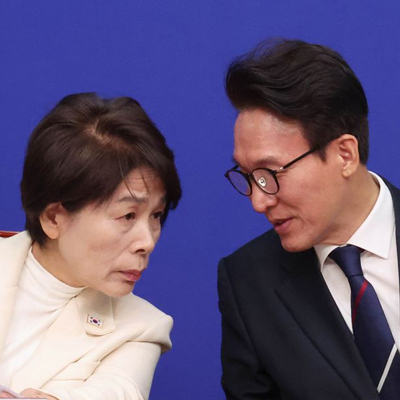
최민희 최고위원을 둘러싼 일련의 언행 논란은 개인적 실언이나 일시적 계파 갈등의 수준을 넘어섰다

단상斷想
칼럼
HumanX
Hyena pack, memory error, and the appropriate level of discipline for Choi Min-hee

0
2026. 11. 17
- Supreme Council member Choi Min-hee's false statements about the President and disparagement of the media are deepening internal party divisions and undermining the legitimacy of the administration.
- Despite past disciplinary actions, similar controversies are recurring, raising questions about the effectiveness of the party's ethical standards, necessitating severe measures beyond mere warnings.
- Representative Kim Min-seok must establish party discipline and maintain momentum for state affairs by making a firm disciplinary decision based on principles, without being swayed by factional conflicts.
Lies about the President and internal party strife
The series of controversial remarks and actions by Supreme Council member Choi Min-hee within the Democratic Party has gone beyond mere personal gaffes or temporary factional conflicts. The controversy has not subsided, even after the Blue House immediately refuted as “groundless” Choi’s remarks, made public from a private party members’ meeting, that President Lee Jae-myung had opposed the impeachment of former President Yoon Suk-yeol when Lee was party leader, and even after Choi herself repeatedly apologized, citing “a lapse in memory” and “confused remarks during a Q&A session.” The problem has escalated with her additional description of National Assembly photo and video journalists as a “pack of hyenas.” Now that Chairman Kim Min-seok has received the results of the ethics inspection team’s investigation and ordered the case to be transferred to the Central Party Ethics Tribunal, the decision on whether and how to discipline her has become a critical one that will determine the party’s discipline and the stability of state administration. This issue cannot simply be overlooked. The act of a senior party leader distorting the President’s political judgment and the legitimacy of the government’s creation in front of party members ultimately undermines the ruling party’s foundation for state administration.
The core of the problem lies in the content of the remarks and the context in which they were delivered. The narrative that a compromise was sought by joining hands with then-Prime Minister Han Duck-soo to secure centrist support during the impeachment phase directly contradicts the official position that President Lee consistently advocated for and achieved impeachment after the December 3, 2024 rebellion. Although Supreme Council member Choi later corrected himself, stating, “The President consistently advocated for impeachment, and that is a fact,” the recorded statement had already been released and the narrative conveyed to the party's most active supporters, the party members, cannot be easily erased. Given that the remarks were made in the capacity of a Supreme Council member, their repercussions clearly extend beyond a personal slip of the tongue. A narrative that makes the President appear opportunistic undermines the legitimacy of the administration from within and provides ammunition for attack to the opposition and critical forces. This goes beyond factual errors and has had the effect of negatively imprinting the President's consistent actions on party members. The sight of the ruling party internally shaking the President's judgment is bound to weaken not only the trust of its supporters but also its persuasive power among centrists.
Furthermore, inappropriate expressions regarding the media, coupled with this, are shaking the party's external credibility. The remark referring to reporters as a 'pack of hyenas' goes beyond an emotional expression and can only be interpreted as revealing the party leadership's perception of the reporting environment. This is why the Korea Photojournalists Association immediately expressed regret and demanded an apology. If the ruling party manages its relationship with the media in this manner, the channels for policy promotion and public opinion gathering will narrow, and unnecessary conflicts are likely to recur. Especially in a situation where national issues are piled up, unnecessary friction with the media can reduce policy delivery effectiveness and lead to distortion of public opinion. Supreme Council member Choi's remarks were not an expression of emotion but resulted in damaging the entire party's external image. If such words and actions are repeated, the ruling party will face greater difficulty in persuading the public of the effectiveness of its policies.
Harmony without principles leads to greater division.
More seriously, these issues have become a catalyst for intensifying internal party divisions. The pro-Cheonggyeong faction's supreme council members' response to Chairman Kim Min-seok's inspection order—characterizing it as an 'malicious frame shift' or 'pressure to cover up the Shincheonji allegations,' and boycotting the supreme council meeting to hold a separate press conference—is a response that obscures the true nature of the problem. The Shincheonji-related allegations and Supreme Council Member Choi's controversial words and actions are clearly separate issues. Attempts to offset one's responsibility with another problem undermine the party's ethical standards and sow deep distrust among supporters. Using allegations raised during the party convention process as a tool for attack by linking them to the current controversy sets a dangerous precedent that subordinates the party's internal discipline to political calculations. Questions such as 'Who is this inspection for?' are being raised among party members, which weakens the leadership's authority and hinders party cohesion. If there is no principled judgment in a situation where factional conflicts are becoming overt, the party will waste energy on internal infighting rather than focusing on state affairs.
His past record cannot be taken lightly either. Supreme Council Member Choi received a 'warning' from the Ethics Tribunal in early 2026 regarding the controversy over congratulatory money for his daughter's wedding. This was an issue where he was accused of sending wedding invitations to officials of audited organizations during the parliamentary audit period and receiving cash congratulatory money. Although a warning was the lowest level of disciplinary action the party could impose, his being at the center of a similar controversy just a few months later raises questions about the effectiveness of party discipline. In a situation where the recording of a party member meeting has been released and he himself has admitted the facts, his attitude of trying to evade responsibility with an explanation of 'I was confused' and an SNS apology simultaneously undermines the authority of the leadership and the party's internal norms. The fact that some pro-Lee Jae-myung external organizations issued a statement demanding his expulsion is also a reflection of this accumulated dissatisfaction. There are not a few cases where the Democratic Party suffered a loss of support and damage to its image by handling internal problems lukewarmly in the past. Given that the punishment, which was limited to a warning, failed to prevent recurrence, it is natural that voices are calling for more effective measures regarding this matter.
The appropriate level of disciplinary action cannot be limited to a warning or caution. Given the repeated instances of distorting facts about the President, instigating internal party strife, and making inappropriate remarks to the media, a more effective measure, at least a suspension of party membership, is necessary. While expulsion may be an extreme measure and not necessarily the only solution, suspending duties as a supreme council member for a certain period or restricting party membership itself for a certain period are within the scope of consideration. During the deliberation process of the Ethics Committee, the clarity of facts, intentionality, risk of recurrence, and the actual damage caused to the party and the administration must be objectively evaluated. However, the outcome should not be glossed over in the name of 'party harmony.' True harmony can only be achieved by upholding principles. Harmony that sacrifices principles is merely a temporary patch and will only sow the seeds for the next conflict. If the party's ethical standards vary according to factional interests, it will be difficult to regain the trust of party members in the long run.
A clear decision demanded from CEO Kim Min-seok
What is required of Chairman Kim Min-seok is a clear and decisive resolution. Having ordered an audit, an attitude that adjusts the results based solely on political calculations or factional balance is tantamount to shirking responsibility as party leader. Now, in the second year of the administration, if the ruling party loses momentum, the damage will not be confined to the party itself. The implementation of national tasks will be delayed, effective responses to the opposition's offensives will be hampered, and the alienation of swing voters and supporters may accelerate. This is not merely a loss within the party but incurs enormous national opportunity costs. If the ruling party falters, policy consistency and speed will decline, and its ability to respond to diplomatic, security, and economic issues will weaken. Especially with pressing issues such as low birth rates, real estate, industrial competitiveness, and judicial reform, the loss of momentum due to internal party strife will lead to harm for the entire nation. While it is true that Chairman Kim bears the burden of managing various allegations raised during the party convention process and the current internal strife simultaneously, postponing a clear judgment due to this burden would pass an even greater burden onto the entire party and the next leadership. To maintain the momentum of the early administration, rectifying internal discipline must be prioritized.
What is needed now is not emotional retribution but the establishment of standards. A clear message must be sent both within and outside the party that the party will not tolerate the distortion of the President's actions before party members, leading to the party being engulfed in the noise of division. As Supreme Council member Choi Min-hee's behavior was not merely a personal mistake but had a substantial impact on party discipline and the legitimacy of the administration, the disciplinary action must be firm. The decision Chairman Kim Min-seok makes in this situation will not be a personnel measure but a touchstone demonstrating the principles and direction the party will take. To prevent national damage, a clear and decisive resolution based on principles must be made. We hope that he does not make the mistake of trying to buy time with a lukewarm response, only to invite greater division and loss of momentum. Considering the future of the party and the continuity of national governance, now is the time to draw a clear line.
댓글
( 0 / 500 )
올드보이55
7
최고위원이라는 자리는 개인의 정치적 감정이나 기억을 앞세우는 자리가 아닙니다. 대통령의 정치적 행보를 사실과 다르게 전달하고 당원들에게 잘못된 인식을 심어준 책임은 결코 가볍지 않습니다. 사과 한마디로 끝낼 일이 아니라 분명한 책임을 져야 합니다.
( 0 / 500 )
sun
9
김민석 대표님 더 이상 머뭇거릴 시간이 없습니다. 감찰을 지시했다면 그에 상응하는 책임도 물어야 합니다. 계파의 눈치를 보며 적당히 봉합한다면 당 대표의 리더십은 물론 당원들의 신뢰까지 잃게 될 것입니다. 원칙을 세우는 것이 진정한 당내 화합의 출발점입니다.
( 0 / 500 )
Philip
6
최민희 최고위원은 이제 자신의 언행이 민주당과 이재명 정부에 얼마나 큰 부담을 주고 있는지 돌아봐야 합니다. 대통령의 정치적 행보를 왜곡하고 기자들을 하이에나 떼라고 비하하는 사람이 과연 집권 여당의 최고위원 자격이 있는지 묻고 싶습니다. 사과보다 책임이 먼저입니다.
( 0 / 500 )
crown77
6
김민석 대표의 리더십이 시험대에 올랐습니다. 잘못을 바로잡지 못하는 지도부는 당을 이끌 자격도 없습니다. 최민희 최고위원에 대한 징계를 어물쩍 넘긴다면 민주당의 기강은 무너지고 이재명 정부의 국정 동력에도 부담이 될 것입니다. 계파가 아니라 원칙으로 판단하고 단호하게 결단하십시오.
( 0 / 500 )
Pohang
5
언론인을 하이에나 떼라고 표현한 것도 문제지만, 대통령의 과거 행보를 왜곡한 발언은 더욱 심각합니다. 집권 여당의 지도부라면 자신의 말에 책임을 져야 합니다. 계파가 다르다는 이유로 감싸거나 징계를 피하게 해서는 민주당의 미래가 없습니다.
( 0 / 500 )
kingkong
4
당내 화합이라는 명분으로 잘못을 덮는 순간 그것은 화합이 아니라 방조입니다. 신천지 의혹과 최민희의 언행 문제는 별개로 다뤄야 합니다. 김민석 대표는 계파의 눈치를 보지 말고 당의 원칙과 기강을 세우는 결단을 보여줘야 합니다.
( 0 / 500 )
nam88
3
한 번의 실수는 이해할 수 있어도 반복되는 논란과 책임 회피는 더 이상 실수로 받아들이기 어렵습니다. 특히 과거에도 윤리 문제로 경고를 받았던 인물이라면 더욱 엄격한 자기 성찰이 필요합니다. 최고위원이라는 직책에는 그에 걸맞은 책임이 따라야 합니다.
( 0 / 500 )
바바리안
3
기억 착오라는 말로 모든 책임을 피해 갈 수는 없습니다. 당원들 앞에서 대통령의 과거를 왜곡해 놓고 문제가 되자 헷갈렸다고 변명하는 모습은 정치인의 기본적인 신뢰마저 무너뜨립니다. 최고위원이라는 자리가 개인의 정치적 감정과 독선으로 유지되는 자리는 아닙니다.
( 0 / 500 )
krrr
3
최민희 최고위원은 민주당의 동지가 누구인지, 지금 무엇을 위해 싸워야 하는지부터 다시 생각하십시오. 대통령을 흔들고 당내 분열을 키우면서 자신만 피해자인 것처럼 행동하는 것은 책임 있는 정치인의 자세가 아닙니다. 당의 기강을 위해서라도 이번에는 엄중한 책임을 져야 합니다.
( 0 / 500 )
Augustine
1
지금 민주당에 필요한 것은 계파 간 자리 나눠 먹기도, 무조건적인 동지 감싸기도 아닙니다. 대통령을 중심으로 국정에 힘을 모으고 국민과의 약속을 실천하는 것입니다. 당의 분열을 부추기는 행위에는 분명한 책임을 물어야 합니다. 김민석 대표의 결단을 지켜보겠습니다.
( 0 / 500 )
신고내용
신고내용을 선택해주세요
회원비난/비하/욕설글 및 댓글도배성 게시물저작권 침해/불법자료 유출허위사실유포개인정보 유출.사생활 침해무단광고/홍보음란물 및 도박 불법 광고물범죄행위 관련 글불법행위 관련 소개물품 판매 및 사기글악성코드 및 스파이웨어 유포기타 사유 및 운영진 판단


비밀번호를 잊으셨나요?
Sign in with Google


All information provided by us is free of charge and is for the public good.