品

Corea든 Korea든, 품격이 먼저다
Whether Corea or Korea, dignity comes first.
Whether Corea or Korea, dignity comes first.
Now
지금
751 Diaspora
Heritage
유산
Humanity
인문
Mirengsi
未冷尸
Politics
정치
Media
언론
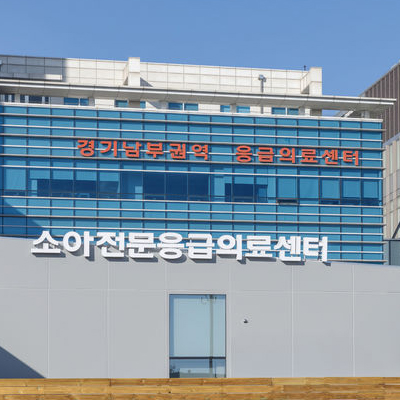
아주대학교병원 소아전문응급의료센터

단상斷想
칼럼
Dr_Pepper
The reason police power was possible in the emergency room

0
2026. 11. 13
- The Ajou University Hospital pediatric emergency room search and seizure incident exposed a structural contradiction in Korean society where the most vulnerable patients are sacrificed as medical staff, police, and bereaved families clash, each asserting their own rights.
- In particular, the police's investigative practices, remnants of the Japanese colonial era, and doctors' collective resignation movements prioritize their own exercise of power over public good, warning of severe consequences such as the collapse of the medical system.
- This incident shows how asserting "legitimate rights" can devolve into "structural violence" that threatens other lives, pointing to a backward aspect of Korean society that fails to consider proportionality and public good when exercising rights.
- Ultimately, with the essential values of patient treatment and life being pushed aside, the costs of power struggles are entirely passed on to the public, potentially leading to the paralysis of the national system.
On July 15, 2026, a 4-month-old infant of Uzbek nationality was brought to Ajou University Hospital's Pediatric Emergency Medical Center in a state of cyanosis and cardiac arrest. The medical staff performed CPR for over an hour on the child, who was as good as dead, but the child ultimately passed away. The parents reported the death to 112 immediately after, and soon after, they sued the medical staff for professional negligence resulting in death. Two months later, on September 30, the Gyeonggi Nambu Provincial Police Agency, armed with a warrant issued by the Suwon District Prosecutors' Office, raided the pediatric emergency room during patient care. It is questionable how this couple was able to file a lawsuit, and why the matter was not resolved within common sense over two months.
This incident fully exposed the roots of the Republic of Korea's police, which failed to liquidate the governance practices of the Japanese colonial police. One might ask why the Japanese colonial era is brought up whenever something happens, but once laws and systems are established, they instill habits and judgment criteria in the people who work within them, and that inertia does not easily disappear just because the government changes. Just as someone over sixty would know that the direction or method of achieving desires in childhood does not easily change with age, it must be pointed out that the roots of the Republic of Korea's police lie in the distortion of administrative history, which has continued the practices rooted in the Japanese colonial police who tortured anti-Japanese patriots by pulling out their tongues, without correcting them.
The Korean police, under Japanese colonial rule, did not exist to protect their own people; on the contrary, their raison d'être was to attack, abuse, neglect, and abandon them. After liberation, under the protection of the U.S. military government, the Korean police inherited the governance methods of the Japanese Government-General, further strengthening colonial rule and the dual legacy left by the U.S. military government. This is the Republic of Korea police. If news had emerged that Ajou University Hospital had been raided because a Korean infant was in the same situation, the public would assume that the infant was someone powerful, perhaps the child of Bae Yong-joon. Although the police's double standard of beating their own citizens and accepting bribes in exchange for leniency has improved with the growth of civic consciousness, the fundamental fact remains that the police were an organization whose primary purpose in the liberated space was 'enforcement.' The Republic of Korea police played a significant role in burying and concealing the reasons why the U.S. had to remain even after colonial rule ended, and why, in addition to enforcement, they had to go as far as 'war cleanup.' Those roots remain intact.
A normal police officer, upon hearing about an infant arriving at a university hospital in cardiac arrest, would not commit the idiotic act of raiding the hospital. The reason principles and manuals are well-applied in such situations is that, regardless of who the other party is, this subservience to foreigners is also based on a foolish mental defect. A police officer capable of sound judgment would instead investigate the reasons why the infant arrived at the hospital in cardiac arrest. With the disappearance of the Joseon Government-General, the pre-modern values of public authority, like a dog chasing a chicken and then staring at the roof, have lost their direction in the modern era, unsure of what or whom to wield their bat for.
This raid became the starting point for all subsequent conflicts. The police explained, “We first checked spaces where there were no patients, our stay lasted only 17 minutes, and it was executed minimally after prior consultation.” In contrast, the medical staff protested, “They took photos in the resuscitation room where treatment was not yet finished, asked us to move aside to check computers, and treated us like criminals.” Professor Lee Ji-sook, the center director, stated, “We did not receive a satisfactory explanation.” At the National Assembly audit, the police merely expressed ‘regret,’ which the medical community interpreted as a refusal to apologize. The majority of the public, in fact, finds the very existence of such police more regrettable. It is unfair that the police covered up their history of torturing and disabling citizens, but with the 2024 medical school quota increase of 2,000 students, a situation created by Yoon Suk-yeol, university hospital emergency rooms have become even less accessible. University hospital emergency rooms are not what they used to be. One can psychologically feel that the threshold for university hospitals has risen due to the changed language attitude, now filled with denials like ‘Go to another hospital, we can’t treat you, no, we can’t do it.’ If costs also increase like in Western countries, it will be the government and public authority that have ruined Korea’s medical system.
At Ajou University Center, 7 out of 9 affiliated specialists expressed their intention to resign, and the center director also submitted their resignation. Although the police command visited the hospital and expressed regret, the medical staff's anger did not subside. This center was ranked second nationwide in the regional emergency medical center evaluation. Instead of using inadequate words of regrettable apology, wouldn't it be more appropriate for the police to publicize the issues with the chain of command on the day of the incident and dismiss those responsible one after another? While we're at it, the disciplinary measures of dismissal and removal for public officials should also be reviewed. Just as national assembly members and chaebol find loopholes to escape, turning a blind eye to everything, public officials also use the same loopholes. Ultimately, this damage is passed on to the public, and fundamentally, due to a shameful judicial system, it paralyzes the nation.
This case is not merely a controversy over a medical malpractice investigation. It highlights how patients and their treatment, which should be at the forefront, are pushed aside when three parties—doctors, police, and bereaved families—clash, each asserting their 'rights' and 'power.' It also challenges who holds the validity and justification for a double standard where the existence of historically disenfranchised citizens is marginalized.
First, let's look at the parents' position. The grief of losing a child cannot be fully explained by any institutional language. They suspected medical negligence and reported and sued the police. This is a legally guaranteed right. Demanding the truth is a natural right of the bereaved family and a minimum safeguard to check the opacity of the medical field. However, the moment that right is exercised, the scene already begins to transform from a 'space of treatment' to a 'space of investigation.' In particular, the fact that the parents were foreigners was consumed by some public opinion with sentiments like, “Is Korea a pushover?”, creating room for the right to mourn to be distorted into a political and emotional tool. When grief transcends rights and becomes a force that compels specific outcomes, it is no longer pure mourning. The government and ruling party must not engage in politics that fail to escape the 'national pushover' frame.
Next is police power. Once the possibility of medical malpractice is raised, it is the natural duty of public authority for the police to investigate. Choosing to execute a warrant instead of voluntary submission, based on the judgment that there is a risk of evidence tampering or alteration, may also be procedurally possible. However, the problem is 'where and how' that power was exercised. Targeting the pediatric emergency room, a place where every second counts, as the subject of a coercive investigation, assumes that the necessity of the investigation can override patient safety and continuity of care. The police emphasize '17 minutes,' but the moment medical staff feel '1 hour and 30 minutes of disruption to treatment,' that number takes on a different meaning. The attitude of merely saying 'it's regrettable' when asked to apologize at the parliamentary audit revealed that public authority can be insensitive to the wounds on the ground, asserting only its procedural legitimacy.
The current situation, where the police can impersonate chaebols and national assembly members, is the most precarious. This is public authority that has not been sufficiently reformed mentally. The sin of failing to modernize the Japanese colonial era's mental reform of Koreans is also an act of resentment. The subsequent visit by the leadership to the hospital to express regret and the government's discussion of investigation guidelines for essential medical fields are belated attempts at damage control. A structure where power is exercised first, and restrictions are discussed only after observing its repercussions, is a typical backward situation. In an era of 20 million foreign tourists, whom will the police protect? If there's still a desire to beat up their own citizens at the slightest provocation, shouldn't the police conduct aptitude tests internally first?
The most subtle point is the power of doctors. It is fully understandable that medical staff felt insulted and that their medical practice was disrupted during the search and seizure process. However, the moment that backlash led to a collective expression of intent to 'resign,' it transformed from an individual right into an exercise of professional power. Even assuming there was no medical malpractice in this incident, the act of seven pediatric emergency specialists simultaneously threatening to leave inherently jeopardizes the regional pediatric emergency system. In a reality where there are only about 100 pediatric emergency specialists nationwide, a staffing void at one central facility immediately lowers the survival chances of other children and parents.
When the Korean Medical Association and the Korean Society of Pediatric Emergency Medicine cry out, "If you trample on the emergency room, who will take care of the children?" and "Coercive search and seizure collapses emergency medical care," the legitimacy of their appeal is acknowledged. However, at the same time, when that appeal manifests as actual pressure through collective resignations, doctors are confusing their 'right to practice' with power over patients. Instead of making excuses about patients, they should be honest that their pride as doctors was hurt. The statement, 'My hands are shaking, so I can't treat patients,' might be a genuine expression of distress, but its sincerity fades when it becomes leverage that holds patients hostage. The good old days for doctors are over. It's not a bad life lesson to resign and go out into the cold to see what kind of work you can do.
The history of doctors in South Korea, rooted in Western missionary work and the training of Western doctors during the Japanese colonial era, and the current situation where these practices have led to entrenched vested interests, is as dirty and deeply rooted as the history of the police. Park Seoyang, a Western doctor from a 'baekjeong' (butcher) background, and Ahn Sang-ho, who was involved in the assassination of Emperor Gojong, were also Western doctors. It's not that 'baekjeong' are bad; what's wrong is that Severance Hospital's history, which trained the son of a 'baekjeong' to be a Western doctor, conceals its role as one of the organizations and institutions that played a significant part in the downfall of Joseon, and continues to operate as a university real estate conglomerate in modern times. Korean universities like Seoul National University, Yonsei University, and Ewha Womans University act as institutions that suppress the discourse on decolonization from surfacing. This needs to be explained in a different context.
What these three parties commonly demonstrate is that in the process of prioritizing their respective rights and powers, the most vulnerable—other children currently seeking emergency care—are relegated to a lower priority. Parents aim at each other with the right to mourn, the police with the power to investigate, and doctors with the scarcity of their profession, but the cost of this conflict is ultimately borne by the patients. In a situation where negligence has not yet been concluded, the act of shaking the system through resignation even without negligence, and the act of pressuring the emergency room itself to confirm the possibility of negligence, create the same problem from different directions. Both assert 'their legitimate rights,' but when the pediatric emergency system is shaken as a result, the first to suffer are the children who don't even have the power to claim their rights.
This situation reveals a contradiction in Korean society: while emphasizing 'rights,' it has failed to adequately institutionalize proportionality and public interest when those rights are exercised. Doctors have the right to provide care without fault, but also the responsibility to maintain the system so that care is not interrupted. The police have investigative powers, but also the limit that their investigations should not endanger other lives. Bereaved families have the right to demand the truth, but also the boundary that their demands should not excessively infringe upon the treatment rights of other patients. When these three do not operate simultaneously, society approaches a self-diagnosis of being a 'violent, underdeveloped country-type incident.' This violence is not physical violence, but structural violence where each party's power clashes without acknowledging the other, sacrificing the weakest beings.
The lights of Ajou University Hospital's pediatric emergency room are still on. However, under those lights, doctors are preparing to leave, the police are discussing guidelines, and parents are awaiting the outcome of a lawsuit. Meanwhile, when another child gasps for breath and opens the door, it is still unclear whose power it is to greet that child, or if it belongs to no one. In Korean society, where rights and power aim at each other, this incident questions how the fundamental act of treatment can be protected—a question left by a Korea that is committing suicide by shooting each other.
댓글
( 0 / 500 )
dany
8
유족의 진실 규명 요구도 존중해야 하고 경찰의 수사권도 인정해야 합니다. 그러나 생명을 다루는 응급실에서만큼은 수사의 필요성이 진료의 연속성을 침해하지 않도록 엄격한 원칙이 있어야 합니다. 이번 사건은 필수의료 보호를 위한 제도적 안전장치가 얼마나 절실한지 보여줍니다.
( 0 / 500 )
cyberpunk
7
의사들의 분노에는 충분히 공감하지만 집단 사직이 해법이 될 수는 없습니다. 의료진의 진료권과 자존심도 중요하지만 무엇보다 환자의 생명과 치료받을 권리가 우선되어야 합니다. 경찰의 잘못을 비판하면서 의료계 역시 자신들의 공적 책임을 돌아봐야 한다는 지적에 동의합니다.
( 0 / 500 )
Cassandra
6
결국 이 사건은 대한민국의 공권력과 전문직 모두에게 책임이 무엇인지 묻고 있습니다. 권리는 주장하면서 책임은 외면하고, 권력은 행사하면서 결과에는 무책임한 사회가 지속된다면 피해자는 언제나 가장 약한 사람들입니다. 아이들의 생명을 중심에 놓고 경찰과 의료계 모두 근본적인 성찰을 해야 합니다.
( 0 / 500 )
산들바람
6
이번 사건을 단순히 경찰의 과잉수사나 의료계의 집단행동 문제로 축소해서는 안 됩니다. 해방 이후 청산하지 못한 권력기관의 잘못된 관행과 기득권화된 전문직 문화가 한꺼번에 드러난 사건입니다. 결국 국민의 생명과 안전을 기준으로 두 조직 모두를 개혁해야 합니다.
( 0 / 500 )
kimpapa
5
이 글의 핵심은 경찰과 의사, 유족 가운데 누가 옳으냐를 따지는 데 있지 않고, 그 갈등의 결과를 왜 아무런 힘도 없는 아이들이 감당해야 하느냐는 질문에 있다고 봅니다. 공권력에는 절제와 책임이, 의료진에게는 전문직으로서의 사명과 공공성이 요구됩니다.
( 0 / 500 )
열린미래
5
경찰이 영장을 발부받았다는 사실이 모든 집행 행위의 정당성을 보장하지는 않습니다. 법적 절차에도 상식과 비례의 원칙이 있어야 합니다. 특히 응급실처럼 생명이 오가는 공간에서는 일반적인 압수수색과는 다른 엄격한 기준을 적용해야 합니다.
( 0 / 500 )
박준
4
의사도 경찰도 국민을 위해 존재하는 공적 기능의 수행자라는 사실을 잊어서는 안 됩니다. 경찰은 수사권을 특권으로 착각해서는 안 되고, 의사는 전문성과 희소성을 사회적 면책특권으로 여겨서도 안 됩니다. 공공성을 잃은 권리는 또 다른 권력이 될 뿐입니다.
( 0 / 500 )
Hybridman
4
경찰의 수사권은 국민을 보호하기 위해 존재하는 것이지, 현장의 전문성과 생명 구조 활동을 위축시키기 위해 존재하는 것이 아닙니다. 영장이 있다는 이유만으로 모든 집행이 정당화되는 것은 아닙니다. 공권력일수록 더 높은 수준의 절제와 책임이 필요합니다.
( 0 / 500 )
woojoo
3
외국인 부모라고 해서 자녀의 죽음에 대한 진실 규명 권리가 달라질 수는 없습니다. 반대로 외국인이라는 이유로 경찰이 과도하게 눈치를 보거나 의료진을 압박해서도 안 됩니다. 국적과 감정을 떠나 동일한 법과 원칙을 적용하는 것이 진정한 국민주권 국가의 모습입니다.
( 0 / 500 )
Eulji6
3
이 사건에서 가장 안타까운 것은 정작 생명을 잃은 아이는 아무런 목소리도 낼 수 없고, 앞으로 응급실을 찾아야 할 아이들마저 불안해졌다는 사실입니다. 경찰도 의사도 유족도 결국 생명을 위해 존재해야 합니다. 권리와 권력의 대립을 넘어 생명을 최우선에 두는 사회적 원칙부터 다시 세워야 합니다.
( 0 / 500 )
이판사판
1
가장 중요한 것은 이 사건 이후에도 소아 응급의료 체계가 정상적으로 작동할 수 있느냐는 것입니다. 경찰의 책임은 분명히 규명하고 의료진의 공적 책임도 함께 논의해야 합니다. 어느 한쪽의 승패가 아니라 다시는 응급실에서 환자가 권력 다툼의 희생양이 되지 않도록 제도를 바꾸는 것이 진정한 해결입니다.
( 0 / 500 )
신고내용
신고내용을 선택해주세요
회원비난/비하/욕설글 및 댓글도배성 게시물저작권 침해/불법자료 유출허위사실유포개인정보 유출.사생활 침해무단광고/홍보음란물 및 도박 불법 광고물범죄행위 관련 글불법행위 관련 소개물품 판매 및 사기글악성코드 및 스파이웨어 유포기타 사유 및 운영진 판단


비밀번호를 잊으셨나요?
Sign in with Google


All information provided by us is free of charge and is for the public good.