品

Corea든 Korea든, 품격이 먼저다
Whether Corea or Korea, dignity comes first.
Whether Corea or Korea, dignity comes first.
Now
지금
751 Diaspora
Heritage
유산
Humanity
인문
Mirengsi
未冷尸
Politics
정치
Media
언론
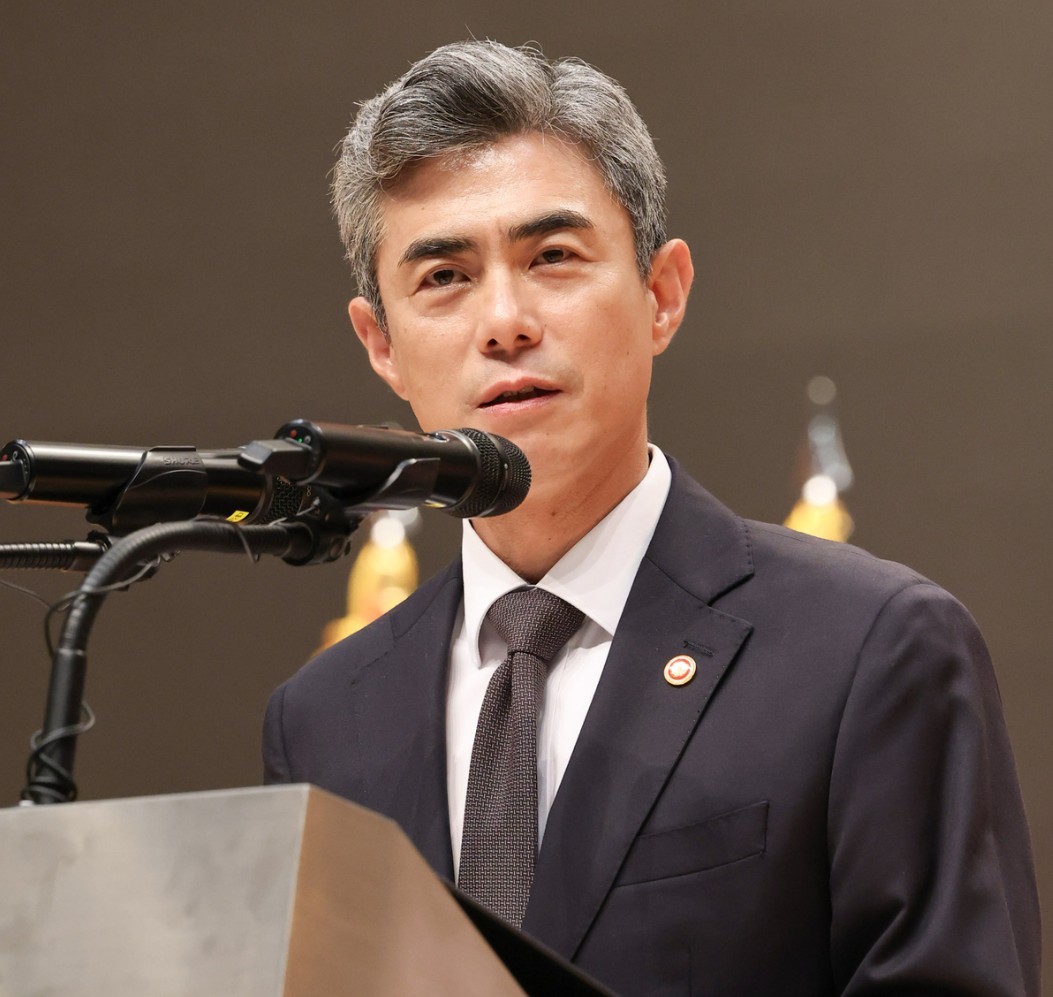
지난 9월 22일 취임사를 하는 강신철 신임 국방부 장관.

단상斷想
칼럼
뉴크로스
Yongsan Relocation Deja Vu, 'Military Academy Integration' Becoming a Ragged Mess

0
2026. 11. 11
Reform, as the word implies, is a process that involves extreme pain and self-sacrifice, akin to shedding one's own skin. I believe that for a reform to gain legitimacy, it must pass at least three questions.
The first is efficiency, which assesses whether the actual benefits gained outweigh the costs incurred and the disruption that must be endured. The second is causal appropriateness, which involves determining whether the system intended for reform is truly the root cause of the problem, in other words, whether the root of the illness lies within that system.
The third is future consistency, which asks whether the outcome of the reform can adapt to changes in the future environment and whether its design is robust enough to be maintained without faltering even if the government changes. If even one of these three questions cannot be adequately answered, no matter how plausible the justification, the reform will undergo a process of patching and mending every time it encounters resistance, eventually becoming a tattered mess.
Former President Yoon Suk-yeol's relocation of the presidential office from Cheong Wa Dae to Yongsan is a prime example of a case that failed to pass any of these three criteria. Former President Moon Jae-in had pledged a 'Gwanghwamun President' era but ultimately abandoned it due to security and cost issues. However, during his transition period, former President Yoon pushed through the Yongsan relocation in just two months, driven by a 'stubbornness' to accomplish what his predecessor could not.
There is a significant difference between having accomplished something a predecessor could not and being evaluated as having done something necessary for the nation at a reasonable cost. Issues of efficiency, such as relocation costs, the disruption caused by the sequential relocation of the Ministry of National Defense and the Joint Chiefs of Staff, and concerns about a security vacuum, were not properly considered from the outset. Above all, the actual benefits the presidential office would gain by moving to Yongsan were unclear. Instead, staff members endured discomfort in cramped offices, only to be hit by the sudden shock of martial law.
Regarding the question of causal appropriateness—whether the cause of the imperial presidency lay in the building of Cheong Wa Dae—former President Yoon ultimately failed to provide a convincing answer. The logic that Cheong Wa Dae was a symbol of authoritarianism and the Yongsan presidential office is not, was closer to a bizarre idea that substituted the problem of power for the problem of a building.
Yoon Suk-yeol succeeded in the Yongsan relocation that Moon Jae-in could not?
In fact, the negative effects of the imperial presidency were even more starkly revealed at the Yongsan Presidential Office. The 'doorstep Q&A' that was touted as a symbol of communication was suspended after six months, and ultimately, it was the Yongsan Presidential Office, not Cheong Wa Dae, where martial law was declared on the night of December 3, 2024.
From the perspective of future consistency, the relocation to Yongsan was a failure. The presidential office space is a matter that should be decided based on national consensus and a long-term blueprint so that it can continue even if the government changes. However, the relocation to Yongsan was carried out by one person's impromptu decision, without being connected to the Sejong office plan or the long-term relocation plans of the Ministry of National Defense and the Joint Chiefs of Staff.
In particular, it was revealed that during this process, a geomancer had visited the Army Chief of Staff's official residence in Hannam-dong, Seoul, which was a candidate site for the presidential residence. Police investigation confirmed that Rep. Yoon Han-hong, who was the head of the Cheong Wa Dae relocation task force team in March 2022, and Kim Yong-hyun, former head of the Presidential Security Service, who was the deputy head, visited the residence with geomancer Baek Jae-kwon.
Subsequently, during the investigation of the Kim Keon-hee special prosecutor, it was revealed that Mr. Baek had long phone conversations with First Lady Kim Keon-hee on several occasions, leading to suspicions that an unofficial line, not the official one, was involved in the relocation of the residence. The very suspicion that the decision of the highest power in the nation's residence relied on a geomancer's site assessment rather than official review procedures shows how far the Yongsan relocation was from rational judgment or the future consistency of a hundred-year plan.
Since the future was not considered at all when relocating to Yongsan, there was no design from the beginning that would survive even if the next president came, and as soon as the government changed, the presidential office returned to its original location. If we add the 83.2 billion won spent on moving to Yongsan, the 25.9 billion won in contingency funds allocated for returning to Cheong Wa Dae, and the 23.8 billion won for the Ministry of National Defense to return to the Yongsan building, it is estimated that over 130 billion won has been buried just in the back-and-forth. Considering the Democratic Party's estimate that the total cost will exceed 1 trillion won when including sequential costs such as the relocation of the Joint Chiefs of Staff, the price was much harsher.
However, at this point, the reform of integrating military academies, which the Lee Jae-myung government has recently been pushing for, unfortunately feels like a déjà vu of Yoon Seok-yeol's relocation to Yongsan when placed before these three criteria.
Why Ahn Gyu-baek protested to Kang Shin-chul about the integration issue
On November 9, newly appointed Minister of National Defense Kang Shin-chul met with the presidents of the alumni associations of the Korea Military Academy, Naval Academy, and Air Force Academy to hear their opinions regarding the promotion of integrated military academies. At this meeting, Minister Kang made it clear that there was no intention to close the military academies or eliminate the education of each service branch.
Minister Kang also stated that the plan to integrate the Army, Navy, and Air Force academies "has not been finalized." It is reported that former Minister of National Defense Ahn Gyu-baek directly protested to Minister Kang after Minister Kang hinted at the possibility of revising the existing integration reform plan.
Former Minister Ahn stated in an interview, "I asked Minister Kang, 'How can you say it's not finalized when the party, government, and presidential office agreed and announced the integrated basic plan in July?'" Former Minister Ahn did not separately mention Minister Kang's reaction at the time, but the mere exposure of public conflict and disagreement between former and current ministers regarding the military's core reform plan of integrating military academies is a serious matter.
Furthermore, when viewed from the three reform criteria presented earlier, the current proposal for integrating military academies is almost in tatters. First, let's look at the aspect of efficiency. The Ministry of National Defense promoted integration, stating that the current structure, which maintains 7 generals, including 3 three-star generals, and approximately 3,000 support personnel to train about 2,900 cadets annually, is inefficient. However, it is estimated that building a new campus in Jaunde, Daejeon alone will cost over 3 trillion won.
Funding plans also remain at a rudimentary level, involving the sale of existing military academy sites and the injection of national finances. It is said that even related project costs were not reflected in the 2027 defense budget proposal. It is also unclear what educational achievements can be gained by investing trillions of won. There is a counterargument that joint operational capabilities can be strengthened in advanced officer training courses, and the U.S. military, which possesses the world's strongest joint forces, also operates each military academy separately.
The cost of constructing the new campus in Jawoondae is estimated to be over 3 trillion won.
Furthermore, the 1+2+1 system being reviewed by Minister Kang Shin-chul undermines the very justification of efficiency. If a National Armed Forces Academy is established while maintaining the existing three military academies, additional costs are inevitable due to the overlapping operation of facilities and faculty. There will also be the problem of cadets having to move between schools to receive integrated education and specialized training for each branch of the military.
A reform initiated to eliminate inefficiency could ironically end up creating yet another educational institution. To avoid repeating the mistakes made during the Yongsan relocation, where costs and administrative chaos were not adequately considered, the concrete benefits of integration must first be proven.
Next is the consistency of the cause. The integration of military academies itself is an old agenda. The problem is whether this government, in pursuing it, prioritized the President's political judgment over the logic of educational reform. We need to examine whether the cause of the military's political involvement is being sought in military academies as educational institutions, just as the cause of the imperial presidency was sought in the building of the Blue House.
The Ministry of National Defense put forward strengthening jointness, decreasing school-age population, and securing excellent talent as justifications for integration. However, on August 5th, President Lee Jae-myung, during a Ministry of National Defense work report, pointed out that past military coups were carried out by graduates of the Korea Military Academy and asked if integrating military academies would reduce the possibility of coups. He also issued a directive to pursue integration quickly and strongly.
President Lee's remarks show that the integration of military academies goes beyond a simple reorganization of military education and takes on the character of a political reform aimed at dismantling the responsibility for the December 3rd emergency martial law and the closed networks within the military. Of course, the integration of military academies was President Lee's presidential campaign promise. However, the fact that it was a campaign promise alone does not guarantee the validity of its 추진. It must first be clarified whether it is a reform aimed at solving structural problems in the military education system, or a political prescription that holds military academies responsible for the emergency martial law.
Reform must begin with an accurate diagnosis of the cause. If the cause is misidentified, even the most drastic reforms are likely to produce unintended results. Reform is not about getting to Seoul no matter which way you go; it's about going the wrong way and ending up somewhere completely different. If we cannot prove that the fundamental cause of the martial law lies in the military academy system, then the integration of military academies could be a prescription that misses the essence of the problem.
Was the cause of the martial law truly in the military academy system?
Was the cause of the martial law truly in the military academy system? The December 3rd martial law originated from former President Yoon Suk-yeol's unconstitutional exercise of power, with some military commanders participating in the incident. While those responsible must be severely punished, attributing that responsibility to the entire educational institution of the Korea Military Academy is a different matter. There is also insufficient evidence that political private organizations within the military are operating as systematically as in the past since the dissolution of Hanahoe.
If the problem is the personnel monopoly by KMA graduates, then reforming the promotion structure and personnel system, and strengthening the military's control mechanisms over illegal orders, could be a more direct solution. Even Minister Kang Shin-chul, during his candidacy, responded that the responsibility for a coup lies with a few individuals involved, not the entire KMA. It is questionable whether the issue of the military's political neutrality has been reframed as a problem of military academies, an educational institution, much like the Yoon Suk-yeol administration sought the cause of the imperial presidency in the building of Cheong Wa Dae.
The last point is future consistency. The integration of military academies has been a task of defense reform raised long ago, so it cannot be concluded that it is President Lee's impromptu idea. However, the process of its promotion is difficult to see as a thoroughly deliberated reform. President Lee's presidential campaign pledge was the phased integration of military educational institutions, but former Minister Ahn Gyu-baek proposed a 2+2 method last April, and three months later, changed direction to a full four-year integration. The president encouraged its rapid implementation.
However, since Minister Kang Shin-cheol took office, a 1+2+1 method that preserves the existing military academies is being considered. In just a few months, the basic design has already changed to the third proposal. I cannot help but wonder if it is gradually becoming a patchwork, as it accelerated to match the president's will for reform, then faced opposition from within the military, and is now changing direction again.
A bigger problem is whether such reforms can be maintained even after a change of government. Challenges such as legislation for the establishment of the National Armed Forces Academy, long-term financial plans, and building consensus within the military still remain. How can a military education system that looks decades ahead be designed when even the current and former Ministers of National Defense express differing opinions on whether the basic plan has been finalized?
Just as the Yongsan Presidential Office returned to Cheong Wa Dae after the change of government, the integration of military academies will surely be overturned as easily as flipping a palm if conservatives come into power. Unlike the presidential office, military academies are the cradle of national security, training future military commanders. The relocation to Yongsan was a matter that only the president and a few of his staff (including the Ministry of National Defense) had to endure, but the integration of military academies is a matter that concerns the life and death of the entire military, as well as the safety of the people and national security.
I have no opinion for or against the integration of military academies. However, looking at how things are going now, this integration reform agenda makes me unnecessarily worry that it will drift for a long time, or that innocent cadets will pack their bags and wander around the country, spending one year together, then two years apart, and then another year together. Above all, I am deeply concerned about what the standards and principles for reform were in the Lee Jae-myung administration, and where the reforms we expected are heading now.
댓글
( 0 / 500 )
GoldHunter
8
개혁은 속도가 아니라 방향과 완성도가 중요합니다. 비용을 얼마나 들이고 조직을 얼마나 흔드느냐가 개혁의 성과를 보장하지는 않습니다. 특히 국가 안보와 직결된 사관학교 통합이라면 충분한 검증과 사회적 합의가 먼저입니다. 윤석열의 용산 이전과 같은 시행착오를 반복해서는 안 됩니다.
( 0 / 500 )
luckyboy
7
글에서 제시한 효율성, 원인 적합성, 미래 정합성이라는 세 가지 기준에 공감합니다. 개혁은 기존 질서를 무너뜨리는 것 자체가 목적이 아니라 잘못된 구조를 바로잡고 더 나은 제도를 만드는 과정입니다. 대통령의 의지만으로 밀어붙이는 개혁은 결국 또 다른 실패를 낳을 수 있습니다.
( 0 / 500 )
뽀빠이
3
12·3 비상계엄의 책임을 육사라는 교육기관 전체에 돌리는 것은 신중해야 합니다. 군의 정치 개입을 막으려면 사관학교 통합보다 군 인사제도와 지휘체계, 위법한 명령에 대한 통제장치를 먼저 정비하는 것이 본질적인 해법일 수 있습니다. 원인을 정확히 진단해야 처방도 제대로 나옵니다.
( 0 / 500 )
radichelove
5
장기적관점에서 사관학교 통합은 적절하다고 보입니다. 다만 절차와 속도를 너무 강조하다 보면 원하는 않는 결과를 초래할 수 있으니 이런점을 고려해서 세심한 디자인한다면 개혁의 성과를 거둘수 있다고 보입니다. 현행 문제점이 분명 존재함과 동시에 미래 전략차원에도 분명 변화가 필요한데 이런저런 걸림돌을 이유삼아 주춤한다면 개혁은 요원합니다. 독일 연방제가 의사결정 속도는 더딘 반면 충분한 의견수렴과 동의절차를 거쳐 완성된 정책을 내놓듯이 좀더 숙고한 준비과정을 거켜 실행한다면 좋은 결과를 낼 것이라고 기대합니다.
( 0 / 500 )
진성K
4
이재명 정부에 기대하는 것은 윤석열 정부와 다른 방식의 국정 운영과 실질적인 개혁입니다. 그렇다면 개혁의 명분만 앞세울 것이 아니라 과정의 합리성과 결과의 지속 가능성까지 보여줘야 합니다. 잘못된 개혁을 고집하는 것도 문제지만, 충분히 검증되지 않은 개혁을 서둘러 추진하는 것 역시 경계해야 합니다.
( 0 / 500 )
홍조
3
군의 정치적 중립성을 확립하는 일과 사관학교를 통합하는 일은 구분해서 접근해야 합니다. 비상계엄에 가담한 군 지휘관들의 책임은 엄중하게 물어야 하지만, 그것이 곧 사관학교 교육체계 전체를 바꿔야 한다는 논리로 연결되지는 않습니다. 문제의 본질을 놓치지 않는 개혁이 필요합니다.
( 0 / 500 )
자주국방
2
윤석열의 용산 이전에서 우리가 배워야 할 가장 큰 교훈은 최고 권력자의 의지가 국가적 합리성을 대신할 수 없다는 사실입니다. 이재명 정부가 같은 오류를 범한다면 정권교체의 의미도 퇴색할 수밖에 없습니다. 개혁일수록 더 치밀하게 검증하고 반대 의견에도 귀를 기울여야 합니다.
( 0 / 500 )
사랑나무
1
3조 원이 넘는 예산을 투입하면서도 교육적 효과와 운영 방식조차 명확하지 않다면 그것은 개혁이라기보다 거대한 실험에 가깝습니다. 더욱이 전임 장관과 신임 장관의 구상이 다르고 기본계획마저 흔들린다면 누가 정책의 책임을 질 것인지부터 분명히 해야 합니다.
( 0 / 500 )
신고내용
신고내용을 선택해주세요
회원비난/비하/욕설글 및 댓글도배성 게시물저작권 침해/불법자료 유출허위사실유포개인정보 유출.사생활 침해무단광고/홍보음란물 및 도박 불법 광고물범죄행위 관련 글불법행위 관련 소개물품 판매 및 사기글악성코드 및 스파이웨어 유포기타 사유 및 운영진 판단


비밀번호를 잊으셨나요?
Sign in with Google


All information provided by us is free of charge and is for the public good.