品

Corea든 Korea든, 품격이 먼저다
Whether Corea or Korea, dignity comes first.
Whether Corea or Korea, dignity comes first.
Now
지금
751 Diaspora
Heritage
유산
Humanity
인문
Mirengsi
未冷尸
Politics
정치
Media
언론
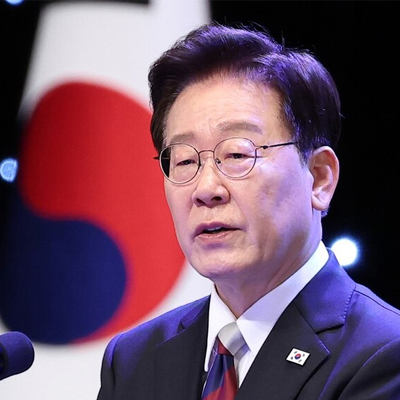
검찰 권력의 피해자를 구제하려는 취지와, 그 취지를 실현하기 위해 불가피하게 감수해야 하는 제도적 모순 사이에서, 무엇이 우선되어야 하는지를 묻는 것이 먼저다.

단상斷想
칼럼
wonderboy
If there had been no indictment, there would have been no special prosecutor.

0
2026. 11. 09
- The special prosecutor bill concerning President Lee Jae-myung stems from fundamental doubts about the validity of past prosecutorial investigations and indictments, with significant political motivations at play beyond mere legal procedures.
- While institutional contradictions and practical difficulties (such as special investigative powers, presidential appointment of the special prosecutor, and staffing shortages) of the special prosecutor bill clearly exist, these should not obscure the bill's essential purpose of remedying damages caused by the excessive exercise of prosecutorial power.
- When the media highlights only the procedural issues of the special prosecutor bill and overlooks the political intentions and context of past prosecutorial investigations, it distorts the essence of the matter, thereby underscoring the necessity of media reform.
- Before engaging in retrospective criticism, a truth-finding investigation into whether the series of indictments against President Lee Jae-myung were purely law enforcement or a means of political pressure must precede to truly address the core of the special prosecutor bill discussion.
Let's reconsider the fundamentals. Was the indictment of President Lee Jae-myung truly justified? Tracing his actions one by one, from the allegations related to the Daejang-dong, Wirye, and Baekhyeon-dong developments during his time as Seongnam mayor, to the corporate credit card usage issues as Gyeonggi Province governor, the Seongnam FC sponsorship allegations, the Ssangbangul North Korea remittance case, and finally, the charges of violating the Public Official Election Act, there are not a few aspects where he was unfairly treated. Throughout the investigation process, the appropriateness of evidence collection, the necessity of indictment, and the timing of its selection have always remained questionable. It is still a matter of debate whether the intensive investigations and indictments conducted during his time as an opposition leader went beyond law enforcement, or if they were combined with political motives. In particular, the way multiple cases proceeded simultaneously, pressuring one person's political life and the fate of a political party at the same time, is an example of how prosecutorial power can operate.
We cannot ignore this background and isolate only the Special Prosecutor Act for Fabricated Indictments. The political situation that necessitated the Special Prosecutor Act, and its purpose to provide relief to victims of prosecutorial power, come first. During the Yoon Suk-yeol administration, the prosecution held both investigative and prosecutorial powers, simultaneously pursuing multiple cases against opposition figures, especially then-leader Lee Jae-myung. As a result, some cases are currently on trial or have resulted in convictions, but it is also true that allegations of manipulation or excessive investigation were raised during the process. If such indictments had not existed in the first place, would the Democratic Party have needed to go to such lengths to push for a Special Prosecutor Act aimed at preventing fabricated indictments? The very existence of the Special Prosecutor Act is a result that shows how prosecutorial power operated in the preceding stages. To question only the outcome without first asking who provided the cause is to distort the essence of the matter.
Before discussing the contradictions or application problems of the law, the wrongdoings and atrocities of the authoritarian regime and the prosecutorial power must first be condemned. The abolition of prosecutors' investigative powers and the promotion of the separation of investigation and prosecution were intended to prevent abuse of power. However, granting special investigative powers to dispatched prosecutors under the Special Prosecutor Act, as per the Criminal Procedure Act before its amendment, clearly conflicts with that principle. The structure in which the President ultimately appoints a special prosecutor related to their own case also cannot avoid controversy over conflicts of interest.
Securing personnel is also not easy. Prosecutors avoid dispatch due to the burden of having to look into the past investigations of their colleagues and the possibility of unconstitutionality, and the burden on the prosecution, which already has over 180,000 unresolved cases, will increase further. To form a special prosecution team of up to 309 people, 20 dispatched prosecutors, 210 dispatched public officials, and 70 special investigators must be secured, but in reality, due to prosecutors' avoidance and existing personnel shortages, recruitment is likely to be delayed or filled only formally. The investigation period itself, which is a maximum of 200 days including a 20-day preparation period, may be pressured, and investigative capabilities may also be limited. However, these institutional contradictions and practical difficulties do not explain the very reason why a special prosecutor became necessary.
What will actually happen after the passage of the Special Prosecutor Act must also be viewed in the context of this cause-and-effect relationship. The special prosecutor is appointed by the President from among candidates recommended by the Democratic Party, the People Power Party, and the Rebuilding Korea Party, one from each. With about half of the investigation targets directly or indirectly related to President Lee Jae-myung, the structure in which the President, as a party involved, ultimately appoints the special prosecutor makes it difficult to avoid controversy over conflicts of interest. However, if this structure is the problem, one must first ask why such a special prosecutor became necessary in the first place. The difficulty in securing dispatched prosecutors is also similar. It is understandable that prosecutors avoid 'investigating their own' by directly looking into their colleagues' past investigations and prosecutions, but that avoidance itself also reflects an atmosphere of self-doubt about the appropriateness of past investigations.
The possibility of a constitutional petition regarding the potential unconstitutionality or a request for a constitutional review during the trial process could also become a reality. Even Cho Kuk, head of the Innovation Policy Research Institute, warned of constitutional issues regarding the supplementary provisions, and there are concerns about trials being suspended. The path remains open for investigation results to indirectly pressure ongoing trials, or for discussions about dropping charges to arise from the Minister of Justice's directive or the prosecution's judgment. Even if the direct power to drop charges was removed from the bill, the possibility of follow-up measures based on the special prosecutor's results is still open.
However, the media has always incited the public with only the results, omitting the causes and processes of events. While focusing on issues like the legal consistency of the special prosecutor law, staffing shortages, and the potential infringement on judicial independence, they relatively neglect why such a special prosecutor became necessary and what problems existed in the previous prosecutorial investigation and indictment process. The pattern repeats where the modus operandi of past prosecutorial power, which caused the problems, is left untouched, and all responsibility is retrospectively placed on the Democratic Party and President Lee Jae-myung. This is also the basis for the argument that media reform is necessary.
Even if the special prosecutor is actually launched and achieves limited results amidst staffing shortages and fairness controversies, or if lawsuits continue over constitutional issues, it is highly likely that the process will again be judged solely by its outcomes. The Public Prosecution Office and the Central Investigation Office are already experiencing staffing shortages, and personnel are tied up in existing special prosecutor investigations. Further secondments will exacerbate delays in handling general cases, and the backlog of public welfare and criminal cases could worsen. However, this staffing shortage should not be a reason to negate the necessity of the special prosecutor; rather, it should be evaluated in the context of how past prosecutorial power intensively utilized resources.
I can understand the intent behind the 'prevention of fabricated indictments' and 'truth-finding' advocated by the Democratic Party and President Lee Jae-myung. However, the approach of making an exception to the reform principle of abolishing investigative powers, having the President, who is a party to the case, appoint a special prosecutor, and targeting cases currently in trial, conflicts with that intent. Now that the law has passed, the likelihood is high that this contradiction will become even clearer depending on the actual composition of the special prosecution team and the direction of their investigation. With a shortage of personnel, controversy over fairness, and constitutional issues overlapping, the practical achievements of the special prosecution may be limited, and there is ample room for political disputes to drag on. Nevertheless, all these institutional and practical problems can only be properly evaluated based on the questions of whether the initial indictment was valid and how prosecutorial power was exercised.
As long as the method of only addressing the outcome while omitting the causes and processes continues, even voices criticizing the contradictions of the special prosecution law are likely to become another form of selective interpretation. While it is important to point out the application of the law and institutional contradictions, if we do not first ask what necessitated the special prosecution law, the discussion will once again repeat only results without causes. Highlighting only the problems of the special prosecution law without properly investigating whether the various suspicions and indictments that have continued since his time as Seongnam mayor were truly pure law enforcement or a means of political pressure, misses the essence of the matter.
The first question to ask is what should take precedence between the intent to relieve victims of prosecutorial power and the institutional contradictions that must inevitably be accepted to realize that intent. As long as the media continues to incite by omitting causes and processes and focusing only on results, the personnel shortages, constitutional controversies, and political disputes that will arise after the passage of the special prosecution law are likely to be distorted in another form. Blaming only the outcome while leaving the instigators untouched is, in the end, merely another form of selective justice.
댓글
( 0 / 500 )
raphael
10
특검법의 법적 정합성과 인력 문제를 지적하는 것도 필요하지만, 정작 왜 이런 특검이 필요해졌는지에 대한 논의가 빠져서는 안 됩니다. 검찰의 수사와 기소가 과연 정치적 중립성을 지켰는지, 그 과정에서 권력 남용은 없었는지부터 철저히 따져봐야 합니다.
( 0 / 500 )
ruru
9
결과만 놓고 특검법을 비판하는 것은 문제의 본질을 놓칠 수 있습니다. 여러 사건이 동시에 진행되면서 야당 대표의 정치적 활동이 장기간 제약받았던 과정 자체가 검증 대상입니다. 법의 형식뿐 아니라 법이 만들어진 배경과 과정까지 함께 살펴야 합니다.
( 0 / 500 )
tiger84
7
윤석열 정권 시절 검찰은 법과 원칙을 앞세웠지만, 야당 대표를 향한 전방위 수사와 동시다발적 기소가 과연 공정한 법 집행이었는지는 반드시 밝혀야 합니다. 검찰권이 정치적 경쟁자를 압박하는 수단으로 사용됐다면 그것은 법치주의의 훼손입니다.
( 0 / 500 )
minjoo88
7
이재명 대통령을 둘러싼 수많은 의혹과 기소가 과연 정당한 법 집행이었는지 이제는 명확히 밝혀야 합니다. 정치적 압박 속에서도 국정과 민생을 책임져야 했던 과정까지 공정하게 평가받아야 합니다. 진실은 정치적 공방이 아니라 객관적인 증거로 가려야 합니다.
( 0 / 500 )
정영무
5
윤석열 정권의 가장 큰 문제는 검찰 권력을 개혁하기는커녕 국정 운영의 핵심 수단으로 활용했다는 의혹입니다. 수사와 기소가 정치적 목적에 종속됐는지, 무리한 수사와 조작기소가 있었는지 반드시 밝혀야 합니다. 책임지는 사람이 없다면 검찰개혁도 공허한 구호에 그칠 것입니다.
( 0 / 500 )
골목대장
4
검찰개혁의 원칙과 조작기소 의혹에 대한 진상 규명은 별개의 문제가 아닙니다. 수사권과 기소권을 분리하겠다고 하면서 특검에 예외를 두는 모순은 분명히 점검해야 하지만, 그렇다고 과거 수사의 적정성까지 덮어둘 수는 없습니다.
( 0 / 500 )
poo777
4
이재명 대통령에게도 법 앞의 평등은 당연히 적용되어야 하지만, 반대로 검찰의 권력 남용 의혹 역시 예외 없이 검증받아야 합니다. 대통령이라는 이유로 면죄부를 주자는 것이 아니라, 억울한 기소가 있었다면 바로잡자는 것입니다. 그것이 진정한 법치주의입니다
( 0 / 500 )
iso945
4
권력에 충성하는 검찰, 정적을 겨누는 수사, 선택적으로 작동하는 법의 잣대가 윤석열 정권에서 어떤 결과를 낳았는지 우리는 똑똑히 돌아봐야 합니다. 검찰이 국민을 위한 사법기관인지 권력을 위한 정치조직인지 철저히 규명해야 합니다.
( 0 / 500 )
hongminsoo
2
이재명 정부가 해야 할 일은 과거의 정치적 탄압 논란을 반복하는 것이 아니라 그 실체를 밝혀 사법 정의를 바로 세우는 것입니다. 지지자들의 요구도 무조건적인 보호가 아니라 진실 규명과 제도 개혁입니다. 사람을 지키는 것을 넘어 다시는 누구도 검찰권의 부당한 행사로 피해를 보지 않는 나라를 만들어야 합니다
( 0 / 500 )
絶海孤島
2
결국 핵심은 누구에게 유리한가가 아니라 무엇이 사실인가입니다. 과거 검찰의 수사와 기소에 문제가 있었다면 그 책임을 밝혀야 하고, 특검법 자체에 위헌적 요소나 제도적 허점이 있다면 그것 역시 바로잡아야 합니다. 원인과 결과를 함께 살피는 것이 법치주의의 출발점입니다.
( 0 / 500 )
讀書
1
특검이 대통령과 관련된 사건을 다룬다는 점에서 이해충돌 논란은 피하기 어렵습니다. 따라서 수사 대상과 임명 절차, 수사팀 구성부터 독립성과 투명성을 확보해야 합니다. 진실 규명이라는 목적이 정당성을 얻으려면 그 과정 역시 국민의 신뢰를 받아야 합니다.
( 0 / 500 )
신고내용
신고내용을 선택해주세요
회원비난/비하/욕설글 및 댓글도배성 게시물저작권 침해/불법자료 유출허위사실유포개인정보 유출.사생활 침해무단광고/홍보음란물 및 도박 불법 광고물범죄행위 관련 글불법행위 관련 소개물품 판매 및 사기글악성코드 및 스파이웨어 유포기타 사유 및 운영진 판단


비밀번호를 잊으셨나요?
Sign in with Google


All information provided by us is free of charge and is for the public good.