品

Corea든 Korea든, 품격이 먼저다
Whether Corea or Korea, dignity comes first.
Whether Corea or Korea, dignity comes first.
Now
지금
751 Diaspora
Heritage
유산
Humanity
인문
Mirengsi
未冷尸
Politics
정치
Media
언론
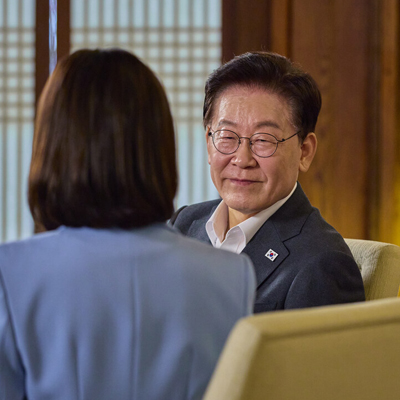
11월 5일 밤 9시, 이재명 ‘대통령의 Y’ 첫 방송이 공개됐다

단상斷想
칼럼
HumanX
President Y's first broadcast: appropriate boundaries and possibilities

0
2026. 11. 07
- 'President's Y' appears to be an attempt to directly explain the President's communication philosophy, point out the limitations of traditional media, and gain sympathy from supporters.
- The President denied algorithmic bias, defined SNS as a 'lifeline,' and advocated for rational debate, but critics viewed this as an extension of selective communication, raising concerns about wasted national resources.
- While this channel holds positive potential for explaining policy context, enhancing transparency, and reaching younger demographics, it also carries the risks of diluting public discourse and amplifying extreme opinions.
- In future broadcasts, mitigating algorithmic bias, persuading the moderate electorate, managing real-time risks, and maintaining balance with key national agenda items will be crucial for the channel's success.
At 9 PM on November 5th, the first broadcast of 'President's Y' was released. The recorded broadcast, approximately 30 minutes long, was hosted by former MBC announcer Son Jung-eun, and the topic was President Lee Jae-myung's communication philosophy itself. As the Blue House had announced in advance, it was an opportunity for him to directly address the controversies surrounding his SNS (X) activities and the live broadcast of cabinet meetings.
After the broadcast, public opinion was sharply divided. Supporters reacted with, 'Since the media isn't functioning properly, the president must step forward directly,' while opponents retorted with ridicule, 'We told him to turn down the volume, but he added more speakers.' However, it is still too early to judge whether this channel is an excess of communication or an experiment opening new possibilities for presidential communication in the digital age. Now that the first broadcast has ended, it is necessary to examine both the positive aspects and the negative concerns in a balanced way.
In the first broadcast, President Lee strongly put forward three main arguments. First, he refuted the idea of being trapped by algorithms. He said, “I see both insults and criticism,” and “The greater the authority, the more people around you only say good things, so I am grateful to those who tell me things as they are.” Second, he defined SNS as his 'lifeline.' His remark, “There were many times when the media, politics, and power all attacked me, and if I hadn't communicated directly with the public then, I wouldn't be in this position now,” evoked strong empathy from his supporters. Third, he actively advocated for rational debate. He said, “Truth does not need to be debated, but policies need to be debated because positions differ. Controversy is not something to be feared; the more of it, the better.” Regarding the live broadcast of cabinet meetings, he stated that it is “a means for the public to confirm the decision-making process” and that even if errors are exposed, they are “tolerable.” Furthermore, he hinted at the possibility of future live broadcasts, saying, “I'm thinking of doing a surprise live broadcast from my office.”
It is possible to point out that these remarks directly address existing criticisms, while at the same time sidestepping the core of those criticisms. What the opposition has taken issue with is not 'algorithm bias' itself, but rather a structure in which the president selectively consumes and disseminates only the information he wants to see and the voices he wants to hear. The argument that 'he also sees criticism' does not prove that this structure has been resolved. In fact, some reactions after the broadcast appeared as cynicism, saying, 'The person who has been communicating selectively now claims not to be confined.' In the People Power Party, expressions such as 'The people say 'stop,' but he demands 'subscribe'' and 'Go the way of a full-time influencer' emerged, and Rep. Park Hyung-soo said, 'National power is being wasted because of SNS, and if YouTube is added, one-sided indoctrination will intensify.' Even within the ruling party, a senior lawmaker's concern was conveyed, saying, 'In a situation where there are criticisms that SNS should be reduced, the role of leading the government is more important.'
However, it is difficult to diminish the meaning of the channel with only such criticisms. The reactions from the supporters are quite the opposite. Voices such as 'The Korean media is not functioning properly, so the president is going this far' and 'Direct communication is welcome' are dominant. The 'lifeline' remark particularly garnered emotional empathy. They view the president's direct explanation through new media as an unavoidable complementary measure, premised on the distortion and reduction of reports by existing media. The Blue House also stated that it created the program based on the awareness that 'the intent of remarks and policies is not sufficiently reflected in media reports.' The fact that the first broadcast was recorded, yet expressed the will to switch to live broadcasting, is interpreted as an intention to emphasize unedited transparency.
On the positive side, this channel has several possibilities. First, it can explain context and background in a 30-minute discussion format, going beyond the limitations of short social media posts. If the 'why' of policy can be conveyed with a relatively long breath, it has the potential to become a space for persuasion beyond mere promotion. Second, it is an extension of the principle of transparency that discloses decision-making processes, like live broadcasts of cabinet meetings. The attitude of enduring even if errors are exposed may be a burden in the short term, but in the long term, it can be an experiment that broadens the foundation of public trust. Third, due to the nature of the YouTube platform, there is a possibility of reaching young people and the politically indifferent middle. In an environment where Minju TV or individual lawmakers' YouTube channels have already become the center of political content, there is an expectation that the presidential channel can fill that void. Fourth, historically, presidential communication with the public has changed with the media. Just as Franklin Roosevelt's fireside chats overcame a crisis through radio, it is also possible to view YouTube as playing a part in that role in the digital age.
At the same time, the risks remain. While expanding direct communication increases transparency, there is a risk of diluting the weight and focus of public language. The fact that the president gets information and ideas outside of reports from social media can help maintain a sense of reality. At the same time, it remains true that this space is an algorithmic environment where the extreme voices of strong supporters and opponents are amplified. The principle that the more rational debate, the better, is correct, but when that debate pushes aside the central tasks of state administration and is consumed in everyday verbal sparring, the criticism of wasting national power gains traction. Stating that the side effects of live cabinet meetings are 'tolerable' is a consistent application of the principle of prioritizing transparency, but there is still insufficient empirical judgment on whether the cost is tolerable when errors and inappropriate remarks spread in real time.
The first broadcast was closer to a declaration of communication philosophy. Subsequent broadcasts are expected to deal with current issues and policy explanations in earnest, and the Blue House announced that it would supplement the questioning method by reflecting viewer opinions. The criteria for success are relatively clear. First, whether a questioning and editing method that substantially alleviates concerns about algorithmic bias works. Second, whether the 'lifeline' logic goes beyond rallying supporters and persuades the moderate and critical public. Third, whether the depth of explanation can be maintained while managing real-time risks when switching to live broadcasting. Fourth, whether the core tasks of state administration (livelihood, economy, security, etc.) are not pushed aside by the expansion of communication channels.
Current public opinion shows that this channel is more likely to reproduce existing conflicts than to resolve them. For supporters, it is read as a legitimate response to media failure, and for opponents, it is read as an extension of excessive communication and one-sided persuasion. The appropriate line is in between. It is to acknowledge the value of direct communication, while continuously verifying whether it works in a way that improves the quality of public judgment. If the first broadcast ended as a philosophical declaration, the key is whether subsequent broadcasts can transform that declaration into concrete policy explanations and balanced discussions.
The next episodes, spaced 2-3 weeks apart, will be the test. Only by simultaneously confronting both positive possibilities and negative risks can the true meaning of this experiment be gauged. The problem is not that the president talks a lot, but whether those words lead to practical explanations and accountability in state administration. In a world where Democratic TV and various political YouTube channels already exist, what a channel directly opened by the president can add will now be properly evaluated as broadcasts accumulate.
댓글
( 0 / 500 )
hong64
8
대통령의 직접 소통은 시대적 변화에 부응하는 시도라는 점에서 긍정적으로 평가할 만합니다. 다만 국민과의 소통이 지지층과의 소통에 머물러서는 안 됩니다. 비판하는 국민의 목소리까지 동등하게 듣고 답할 때 비로소 진정한 소통이 될 것입니다.
( 0 / 500 )
khj
8
이재명 대통령의 직접 소통은 기존 정치의 일방적인 홍보 방식에서 벗어나 국민에게 국정의 과정과 판단을 설명하려는 시도라는 점에서 의미가 있습니다. 비판은 겸허히 듣되 필요한 정책은 소신 있게 추진하는 대통령의 모습을 기대합니다.
( 0 / 500 )
Tahiti83
6
언론에만 의존하지 않고 대통령이 직접 정책의 배경과 국정 방향을 설명하는 것은 필요한 변화입니다. 그러나 소통의 양보다 중요한 것은 내용과 책임입니다. 국민이 듣고 싶은 말이 아니라 국민이 알아야 할 사실을 전달하는 채널로 자리 잡기를 바랍니다.
( 0 / 500 )
임동수
5
대통령에게 필요한 것은 비판을 피하는 기술이 아니라 비판을 감당하면서 국정을 이끌어가는 책임감입니다. 이재명 대통령이 강조한 공개와 토론의 원칙이 실제 국정 운영에서도 흔들림 없이 이어지기를 기대합니다.
( 0 / 500 )
유미
5
말이 많다는 비판보다 중요한 것은 그 말이 얼마나 국민의 삶과 국정의 변화로 연결되는가입니다. 이재명 대통령의 SNS와 유튜브가 단순한 메시지 전달을 넘어 정책을 설명하고 국민의 목소리를 듣는 실질적인 소통 창구가 되기를 응원합니다.
( 0 / 500 )
kasandra
4
언론 보도만으로 대통령의 생각과 정책 의도를 온전히 이해하기 어려운 시대입니다. 대통령이 직접 국민에게 설명하고 질문을 받는 것은 소통의 새로운 통로가 될 수 있습니다. 이재명다운 실용적이고 거침없는 소통이 국민의 신뢰로 이어지기를 바랍니다.
( 0 / 500 )
Amore
4
이번 실험의 성패는 시청률이나 조회 수가 아니라 국민의 이해와 정책 신뢰를 얼마나 높이느냐에 달려 있습니다. 대통령의 말이 많아지는 것보다 국민의 삶이 나아지는 것이 중요합니다. 직접 소통이 홍보의 확장이 아닌 국정의 투명성과 책임성을 높이는 계기가 되기를 바랍니다.
( 0 / 500 )
타미르
2
언론의 왜곡과 편향이 존재한다면 대통령의 직접 설명은 충분히 의미가 있습니다. 그렇다고 모든 비판을 언론의 문제로 돌려서는 안 됩니다. 불편한 질문에도 답하고 잘못된 판단은 인정하는 모습이야말로 국민의 신뢰를 얻는 가장 확실한 방법입니다.
( 0 / 500 )
조기호
1
대통령의 SNS와 유튜브 활동을 무조건 부정적으로 볼 필요는 없습니다. 문제는 소통 자체가 아니라 소통에 투입하는 시간과 에너지의 적정성입니다. 대통령의 가장 중요한 임무는 국정 성과로 답하는 것입니다. 직접 소통이 국정 운영의 경쟁력을 높이는 수단이 되기를 기대합니다.
( 0 / 500 )
신고내용
신고내용을 선택해주세요
회원비난/비하/욕설글 및 댓글도배성 게시물저작권 침해/불법자료 유출허위사실유포개인정보 유출.사생활 침해무단광고/홍보음란물 및 도박 불법 광고물범죄행위 관련 글불법행위 관련 소개물품 판매 및 사기글악성코드 및 스파이웨어 유포기타 사유 및 운영진 판단


비밀번호를 잊으셨나요?
Sign in with Google


All information provided by us is free of charge and is for the public good.