品

Corea든 Korea든, 품격이 먼저다
Whether Corea or Korea, dignity comes first.
Whether Corea or Korea, dignity comes first.
Now
지금
751 Diaspora
Heritage
유산
Humanity
인문
Mirengsi
未冷尸
Politics
정치
Media
언론
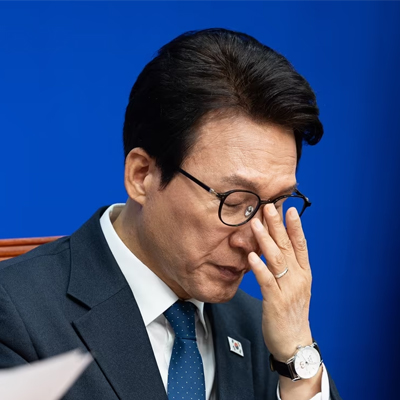
김민석 대표는 8·17 전당대회 당시 자신이 제기했던 ‘반명·분열주의·신천지 3자 비밀 연합’ 의혹에 대해 “조사 결과 3자 비밀 연합의 증거는 없었다”라며 사과했다.

단상斷想
칼럼
jeffrey
Kim Min-seok's Shincheonji apology: Is it an internal resolution or a cover-up?

0
2026. 11. 04
- Representative Kim Min-seok apologized for the "anti-Lee, divisive, Shincheonji three-way secret alliance" allegations he raised during the August 17 party convention, stating there was no evidence. However, this appears to be a denial of a political conspiracy theory, not a denial of the organized Shincheonji group membership itself.
- The cancellation of sharing specific details from the investigation results and the report by investigation team leader Park Seon-won is interpreted as an attempt to prevent the entire party from being branded as a "Shincheonji party," avoid the pro-Cheonggye faction's demand for "full disclosure," and preempt further controversy.
- Representative Kim's apology is a political compromise aimed at protecting the party's short-term stability and the leadership's position, but it seems difficult to avoid strong backlash from the pro-Cheonggye faction and criticism that he "made false claims for party control."
- With Representative Kim's position shaky due to declining approval ratings since taking office and controversies like the merger with the Cho Kuk Innovation Party, the Jeong Cheong-rae faction is expected to intensify its offensive by linking this issue to the legitimacy of Representative Kim's party convention victory.
- This incident exposes the Democratic Party's organizational management issues and the risk of religious group intervention. If the party fails to demonstrate transparent follow-up measures, it will lead to a decline in party trust and deepening factional conflict, burdening national governance.
On November 3, 2026, at a closed-door Democratic Party caucus, Chairman Kim Min-seok apologized to those who were inadvertently harmed by the 'anti-Lee, divisive, Shincheonji three-way secret alliance' allegations he raised during the August 17 party convention, stating, “The investigation found no evidence of a three-way secret alliance.” The party's floor spokesperson announced that the scheduled report by investigation team leader Park Seon-won was canceled, and claims by some YouTubers about a large number of members joining in specific regions were confirmed to be unfounded. The specific results of the investigation were not shared. This statement is not merely an explanation but is interpreted as a minimal political damage control measure taken after the framework he presented during the party convention boomeranged.
Background of the Shincheonji allegations that continued from the party convention
During the August 17 party convention, candidate Kim Min-seok asserted, “The essence of this convention is to break the anti-Lee, divisive, Shincheonji three-way secret alliance.” This was interpreted as a framework targeting Chung Cheong-rae's faction and provoked strong opposition from the pro-Chung faction after Kim was elected party leader. After taking office, Chairman Kim formed a party member reorganization TF led by Supreme Council member Park Seon-won and entrusted it with the investigation. The TF examined issues such as dual party membership, ghost members, and Shincheonji-related allegations. Chairman Kim himself stated through party YouTube channels that “a significant degree of collective membership has been confirmed” and “meaningful testimonies have also been accumulated.”
Distinction between evidence of collective membership and the 'three-way secret alliance'
Some media outlets reported a scale of 30,000 to 50,000 people, and citizen media Newstamsa reported, based on testimonies from ex-members who cooperated with the TF investigation, that approximately 56,000 people overlapped when comparing the Shincheonji roster (around 300,000 people, in the nature of a quarantine roster during the COVID-19 period) with the Democratic Party member roster. There were also testimonies of individuals recruiting 1,000 members each and evidence of concentrated membership in specific regions like Suncheon. This scale is comparable to the Shincheonji collective membership confirmed in the People Power Party and represents a significant proportion relative to the number of full party members who voted.
However, what Chairman Kim denied as groundless at today's general meeting was the political conspiracy theory of a 'secret alliance with anti-Lee Jae-myung and divisive forces to support a specific candidate in the party convention.' The collective and organized nature of the membership itself was not denied; rather, previous statements and external reports support it. The cancellation of the report and the non-sharing of details seem to be a choice to prevent the entire party from being branded as a 'Shincheonji Party' if the numbers were disclosed, and at the same time, to preempt further controversy by avoiding the 'full disclosure' demanded by the pro-Chung faction.
The Political Motives Behind the Apology and Report Cancellation
The motives behind this action are a complex interplay of ensuring the party's short-term stability and protecting the leadership's position. If large-scale organized membership is confirmed, the ruling party would suffer significant moral and political damage. With similar issues already confirmed within the People Power Party, if the ruling party also gets embroiled in the same controversy, it would negatively impact both its support base and swing voters. At the same time, if the core of the allegations raised by Chairman Kim at the party convention is resolved due to lack of evidence, it would give some ammunition to the pro-Chung faction's attack of 'false claims for party power.' However, by concluding 'an investigation was conducted, and that part was not found,' it becomes a compromise that avoids a complete incompetence/irresponsibility framework. The cancellation of the detailed report is central to this compromise. If the numbers were disclosed, the party's image would be severely damaged; if not disclosed, there would be criticism of a 'cover-up.' The latter option was chosen. A risk factor is that if the perception spreads that there is a discrepancy between the party's internal investigation and external media/ex-member testimonies, distrust could actually increase.
Chairman Kim Min-seok's Shaky Position
CEO Kim Min-seok's position has become quite difficult in just about two and a half months since the launch. Many evaluate that his approval rating, which he promised to increase during the party convention, has instead declined. In addition to the Shincheonji issue, controversies such as the merger with the Cho Kuk Innovation Party, and the slow progress of personnel and policy matters have compounded. Today, there was a clash when CEO Kim criticized the January next year merger deadline proposed by Chung Cheong-rae's side, saying it "looks like a means of internal party struggle," and former CEO Chung refuted it. As the perception that the initiatives he was actively pursuing are stagnant without visible results spreads within the party, a space has opened up for the pro-Chung faction to raise issues. The relatively low positive evaluations of CEO Kim in public opinion polls such as Realmeter are also a burden. Within the party, there are even remarks like, "We need leadership that can tighten up the loose screws of the Democratic Party."
Jeong Cheong-rae faction's offensive and prospects for internal party strife
The Jeong Cheong-rae faction is highly likely to continue its offensive by linking this issue to 'Chairman Kim's legitimacy in winning the party convention'. Supreme Council members Han Min-soo and Lee Seong-yoon have continuously pressured through the Supreme Council and SNS, saying, "Disclose it as it is," and "Take responsibility if there is no basis." Former Chairman Jeong Cheong-rae issued a warning statement, saying, "I am thinking about what flag to raise" after the 100th day of the Kim regime (around November 24). Even after today's apology, reactions such as "He must take responsibility" and "The perpetrator is Kim Min-seok" are emerging. After the 100-day mark, former Chairman Jeong may raise his voice more actively and rally forces over the issue of party merger or party operation direction. However, the possibility of a full-scale defection or party split is low for now. Going to such an extent within the Democratic Party would be fatal to approval ratings and the presidential election structure, so most are likely to stop at the level of 'pressure and checks'. However, if the emotional rift between factions deepens and the party as a whole is seen from the outside as 'a party that failed to properly resolve the Shincheonji issue', it will be a burden on expanding to the center and consolidating the support base.
Impact on the entire party and state administration
This issue goes beyond simple factional conflict, exposing the Democratic Party's organizational management and the risk of religious group intervention. Shincheonji was confirmed to have joined the People Power Party in large numbers in the past, and similar circumstances have been repeatedly raised within the Democratic Party. If the party fails to properly address this, internal trust will weaken, and externally, cynicism that 'all parties are the same' could spread. From the Lee Jae-myung administration's perspective, continued internal conflict within the ruling party would burden state affairs. If Chairman Kim fails to shift the situation with achievements in public welfare and policy, there is a possibility that internal party attacks will intensify around the 100-day mark, and the Shincheonji issue is highly likely to continue to be used as a weapon in that process.
Today's action is a political decision that prioritized the party's short-term stability. In a situation where significant evidence of organized membership has been revealed, emphasizing only 'no evidence of secret alliance' and closing the report is closer to management under the guise of harmony, and simultaneously a cover-up to protect the party and the leadership's position. The backlash from the pro-Cheonggye faction will continue for some time, and how the choice to prioritize damage control over transparency will affect the party's long-term trust depends on future responses. If the party does not disclose at least some of the details and clearly present follow-up measures (such as organizing party members), this issue will not easily subside. As long as factional conflicts are not overshadowed by policy achievements, the stability of Chairman Kim's system is likely to be difficult for the time being.
댓글
( 0 / 500 )
omega
5
민주당이 국민의 신뢰를 회복하려면 계파 간 책임 공방부터 멈춰야 합니다. 잘못이 있다면 인정하고 바로잡되, 당내 갈등을 정치적 이익을 위한 수단으로 삼아서는 안 됩니다. 지도부부터 겸허한 자세로 국민과 당원 앞에 책임 있는 모습을 보여주기 바랍니다.
( 0 / 500 )
민우
9
전당대회에서 상대 진영을 겨냥해 제기한 의혹이라면 그에 상응하는 입증 책임도 김민석 대표에게 있습니다. 증거가 없었다는 사과만으로 끝낼 일이 아닙니다. 어떤 조사를 했고 무엇이 확인됐는지 공개해야 당원들이 납득할 수 있습니다.
( 0 / 500 )
曲筆
6
이 정도로 계파 갈등이 반복된다면 차라리 친명과 반명으로 갈라서 각자의 정치적 책임을 분명히 하는 게 낫겠다는 생각까지 듭니다. 한 지붕 아래서 서로 발목을 잡고 국민을 피곤하게 만드는 정치는 이제 끝내야 합니다.
( 0 / 500 )
철수네
4
민주당은 정권을 맡긴 국민의 기대와 책임을 잊어서는 안 됩니다. 당내 갈등으로 소중한 시간을 허비할 때가 아닙니다. 김민석 대표를 비롯한 지도부와 모든 의원들이 기득권과 계파의 이해를 내려놓고, 국민 눈높이에서 당을 쇄신하는 모습을 보여주기 바랍니다.
( 0 / 500 )
dami
5
정치적 의혹 제기는 쉽게 하지만 책임지는 정치는 어렵습니다. 김 대표가 사과한 것은 다행이지만 조사 결과 보고까지 취소한 것은 이해하기 어렵습니다. 진실을 밝히는 것이 당에 상처를 주는 일이 아니라 오히려 당을 살리는 길입니다.
( 0 / 500 )
hyundong
4
신천지의 조직적 당원 가입 의혹과 전당대회 후보 간 비밀 연합 의혹은 분명히 구분해야 합니다. 하나가 사실이 아니라고 다른 하나까지 없었던 일이 되는 것은 아닙니다. 당원 명부와 조사 결과를 투명하게 공개하는 것이 우선입니다.
( 0 / 500 )
radichelove
4
문제제기를 해놓고 대승적차원에서 철회했다는 것은 한편으로 납득은 할 수 있습니다. 그러나 민주당은 국민이 바라는 눈높이에 현저히 미달한다는 사실을 인식하고 보다 개혁적이고 강력한 리더십을 발휘해야 다음 선거에서 국민의 선택을 받을 수 있습니다. 이재명정부가 치고 나가는 모습에 비해 민주당은 왜 이리도 답답하고 졸렬한가라는 인식을 지울수가 없습니다. 참 안타깝습니다.
( 0 / 500 )
sung_Lee
3
김민석 대표의 사과를 당권 흔들기의 빌미로 삼아서는 안 됩니다. 조사 결과 3자 비밀 연합의 증거가 없었다는 사실을 인정하고 사과한 것은 책임 있는 태도입니다. 이제는 과거의 공방을 반복하기보다 당을 안정시키고 이재명 정부의 성공을 뒷받침하는 데 힘을 모아야 합니다.
( 0 / 500 )
김태일
3
김민석 대표에게도 부족한 점은 있겠지만, 취임 두 달여 만에 모든 책임을 뒤집어씌우고 흔드는 것은 지나칩니다. 당대표는 특정 계파의 대표가 아니라 민주당 전체의 대표입니다. 지금 필요한 것은 지도부 흔들기가 아니라 개혁 과제를 완수할 수 있도록 힘을 실어주는 일입니다.
( 0 / 500 )
namhee
3
이번 사과가 당내 갈등을 봉합하기 위한 정치적 수습에 그쳐서는 안 됩니다. 신천지의 조직적 정치 개입은 어느 정당에서도 용납할 수 없는 문제입니다. 의혹을 제기한 사람도, 조사한 지도부도 결과에 책임져야 합니다. 덮는 것이 아니라 사실을 밝히는 것이 진정한 당내 통합입니다.
( 0 / 500 )
K_maria
2
지금 민주당에 필요한 것은 김민석과 정청래 어느 한쪽의 승리가 아니라 당의 신뢰 회복입니다. 계파 간 책임 공방에 매달리다 보면 정작 국민이 요구하는 개혁과 민생은 뒷전으로 밀립니다. 양쪽 모두 자제하고 당의 미래를 먼저 생각해야 합니다.
( 0 / 500 )
신고내용
신고내용을 선택해주세요
회원비난/비하/욕설글 및 댓글도배성 게시물저작권 침해/불법자료 유출허위사실유포개인정보 유출.사생활 침해무단광고/홍보음란물 및 도박 불법 광고물범죄행위 관련 글불법행위 관련 소개물품 판매 및 사기글악성코드 및 스파이웨어 유포기타 사유 및 운영진 판단


비밀번호를 잊으셨나요?
Sign in with Google


All information provided by us is free of charge and is for the public good.