品

Corea든 Korea든, 품격이 먼저다
Whether Corea or Korea, dignity comes first.
Whether Corea or Korea, dignity comes first.
Now
지금
751 Diaspora
Heritage
유산
Humanity
인문
Mirengsi
未冷尸
Politics
정치
Media
언론
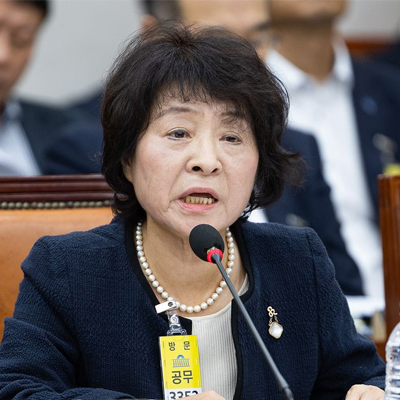
박지향 사건과 같은 판결이 반복 학습되면서 사법부에 대한 국민의 불신은 심화 과정을 넘어선 지 이미 오래다.

단상斷想
칼럼
Dr_Pepper
South Korean historical institutions have become parasites.

0
2026. 11. 03
- The Yoon Seok-yeol government appointed Park Ji-hyang, a Western history scholar with New Right leanings, as the chairperson of the Northeast Asian History Foundation, pushing through an appointment that conflicts with the institution's founding purpose.
- The acquittal and return to duty of Yongsan District Mayor Park Hee-young, who faced charges related to the Itaewon disaster, sparked criticism that the judiciary is biased towards protecting powerful corruption and vested interests.
- The judiciary cited only procedural legitimacy when it granted the injunction to suspend the execution of Chairperson Park Ji-hyang's suspension from duty, but this effectively maintained the previous government's ideological appointments and delayed policy changes following the change of government.
- The article strongly criticizes the judiciary for prioritizing the self-preservation of elite networks and the maintenance of conservative vested interests over democratic accountability, thereby losing public trust.
- Ultimately, it reveals a pessimistic view that Korean society is mired in ideological conflict, hindering the resolution of fundamental problems and sustainable growth.
The two Parks (Park family) born of the Yoon Suk-yeol administration
In late 2023, during the Yoon Suk-yeol administration, Park Jihyang (born 1953), an emeritus professor of Western History at Seoul National University, was appointed as the 7th chairperson of the Northeast Asian History Foundation. Her term is three years, until December 2026. The appointment of a Western historian specializing in British history as the head of an institution dealing with Northeast Asian historical issues and Dokdo is not only unusual but also an unacceptable disaster, and the tragedy was already conceived at this time.
Northeast Asian history is a field where someone who cannot decipher classical Chinese historical materials, the written language of Northeast Asia, should not be seated as its head. Let's try to recall if there was anyone within the foundation who held up a picket, wore a bandana, and protested. No matter who comes, it's a parachute appointment, and merely preserving one's position is a daunting reality. In that case, isn't the existence of such an institution a meaningless waste of taxpayer money? Not a single South Korean citizen can discuss the research into the distortion of Northeast Asian history and its relationship with Britain, which was the axis of evil among the colonial hegemonic empires worldwide. To unravel that history would require hundreds of books, yet it's questionable what someone who has internalized their management logic intends to achieve by completing their term. If we expand Park Jihyang's appointment to the issue of history education, readers should also consider why propaganda that lowers the consciousness level of Koreans and traps them in an ideological prison is repeated.
Yoon Suk-yeol and Kim Keon-hee are ignorant yet shamelessly unable to hide their desires, using this very brazenness as a weapon and not considering the buying and selling of public office shameful. Many others, equally devoid of shame, must have lined up. However, Park Jihyang is not the only unacceptable appointment. The appointment of a Western history major as the chairperson of the Northeast Asian History Foundation was not the only unusual case. On October 29, 2022, in connection with the Itaewon tragedy, Yongsan District Mayor Park Hee-young (born 1961), who was charged with professional negligence resulting in death and injury for failing to prepare a safety management plan for a large crowd and not properly operating the disaster safety situation room, was also an presumptuous appointment.
Park Hee-young, who has two sons who chose American nationality because they were not born in South Korea, is not eligible to run for office in South Korea. The failure to punish pro-Japanese, anti-national collaborators darkens the future of the nation, and in the political circles that have failed to eradicate the practice of such third-rate public officials being rampant, allowing those like Park Hee-young, who have been influenced by American culture, to assist Yoon Suk-yeol and Kim Keon-hee alongside indigenous Japanese collaborators, only reveals embodiments of desire who have merely aged. In such a world, the people are Red Guards, pigs, dogs, and fools. The political circles that avoided military service and then pushed for false accusations, and the Democratic Party that couldn't utter a word for fear of public shaming, must now slowly develop self-purification capabilities. Ultimately, Park Hee-young was acquitted in the first trial after five months of imprisonment and achieved the remarkable feat of returning to her district chief duties the day after her release, along with 50 million won in bail.
The South Korean judiciary is like mold growing on a pile of rotten garbage; this is our reality. In South Korea, academic background is another word for success, not a means or purpose of learning to cultivate individuals with a strong sense of mission to promote nationalism or the philosophy of national coexistence. Those low-class individuals who have never been ashamed of their cheap, third-rate outlook on life, who take career advancement for granted, and who create, nurture, and stake their honor on the bottom-feeder Kim Keon-hee faction, should now be legally sanctioned from holding public office. Ah, if the mold persists, then fundamentally, young couples who wish to become parents must think so that such individuals are not born. Even if a rebellion fails by chance, and even if export figures are renewed by chance, without fundamental structural improvement, sustainable growth is impossible as things stand. Now is the time to think, not to raise an unstable champagne glass.
The essence of the Park Ji-hyang case
Park Ji-hyang has been evaluated as having a New Right tendency due to her participation in the co-authorship of "Re-recognition of the History Before and After Liberation," her emphasis on analyzing and understanding the motives of colonial collaborators, and her remarks welcoming discussions with Japanese right-wingers. Therefore, it is unlikely that Yoon Suk-yeol, knowing these tendencies and intending to promote harmony with Japan, would have foolishly appointed Park Hee-young to the Northeast Asian History Foundation. Who should be placed in which position to expand the stronghold of pro-Japanese sentiment and even move towards the much-rumored parliamentary system? Park Ji-hyang was the person to lay the theoretical groundwork for actions befitting that goal. The sorrow of a nation that has lost its history is revealed when a spokesperson for the perpetrators is placed in a research institution that should protect history, and those who trampled on the victims are revered. Park Ji-hyang is the person who 're'-interpreted the history before and after liberation, which has never been properly recognized since the founding of the Republic of Korea—the debate over National Foundation Day is also a topic worth igniting. The book "Re-recognition of the History Before and After Liberation" was proposed in the fall of 2004, and four editorial board members selected papers for over a year, publishing it in February 2006 through Chaeksesang.
Park Ji-hyang was a co-editor of volumes 1 and 2, and wrote the "Preface" for volume 1 and "Korea's Labor Movement and the United States, 1945-1950" in part 5 of volume 2. I don't know what criteria allowed for the premise of comparing Korea's '1945-1950' with the American labor movement, but if one had a proper grasp of historical fundamentals, a comparison between Korea and the United States during this period would be impossible. Let alone the labor movement; is this person sane?
The preface is even more so. The purpose of publishing "Re-recognition" is to re-examine the nation- and people-centered view of history presented in the existing "Understanding of History Before and After Liberation." It criticizes the perspective that makes the nation an absolute criterion for judging history, which makes it a perfect match with co-editor Lee Young-hoon. I imagine that Park Ji-hyang was chosen as the second-best option because they thought it was too obvious to appoint Lee Young-hoon as the chairman of the Northeast Asian History Foundation. Lee Young-hoon, Kim Boo-kyum's brother-in-law, called the events in Gwangju in May 1980 "riots" at a forum on 5.18 hosted by Lee Jin-sook of the People Power Party at the National Assembly Library on August 13, 2026, and claimed the conspiracy theory that "deep state" governs South Korea. This person, who once helped Kim Geun-tae in the student movement, worked undercover in the Guro Industrial Complex, participated in labor and democratization movements, and even learned classical Chinese at Jigok Seodang, is now an Rhee Syngman TV YouTuber. What has divided the spiritual world of Koreans after the war into such ideologies?
The Northeast Asian History Foundation was a public institution established in September 2006 during the Roh Moo-hyun administration to counter China's Northeast Project and Japan's historical distortions. Therefore, it was pointed out early on that Park Hee-young's view of history was in tension with the institution's founding purpose. At a time when people were covering their mouths and whispering behind the scenes, a conflict erupted in December 2025 during President Lee Jae-myung's Ministry of Education work report. When the President asked why they weren't researching "Hwandangogi," Park Ji-hyang replied, "The theories of professional researchers are more persuasive than the claims of amateur historians." The prevailing view in academia that "Hwandangogi" is a forged book has even erased the memory of anti-Japanese armed independence fighters who printed "Hwandangogi" to pass on history to future generations, and the workers mobilized to destroy the evidence of that slaughter were none other than government-sponsored scholars. In other words, the claims that uphold Japan's historical distortions have been passed down through generations and treated as established facts. Fact and established fact are different.
Three days after this answer directly clashed with the President, on December 15, the Ministry of Education launched an investigation into alleged misuse of funds for projects related to Dokdo and Ulleungdo. The timing of the investigation's commencement, immediately after the work report, raised suspicions of a targeted investigation, but the essence is that this targeted investigation is likely to be widespread across all institutions, so the Hwandangogi issue is not the root cause. Nevertheless, in the past, the head of the institution would have resigned and stepped down at this point, but what would the judiciary, which even participated in the rebellion, fear? On July 28, 2026, the Ministry of Education notified Park Ji-hyang of her suspension from duty due to budget misuse and other reasons. Director Park appealed this decision and filed for an injunction along with a main lawsuit.
On August 21 of the same year, the 7th Administrative Division of the Seoul Administrative Court (Presiding Judge Kang Woo-chan) granted the application for suspension of execution. The court stated, "It is difficult to conclude that there is sufficient explanation regarding the necessity and reasonableness of suspending the applicant's duties." The court's reasoning was that the Ministry of Education lacked sufficient grounds for the reasons it presented, such as embezzlement, and that the diversion of budget, which was the main reason for the suspension of duties, was considered to have been handled in accordance with regulations. This decision allowed Chairman Park to return to his duties. However, even after the court's decision, the Ministry of Education continued to pursue the dismissal process. At the end of August, the Ministry of Education sent an official letter to the Northeast Asian History Foundation, requesting the holding of a board meeting to process the recommendation for the chairman's dismissal, and opposition lawmakers raised suspicions that the influence of the Blue House Senior Secretary for Political Affairs was at play. Chairman Park's side expressed its intention to file a complaint against the Minister of Education and others on charges of abuse of power.
While respecting the court's decision, the Democratic Party urged Chairman Park to voluntarily resign, stating that the controversy surrounding his historical views and qualifications had not been resolved. On November 1, 2026, the Ministry of Education's immediate appeal was dismissed, reaffirming Chairman Park's continued performance of duties. His term remained until December, and the main lawsuit was still ongoing. The court suspended the effect of the suspension of duties due to insufficient formal explanation, but it remained a procedural judgment without actively considering the political context at the time of the investigation's commencement and the ideological position of the head of the institution appointed by the previous government. As a result, the personnel structure of historical institutions appointed during the Yoon Suk-yeol administration was virtually maintained, and the policy direction of the democratically elected government was delayed. The Democratic Party was incompetent, and the pro-Japanese judiciary was inherently brazen. With this structure, there is no meaning in confrontation. Currently, President Lee Jae-myung's question is a penetrating insight into the essence of Korean history. With one question, Koreans are divided, like the Red Sea before Moses, into those who advocate for civil war and follow its hierarchy, and those who oppose it, splitting national opinion and national identity. Koreans are not thinking and reasoning people, but parasitic animals who take sides in the face of ideology.
Judiciary's Self-Preservation
It is said that this inertia has become even more pronounced since the proportion of moderate and conservative Supreme Court justices expanded under Chief Justice Cho Hee-dae. A series of actions, including refusing to recommend Supreme Court justices, emphasizing caution regarding judicial reform proposals, and actively speaking at parliamentary audits, are interpreted as an attitude that, while advocating for 'judicial independence,' ultimately seeks to protect existing personnel authority and hierarchical structures. Independence should be freedom from external pressure, but when it is replaced by the self-preservation of an elite network, it clashes with popular sovereignty.
From a broader perspective, several recent judicial decisions suggest that the 'politicization of the judiciary' is leaning in a particular direction. The selective expedited processing seen in some political cases, criticisms regarding delays and tendencies toward reduced sentences in trials related to insurrection, and the tendency to protect vested interests in administrative lawsuits like the current one, all combine to raise concerns that the judiciary is functioning as a mechanism to buffer or delay the outcomes of democratic changes in government. The voices from judicial representative councils, among others, expressing concerns about the infringement of independence regarding judicial reform bills, are in the same context. However, the value of independence must be distinguished from the self-preservation of elite networks. When the head of a public institution clashes with the policy direction of a government elected by the people, if the court emphasizes only procedural strictness and chooses to maintain the status quo, it cannot but be seen as the institutional reproduction of conservative vested interests, rather than neutrality.
Personnel appointments and operations of historical institutions are not administrative matters. They are political acts that define which past the nation remembers and which future it aims for. What the Park Jihyang case revealed is a structure where it is difficult to easily replace ideological appointees from the previous government even after a change in administration, and the reality that the courts ultimately support this structure. As such rulings are repeated, the judiciary runs an increasing risk of being perceived as a 'conservative stabilizing force' that delays political changes decided by the people. Beyond procedural legitimacy, a critical perspective is needed to question for whom those procedures operate favorably. If the judiciary does not reorganize itself as an institution that responds to democratic change and public accountability, rather than a mechanism for elite reproduction, public trust will inevitably further erode.
Even after democratization, Korea's judiciary has not fully shed the legacy of the authoritarian era. The bureaucratic culture and elitist consciousness, cultivated under past military regimes, have been internally reproduced even after formal independence was secured. The closed structure of judicial appointments and promotions within a small elite group limits the judiciary's responsiveness to social change and democratic demands. Especially when ideological issues, such as historical awareness, are linked to the operation of public institutions, courts often tend to rule in favor of maintaining the existing order. This is not a matter of legal interpretation, but rather a question of which social forces and values the judiciary prioritizes.
The Park Ji-hyang case succinctly illustrates these structural limitations. While the possibility that the Ministry of Education's investigation and suspension of duties stemmed from political motives cannot be ruled out, the court emphasized only formal requirements without sufficiently examining that possibility. As a result, the personnel structure of historical institutions from the previous administration was effectively maintained, and the policy direction of the democratically elected government was delayed. This can be interpreted as the judiciary prioritizing the continuity of an elite network over democratic accountability. Furthermore, such a judgment carries the risk of clashing with the national task of responding to historical distortion, as the role of the Northeast Asian History Foundation extends beyond an academic institution and is directly linked to the protection of the nation's historical identity and sovereignty.
The conservative inertia of the judiciary is being reinforced at an institutional level, beyond the issues of individual rulings. Under Chief Justice Cho Hee-dae's leadership, with the Supreme Court justices leaning moderate-conservative, the possibility of progressive voices being weakened in major decisions, such as those by the full bench, has increased. While caution regarding judicial reform proposals and an emphasis on independence are formally valid, the problem becomes serious when these are used as grounds to cling to existing personnel authority and hierarchical structures. The public demands that the judiciary be free from external pressure, yet also responsive to democratic change. However, the current structure makes it difficult to meet these dual demands.
Ultimately, as judgments like the Park Ji-hyang case are repeatedly learned, public distrust in the judiciary has long since gone beyond a deepening process. The shadow hidden within the strictness of procedure is the fate of those who, if they relinquish their vested interests, must go to prison as criminals. More serious is the future value that the five viscera and six entrails of indigenous Japanese collaborators, flowing in their blood, instinctively reject. The South Korean judiciary's origin lies with those born as enemies to side with the enemy in the struggle between those who sought to defend their ancient homeland for thousands of years and those who forcibly tried to seize it. Is colonial history so trivial? Since no historical institution has ever experienced conflict over historical perspectives, I believe there is no nationalism in the Northeast Asian History Foundation or the National Institute of Korean History. The question is whether feeding parasites is meaningful or not. It would be quicker to find that meaning.
댓글
( 0 / 500 )
문상준
7
동북아역사재단은 단순한 연구기관이 아니라 중국의 동북공정과 일본의 역사 왜곡에 대응하기 위해 설립된 국가기관입니다. 기관의 수장이라면 학문적 명성뿐 아니라 설립 목적에 대한 이해와 역사적 책임감도 갖춰야 합니다. 정권이 바뀌어도 그 책임은 달라지지 않습니다.
( 0 / 500 )
m504
6
학문의 자유와 전문성은 존중받아야 하지만 모든 전문성이 모든 자리에 적합한 것은 아닙니다. 박지향 이사장의 전공과 역사 인식, 그동안의 발언을 둘러싼 논란은 충분히 검증할 필요가 있습니다. 핵심은 개인의 성향이 아니라 기관의 설립 목적에 부합하는 인사였는가입니다.
( 0 / 500 )
대륙의왕
5
사법부 독립은 정치권력의 간섭을 막기 위한 것이지 기존 기득권과 인사 구조를 보호하기 위한 특권이 아닙니다. 법원이 절차적 정당성을 강조하는 것은 당연하지만, 그 판단이 결과적으로 공공기관의 책임성을 약화시키는 것은 아닌지 돌아봐야 합니다.
( 0 / 500 )
Bio2274
5
동북아역사재단은 개인의 학문적 명예를 쌓거나 특정 역사관을 관철하는 자리가 아닙니다. 중국의 동북공정과 일본의 역사 왜곡에 맞서 우리 역사의 진실을 지켜야 할 기관입니다. 식민지 협력자에 대한 이해를 강조해 온 박지향 교수가 과연 이 기관을 이끌 적임자였는지 엄중하게 물어야 합니다.
( 0 / 500 )
happynam
4
윤석열 정부가 남긴 잘못된 인사와 제도적 유산을 바로잡는 것은 현 정부의 중요한 책무입니다. 그러나 정치적 구호만으로 해결할 수는 없습니다. 명확한 근거와 정당한 절차를 통해 잘못된 인사를 바로잡아야 합니다. 민주당 역시 무능과 소극적 대응에서 벗어나야 합니다.
( 0 / 500 )
이정훈90
4
역사를 잃으면 과거만 잃는 것이 아니라 미래를 판단할 기준까지 잃게 됩니다. 식민지 지배와 독립운동의 역사를 어떻게 연구하고 가르칠 것인가는 국가 정체성의 문제입니다. 역사기관이 정권의 전리품이 되어서도 안 되지만, 역사 왜곡에 침묵하는 기관이 되어서도 안 됩니다.
( 0 / 500 )
ganghyug
4
정권은 바뀌었지만 국가기관 곳곳에 남아 있는 낡은 인식과 인사 구조는 쉽게 바뀌지 않습니다. 특히 역사를 연구하고 국가의 정체성을 지켜야 할 기관이라면 더욱 엄격한 검증이 필요합니다. 역사기관의 독립성은 국민의 역사적 진실을 지키는 데서 출발해야 합니다.
( 0 / 500 )
木石
3
박지향 이사장은 법원의 직무정지 효력정지 결정을 자신의 역사적 정당성을 인정받은 것으로 착각해서는 안 됩니다. 법적 절차의 문제와 역사기관 수장으로서의 자격은 전혀 별개입니다. 동북아역사재단의 설립 취지와 국민의 역사적 요구에 부응할 자신이 없다면 임기를 채우려 하지 말고 스스로 물러나는 것이 최소한의 책임입니다.
( 0 / 500 )
박진택
3
역사에는 다양한 해석이 있을 수 있지만 모든 해석이 동등한 가치를 갖는 것은 아닙니다. 사료와 사실에 근거하지 않은 주장을 학문의 자유라는 이름으로 보호할 수는 없습니다. 동북아역사재단이 무엇을 위해 존재하는지, 누구의 세금으로 운영되는지부터 다시 생각해야 합니다.
( 0 / 500 )
arc55
2
『해방전후사의 재인식』에서 드러난 박지향의 역사 인식은 단순한 학문적 해석 차이로 치부할 문제가 아닙니다. 민족과 민중의 관점에서 해방과 분단의 역사를 재검토한다는 명분으로 식민지 지배와 협력의 책임을 희석한다면 그것은 역사에 대한 또 다른 왜곡입니다. 역사기관의 수장이라면 더욱 엄격한 검증을 받아야 합니다.
( 0 / 500 )
Ryan90
1
친일 청산이 제대로 이루어지지 못한 역사는 오늘날에도 국가기관의 인사와 역사교육에 그림자를 드리우고 있습니다. 과거를 바로 세우지 못한 사회가 미래를 제대로 설계할 수 있을까요? 이제는 이념 논쟁을 넘어 역사적 사실과 공공기관의 책임을 분명히 세워야 합니다.
( 0 / 500 )
신고내용
신고내용을 선택해주세요
회원비난/비하/욕설글 및 댓글도배성 게시물저작권 침해/불법자료 유출허위사실유포개인정보 유출.사생활 침해무단광고/홍보음란물 및 도박 불법 광고물범죄행위 관련 글불법행위 관련 소개물품 판매 및 사기글악성코드 및 스파이웨어 유포기타 사유 및 운영진 판단


비밀번호를 잊으셨나요?
Sign in with Google


All information provided by us is free of charge and is for the public good.