品

Corea든 Korea든, 품격이 먼저다
Whether Corea or Korea, dignity comes first.
Whether Corea or Korea, dignity comes first.
Now
지금
751 Diaspora
Heritage
유산
Humanity
인문
Mirengsi
未冷尸
Politics
정치
Media
언론
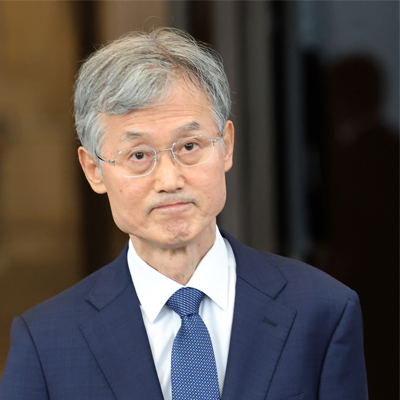
내란 가담 군 인사, 오세훈 시장, 김기현 의원 등 여권 인사들에게 연이어 무죄 판결이 내려지며 사법부의 공정성에 대한 구조적 의문이 제기되고 있다.

단상斷想
칼럼
andante
Cho Hee-dae Judiciary's Selective Justice

0
2026. 11. 01
- Under Chief Justice Cho Hee-dae's recent tenure, a series of acquittals for ruling party figures, including military personnel involved in the rebellion, Mayor Oh Se-hoon, and Rep. Kim Ki-hyun, has raised structural questions about the judiciary's impartiality.
- Specifically, in the case of Rep. Kim Ki-hyun's spouse receiving a luxury bag, while acknowledging the job-relatedness and reciprocal nature of the gift, Rep. Kim himself was acquitted. This contrasts sharply with strict rulings against the Democratic Party and progressive factions, making it difficult to avoid criticism of "selective strictness."
- This series of rulings deepens the perception that the judiciary is lenient towards a specific faction, thereby proving the necessity for more robust judicial reform, such as increasing the number of Supreme Court justices and introducing a "judicial distortion crime."
- The Democratic Party asserts its clear commitment to judicial reform, not shying away from parliamentary investigations or impeachment discussions, and argues that if the judiciary fails to restore public trust on its own, it must be held accountable through public oversight and institutional reform.
Acquittal in the Rebellion Case, Leniency for Oh Se-hoon and Kim Ki-hyun, and the Urgency of Judicial Reform
On October 30, 2026, the 22nd Criminal Division of the Seoul Central District Court (Presiding Judge Jo Hyeong-woo) acquitted People Power Party lawmaker Kim Ki-hyun of charges of violating the Improper Solicitation and Graft Act. Around the same time, Seoul Mayor Oh Se-hoon had his first-instance conviction overturned and was acquitted in his appeal for violating the Political Funds Act, and eight military personnel involved in the December 3rd emergency martial law were all acquitted of charges of participating in a rebellion. These rulings go beyond the assessment of evidence in individual cases and simultaneously raise structural questions about the standards applied by the judiciary under Chief Justice Cho Hee-dae. While rulings against the Democratic Party and the progressive camp are strict, swift, and severe, rulings concerning the so-called rebellion forces and their periphery are lenient, citing lack of evidence or insufficient credibility of statements. The Kim Ki-hyun case, in particular, most clearly exposes this contradiction.
First, let's look at the rulings concerning military personnel. Eight soldiers, including former 2nd Armored Brigade Commander Gu Sam-hoe and former Ministry of National Defense Innovation Planning Officer Bang Jeong-hwan, who attended the so-called 'Hamburger Meeting' (Lotteria Meeting) and were accused of conspiring in the December 3rd rebellion, were all acquitted in the first instance. The special prosecutor viewed them as discussing the role of a second investigative unit for investigating election fraud or being involved in deploying troops to the National Assembly and the National Election Commission. However, the court ruled that the purpose of disturbing the constitutional order was not recognized and that the characteristics of military organizations, where subordinates obey superiors, should be considered. In fact, with martial law declared and troops moving, they were acquitted on the grounds that they had no specific awareness of their role. This contrasts with past cases, such as the Lee Seok-ki case, where a conviction for incitement to rebellion was confirmed based solely on the content of words. The logic of exoneration due to 'non-recognition of intent,' despite actual troop movements and meetings, has the effect of diluting the responsibility for rebellion from individual actors to the structure and chain of command.
The same was true for Mayor Oh Se-hoon. He was sentenced to a fine of 10 million won (a penalty that would result in the loss of his mayoral position) in the first trial on suspicion of paying for Myung Tae-kyun's public opinion poll, but was acquitted in the second trial. The court gave low credibility to Myung Tae-kyun's testimony and did not acknowledge Mayor Oh's involvement based on newly submitted audio files. The special prosecutor appealed, stating that 'sufficient objective evidence was rejected without reasonable cause.' The difference in judgment between the first and second trials lay in the evaluation of the credibility of the testimony, but as a result, a key politician was exempted from responsibility for charges related to political funds. The Democratic Party criticized it as 'a judgment that defies common sense.'
The Kim Ki-hyun case was not merely a 'gift between spouses.' After being elected as the leader of the People Power Party on March 8, 2023, with the support of Yoon Suk-yeol, his spouse, Lee Sun-ae, handed a Roger Vivier clutch bag (worth about 2.67 million won) to Kim Keon-hee on March 17 of the same month (9 days after his election). The special prosecutor indicted this as a quid pro quo for supporting the party leader election. Half of the bag's purchase cost was paid with gift certificates and department store points, and the rest was paid with a credit card linked to an account where Representative Kim Ki-hyun's parliamentary salary was deposited. This circumstance, confirmed by the special prosecutor, was also recognized by the court as 'suspicious circumstances.' Inside the bag was a memo related to party leader Kim Ki-hyun. The court clearly ruled that the bag was related to the president's comprehensive duties (a position that could exert influence over the ruling party's leader election) and had the nature of a 'repayment' rather than a ceremonial gift. The court even mentioned Yoon Suk-yeol's proposal to change party election rules and his hostile attitude towards rival candidates, acknowledging the job-relatedness.
Nevertheless, Kim Ki-hyun himself was acquitted. The court stated that 'there is no objective evidence directly admitting to conspiracy or delivery, nor is it present in the statements of related parties,' and that the possibility of his wife independently delivering it through employees could not be ruled out. Despite acknowledging the circumstances of payment to a salary account, the timing, memos, and job relevance, the court denied conspiracy due to 'lack of direct evidence.' The special prosecutor sought a one-year prison sentence for Kim Ki-hyun and six months for his spouse, but only his wife was sentenced to a 5 million won fine and confiscation of the bag. Kim Ki-hyun's side claimed 'indiscriminate prosecution' and asserted political oppression. This could be a result of applying the principle of presumption of innocence under the Criminal Procedure Act. However, compared to cases at the same time involving the Democratic Party and progressive factions where statements and circumstantial evidence were evaluated more strictly, and swift guilty verdicts were rendered for election law violations, criticism can inevitably be raised that the standard of strictness is inconsistent.
This ruling is not an isolated incident. It aligns with the immediately preceding acquittal of Oh Se-hoon in the second trial (overturning the first-instance loss of mayoral office due to the rejection of Myung Tae-kyun's testimony credibility) and the acquittal of all eight military personnel (related to the Lotteria meeting and troop deployment, non-recognition of the purpose/intent of disturbing the constitutional order, and consideration of superior-subordinate relations). The trend of exemption for 'lack of specific role recognition' in a situation where martial law was actually declared and troops moved, and the successive exemption of key politicians related to political funds and solicitations, reinforces the impression of 'leniency towards internal rebellion forces and their periphery.' This is the structural background for the widespread perception under Chief Justice Cho Hee-dae's system that the judiciary is strict on one side and lenient on the other. Regardless of the National Court Administration's statement that 'Cho Hee-dae was not involved,' the direction of lower court rulings is directly connected to the overall trust in the judiciary.
These patterns themselves prove why judicial reform must be pursued more strongly and decisively. Issues such as the number and composition of Supreme Court justices, the Chief Justice's nomination power, and problems of trial delays and selective strictness have not fully escaped the shadow of past judicial misconduct. The measures promoted by the Democratic Party, such as increasing the number of Supreme Court justices (from 14 to 26 or more), introducing the crime of judicial distortion, and establishing a system for appealing judicial decisions, are not political attacks but attempts to create checks and balances to prevent the judiciary from repeatedly making politically biased or power-friendly judgments. If the will for reform weakens in a situation where Chief Justice Cho Hee-dae opposes judicial reform as a 'constitutional amendment matter,' prolongs vacancies for Supreme Court justices, and made swift judgments in cases such as the remand of then-presidential candidate Lee Jae-myung's election law case, the judiciary is highly likely to become even more self-protective. The fact that discussions about a parliamentary investigation or impeachment of Cho Hee-dae have already emerged within the Democratic Party is a result of this distrust.
The Democratic Party must express its commitment to judicial reform more clearly and strongly. If the current efforts show hesitation or retreat due to a rush or political calculations, it is no different from condoning judicial bias. Institutional support must be provided for measures such as increasing the number of Supreme Court justices and improving the recommendation process to ensure diversity in the composition of the Supreme Court, establishing a mechanism to review the consistency of judgments between lower and higher courts, ensuring swift and strict trials in cases of rebellion and power-related corruption, improving the judicial evaluation system, and expanding the public disclosure of judgments. If necessary, discussions about parliamentary investigations or impeachment in the National Assembly should not be avoided, and the boundaries of judicial accountability must be clearly defined in conjunction with public opinion. If the judiciary cannot restore trust on its own, the responsibility for that restoration will inevitably fall to the elected power and the people.
The principle of presumption of innocence and the principle of evidence-based trials under the Criminal Procedure Act must be respected. However, if significant differences repeatedly appear across factions in how the same principles are applied, it no longer appears to be 'the application of principles' but rather 'the selective application of principles.' It is difficult to assert the judiciary's fairness when, in the Kim Ki-hyun case, professional relevance and reciprocity were acknowledged, yet he was exonerated, and then Oh Se-hoon and military personnel were successively acquitted. The not-guilty verdicts now being issued are not just individual cases, but the clearest evidence of why the Democratic Party must pursue judicial reform more strongly and decisively. Public judgment can be delivered not only through elections but also through institutional reform and continuous oversight in the National Assembly. If the Cho Hee-dae judiciary cannot resolve this contradiction itself, the responsibility will also fall on the political forces that hesitated to reform.
댓글
( 0 / 500 )
jinyoung82
9
개별 판결의 유무죄를 정치적 성향으로 단정해서는 안 됩니다. 그러나 서로 다른 사건에서 반복적으로 납득하기 어려운 판단이 나온다면 사법부는 그 차이를 국민에게 설명할 책임이 있습니다. 무죄 추정은 모든 국민에게 동일하게 적용되어야 하며, 권력의 위치에 따라 증거의 무게가 달라져서는 안 됩니다.
( 0 / 500 )
jungjoon
7
김기현 사건에서 가장 이해하기 어려운 대목은 직무 관련성과 답례 성격을 인정하면서도 정작 당사자의 공모는 인정하지 않았다는 점입니다. 법리적으로 가능한 판단인지와 별개로, 국민의 눈높이에서 그 결론이 얼마나 설득력을 갖는지 법원은 되돌아봐야 합니다.
( 0 / 500 )
화양연화
9
조희대 대법원장에게 묻고 싶습니다. 사법부는 국민 위에 존재하는 무풍지대입니까? 판결에 대한 비판은 존중받아야 할 표현이고, 사법행정과 권한 행사에 대한 검증 역시 민주주의의 당연한 절차입니다. 사법부가 스스로 개혁의 주체가 되지 못하고 기존 질서의 방어에만 매달린다면 국민의 불신은 더욱 커질 수밖에 없습니다.
( 0 / 500 )
jongman69
7
사법부의 독립은 존중받아야 하지만, 그것이 사법부의 무오류나 무책임을 의미하지는 않습니다. 판결에 대한 비판까지 사법부 독립 침해로 몰아가는 태도야말로 사법부의 신뢰를 무너뜨립니다.
( 0 / 500 )
최진석
5
당대표 선거 직후 대통령 부인에게 267만 원 상당의 명품 가방을 전달했다는 사실만으로도 정치적 도덕성에 심각한 의문이 제기됩니다. 더욱이 가방의 직무 관련성과 답례 성격까지 법원이 인정했다면 김기현 의원은 법적 무죄 여부를 떠나 국민 앞에 정치적 책임부터 설명해야 합니다.
( 0 / 500 )
paran26
5
법의 판단 뒤에 숨는다고 정치인의 책임까지 사라지는 것은 아닙니다. 조희대 체제의 문제를 개인에 대한 공방으로 축소하지 말고, 권력으로부터 독립된 사법부를 만들기 위한 제도 개혁으로 연결해야 합니다.
( 0 / 500 )
iso945
5
당대표 당선에 대통령의 영향력이 작용했다는 의혹이 있는 상황에서 불과 9일 만에 대통령 부인에게 고가의 가방을 전달했다면 국민이 이를 순수한 사적 선물로 받아들이겠습니까? 본인은 몰랐고 배우자가 알아서 했다는 식의 해명으로 정치적 책임을 피하려 해서는 안 됩니다.
( 0 / 500 )
bora90
4
공직자의 신뢰는 법정에서 무죄를 받는 것만으로 회복되지 않습니다. 국정조사를 통해 제기된 의혹을 투명하게 밝히고 책임질 부분은 책임지는 것이 사법부 신뢰 회복의 출발점입니다. 정치인의 양심과 책임은 법의 빈틈 뒤에 숨을 수 없습니다.
( 0 / 500 )
Yeongwol
4
법적으로 무죄를 받았다고 정치적 책임까지 면제받았다고 생각한다면 큰 착각입니다. 당대표 당선의 도움을 받은 데 대한 답례로 배우자가 대통령 부인에게 명품 가방을 전달했고, 법원조차 그 직무 관련성과 대가성을 인정했습니다. 그런데 정작 당선의 당사자는 아무것도 몰랐다는 결론을 국민에게 어떻게 설명할 것입니까
( 0 / 500 )
탑건
4
내란의 책임을 끝까지 묻고 권력형 비리를 엄정하게 심판할 수 있는 구조를 만드는 것, 그것이 지금 민주당이 감당해야 할 역사적 책무입니다.
( 0 / 500 )
Orange9
3
사법부 독립은 대법원장의 개인적 권위를 지키기 위한 방패가 아닙니다. 사법부가 국민의 신뢰를 잃었다면 그 원인을 돌아보고 책임 있게 설명하는 것이 대법원장의 책무입니다. 사법개혁에는 헌법적 문제를 제기하면서 정작 사법부 내부의 불신과 논란에는 얼마나 책임 있는 모습을 보였습니까? 독립을 주장하기 전에 국민이 신뢰할 수 있는 사법부인지부터 돌아봐야 합니다.
( 0 / 500 )
박인훈
1
조희대부터 잡아야합니다. 사법부를 이용해 너무나 많은 범죄를 저지르고 있어요, 일단 직무정지 시킨 후 하나씩 각개격파로 처리하면서 사법개혁을 이루어야 합니다.
( 0 / 500 )
신고내용
신고내용을 선택해주세요
회원비난/비하/욕설글 및 댓글도배성 게시물저작권 침해/불법자료 유출허위사실유포개인정보 유출.사생활 침해무단광고/홍보음란물 및 도박 불법 광고물범죄행위 관련 글불법행위 관련 소개물품 판매 및 사기글악성코드 및 스파이웨어 유포기타 사유 및 운영진 판단


비밀번호를 잊으셨나요?
Sign in with Google


All information provided by us is free of charge and is for the public good.