品

Corea든 Korea든, 품격이 먼저다
Whether Corea or Korea, dignity comes first.
Whether Corea or Korea, dignity comes first.
Now
지금
751 Diaspora
Heritage
유산
Humanity
인문
Mirengsi
未冷尸
Politics
정치
Media
언론
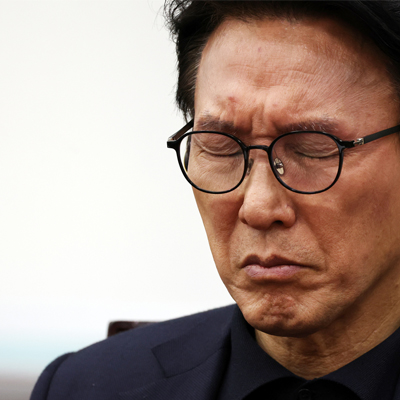
민주당이 조희대 대법원장 탄핵을 미루고 국정조사를 우선하는 것은 상대에게 시간을 벌어주는 패착이다.

단상斷想
칼럼
HumanX
Representative Kim Min-seok, make a decision: Cho Hee-dae's impeachment is a prerequisite.

0
2026. 10. 29
- The Democratic Party's decision to postpone the impeachment of Chief Justice Cho Hee-dae and prioritize a parliamentary investigation is a misstep that buys time for their opponents, as the judiciary and conservative establishment have already meticulously planned their strategy.
- The acquittal of Mayor Oh Se-hoon and the extended detention of Kim Keon-hee are a dual strategy to protect key figures and preempt backlash, suggesting the judiciary is operating under political calculations.
- The Democratic Party is wasting time, fearing impeachment backlash and failing to unify internal opinions, but Chief Justice Cho Hee-dae's exercise of personnel authority will critically influence the Lee Jae-myung administration's judicial reform and trial directions.
- While impeachment backlash may be temporary, the structural entrenchment of judicial power is difficult to reverse; thus, the Democratic Party must overcome internal conflicts and make Cho Hee-dae's impeachment a priority to curb the judiciary's actions.
- A parliamentary investigation is merely a means to impeachment, not an end; substantive measures to control judicial appointments and trial flows through the suspension of Chief Justice Cho Hee-dae are essential for the Lee Jae-myung administration's survival and future presidential prospects.
The Democratic Party is completely missing the essence of the current struggle. The impeachment of Supreme Court Chief Justice Cho Hee-dae is not an option, but a prerequisite. The attitude of trying to create an appearance with a parliamentary investigation, gauge public opinion, and balance internal party dynamics is not caution, but an act of giving the opponent time for their survival strategy. The judiciary and the conservative establishment have already calculated and executed all their cards to survive. Yet, the Democratic Party is still tied down by the word 'backlash' and is only looking around. If the Lee Jae-myung government is to survive and maintain the possibility of the next presidential election, there is no time to play the role of a nobleman.
The opponent has already set the stage. Seoul Mayor Oh Se-hoon's acquittal in the appellate trial for his political funds law violation case was not a typical trial outcome. That ruling, which overturned the first trial's sentence of loss of mayoral office, created 'room to survive' for conservative forces. At the same time, an additional arrest warrant was issued for Kim Keon-hee just before the expiration of her detention, keeping her incarcerated until the end of the year. It's a strategy to hold key figures to prevent backlash, while giving breathing room to those who can survive.
The judiciary and the conservative establishment are calculating without a single flaw. The dual mechanism of securing survival space with an acquittal and blocking the pretext for backlash with extended detention is already in operation. In contrast, the Democratic Party cannot even gather internal opinions in one place and is wasting time by worrying about impeachment backlash and suggesting a step-by-step parliamentary investigation. In a game where the opponent has already finished their brain-play, the Democratic Party is still talking about 'the process of persuasion and consent'.
It may seem reasonable, to some extent, for CEO Kim Min-seok to emphasize national consensus and persuasion. However, at this point, that logic is completely out of touch with reality. The issues surrounding Supreme Court Chief Justice Cho Hee-dae have already accumulated sufficiently: the prolonged vacancy due to the refusal to re-nominate a Supreme Court Justice, his refusal to take an oath and unauthorized departure during the parliamentary audit, suspicions regarding the execution of his business promotion expenses and cash incentives, and the controversy over political neutrality during the remand process of then-candidate Lee Jae-myung's case. With the Cho Kuk Innovation Party already having disclosed a second impeachment motion and demanding joint promotion, the Democratic Party's step back, stating, “We will first uncover the suspicions through a parliamentary investigation,” is merely buying time for the other side.
If the structure allowing Supreme Court Chief Justice Cho Hee-dae to exercise judicial personnel authority in February next year remains unchanged, there is a high probability that the direction of judicial reform and trials related to insurrection that the Lee Jae-myung administration intends to pursue will already be largely determined. The longer the Supreme Court Justice vacancy persists, the more that void will be filled by the influence of the Cho Hee-dae system, and that influence will in turn be reproduced through the judiciary and personnel structure. If that time is not secured, all subsequent discussions will inevitably proceed on an already tilted playing field.
The fear of an impeachment backlash is understandable. However, a backlash is a matter of time. While the approval ratings of moderates and conservatives may temporarily fluctuate, if the perception that the judiciary has abandoned political neutrality accumulates, the impact could actually work in the opposite direction. The fact that some public opinion polls already show majority support for impeachment, with approval even among moderates, demonstrates that the public views this issue not as a confrontation between ruling and opposition parties, but as a matter of accountability for judicial power.
Not acting by preemptively calculating the backlash means unilaterally putting oneself in a disadvantageous position when the opponent has already finished their calculations and put them into action. Public opinion is not fixed. Over time, changes in support for moderates and conservatives naturally adjust. However, the time it takes for the structural superiority of judicial power to solidify is difficult to reverse. The approach of building up suspicions through a parliamentary investigation overlooks the fact that the opponent can further solidify their structure during the process of building up. As suspicions become clearer, the justification for impeachment grows, but if personnel appointments and trial directions are already decided in the interim, the justification will only serve as ex post facto rationalization.
The struggle between vested interests within the party is also a problem. The division between hardliners and cautious factions, and the intervention of factional power struggles, leading to a fragmented party line, becomes the best gift for the opponent. This fight is not the place to appear cautious by balancing internal party dynamics. The opponent is already using both acquittal and extended detention simultaneously 'to survive.' While the Democratic Party delays its decision, citing public opinion and internal balance, the judiciary gains time to further solidify its domain.
For the Lee Jae-myung administration to survive and maintain the possibility of the next presidential election, it needs to consolidate internal party opinions and make a decisive move. While time is spent adjusting the interests of factions, the judicial establishment converts that time into its structural advantage. The longer internal disputes continue, the more external decisions are delayed, and the more they are delayed, the more favorable the opponent's calculations become.
A parliamentary investigation is a means, not an end. The impeachment of Supreme Court Chief Justice Cho Hee-dae must be set as a prerequisite, securing the political and institutional significance of controlling judicial appointments and the flow of trials for a certain period through the effect of suspension from duty. Although there are opinions from the legal community that the possibility of impeachment being upheld by the Constitutional Court is low, what is more important than that itself is to stop the opponent's movements at this very moment. Suspension from duty is not just a symbol; it is a practical mechanism that blocks the exercise of personnel rights and the formation of judicial panels for a certain period. If that mechanism is not activated, even the suspicions uncovered by the parliamentary investigation will only remain as ex post facto matters. What Representative Kim Min-seok needs to do is clear. He must not stop at saying that all methods and routes have begun to be discussed, but must unite opinions within the party and make the decision to actually implement the impeachment.
Changes in the approval ratings of moderates and conservatives will be resolved by time. However, the time when the structural superiority of judicial power solidifies is difficult to reverse. What the Democratic Party should show now is not caution, being mindful of public opinion, but fierce determination for survival. In a situation where the opponent is already playing mind games, merely being mindful is not a strategy but a reservation for defeat. The survival of the Lee Jae-myung government and the possibility of the next presidential election depend on this decision now. Representative Kim Min-seok should not delay any longer. The impeachment of Cho Hee-dae is a prerequisite. Do not fear the backlash. Time will adjust the approval ratings of moderates and conservatives, but the structure of judicial power will solidify if it does not move now. The Democratic Party must wake up. There is no more time to just calculate when the opponent has already finished their calculations.
댓글
( 0 / 500 )
원빈
9
국정조사만 하다가 결정적인 시기를 놓치는 일이 없어야 합니다. 의혹을 밝히는 과정도 중요하지만, 그 사이 사법부 인사 구조가 굳어질 수 있다는 지적을 민주당은 무겁게 받아들여야 한다. 김민석 대표는 원칙과 실행 사이에서 분명한 입장을 보여야 한다.
( 0 / 500 )
김성민
9
민주당은 도대체 언제까지 역풍 타령만 하며 시간을 허비할 겁니까? 국민이 원하는 것은 눈치 보는 정치가 아니라 책임지는 정치입니다. 상대는 움직이는데 민주당은 검토만 하다가 개혁의 골든타임을 놓칠 작정입니까? 김민석 대표는 이제 말이 아니라 결단으로 답하십시오.
( 0 / 500 )
dongjoo
7
사법개혁을 외치면서 정작 사법 권력의 책임을 묻는 순간마다 뒷걸음친다면 국민은 민주당의 개혁 의지를 무엇으로 믿겠습니까? 국정조사라는 명분 뒤에 숨어 시간을 보내서는 안 됩니다. 탄핵 요건과 증거를 신속하게 검증하고, 정당한 사유가 있다면 주저 없이 헌법적 절차에 나서야 합니다.
( 0 / 500 )
임필립
6
탄핵 역풍만 걱정하다가 개혁의 기회를 놓친다면 그것이야말로 더 큰 정치적 부담이다. 다만 탄핵은 헌법적 요건과 구체적인 근거가 뒷받침되어야 한다. 국민이 납득할 증거와 책임 규명을 바탕으로 민주당이 결단해야 한다.
( 0 / 500 )
이주영
6
민주당이 두려워하는 역풍보다 더 무서운 것은 개혁을 바라는 국민의 실망입니다. 권력을 맡겨 놓았더니 기득권의 눈치를 보고, 당내 계산만 하다가 아무것도 바꾸지 못한다면 정권교체의 의미가 무엇입니까? 김민석 대표는 당내 눈치 정치부터 끝내고 사법개혁의 구체적인 실행 계획을 내놓으십시오.
( 0 / 500 )
jonghoon
5
철저한 검증과 책임 추궁을 동시에 추진하십시오. 국민은 더 이상 책임을 미루는 정치에 인내심을 낭비할 이유가 없습니다. 민주당은 당내 셈법이 아니라 헌법과 국민 앞에 책임지는 정당임을 행동으로 증명해야 합니다.
( 0 / 500 )
자수정
5
사법부 독립이 성역을 뜻하는 것은 아니다. 누구든 헌법과 법률을 위반했다면 그에 합당한 책임을 져야 한다. 조희대 대법원장에 대한 의혹도 예외가 될 수 없다. 민주당은 의혹을 덮어서도 안 되고, 근거가 충분히 확인되기 전에 정치적 구호만 앞세워서도 안 된다.
( 0 / 500 )
김동수
4
지금 민주당에 필요한 것은 말뿐인 사법개혁이 아니라 책임 있는 행동입니다. 국정조사와 탄핵 추진을 무조건 양자택일로 볼 것이 아니라, 각각의 목적과 실효성을 따져 신속하게 추진해야 합니다. 시간을 끌면서 개혁의 동력까지 잃어서는 안 됩니다.
( 0 / 500 )
손수미
4
김민석 대표에게 묻습니다. 사법개혁을 하겠다는 겁니까, 아니면 사법개혁을 말하면서 시간을 보내겠다는 겁니까? 국정조사가 필요하다면 신속하게 진행하고, 탄핵 사유가 확인된다면 헌법적 절차를 밟으십시오. 두려움 때문에 결정을 미루는 것과 신중하게 책임을 다하는 것은 전혀 다릅니다.
( 0 / 500 )
전원일기
2
사법부 독립은 존중되어야 하지만, 그것이 사법 권력에 대한 책임까지 면제해 주는 방패가 되어서는 안 됩니다. 조희대 대법원장을 둘러싼 의혹과 논란을 철저히 검증하고, 위법이나 탄핵 사유가 확인된다면 누구도 예외 없이 헌법적 책임을 물어야 합니다.
( 0 / 500 )
신고내용
신고내용을 선택해주세요
회원비난/비하/욕설글 및 댓글도배성 게시물저작권 침해/불법자료 유출허위사실유포개인정보 유출.사생활 침해무단광고/홍보음란물 및 도박 불법 광고물범죄행위 관련 글불법행위 관련 소개물품 판매 및 사기글악성코드 및 스파이웨어 유포기타 사유 및 운영진 판단


비밀번호를 잊으셨나요?
Sign in with Google


All information provided by us is free of charge and is for the public good.