品

Corea든 Korea든, 품격이 먼저다
Whether Corea or Korea, dignity comes first.
Whether Corea or Korea, dignity comes first.
Now
지금
751 Diaspora
Heritage
유산
Humanity
인문
Mirengsi
未冷尸
Politics
정치
Media
언론
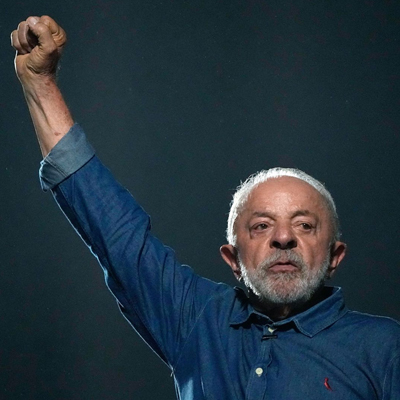
브라질은 현대 정치사상 최초의 4선 대통령을 배출했다.

단상斷想
칼럼
飛上
Lula's 4th term, Lee Jae-myung's people's democracy

0
2026. 10. 27
- Lula da Silva's fourth presidential victory in Brazil is a symbolic event demonstrating democracy's self-healing power; his comeback, overturning an initial deficit, halted the right-wing wave in Latin America.
- Bolsonaro's refusal to concede and his apparent attempt to follow in his coup-convicted father's footsteps highlight the limits of far-right populism and anti-democratic behavior when confronted by democratic institutions.
- This article uses Brazil's case to emphasize the need for democratic development and the eradication of deep-rooted evils in Korea, particularly judicial reform, arguing that politician Lee Jae-myung should be at its forefront.
- Judicial reform is stressed as a key task to dismantle structures where vested interests and remnants of the Japanese colonial era mock the public, prevent excessive prosecutorial intervention, and restore true popular sovereignty.
- Ultimately, Brazil's example of democratic preservation sends a strong message to Korean society: to break the distortions caused by incomplete past purges by vested interests and complete politics for the people.
The results confirmed by Brazil's Superior Electoral Court on the night of the 25th local time, with over 99.76% of votes counted, were more than just a declaration of election; they were an event demonstrating the self-healing power of democracy. Luiz Inácio Lula da Silva, the current president, secured 51.76% of the votes, defeating candidate Flávio Bolsonaro, who received 48.24%, by a margin of 3.52 percentage points. With this victory, Brazil has produced its first four-term president in modern political history.
It is also the first time since the resumption of direct presidential elections after democratization in 1989 that a candidate who trailed in the first round reversed the outcome in the runoff. This reversal, where Bolsonaro, who led by about 2.2 million votes in the first round, was overturned by a margin of over 4.4 million votes in the runoff, is recorded as a historic event that put a brake on the 'Blue Tide' (wave of right-wing power) that was sweeping Latin America. The process was tense: in the early stages of vote counting, Bolsonaro took the lead based on his advantage in urban areas, but Lula, who began to catch up after 30% of the votes were counted, successfully reversed the lead again around 48% and seized victory. The defeated Flávio Bolsonaro stated that he "cannot accept the results" and would request an annulment, which precisely overlaps with the history of his father, Jair Bolsonaro, who refused to accept defeat in 2022 and was involved in a coup plot, leading to a long prison sentence.
This result shows that Brazilian democracy is still alive. Lula, who started as a union activist from a peasant background, served as president twice from 2003 to 2011, and again from 2023, implementing policies aimed at genuinely improving the lives of the poor and workers. In this election, he also rallied his popular base by accelerating the schedule for cash assistance to low-income individuals and pushing for improved working conditions. In contrast, the Bolsonaro family symbolizes far-right populism, nostalgia for military rule, and anti-democratic defiance.
The eldest son of Zaire, who was sentenced to 27 years in prison and placed under house arrest after attempting a coup following his defeat in the presidential election, aiming for the presidency was a direct challenge to democracy. In a trend where the right-wing is gaining ground across Central and South America and regional politics are shifting to the right after a second Trump administration, Brazil, the largest country, preserving a left-wing government demonstrated the limits of extreme family politics and refusal to accept election results in the face of institutional democracy. Lula's own history of being imprisoned on bribery charges, then pardoned and returning to power, also proves that the people's choice can reverse history through institutions.
This reversal in Brazil is by no means irrelevant to us in Korea. We, too, must solidify and develop a democracy for the people, by the people, centered around Lee Jae-myung. President Lee Jae-myung is a politician who has stood against the excessive political intervention of prosecutorial power and the vested interest structure. His leadership aims not at maintaining power, but at a democracy where popular sovereignty functions practically, not just formally. Just as Lula in Brazil overturned an initial disadvantage and led a reversal towards prioritizing the lives of the people, politics centered around Lee Jae-myung in Korea must also prioritize the daily lives of the people and fair institutions.
Democracy is a continuous process of verifying whether power institutions work for the people even after elections, or if they deceive the people for the benefit of specific forces. What politics centered around Lee Jae-myung pursues is precisely this restoration of practical sovereignty. Formal elections and procedural legitimacy alone are not enough. An institutional foundation must be established for the people to decide their own lives, and in that process, Lee Jae-myung's leadership must become the central axis that brings the voices of the people into the system.
To achieve this, the most urgent task is to dismantle entrenched forces, which means judicial reform. The structure in which remnants of the Japanese colonial era and descendants of remaining Japanese individuals mock the public to protect their vested interests can no longer be tolerated. In the historical context where the liquidation of pro-Japanese collaborators remained incomplete after liberation, the judiciary and prosecutorial power have repeatedly served as political tools, representing the interests of specific factions. It is a clear fact that the remnants of the Japanese colonial era have persisted within the modern Korean judicial system, leading to a structure where the abuse of power and the protection of vested interests restrict the fundamental rights of the people. The incomplete liquidation immediately after liberation was not limited to issues of past history. It deeply permeated the personnel and operational logic of power institutions, reproducing a system where specific factions pursued their interests through judicial procedures and checked opposing forces. This structure led to the public being regarded as objects of management rather than subjects, and as a result, judicial power has sometimes served as a shield for vested interests rather than protecting the fundamental rights of the people.
Just as Lula in Brazil has continued people-based politics against corruption and abuse of power, in Korea, through judicial reform, we must adjust the excessive investigative and prosecutorial powers of the prosecution and strengthen the independence and fairness of the courts, so that vested interest groups can no longer deceive the public. We must achieve an institutional break so that colonial remnants are never again reproduced in modern politics and justice due to incomplete past liquidation. Judicial reform is not about retribution, but about the practical realization of popular sovereignty.
To prevent the manipulation of public opinion or the distortion of judicial procedures by remnants of Japanese imperialism and their descendants for their vested interests, transparent personnel appointments, decentralization of power, and a system that allows for direct public oversight must be supported. The structure in which the prosecution determines the direction and intensity of investigations based on political judgment, and the results influence trials, conflicts with the basic principles of democracy. Adjusting these powers appropriately and creating an environment where the courts can make independent judgments free from political pressure is the core of judicial reform. The development of democracy, centered around Lee Jae-myung, must start at this point.
Just as the Brazilian people chose to "defend democracy" through Lula's comeback, the Korean people must also complete true politics of the people, by the people, for the people through the eradication of deep-rooted evils and judicial reform. Democracy can only fully blossom in a society where the mockery of vested interests has disappeared. History has already shown how incomplete liquidation leads to repeated distortions. Now, that cycle must be broken. People's democracy, centered on Lee Jae-myung, must pave the way for its completion.
Eradicating the remnants of Japanese colonial rule and the deception of the vested interests through judicial reform, and establishing a system where power institutions truly work for the people, is precisely the answer to the strongest message Brazil's comeback delivers to us. Democracy is maintained by the will of those who protect it, and completed by reforms that break the distortions of vested interests. Lee Jae-myung must stand at the center of that reform, and the goal of that reform is to create a country where the people are never again deceived by vested interests.
댓글
( 0 / 500 )
Aipha
10
룰라의 역전은 민주주의가 선거 결과를 통해 역사의 방향을 바꿀 수 있다는 사실을 보여 줍니다. 한국 역시 선거에서 승리하는 것만으로는 부족합니다. 국민 위에 군림해 온 권력기관을 개혁하고, 국민의 삶을 실질적으로 바꾸는 정치로 나아가야 합니다. 이재명 정부가 국민주권을 제도로 완성하기를 바랍니다.
( 0 / 500 )
grand_k
7
룰라의 정치적 승리가 브라질 민주주의의 최종 완성을 뜻하는 것은 아닙니다. 선거 이후에도 민생을 개선하고 반대 세력과의 갈등을 제도 안에서 해결하며 권력의 남용을 막아야 비로소 승리의 의미가 살아납니다. 한국도 마찬가지입니다.
( 0 / 500 )
아리
7
이재명 중심의 정치가 사람에 대한 기대를 넘어 공정한 법과 책임지는 권력, 국민의 삶을 우선하는 제도로 결실을 맺을 때 국민 민주주의는 비로소 뿌리를 내릴 것입니다. 국민이 주인인 나라를 만드는 데 이재명 정부가 흔들림 없이 나아가기를 기대합니다.
( 0 / 500 )
讀書
6
브라질의 룰라가 보여 준 것은 민중의 힘은 결코 쉽게 사라지지 않는다는 사실입니다. 기득권이 아무리 강고하고 정치적 역풍이 거세더라도 국민의 삶을 개선하려는 정치가 신뢰를 얻으면 역사는 달라질 수 있습니다. 이재명 정부 역시 국민의 기대를 개혁의 동력으로 삼아 검찰개혁과 사법개혁을 끝까지 완수해야 합니다.
( 0 / 500 )
namu
4
민주주의는 투표함에서 끝나는 것이 아니라 권력기관이 누구를 위해 존재하는가를 묻는 데서 완성됩니다. 룰라의 승리가 브라질 민주주의의 회복을 상징한다면, 우리에게는 검찰개혁과 사법개혁을 통해 미완의 민주주의를 바로 세워야 할 과제가 남아 있습니다.
( 0 / 500 )
min91
6
해방 이후 제대로 청산하지 못한 과거는 단순히 역사책 속에 머물지 않습니다. 권력에 대한 복종을 미덕으로 여기고 특권을 당연시하는 문화가 남아 있다면, 민주주의는 언제든 껍데기만 남을 수 있습니다. 그렇기에 과거 청산은 역사적 책임을 밝히는 동시에 현재의 권력 구조를 민주적으로 바꾸는 작업이어야 합니다. 이재명 정부가 그 오랜 숙제를 외면하지 않기를 바랍니다.
( 0 / 500 )
dongsoo_K
4
민주주의를 위협하는 것은 선거에서 패배한 세력만이 아닙니다. 국민의 통제를 벗어난 권력기관, 자신들의 특권을 정의로 포장하는 기득권, 잘못을 저지르고도 책임지지 않는 구조가 민주주의를 안에서부터 무너뜨립니다. 룰라의 승리가 우리에게 주는 교훈도 여기에 있습니다.
( 0 / 500 )
달그림자
3
룰라의 승리에서 주목해야 할 것은 단순한 좌우의 대결이 아니라 민중의 선택과 민주적 제도의 힘입니다. 한국도 이재명 개인에 대한 지지에 머물러서는 안 됩니다. 국민의 뜻이 정책과 제도로 실현되고, 권력기관이 잘못을 저질렀을 때 책임을 지는 구조를 만들어야 합니다.
( 0 / 500 )
검정고무신
3
이재명 정부가 성공하려면 지지층의 열망을 확인하는 데 만족해서는 안 됩니다. 국민이 무엇 때문에 정치에 실망했고, 왜 사법기관을 불신하며, 어떤 불공정에 분노하는지를 정책과 제도로 답해야 합니다. 검찰과 사법부의 권한을 합리적으로 조정하고 인사와 재판의 공정성을 높이는 개혁이야말로 국민주권을 구호에서 현실로 바꾸는 길입니다.
( 0 / 500 )
moonlight
2
국민이 주인인 나라를 만들려면 권력의 오만을 견제할 실질적인 제도 개혁이 반드시 뒤따라야 합니다. 사람이 아니라 제도가 민주주의를 지탱하도록 하는 것이 진정한 개혁입니다.
( 0 / 500 )
xp56
1
국민주권정부가 완성해야 할 과제는 분명합니다. 검찰과 사법부를 포함한 모든 권력기관이 특권층의 방패가 아니라 국민의 권리를 지키는 기관으로 거듭나야 합니다. 다만 개혁의 정당성은 구호가 아니라 구체적인 증거와 공정한 절차로 입증되어야 합니다.
( 0 / 500 )
신고내용
신고내용을 선택해주세요
회원비난/비하/욕설글 및 댓글도배성 게시물저작권 침해/불법자료 유출허위사실유포개인정보 유출.사생활 침해무단광고/홍보음란물 및 도박 불법 광고물범죄행위 관련 글불법행위 관련 소개물품 판매 및 사기글악성코드 및 스파이웨어 유포기타 사유 및 운영진 판단


비밀번호를 잊으셨나요?
Sign in with Google


All information provided by us is free of charge and is for the public good.