品

Corea든 Korea든, 품격이 먼저다
Whether Corea or Korea, dignity comes first.
Whether Corea or Korea, dignity comes first.
Now
지금
751 Diaspora
Heritage
유산
Humanity
인문
Mirengsi
未冷尸
Politics
정치
Media
언론
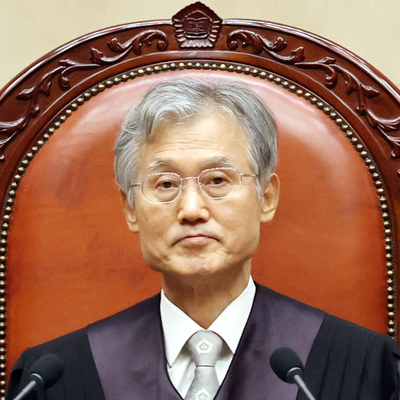
1909년 기유각서 이후 한국의 사법권은 일본에 위탁되었고, 통감부 재판소를 거쳐 조선총독부 체제에서는 재판소가 총독에게 직속된 행정 부서의 하나로 편제되었다.

단상斷想
칼럼
Mizuno
From the Japanese Government-General to Cho Hee-dae, the unending shift of power

0
2026. 10. 26
- Even after the October 26th incident in 1979, the essence of power merely changed form, continuing through military dictatorships, the prosecution, and the judiciary, which is the root cause of the current conflict between the Lee Jae-myung administration and the judiciary.
- After liberation, pro-Japanese collaborators formed the core of the judiciary, providing legal legitimacy to dictatorial regimes, which now constitutes the historical inertia of the judiciary resisting elected power under the guise of judicial independence.
- The judicial conflict is not a dichotomy of 'judicial independence' versus 'political interference,' but rather a result of the unaddressed distorted concept of the rule of law from the colonial judicial system, necessitating democratic control subservient to popular sovereignty.
- The division in public consciousness, such as the glorification of the Park Chung-hee era and the disregard for the Yushin dictatorship, is a result of a national identity formed within the Cold War order and reliance on foreign powers, where internal vested interests justified their status under the pretext of 'security.'
- To break the continuity of power and achieve substantive democracy based on popular sovereignty, it is necessary to redesign the judicial system, reconstruct historical education, and sever the structure of reliance on foreign powers.
The gunshots that rang out in Gungjeong-dong on the night of October 26, 1979, signaled the formal end of the 18-year Yushin regime, but the essence of the power those shots targeted has continued, merely changing its form, to this day. The moment Kim Jae-gyu said he “shot the heart of Yushin with the heart of a beast,” he must have believed, at least, that his actions could prevent greater national sacrifice and open the door to liberal democracy. However, the power vacuum was swiftly filled by the new military regime, and thereafter, military dictatorship transitioned to prosecutorial power, and prosecutorial power to the institutional barriers of the judiciary. The ongoing refusal to re-nominate Supreme Court justices and the prolonged vacancies during President Lee Jae-myung’s tenure, the conflicts surrounding the remand of election law cases, and the controversies over business promotion expenses and personnel appointments are not merely friction between the administration and the judiciary. They are the latest examples of how the power structure, unpurged since liberation, obstructs attempts at reform by elected power. Unless this structure is broken, we will not be able to move beyond formal democracy to a truly sovereign nation. The gunshots of 10.26 have ceased, but the questions they left behind have not.
The continuity of the judiciary originates from the Joseon Government-General court system during the Japanese colonial period. After the Gi-yu Memorandum of 1909, Korea's judicial power was entrusted to Japan, and after passing through the Residency-General courts, the courts under the Joseon Government-General system were organized as one of the administrative departments directly under the Governor-General. The very concept of judicial independence was distorted and implanted as an auxiliary device for colonial rule. After liberation, as the Special Committee for Investigation of Anti-National Activities was neutralized by the obstruction of the Rhee Syngman regime and pro-Japanese police, judges and prosecutors from the Government-General formed the backbone of the nascent Republic of Korea's judiciary. They contributed to providing legal legitimacy to the Rhee Syngman dictatorship, the Park Chung-hee Yushin regime, and the Chun Doo-hwan new military regime. The controversy over judicial dealings during Chief Justice Yang Seung-tae's tenure and the current resistance to elected power under the Cho Hee-dae system can only be understood within this historical inertia.
The judiciary's conformist mindset and opportunistic nature are not a matter of individual morality, but rather the result of the concept of the rule of law, distorted by the colonial judicial system, not being rectified. Therefore, approaching the current judicial conflict solely through the dichotomy of 'defending judicial independence' versus 'political interference' misses the core of the issue. True judicial independence lies not in an unelected power reigning over popular sovereignty, but in genuinely guaranteeing the people's fundamental rights while also accepting democratic control. If this balance is not institutionally redesigned, the judiciary is highly likely to continue functioning as the last line of defense for vested interests. The difficulty in amending a law is not a technical problem, but because that law is a historical product that has long protected the interests of specific forces.
A deeper layer of this problem lies in the division of public consciousness and the distortion of historical memory. The perception that glorifies the economic growth of the Park Chung-hee era as an absolute value and ignores the oppressive aspects of the Yushin regime and military dictatorship still widely persists. This perception does not stem from individual ignorance, but is also a historical result of post-war Korean society forming its national identity within the Cold War order and dependence on foreign powers. As structural constraints such as division, the presence of USFK, and the unrecovered wartime operational control continue, internal power elites have justified their status under the pretexts of 'security' and 'stability.' Herein lies the contradiction of rejecting the pro-Japanese/pro-American frame while failing to structurally recognize the division and sovereign limitations imposed by foreign powers.
However, this cause is increasingly losing its power. With the fruits of economic growth being unequally distributed, the frustration of the younger generation deepening, and the acceleration of low birth rates and regional decline, it is difficult to justify current institutional resistance solely with past growth myths. At the same time, approaching this issue only with dismissive terms like 'brainwashed citizens' or 'pigs and dogs' also has its limits. The structural vested interests could be maintained because a significant number of citizens accepted that structure, or at least did not actively reject it. Awakening does not stem from hatred or contempt for a particular group. It is only possible by confronting the continuity of power as a fact and through institutional and civic practices that break that continuity. Even if the last generation to praise Park Chung-hee disappears, new forms of vested interests can build another line of defense. What is important is the ability to identify structures where the essence of power remains, even if its form changes, beyond emotional attachment to specific individuals.
So, how can we move forward?
First, we must publicly re-examine the historical origins of the judicial system and redesign the relationship between personnel authority and judicial independence. The repeated conflicts in the process of nominating Supreme Court justices indicate that the distribution of powers stipulated in the constitution does not align with the reality of power dynamics. We need to establish institutional mechanisms that allow elected power to exert a certain democratic influence on the composition of the judiciary, while strictly blocking external intervention in individual trials. Strengthening transparency and ensuring accountability must go hand in hand to prevent the recurrence of judicial misconduct.
Second, a reconstruction of historical education and public memory is necessary. The October 26th incident should not be taught merely as a power struggle or personal betrayal, but rather, the limitations of the Yushin regime, the subsequent emergence of the new military regime, and how its legacy continues to this day should be structurally educated. Now, with Kim Jae-gyu's retrial underway, is precisely the opportunity to publicly re-discuss the historical significance of that incident. Beyond the issues of torture and hasty procedures revealed during the trial, we must also examine how the institutional legacy left by the Yushin regime has persisted.
Third, the work of severing the link between the structure of reliance on foreign powers and internal vested interests must be carried out simultaneously. As long as autonomous decisions regarding the recovery of wartime operational control and the issue of US forces in Korea are not made, internal security discourse can continue to be used as a shield for vested interests. When the will for autonomous national operation is clearly expressed by both civil society and political forces, the way state institutions, including the judiciary, exercise power will also have room for change. The perspective that attributes the cause of division to foreign intervention and emphasizes national self-determination cannot be separated from the reform of the internal power structure. The attitude of blaming external factors while neglecting internal ones will ultimately only lead to further dependence and stagnation.
The heightened tension between the judiciary and the executive branch during the Lee Jae-myung administration paradoxically signifies an entry into the next stage of democratization. After procedural democracy has been somewhat established, the remaining task is to bring the institutional privileges of unelected power under national sovereignty. This task inevitably entails resistance. However, packaging that resistance solely as the abstract value of 'judicial independence,' or conversely, treating it only as a political stigma of 'remnants of rebellion,' will only delay problem-solving. What is important is to continue the debate centered on concrete facts and institutional outcomes. Questions such as whether the people's right to a fair trial is actually infringed when Supreme Court vacancies are prolonged, whether the remand of a specific case undermined political neutrality, or whether the execution of business promotion expenses violated legal standards should not be avoided. At the same time, one must not lose sight of how these individual issues are connected to the continuity of the larger power structure. The interpretation that conservative vested interests mobilize the military, prosecution, and judiciary to protect their domains is not a conspiracy theory. It is an extension of a history in which structural tensions between elected and unelected powers have repeatedly occurred.
The answer lies not merely in re-evaluating the past, but in the practical application of subordinating current institutions to popular sovereignty. This can only be achieved through a long process of consistently confronting historical facts, transforming institutional reforms into concrete civic demands, and embedding a vision of independent national governance within everyday political discourse. When this practice is realized, only then can 10·26 be remembered not as a tragic event, but as a starting point for completing unfinished democratization. If we do not confront the reason why the shadow of military dictatorship has extended through the prosecution and judiciary to this day, we will once again have to repeat the same questions. Truth is not the exclusive property of a specific group. It is revealed only through the ability to see structures and the will to change them.
댓글
( 0 / 500 )
andrea72
10
10·26의 총성으로 유신체제는 막을 내렸지만, 권력의 작동 방식까지 바뀐 것은 아니었습니다. 군부에서 검찰로, 다시 사법부의 제도적 권한으로 이어지는 구조적 연속성을 돌아봐야 한다는 지적에 공감합니다. 민주주의의 완성은 권력의 얼굴이 아니라 권력의 구조를 바꾸는 데 있습니다.
( 0 / 500 )
U2king
7
조희대 대법원장에게 묻고 싶습니다. 사법부의 권위를 지키는 일이 국민의 신뢰를 회복하는 일보다 중요합니까? 법관의 독립은 반드시 보장되어야 하지만, 그것이 사법부의 기득권까지 보호해야 한다는 뜻은 아닙니다. 국민 위에 군림하는 사법부가 아니라 국민 앞에 책임지는 사법부로 거듭나야 합니다.
( 0 / 500 )
ssabi
7
사법부 독립이라는 말 뒤에 숨어 국민의 심판과 개혁 요구를 외면하는 시대는 끝나야 합니다. 조희대 대법원장은 사법부가 누구를 위해 존재하는지부터 돌아보십시오. 국민이 위임하지 않은 권력이 국민 주권을 가로막고 특권을 지키는 방패가 된다면, 그것은 독립이 아니라 민주주의의 위기입니다. 더 이상 권위로 침묵을 강요하지 마십시오!
( 0 / 500 )
joonggil
6
친일 잔재를 제대로 청산하지 못한 해방 이후의 역사가 오늘날 국가기관의 성격에도 영향을 미쳤다는 분석은 되새겨볼 만합니다. 과거를 단순히 지나간 일로 치부하면 현재의 제도적 모순도 제대로 이해하기 어렵습니다. 역사 청산은 과거에 대한 심판인 동시에 미래의 권력 남용을 막는 과정입니다
( 0 / 500 )
leeim
6
사법부 독립이 국민 주권 위에 군림할 수 있는 특권을 의미하지는 않습니다. 독립은 국민의 기본권을 지키기 위한 수단이지, 책임과 검증을 거부하는 방패가 되어서는 안 됩니다. 사법부의 독립과 민주적 통제를 어떻게 조화시킬 것인지 이제는 구체적인 제도 개혁으로 답해야 합니다.
( 0 / 500 )
박정철
5
군부독재가 물러난 자리에 검찰 권력이 커졌고, 이제 사법부의 권한과 판단을 둘러싸고 국민적 불신이 깊어지고 있습니다. 정권이 바뀌어도 국민이 체감하는 사법 불신이 반복된다면 제도 자체를 근본부터 되짚어야 합니다. 조희대 대법원장은 사법부를 향한 비판을 정치 공세로 몰아갈 것이 아니라, 의혹에는 명확한 근거로 답하고 잘못이 확인되면 책임지는 모습을 보여야 합니다. 사법부도 성역일 수 없습니다!
( 0 / 500 )
이민호
5
사법부 독립이 국민의 비판으로부터 벗어날 수 있는 면책특권은 아닙니다. 대법원장과 법관도 헌법과 법률에 따라 권한을 행사해야 하며, 논란이 생겼다면 구체적인 근거로 국민을 설득해야 합니다. 권위만 내세우고 책임을 회피하는 모습으로는 무너진 신뢰를 회복할 수 없습니다.
( 0 / 500 )
Pacific5
5
10·26을 오늘의 관점에서 다시 묻는 이유는 특정 인물을 미화하거나 단죄하기 위해서가 아닙니다. 왜 민주화 이후에도 권력기관의 특권과 불신이 반복되는지, 국민 주권은 왜 여전히 제도적 장벽에 부딪히는지 살펴야 하기 때문입니다. 과거의 진실을 밝히는 일과 현재의 제도를 바꾸는 일이 함께 이루어져야 미완의 민주화도 한 걸음 더 나아갈 수 있습니다.
( 0 / 500 )
백금
4
국민이 사법부에 요구하는 것은 정치적 편들기가 아니라 공정하고 일관된 법 적용입니다. 중요한 사건마다 판결의 배경과 절차를 둘러싼 의문이 제기된다면 사법부는 이를 단순한 정치 공세로 치부해서는 안 됩니다. 의혹은 자료와 법리로 해소하고, 잘못이 확인되면 책임을 지는 것이 사법부의 기본 자세입니다.
( 0 / 500 )
liberal
3
민주주의는 선출된 권력만으로 완성되지 않지만, 선출되지 않은 권력이 국민의 뜻을 제약하는 구조를 무조건 옹호한다고 완성되는 것도 아닙니다. 조희대 대법원장 체제 역시 예외일 수 없습니다. 사법부의 독립을 지키되 그 권한이 어떻게 행사되는지 투명하게 검증하는 제도적 개혁이 필요합니다.
( 0 / 500 )
絶海孤島
2
국민이 피와 희생으로 쟁취한 민주주의가 선출되지 않은 권력의 장벽 앞에서 멈춰서는 안 됩니다. 사법부 독립은 법관을 위한 특권이 아니라 국민의 권리를 지키기 위한 헌법적 장치입니다. 그 원칙이 권력기관의 자기보호 수단으로 변질되었다는 의심을 받는다면, 철저한 검증과 제도 개혁을 피할 명분은 없습니다.
( 0 / 500 )
신고내용
신고내용을 선택해주세요
회원비난/비하/욕설글 및 댓글도배성 게시물저작권 침해/불법자료 유출허위사실유포개인정보 유출.사생활 침해무단광고/홍보음란물 및 도박 불법 광고물범죄행위 관련 글불법행위 관련 소개물품 판매 및 사기글악성코드 및 스파이웨어 유포기타 사유 및 운영진 판단


비밀번호를 잊으셨나요?
Sign in with Google


All information provided by us is free of charge and is for the public good.