品

Corea든 Korea든, 품격이 먼저다
Whether Corea or Korea, dignity comes first.
Whether Corea or Korea, dignity comes first.
Now
지금
751 Diaspora
Heritage
유산
Humanity
인문
Mirengsi
未冷尸
Politics
정치
Media
언론
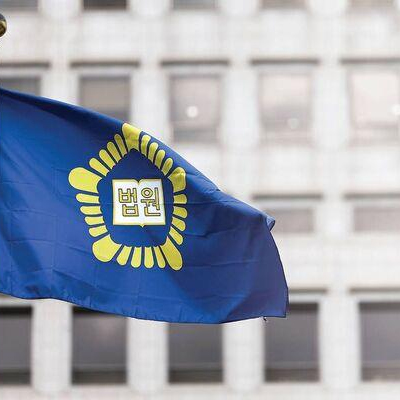
권력 분립의 뿌리는 집정관·원로원·민회가 서로를 견제하던 로마 공화정의 혼합정체에 있다

단상斷想
칼럼
baba77
Who does judicial independence serve?

0
2026. 10. 25
- Seoul Mayor Oh Se-hoon's second-instance acquittal, unlike the first, denied the credibility of key evidence, and following the case of former President Yoon Seok-yeol, similar rulings amplify doubts about the judiciary's political neutrality.
- With the same court having halted President Lee Jae-myung's Public Official Election Act violation remand trial as 'to be designated later,' concerns are raised that the resumption of this trial could lead to a constitutional crisis of the incumbent president's election invalidation.
- The article warns that the judiciary making political decisions superior to the power elected by the people is a unilateral move that goes against the original intent of the separation of powers and could procedurally undermine democracy.
- Judicial independence comes with responsibility, and the judiciary's continuous controversies are even sparking calls for the Chief Justice's impeachment; however, impeachment must go beyond anger over individual rulings to present procedural issues and institutional reforms together to gain public support.
- In conclusion, the current situation where the judiciary delivers rulings detached from common sense in politically sensitive cases is a warning sign that democracy can quietly collapse through procedure, and it emphasizes that it is time for the National Assembly and civil society to awaken and question the judiciary's essential role.
Oh Se-hoon's Acquittal in Second Trial and Militant Democracy
In the case of Seoul Mayor Oh Se-hoon, who was indicted on charges of violating the Political Funds Act for allegedly having Myung Tae-kyun pay for his opinion poll expenses, the appellate court overturned the first trial's fine of 10 million won and acquitted him. The court ruled that the only direct evidence for the key issues was Myung Tae-kyun's testimony, and that his testimony was difficult to believe. With the same recording and the same testimony, the first trial found him guilty, while the second trial acquitted him. The same court also overturned the first trial's prison sentence and acquitted former President Yoon Seok-yeol in the case of Myung Tae-kyun's free provision of opinion polls on the 7th of this month. It is natural for citizens to be puzzled. This is because the circumstances that Mayor Oh's side met with Myung several times, that the opinion poll results were shared with the camp, and that a sponsor paid the costs were not denied even in court.
Of course, 'proof beyond a reasonable doubt' is a fundamental principle of criminal trials, and since the special prosecutor has appealed, the final decision rests with the Supreme Court. However, public trust in a ruling is not solely based on legal principles. We must also consider the context in which the judiciary currently stands.
Another Stalled Case
The 7th Criminal Division of the Seoul High Court is also the court handling President Lee Jae-myung's remanded appeal in the case of violating the Public Official Election Act. In May 2025, the Supreme Court en banc returned the case with a guilty verdict just nine days after it was referred. This was one month before the presidential election. This case is currently stalled with the date 'to be designated later' due to the President's immunity from prosecution under Article 84 of the Constitution. The problem is that this suspension is not legally fixed but depends on the court's judgment. If the court interprets 'prosecution' in Article 84 of the Constitution as limited only to the initiation of a public prosecution and resumes the trial, the possibility of a sitting president being sentenced to a disqualifying penalty cannot be theoretically ruled out. That would not be a simple criminal trial but a constitutional crisis where the court overturns a decision made by the people through an election.
I do not presume to determine the political leanings of Chief Judge Koo Hoe-geun. However, when rulings that are difficult to accept based on common sense occur consecutively in politically sensitive cases, it cannot be dismissed as mere apprehension that citizens interpret this as a prelude to a larger upcoming event. The judiciary has a responsibility to alleviate that anxiety.
Why was the separation of powers established?
The separation of powers is not a principle that fell from the sky. Its roots lie in the mixed constitution of the Roman Republic, where consuls, the Senate, and popular assemblies checked each other. In modern times, Locke and Montesquieu formalized this into a functional separation of legislative, executive, and judicial powers, and the U.S. Constitution first institutionalized it in 1787. The French Revolution enshrined the principle that 'a society in which the separation of powers is not guaranteed has no constitution' in the Declaration of the Rights of Man, making it common sense in European democracy. However, Tocqueville, who wrote about American democracy, left an important message for posterity regarding the separation of powers. The power elected by the people is paramount. Tocqueville ranked powers as 1) legislature, 2) executive, and 3) judiciary, stating that the judiciary should not get entangled in political issues and should avoid or take a passive stance on politically sensitive matters. He basically pointed out that the judiciary is a bureaucratic group. What the history of democratic separation of powers clearly tells us is this: the purpose of the separation of powers is to prevent any one institution from dominating and to protect the freedom of the people, who are the sovereign. Judicial independence is also a means to that end. If the judiciary uses independence as a shield to isolate itself from the will of the people and makes political decisions, it becomes another form of unchecked power that goes against the spirit of the separation of powers.
Democracy also collapses through procedures.
It is well known that the Nazis seized power through legitimate elections and parliamentary procedures. The German constitutional scholar Karl Loewenstein was the first to systematically articulate this as a structural vulnerability of democracy. A Jewish constitutional scholar who studied in Max Weber's seminar, he went into exile in the United States in 1933 and introduced the concept of 'militant democracy' in 1937. This concept argues that democracy should not be defenseless against enemies who exploit its tolerance and procedures. The time has come for us to reflect on whether we have been too lenient with the far-right judiciary, including Jo Hee-dae.
Loewenstein viewed the constitution as a product of the political process. In his book, 'Constitutional Theory,' he divided constitutions into normative constitutions, which actually regulate power; nominal constitutions, which exist only on paper; and ornamental constitutions, which merely adorn the rule of those in power. He warned that even if constitutional provisions are the same, if the institutions operating them harbor a will to power, the constitution can easily degenerate into mere ornamentation. His insight became the spirit of the German Basic Law, which includes provisions for the dissolution of political parties and the loss of fundamental rights. Loewenstein also analyzed Nazism as a kind of 'political religion.' When anti-liberalism and anti-parliamentarianism combine with a mystical narrative of salvation, politics becomes a realm of faith rather than rational debate. Excluding romantic nationalism, the certainty and habit of legal-technical abuse of institutions shown by the far-right in Korea today bear a resemblance to this.
The lesson of defensive democracy is that the enemies of democracy are not necessarily only on the streets. Attempts to nullify the decisions of the people, disguised in the guise of procedure, can also appear within institutions that are supposed to uphold the constitutional order.
Judicial independence and judicial accountability must go hand in hand.
Judicial independence is a request for judges to make decisions according to law and conscience without being swayed by anyone, not a privilege where no judgment can be criticized. Independence must be accompanied by responsibility, and the Constitution has established the National Assembly's power to impeach as a mechanism to hold that responsibility. After the unusually rapid pace of appointments in May 2025, the judiciary under Chief Justice Cho Hee-dae has failed to resolve questions about its political neutrality. The renewed calls for the impeachment of the Chief Justice from the Democratic Party and the Rebuilding Korea Party, following this ruling, are an expression of that accumulated distrust. Restoring judicial justice has now become a task that the National Assembly cannot ignore.
However, that path must be walked with broad public support. If impeachment is pursued solely out of anger over individual rulings, the opposing camp will define it as 'the legislature taming the judiciary,' and the logic of defensive democracy will be turned right back against us. To discuss impeachment, we must prove procedural issues such as case assignment, trial speed, and the operation of the full bench with specific facts, rather than just the conclusion of the ruling, and simultaneously propose institutional reforms such as diversifying the composition of the Supreme Court and expanding the disclosure of rulings. Therefore, we must tactically pay close attention to the details when deciding on impeachment. Even if it's a short time, we must expose the corruption of the Cho Hee-dae judiciary to the public before proceeding with impeachment.
A beacon is a signal to be vigilant.
It is still too early to conclude whether the Oh Se-hoon appellate ruling is the prelude to a constitutional crisis originating from the judiciary, or merely the application of strict principles of proof. However, the fact that the judiciary, which holds the trials of the incumbent president, is repeatedly issuing conclusions far from common sense in politically sensitive cases, is itself a signal that a democratic republic must be wary of.
As Loewenstein warned, democracy collapses more quietly through procedures than through guns and swords. To prevent decisions made by the people through elections from being overturned in court, the National Assembly and civil society must be vigilant from now on. The judiciary, too, must ask itself for whom its independence is granted.
댓글
( 0 / 500 )
purplerain
9
사법부 독립이 법관의 무책임까지 보장하는 면허는 아닙니다. 판결의 결론만이 아니라 사건 배당과 심리 과정, 판결의 논리까지 국민이 납득할 수 있어야 합니다. 선출된 권력과 사법 권력의 충돌이 헌정 위기로 번지지 않도록 국회가 제도적 책임을 다해야 합니다.
( 0 / 500 )
orion
7
법관도 사람이고 판결에는 다양한 법리적 해석이 있을 수 있습니다. 하지만 정치적으로 민감한 사건일수록 판결의 근거와 절차가 더욱 투명해야 합니다. 국민이 의문을 제기한다고 사법부 독립을 침해한다고 몰아붙일 것이 아니라, 왜 그런 의심이 생겼는지부터 살펴보는 것이 옳습니다.
( 0 / 500 )
Y2k200s
6
정치적으로 민감한 사건일수록 사법부는 더 신중하고 엄격해야 한다. 그런데 판결과 재판 진행을 둘러싼 의혹이 반복된다면 국민은 무엇을 믿어야 하는가. 조희대 대법원장은 사법부 독립이라는 말 뒤에 숨지 말고, 국민이 제기하는 의문에 책임 있게 답해야 한다.
( 0 / 500 )
myoungsoo
5
사법부가 국민의 신뢰를 잃는 것은 하루아침의 일이 아닙니다. 논란이 되는 판결과 납득하기 어려운 재판 과정이 쌓이면 결국 사법부 전체가 의심받게 됩니다. 조희대 대법원장은 권위만 앞세울 것이 아니라 국민의 불신을 해소할 실질적인 책임을 보여줘야 합니다.
( 0 / 500 )
dongdong
5
사법부의 독립은 국민 위에 군림하라는 특권이 아니다. 조희대 대법원장은 사법부에 대한 국민의 불신이 왜 커지고 있는지부터 돌아봐야 한다. 법과 원칙을 말하기 전에 국민이 납득할 수 있는 공정성과 일관성을 보여주는 것이 사법부 수장의 책임이다.
( 0 / 500 )
papers99
4
조희대 대법원장 탄핵을 주장하려면 감정적인 비판을 넘어 구체적인 근거와 절차적 문제를 밝혀야 합니다. 사건 배당과 심리 과정, 판결의 법리적 모순을 철저히 검증하고 국민에게 공개해야 합니다. 그래야 사법부 길들이기라는 역공을 차단하고 사법개혁의 정당성을 확보할 수 있습니다
( 0 / 500 )
┖ Mickey
5
근거와 절차를 따져야 한다는 데 동의하지만, 그 검증을 이유로 탄핵을 계속 미루는 것도 문제입니다. 사법부가 스스로 신뢰를 회복하지 못하고 국민적 의혹이 쌓였다면 국회가 헌법상 권한으로 책임을 물어야 합니다. 탄핵은 무조건적인 비난이 아니라 책임을 묻기 위한 헌법적 절차입니다.
( 0 / 500 )
┖ moonjung
3
사법부 길들이기라는 역공이 두려워 필요한 조치조차 주저한다면 개혁은 언제 하겠습니까?
( 0 / 500 )
papers99
삭제된 내용입니다
( 0 / 500 )
김치
3
민주주의에서 사법부도 비판과 검증의 예외가 될 수 없다. 국민이 선거로 선택한 권력과 사법부의 판단이 충돌할 때 필요한 것은 법관의 권위가 아니라 누구나 수긍할 수 있는 법리와 절차다. 조희대 대법원장이 사법부 신뢰 회복을 진정으로 원한다면, 먼저 불신을 키운 원인부터 철저히 돌아봐야 한다.
( 0 / 500 )
crown
2
민주주의의 위기는 언제나 노골적인 쿠데타의 모습으로만 찾아오지 않습니다. 헌법과 법률의 외형을 유지하면서도 그 정신을 훼손할 수 있다는 것이 역사의 경고입니다. 사법부도 예외일 수 없습니다. 국민주권을 지키기 위해서는 사법 독립과 사법 책임을 동시에 바로 세우는 용기가 필요합니다.
( 0 / 500 )
신고내용
신고내용을 선택해주세요
회원비난/비하/욕설글 및 댓글도배성 게시물저작권 침해/불법자료 유출허위사실유포개인정보 유출.사생활 침해무단광고/홍보음란물 및 도박 불법 광고물범죄행위 관련 글불법행위 관련 소개물품 판매 및 사기글악성코드 및 스파이웨어 유포기타 사유 및 운영진 판단


비밀번호를 잊으셨나요?
Sign in with Google


All information provided by us is free of charge and is for the public good.