品

Corea든 Korea든, 품격이 먼저다
Whether Corea or Korea, dignity comes first.
Whether Corea or Korea, dignity comes first.
Now
지금
751 Diaspora
Heritage
유산
Humanity
인문
Mirengsi
未冷尸
Politics
정치
Media
언론
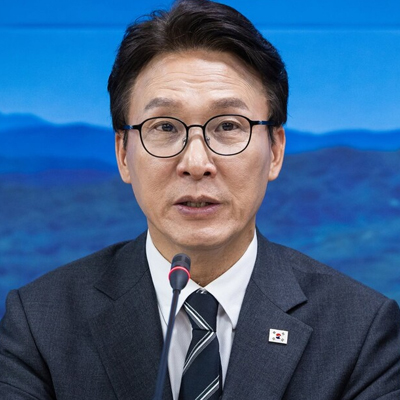
김민석 대표가 회복해야 할 것은 지지율 자체가 아니라, 민주당이 개혁을 약속하고 그 약속을 책임 있게 실행한다는 신뢰다.

단상斷想
칼럼
HumanX
The Democratic Party no longer has a reason to postpone Cho Hee-dae's impeachment.

0
2026. 10. 24
- Contrary to public statements, the Democratic Party's approval rating has declined since Kim Min-seok took office, with the exodus of progressives, people in their 40s, and those in the Seoul metropolitan area indicating a cooling of core support.
- Seoul Mayor Oh Se-hoon's acquittal in the second trial resolves the opposition's judicial risks and positions him as a potential presidential candidate, further deepening the Democratic Party's leadership crisis.
- The decline in the Democratic Party's approval rating is due to complex factors including its connection to President Lee Jae-myung's job approval, the impeachment debate surrounding Chief Justice Cho Hee-dae, and real estate issues; the shift of progressives to the Cho Kuk Innovation Party reflects dissatisfaction with the Democratic Party's lack of 'reform clarity.'
- The Democratic Party's hesitation on Chief Justice Cho Hee-dae's impeachment stems from concerns about effectiveness, potential backlash, and internal power dynamics, but this reservation risks disappointing reform supporters and being perceived as a lack of leadership by moderates.
- Representative Kim Min-seok needs to demonstrate 'principled decision-making' on the Cho Hee-dae impeachment issue by presenting clear procedures and judgment criteria, pursuing it if legal grounds are found through objective verification, or explaining the reasons and alternatives if not.
Since the launch of the Kim Min-seok Democratic Party of Korea leadership, the party's approval rating has moved in the opposite direction of the public promise to 'increase by 10 percentage points within 100 days of taking office.' The approval rating, which recorded in the low to mid-40s immediately after the party convention in mid-August, fell to the mid-30s (35-36%) in a Gallup Korea survey in October, and in a Realmeter survey (October 7-8), it plummeted by 7.0 percentage points from the previous week to 35.5%, allowing the People Power Party to overtake it. In a Media Tomato survey, the Democratic Party remained in the 36% range, and the Jo Guk Innovation Party entered the 9% range. The defection of progressives, people in their 40s, and those in the Seoul metropolitan area indicates not just a simple shift in floating voters but a cold reception from core supporters.
Oh Se-hoon's acquittal in the second trial, resolving the opposition's risk
This was crucially compounded by Seoul Mayor Oh Se-hoon's acquittal in the second trial on October 23. The 7th Criminal Division of the Seoul High Court overturned the first trial's guilty verdict (a fine of 10 million won) and acquitted Mayor Oh in the case of violating the Political Funds Act related to the alleged proxy payment for a public opinion poll by Myung Tae-kyun. The court ruled that the credibility of Myung Tae-kyun's statement, which was the key direct evidence, was difficult to accept, and that there was insufficient corroborating evidence. Had the first trial's verdict been upheld, it could have led to the loss of the mayoral position and a five-year disqualification from running for office, but this judicial risk was resolved in an instant. Within the conservative camp, there are evaluations that Mayor Oh has rapidly emerged as an alternative candidate for the next presidential election, which could act as a variable accelerating the lame duck period of the Lee Jae-myung administration. With the resurgence of a focal point for the opposition, the Democratic Party's declining approval rating and Chairman Kim's low job performance evaluation (25.6% positive, 67.6% negative according to recent Realmeter data) appear to be an even more serious leadership crisis.
Structural background of declining approval ratings
The structural reasons for the decline in approval ratings are a complex result of the coupling with President Lee Jae-myung's national performance evaluation, the controversy surrounding Supreme Court Chief Justice Cho Hee-dae, the DMZ security controversy, rising jeonse and apartment prices in the Seoul metropolitan area, and personnel reshuffles. In particular, the shift of some progressive voters to the Cho Kuk Innovation Party is a reaction to the Democratic Party's lack of 'reform clarity.' Differences in approach regarding the pace of prosecutorial and judicial reform, such as the separation of investigation and prosecution, and the impeachment of Cho Hee-dae, served as the catalyst. Even after the Innovation Party publicly called for joint action by revealing the impeachment motion, the Democratic Party's approval ratings stagnated or declined without a clear rebound. While the impeachment debate may have some effect in consolidating core supporters, it clearly has a dual nature, appearing as a 'political dispute' to swing voters and those experiencing real estate and economic anxiety, thereby accelerating their departure.
In addition, the relationship with the Cho Kuk Innovation Party served as another axis. Differences in approach regarding the pace of prosecutorial and judicial reform, such as the separation of investigation and prosecution, and the impeachment of Cho Hee-dae, served as a catalyst for some progressive voters to shift to the Innovation Party. The 7.0 percentage point increase in the Innovation Party's approval rating among progressive voters in just two weeks in the Media Tomato survey is not merely a temporary phenomenon, but shows that those demanding 'reform clarity' are frustrated with the Democratic Party's cautious stance. Even after the Innovation Party publicly called for joint action by revealing the impeachment motion against Cho Hee-dae, the Democratic Party's approval ratings stagnated or slightly declined without a clear rebound, while the Innovation Party continued its upward trend. This reveals the dual nature of the impeachment debate: even if it has some effect in consolidating core supporters, it is perceived as a 'political dispute' by swing voters and supporters in their 40s and the Seoul metropolitan area who are experiencing real estate and economic anxiety, thereby accelerating their departure.
Practical reasons for hesitating on impeachment
However, this phenomenon cannot be simply interpreted as 'not immediately pursuing impeachment.' The impeachment of Cho Hee-dae is an issue intertwined with judicial independence, separation of powers, legal requirements and evidence, and national stability. There are three realistic reasons why the Democratic Party is hesitant. First, effectiveness. With only about 8 months remaining in Chief Justice Cho's term, there is a judgment that the possibility of the Constitutional Court's acceptance after passing the plenary session is uncertain, and it would be difficult to manage the aftermath of a judicial vacuum during the period of suspension from duty. Second, the risk of backlash. If the People Power Party intensifies its offensive with the 'infringement of judicial independence' frame, it could increase resentment among moderates and swing voters, and the fact that a survey showed more opposition to resignation than support also backs this concern. Third, internal party dynamics. In a situation where hardliners and cautious views coexist, Chairman Kim officially opened discussions by saying, "We are practically reviewing all options," but showed an attitude of ordering opinion gathering centered on the floor and review after the parliamentary audit. This is a practical balance that does not ignore the demands of hardline supporters while trying to postpone actual initiation and voting as much as possible.
The problem is that this balance is no longer valid. With Oh Se-hoon's acquittal in the second trial resolving the opposition's judicial risks and the next presidential election structure becoming visible, the Democratic Party's indefinite postponement of the Cho Hee-dae issue is likely to increase disappointment among reform supporters and be perceived as a lack of leadership by the moderate class. While impeachment should not be pursued based on a strategic judgment that a strong stance is needed due to falling approval ratings, conversely, not even considering the possibility of legal responsibility due to the departure of the moderate class also leads to a loss of trust. In either case, it will be difficult for the Democratic Party to regain trust.
What is needed are clear procedures and judgment criteria
What is needed now are clear procedures and transparent judgment criteria. The reasons and evidence presented by those advocating for impeachment must be specifically verified, and if a parliamentary inquiry is necessary, its scope, data acquisition plan, schedule, and follow-up measures based on the results must be specified. If serious illegal acts are confirmed during the investigation process and it is determined that the constitutional requirements for impeachment are met, then pursuing impeachment prosecution, even at the cost of political burden, could be a responsible choice. If the requirements are insufficient, the reasons should be explained, and alternatives such as judicial administration improvement and legislative control should be presented. The important thing is not to predetermine the conclusion, but to objectively confirm whether it is a matter for which accountability can be demanded and to act according to that result.
Only this approach has the potential to persuade both the supporters who demand clear reform and the moderates who are concerned about judicial independence. This is because it can show supporters that reform is not being avoided, and give moderates confidence that actions are based on legal standards, not political retaliation. Even if sufficient grounds are presented, political backlash may occur. However, a party's credibility comes not from its ability to avoid all conflicts, but from its ability to manage unavoidable conflicts with consistent principles.
100-day report card and principled decision
The 100-day report card of the Kim Min-seok leadership cannot be evaluated solely by how many percentage points the approval rating has dropped. More important is how consistently the ruling party has connected the principles of reform with tangible results for the people's livelihoods. Regaining public trust cannot be achieved by merely consolidating party control and demonstrating political coordination skills. The impeachment of Cho Hee-dae is an issue symbolizing this crisis, and a turning point made even clearer by Oh Se-hoon's acquittal. If reasonable grounds are confirmed for serious illegality in the exercise of judicial power, accountability should not be abandoned on the grounds of respecting judicial independence. At the same time, legal requirements and evidence must be strictly verified to ensure that impeachment does not devolve into political retaliation or a means to reverse approval ratings. Kim Min-seok's choice must be a principled decision, not a postponement.
If CEO Kim indefinitely postpones the impeachment issue, the disappointment of supporters who expected reform will only grow. Conversely, if it is pushed through without sufficient verification, it could expand distrust among moderates and controversy over judicial independence. Therefore, neither an indefinite delay under the guise of caution nor a hasty decision driven by hardline views is the answer. The schedule for investigation and verification, the legal standards for impeachment judgment, and follow-up measures based on the outcome must be clearly presented and acted upon accordingly. If legal grounds are confirmed, impeachment should be pursued; otherwise, the reasons should be publicly explained, and other accountability measures should be prepared.
The Challenge Posed by Oh Se-hoon's Acquittal
Oh Se-hoon's acquittal in the second trial alleviated the opposition's judicial risks, but at the same time, it presented the Democratic Party with a task that can no longer be postponed. What CEO Kim Min-seok needs to restore is not the approval rating itself, but the trust that the Democratic Party promises reform and responsibly implements those promises. The impeachment of Cho Hee-dae and genuine judicial reform are turning points that will test that trust. What is needed is politics that respects judicial independence while holding serious illegal acts accountable, prioritizes public welfare while adhering to reform principles, and adjusts internal disagreements without avoiding final decisions. If the Democratic Party upholds these principles, even conflicts surrounding whether to pursue impeachment can be transformed into an opportunity for institutional reform. Conversely, if decisions are delayed by only calculating political advantages and disadvantages, the decline in approval ratings will not be a temporary crisis but will solidify into distrust of the ruling party's will for reform and leadership.
Principled Decision, Not Ambiguous Balance
What CEO Kim Min-seok needs now is not a vague balance that satisfies everyone. It is a principled decision that secures both legal legitimacy and political responsibility. In terms of public welfare, he must achieve tangible results that the public can feel, in judicial reform, he must clearly define the standards of illegality and responsibility, and within the party, he must transparently disclose the process and results of decisions. This is a realistic way to prevent the defection of supporters, restore the trust of moderates, and protect both the stability of the Lee Jae-myung administration and the Democratic Party's identity as a reform party. Now that the opposition has caught its breath with Oh Se-hoon's acquittal, Cho Hee-dae's impeachment and genuine judicial reform are not options, but essential conditions.
댓글
( 0 / 500 )
최진성
6
김민석 대표의 침묵은 신중함이 아니라 개혁을 바라는 국민에 대한 무책임입니다. 검찰개혁도 사법개혁도 적당히 타협하다 보면 결국 기득권의 방어막만 두꺼워집니다. 민주당이 국민의 압도적인 개혁 요구를 받들 생각이라면 이제는 말이 아니라 행동으로 보여줘야 합니다.
( 0 / 500 )
안병주
8
김민석 대표는 이제 결단해야 합니다. 사법부 독립을 존중하는 것과 사법부의 책임을 묻는 것은 양립할 수 있습니다. 탄핵이 정치적 보복이라는 반론이 두렵다면 더더욱 법적 근거와 증거를 공개적으로 검증하면 됩니다. 근거가 있다면 추진하고 없다면 설명하십시오. 침묵과 유보로는 사법개혁을 바라는 지지층의 신뢰를 회복할 수 없습니다.
( 0 / 500 )
namsun
7
조희대 탄핵을 더 이상 미룰 이유가 없다. 사법부 독립은 국민 위에 군림하라는 면허가 아니다. 헌법과 법률을 위반한 의혹이 있다면 철저히 조사하고 책임을 물어야 한다. 민주당이 계속 눈치만 본다면 개혁을 바라는 국민의 분노와 실망은 더 커질 것이다.
( 0 / 500 )
kangchul
6
민주당이 조희대 탄핵을 계속 미루는 동안 개혁을 바라는 국민의 인내심도 바닥나고 있습니다. 사법부 독립이라는 명분 뒤에 위법과 책임의 문제까지 숨겨둘 수는 없습니다. 탄핵이 필요하다면 법적 근거를 명확히 제시하고 당당하게 추진하십시오. 국민이 원하는 것은 끝없는 검토가 아니라 원칙에 따른 책임 추궁입니다.
( 0 / 500 )
hong_J
6
조희대 탄핵을 더 이상 미루지 말라! 사법부도 헌법 위에 있을 수 없고, 대법원장이라고 책임에서 예외일 수는 없다. 탄핵 사유와 증거를 명확히 검증하고 헌법적 요건이 충족된다면 즉각 행동하라. 정치적 부담만 계산하며 시간을 끄는 것은 국민에 대한 책임 있는 태도가 아니다.
( 0 / 500 )
speaker
5
조희대 문제를 두고 법적 절차와 사법부 독립을 강조하는 것 자체는 틀리지 않습니다. 하지만 그 말이 아무것도 하지 않기 위한 방패가 되어서는 안 됩니다. 위법 의혹이 있다면 철저히 조사하고 책임을 물어야 합니다. 사법부 독립은 사법부가 어떤 책임도 지지 않아도 된다는 특권이 아닙니다.
( 0 / 500 )
Pink6
5
김민석 대표는 이제 결단해야 합니다. 사법개혁을 외치며 국민의 지지를 얻었다면 행동으로 증명해야 합니다. 조희대 탄핵 사유와 증거를 철저히 검증하고 요건이 충족된다면 더 이상 미루지 마십시오. 개혁을 바라는 국민이 원하는 것은 끝없는 검토가 아니라 책임 있는 실행입니다.
( 0 / 500 )
Aipha
4
국민이 지켜보고 있다. 법 앞에 만인이 평등하다면 사법부 수장에게도 똑같은 잣대를 적용해야 한다. 조희대 탄핵이 필요하다면 국회는 정면으로 나서라. 근거가 있는데도 정치적 유불리를 따지며 미루는 것은 직무유기와 다를 바 없다. 이제는 침묵과 눈치 보기가 아니라 명확한 판단과 결단을 보여줄 때다.
( 0 / 500 )
제임스K
4
민주당이 지지율을 잃는 이유를 국민의 변덕이나 일시적인 여론 탓으로 돌려서는 안 됩니다. 개혁하겠다고 표를 달라고 해놓고 막상 권력을 잡으니 속도 조절만 반복하는 모습에 실망한 것입니다. 조국혁신당으로 향하는 진보층의 마음을 읽어야 합니다. 개혁을 외치던 정당이 개혁의 장애물을 앞에 두고 침묵한다면 누가 그 진정성을 믿겠습니까?
( 0 / 500 )
Macho
3
개혁을 기대했던 국민이 실망하는 것은 권력을 잡고도 정작 중요한 순간에 주저하는 모습 때문입니다. 조희대 탄핵이 정치적 구호에 그치지 않으려면 구체적인 사유와 증거를 검증하고 헌법적 요건에 따라 판단해야 합니다. 탄핵할 근거가 있다면 주저하지 말고, 부족하다면 무엇이 부족한지 국민에게 설명하십시오.
( 0 / 500 )
이민혁
3
국민이 민주당에 권력을 맡긴 것은 검찰개혁과 사법개혁을 완수하라는 뜻이다. 조희대 문제를 두고 언제까지 검토만 하겠다는 것인가? 탄핵 사유와 증거를 명확히 검증하고 요건이 충족된다면 즉각 행동해야 한다. 개혁에는 늘 반발이 따르지만, 반발이 두려워 아무것도 하지 않는다면 그것은 개혁이 아니다.
( 0 / 500 )
moon
1
사법부 독립이 책임 면제의 방패가 될 수는 없습니다. 조희대 탄핵이 정당한지 법적 근거부터 명확히 밝히고, 요건이 충족된다면 당당하게 추진해야 합니다. 김민석 대표가 정치적 부담만 계산하며 침묵한다면 개혁을 기대했던 지지층의 실망은 더욱 커질 것입니다.
( 0 / 500 )
신고내용
신고내용을 선택해주세요
회원비난/비하/욕설글 및 댓글도배성 게시물저작권 침해/불법자료 유출허위사실유포개인정보 유출.사생활 침해무단광고/홍보음란물 및 도박 불법 광고물범죄행위 관련 글불법행위 관련 소개물품 판매 및 사기글악성코드 및 스파이웨어 유포기타 사유 및 운영진 판단


비밀번호를 잊으셨나요?
Sign in with Google


All information provided by us is free of charge and is for the public good.