品

Corea든 Korea든, 품격이 먼저다
Whether Corea or Korea, dignity comes first.
Whether Corea or Korea, dignity comes first.
Now
지금
751 Diaspora
Heritage
유산
Humanity
인문
Mirengsi
未冷尸
Politics
정치
Media
언론
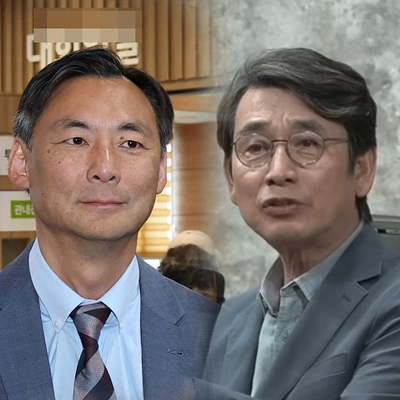
유시민과 모스탄 관련 두 사건 모두 정보통신망법상 허위사실 적시 명예훼손 혐의로 수사와 재판의 대상이 됐다는 점에서 공통점을 갖는다

단상斷想
칼럼
HumanX
Yoo Si-min and Mos Tan's Fraud

0
2026. 10. 22
- The cases involving Yoo Si-min and Mos Tan demonstrate a recurring pattern of deliberate dissemination of false information intended to damage the reputation of specific individuals.
- Our society has been overly lenient or indifferent to political fabrications and slanders, often under the guise of freedom of expression, leading to a vicious cycle that undermines the foundation of public discourse.
- The Yoo Si-min case went beyond policy evaluation to accuse the President of "deceiving the public," while the Mos Tan case fabricated a non-existent juvenile detention record for the President.
- The President's expressed intent not to seek punishment in the Yoo Si-min case raises the possibility of legal proceedings being halted, exposing the limitations when responding to false information relies solely on individual choice.
- Spreading false information about public figures is not mere criticism but an act that harms public trust, and holding them accountable through legal means is the minimum norm for fact-based political debate.
The two incidents involving Yoo Si-min and Mostan are not merely expressions of political disagreement; they demonstrate repeated attempts to distort objective facts or fabricate non-existent facts to intentionally undermine the public reputation of specific individuals. One case involved the dissemination of a definitive false claim that 'the public was deceived,' going beyond an interpretation of the progress of prosecutorial reform. The other involved spreading the non-existent fact, both domestically and internationally, that the President committed a serious crime in his youth and was incarcerated in a juvenile detention center.
Both incidents share the commonality of being subject to investigation and trial on charges of defamation by false statement under the Information and Communications Network Act. However, a more crucial commonality is that our society has long been excessively lenient or indifferent to such political fabrications and slanders. As a result of virtually neglecting repeated slanders and incitements under the guise of freedom of expression, a vicious cycle has continued where the honor of public figures and the foundation of public discourse are simultaneously undermined.
Yoo Si-min's remarks began with an assessment of the content and pace of prosecutorial reform. He claimed that the reform was sluggish because President Lee Jae-myung did not want a complete separation of investigation and prosecution, characterizing this as 'deceiving the public until now.' Furthermore, he stated that the prosecutorial reform envisioned by President Lee was completely different from what was known as the Democratic Party of Korea's stance or the President's campaign promise.
When these remarks were made public through a Media Today YouTube broadcast, the Civic Action for Judicial Justice (사법정의바로세우기시민행동) filed a complaint, alleging that the repeated dissemination of false information, clearly contradicting objective facts, significantly damaged the President's social reputation. The Public Crime Investigation Unit of the Seoul Metropolitan Police Agency's Regional Investigation Division initiated an investigation by questioning the complainant. The core of this case is not a difference in policy evaluation, but rather the assertion that the cause of a specific policy failure was the President's personal intentional deception, and the dissemination of this assertion to the public. The specific details and implementation process of judicial reform are verifiable through publicly available bills, government positions, and parliamentary discussion records. Nevertheless, the choice to go beyond this and use the expression 'deceived the public' allows for criticism that it is closer to rhetorical slander aimed at political effect rather than a statement of fact.
However, on October 20, 2026, President Lee Jae-myung reportedly conveyed to his Cheong Wa Dae staff that he did not wish for punishment in connection with the defamation complaint filed against writer Yoo Si-min. A Cheong Wa Dae official stated that President Lee had communicated his intention not to seek punishment to the investigative authorities, and accordingly, Cheong Wa Dae plans to submit a statement of non-punishment to the Seoul Metropolitan Police Agency. Under the Information and Communications Network Act, defamation by stating false facts is a crime that cannot be punished if the victim does not wish for punishment (반의사불벌죄). Therefore, if the President's wishes are officially conveyed, the police investigation is highly likely to be concluded. Although this is not a direct request for the complainant to withdraw the complaint, it is effectively a decision to halt the legal proceedings by the victim clearly stating that they do not wish for punishment. The President's direct expression of such an intention shortly after the civic group's complaint was initiated can be interpreted as not acknowledging the necessity of legal action regarding the remarks, or at least not wishing for it to lead to criminal punishment.
The case of former U.S. State Department Ambassador-at-Large for International Criminal Justice, Morton (Korean name Dan Hyun-myung), is more directly characterized as fabrication. He was indicted for allegedly spreading information that President Lee Jae-myung committed a violent crime as a teenager and was incarcerated in a juvenile detention center. At the first trial, he pleaded not guilty, stating, “I am innocent because I believe President Lee Jae-myung is guilty,” thereby completely denying the charges. The defense requested dismissal of the charges, arguing that Korean courts lack jurisdiction over statements made in the U.S., and regarding domestic statements, they claimed these were not assertions of fact but rather raised suspicions or questions, and that he had no awareness of them being false.
However, the starting point of this case is that the specific fact of incarceration in a juvenile detention center does not exist. There is no record of criminal activity during his youth confirmed through publicly available official data or related investigation and trial processes, and such claims have been repeatedly made in the past and proven to be untrue. The fact that he is a U.S. citizen and made statements abroad, and that there is a dispute over judicial jurisdiction, are matters to be dealt with in legal proceedings. Nevertheless, the act itself of fabricating and disseminating a non-existent criminal record goes beyond simple political criticism and directly attacks an individual's personal rights and public trust.
When these two cases are placed side by side, it reveals how slow and passive our society has been in responding to the dissemination of political falsehoods. Criticism and raising suspicions about public matters such as prosecutorial reform or the president's past are entirely permissible. However, when such criticism clearly deviates from verifiable facts, or even creates non-existent facts, the argument that it should be protected under the framework of 'freedom of expression' loses its persuasiveness.
Under the Information and Communications Network Act, defamation by stating false facts is distinguished from stating true facts for the public interest, and is subject to punishment if the intent to defame is recognized. Nevertheless, it often took a considerable amount of time for actual investigations, indictments, and trials, during which false information had already spread widely. Especially in cases involving political interests, there was a strong tendency to postpone fact-checking and immediate responses, saying, 'It's a matter for the court to decide later.' As a result, a structure was repeated where those who spread false claims gained political effect, and those who suffered damage had to endure a long legal battle to restore their honor.
This practice, rather than strengthening freedom of expression, actually degrades the quality of public discourse and amplifies political animosity. Defamation based on false facts fosters distrust in a person's character itself, instead of debating the content of their policies or public actions. This reduces the room for voters to make decisions based on facts and encourages politics that relies on emotional mobilization and incitement.
Especially in the case of the highest public officials, such as the president, the spread of false information can even shake the legitimacy of policy implementation. This is not to say that all criticism should be punished as defamation. However, holding accountable, through judicial procedures, acts of creating and disseminating facts that are clearly contrary to confirmed facts or do not exist, is to uphold the minimum norms of the public sphere. The Yoo Si-min case, where the police investigated the accuser, and the Moss Tan case, where jurisdiction and awareness of falsity are being disputed in the first trial, are examples of those judicial procedures beginning to function.
Up until now, our society has been overly complacent regarding political slander and fabricated falsehoods. The argument that freedom of expression should protect defamation and incitement through false information does not hold true, no matter how important freedom of expression is. To prevent such acts from recurring, it is necessary to clarify the facts through investigation and trial and to hold those responsible accountable. Social responses are needed to prevent false information from continuing to circulate even while legal procedures are underway, along with institutional mechanisms to prevent similar claims from being reproduced even after judicial decisions have been made.
As revealed in both cases, acts of distorting or fabricating facts for political purposes should no longer be dismissed as minor incidents. Protecting the reputation of public figures goes beyond a matter of individual rights; it is about safeguarding the foundation of a society where political debate based on facts is possible. Strict responses through judicial procedures can be the minimum starting point for restoring that foundation. However, as seen in the recent Yoo Si-min case, the fact that such procedures can be halted if the highest public official expresses a desire not to pursue punishment simultaneously reveals the limitations that can arise when responding to the spread of false information depends solely on individual choice.
댓글
( 0 / 500 )
한마음
8
표현의 자유는 사실을 바탕으로 비판할 권리이지, 존재하지 않는 사실을 만들어 상대방을 공격할 권리는 아닙니다. 정치적 입장이 다르더라도 사실과 허위의 경계는 분명해야 합니다. 법적 책임과 함께 정치권과 언론의 자정 노력도 필요합니다.
( 0 / 500 )
박병규
8
유시민과 모스 탄의 사안은 성격과 법적 쟁점이 서로 다르지만, 정치적 주장을 할 때 사실과 해석을 구분해야 한다는 원칙은 같습니다. 대통령을 비판할 자유는 보장돼야 하고, 허위사실 유포 혐의 역시 증거와 법률에 따라 판단해야 합니다. 진영 논리로 진실을 대신하려는 태도부터 정치권과 공론장에서 사라져야 합니다.
( 0 / 500 )
woo
6
유시민 사건에서 눈여겨볼 대목은 이재명 대통령이 처벌을 원하지 않는다는 뜻을 밝혔다는 점입니다. 자신을 향한 비판에 형사 처벌로 대응하기보다 감수하겠다는 선택은 정치적 성숙의 한 모습일 수 있습니다. 다만 비판과 허위사실 유포는 분명히 구분해야 합니다.
( 0 / 500 )
77jaemin
7
검찰 개혁의 방향과 속도를 비판하려면 법안과 정책, 실제 추진 과정을 근거로 논쟁해야 합니다. 대통령의 의도를 단정해 국민을 속였다고 몰아가는 방식은 정책 토론을 인신공격으로 바꿀 위험이 있습니다. 말의 무게만큼 사실관계도 엄격히 따져야 합니다.
( 0 / 500 )
이준호
5
모스 탄 사건은 더 심각하게 받아들여야 합니다. 대통령이 청소년 시절 강력범죄에 연루돼 소년원에 수감됐다는 주장을 하려면 그에 상응하는 증거부터 제시해야 합니다. 첫 공판에서 무죄를 주장했다고 의혹이 사실이 되는 것은 아닙니다. 근거 없는 주장이었다면 그에 대한 법적 책임도 피할 수 없어야 합니다.
( 0 / 500 )
hankil64
4
정책에 대한 비판은 얼마든지 가능하지만, 검증되지 않은 주장을 사실처럼 단정하는 순간 공론장의 신뢰는 무너집니다. 특히 ‘국민을 속였다’는 표현은 정치적 수사를 넘어서는 만큼, 그에 걸맞은 구체적 근거와 책임이 따라야 합니다.
( 0 / 500 )
sorceress
3
대통령의 과거에 존재하지 않는 범죄 전력을 덧씌우는 행위는 단순한 정치 공세가 아닙니다. 사실 확인도 없이 자극적인 이야기를 퍼뜨리면 진실은 뒤로 밀리고 거짓만 기억에 남습니다. 정치적 유불리를 떠나 허위사실을 유포한 책임은 엄정하게 따져야 합니다.
( 0 / 500 )
최병철
2
더욱 이해하기 어려운 것은 존재하지 않는 범죄 전력이라는 의혹을 제기해 놓고, 정작 재판에서는 표현의 자유와 관할권 문제를 앞세운다는 점입니다. 표현의 자유는 사실을 검증할 의무까지 없애 주는 면허가 아닙니다. 주장을 뒷받침할 증거가 없다면 먼저 국민 앞에 설명하는 것이 순서입니다.
( 0 / 500 )
viva
2
우리 사회가 진정으로 경계해야 할 것은 진영에 따라 거짓의 기준이 달라지는 현실입니다. 내가 지지하는 사람을 위한 허위 주장은 용납하고 상대 진영의 잘못만 비판한다면 민주주의의 토대는 무너집니다. 누구에게나 동일한 사실 검증과 책임의 원칙이 적용돼야 합니다.
( 0 / 500 )
신고내용
신고내용을 선택해주세요
회원비난/비하/욕설글 및 댓글도배성 게시물저작권 침해/불법자료 유출허위사실유포개인정보 유출.사생활 침해무단광고/홍보음란물 및 도박 불법 광고물범죄행위 관련 글불법행위 관련 소개물품 판매 및 사기글악성코드 및 스파이웨어 유포기타 사유 및 운영진 판단


비밀번호를 잊으셨나요?
Sign in with Google


All information provided by us is free of charge and is for the public good.