品

Corea든 Korea든, 품격이 먼저다
Whether Corea or Korea, dignity comes first.
Whether Corea or Korea, dignity comes first.
Now
지금
751 Diaspora
Heritage
유산
Humanity
인문
Mirengsi
未冷尸
Politics
정치
Media
언론
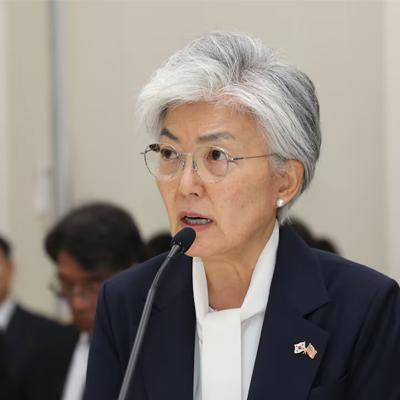
강경화 주미대사는 10월 12일(현지 시간) 워싱턴 주미한국대사관 국정감사 발언에서 한미 정보협력의 신뢰 문제를 공론화하면서 이재명 정부 내부의 외교·안보 노선 균열을 드러냈다.

단상斷想
칼럼
cosign
Korea-US relations are at an all-time low; whose side is Kang Kyung-wha on?

0
2026. 10. 16
- Ambassador Kang Kyung-wha's remarks at the parliamentary audit publicly exposed difficulties in ROK-US intelligence cooperation, hinting at a rift in the Lee Jae-myung administration's foreign policy and security line, and the complex reality of its relationship with the US.
- While Ambassador Kang's statements can be seen as part of her duty to convey the local situation, the lack of concrete roles and achievements presented for problem-solving raises questions about her capabilities as Ambassador to the US and the purpose of her appointment.
- With the US's restrictions on intelligence sharing prolonged and high-level communication facing difficulties, Ambassador Kang's expression of "frustration" could be perceived as an admission of diplomatic limitations, alongside the difficulty of resolving the issue.
- This highlights the Lee Jae-myung administration's dilemma in balancing alliance management with independent diplomacy, and is expected to be a crucial test for the stability of future ROK-US relations and the coherence of the government's foreign policy and security line.
The relationship between Korea and the US has been strained and at an all-time low since the Yoon Suk-yeol rebellion. Kang Kyung-hwa, the Korean Ambassador to the US, who seems oblivious to this, publicly raised concerns about the reliability of Korea-US intelligence cooperation during the National Assembly audit at the Korean Embassy in Washington on October 12 (local time), revealing a rift in the foreign policy and security lines within the Lee Jae-myung administration. She identified intelligence cooperation as “the most difficult issue,” confirmed that the US side raised the issue during the September 18 meeting between Foreign Minister Cho Hyun and Secretary of State Marco Rubio, and then stated, “I don’t think the issue has been sufficiently resolved to the extent that the US side expects.” Her complaint that communication with the White House National Security Council (NSC) and high-ranking officials is limited and “frustrating” goes beyond a simple working-level report, as even a US ambassador to Korea would find it difficult to make such impolite remarks.
This contrasted sharply with Unification Minister Jeong Dong-young's remarks in Seoul on the same day, where he stated, “There is nothing wrong with the Korea-US alliance,” and refuted the US's restrictions on intelligence sharing as a “misunderstanding” and “the US is wrong,” clearly showing a difference in opinion. The criticism of Kang Kyung-hwa as a 'black-haired American' or 'American stooge' is a framework that interprets her public communication of Washington's expectations as advocating for the US, especially when domestic politics are difficult and the president's position is shaky. It is rather suspicious that, despite the very reason Kang Kyung-hwa was appointed to that position was to resolve and address such issues, there is an effort to emphasize that she does not consider national interests.
Kang Kyung-hwa, who served as the first Minister of Foreign Affairs in the Moon Jae-in administration, was appointed as the first Korean Ambassador to the US under the Lee Jae-myung administration, recognized for her experience dealing with the Trump administration's first term. She was evaluated as the right person to manage practical issues such as strategic investment, Alaska LNG, visa issues, and coordination of Korea-US summits, and her capability in alliance management was a key reason for her appointment. However, the listed Korea-US issues, such as the tariff problems that began at the start of the Trump administration's second term and the large-scale ICE crackdown at construction sites in Georgia, are effectively stalled, with no progress being made.
In such a situation, sensitive issues based on trust, such as intelligence cooperation, are a key task for the Ambassador to the United States to accurately ascertain the circumstances on the ground and find a solution through close consultation with the home government and U.S. authorities. Ambassador Kang stated in the parliamentary audit that the U.S. raised the issue of intelligence cooperation and that the problem has not yet been sufficiently resolved to the level expected by the U.S. side. He also expressed frustration that discussions with high-ranking White House officials have not progressed as desired. While these explanations reveal the difficulties in the field of diplomacy, they also prompt questions about what role the Ambassador to the United States is playing to overcome these difficulties.
Kang Kyung-wha stated that after speaking with Minister of Unification Chung Dong-young, explanations were conveyed to the U.S. side through regular consultation channels. As the National Intelligence Service is responding and there has been progress in communication between the intelligence agencies of both countries, it cannot be concluded that no efforts were made to resolve the issue. However, based solely on the public responses, it is difficult to fully understand how our explanations were received and what diplomatic efforts are being made to narrow the remaining differences.
It would not be possible to disclose all the details of sensitive intelligence cooperation matters. However, in addition to explaining the U.S. concerns and communication difficulties, it should also be revealed, to the extent possible, how our government's position is being conveyed and what solutions are being sought for the national interest. This is precisely what needs to be scrutinized in Ambassador Kang's response. Compared to the explanation diagnosing the problem, the Ambassador's role and response direction in managing and resolving it do not seem to have been sufficiently revealed.
This question is also interpreted in conjunction with internal assessments that are being circulated by some. The assessment that Ambassador Kang is 'a fool who speaks English well' implies a criticism that despite her excellent language skills and experience with the UN and multilateral affairs, she does not deeply understand the sensitive details of bilateral relations and the domestic political context. In particular, there have been internal remarks that a former Vice Minister of Foreign Affairs, who worked with Ambassador Kang when she was a minister, called her an 'ignorant fool' and said he 'couldn't work with her.' These assessments reflect the perception that her non-foreign service background and multilateral-focused career show limitations in handling the practical sensitivities of bilateral alliances.
At the same time, there is also an assessment that she has 'very strong survival skills.' The fact that she served as a minister in the Moon Jae-in administration and was then appointed as the ambassador to the U.S. in the Lee Jae-myung administration demonstrates her political and institutional ability to retain her position even amidst a change of government. Some interpret this as meaning she is close to the 'extreme right.' Her public acknowledgment of U.S. concerns regarding intelligence cooperation and her statement that the landmine incident was 'definitely not an accidental mishap' based on the Joint Chiefs of Staff's investigation results, which differed from President Lee Jae-myung's expression, could be seen by the autonomous faction as an 'extreme right-wing' attitude that fails to objectively assess the reality of the alliance and lacks consideration for domestic politics. In fact, with statements of this level, treating a U.S. ambassador who is effectively useless to national interests as a shadow is one approach. After the Yoon Seok-yeol rebellion, the U.S. no longer has a reason to send a white American ambassador to Korea, and Korea, in the same context, believes it is not bad to appreciate the various pro-American statements spewed like buckshot by conservative figures like Kang Kyung-wha, rather than wasting energy by appointing autonomous faction members.
Minister Chung mentioned Gusung, North Pyongan Province, along with Yongbyon and Kangson, as the location of a uranium enrichment facility in the National Assembly in March 2026. The Ministry of Unification explained that it was based on publicly available think tank information, but the US side viewed it as the exposure of sensitive information, given that it was an official statement by a high-ranking official, and took measures to restrict the sharing of some intelligence, such as satellite intelligence on North Korea. This measure has been ongoing for more than half a year, and the National Intelligence Service acknowledged the restrictions in certain areas but stated that the total amount of information provided has not decreased and cooperation is maintained in various fields such as missiles, conventional weapons, and cyber. Ambassador Kang drew a line, saying that Secretary Rubio did not specifically target Jeong Dong-young and Lee Jong-seok, but virtually admitted the US position that there was a problem with information cooperation itself. What role Ambassador Kang can play in the middle may only result in maintaining a stalemate for the time being, without any progress or regression.
Regarding the landmine incident, based on the results of the Joint Chiefs of Staff investigation, he stated, “It was clearly not an accidental incident,” revealing a difference from President Lee Jae-myung’s expression. With just one attitude towards an incident where a soldier's two ankles were severed, the abilities an ambassador should possess have already been fully verified. It is not a desirable phenomenon for an ambassador of a country to express views that contradict the president.
This issue is not a simple technical misunderstanding but a problem that touches the core of trust-based information cooperation. While it is necessary for the ambassador to the US to accurately convey the expectations of the US side felt locally, if the ambassador's job is to solve and resolve problems, then publicly diagnosing and expressing limitations is a form of media play and an overreach of authority.
The role of the Ambassador to the United States carries a dual mission: to convey the home government's position to the U.S. while accurately reporting Washington's true atmosphere and policy priorities back to Seoul. In sensitive matters like intelligence cooperation, if there's a gap between the level of resolution expected by the U.S. and the perception on the Korean side, concealing or downplaying it diminishes the ambassador's credibility and the effectiveness of the channel. Stating the limitations directly during an opposition party's questioning in a public setting like a parliamentary audit might have been a choice to maintain credibility. However, if the reason for being in this position is not merely to be a reporter but a person responsible for solving and resolving problems, it's difficult to say that the mission has been fulfilled with just a public diagnosis.
The complaint of "frustration" in the face of information sharing restrictions lasting over half a year and the reality that high-level White House channels are not as open as desired, might be an appeal about the difficulty of solving the problem, but at the same time, it can also be interpreted as an admission of the limits of one's own problem-solving ability. While it was stated that Korea's position is actively explained on other issues such as strategic investment, no progress commensurate with expectations has been made in the most sensitive axis of the alliance, which is information cooperation. The recognition that high-level channels are not open within the Trump administration's unique White House-centric decision-making structure is valid, but how much effort has been made to overcome or circumvent these restrictions is a separate issue.
This situation is also intertwined with the structural tensions within the Lee Jae-myung administration. With figures like National Security Advisor Wi Sung-rak, who tend to favor alliance management, coexisting with those like Chung Dong-young and Lee Jong-seok, who lean towards self-reliance, there have been cracks in policy messaging. The self-reliance faction tends to dismiss restrictions on information sharing as an excessive reaction from the US or a domestic political attack. Ambassador Kang's remarks could serve to curb the domestic tendency to downplay the issue and convey the concerns of those who prioritize alliance management.
However, conveying the reality that the ambassador experienced locally and actually solving and resolving those problems are different matters. If the purpose of the appointment was to manage and restore such cracks and trust, it is difficult to say that the role was faithfully performed merely by public acknowledgment and an appeal of "frustration." The frames of "black-haired American" or "American stooge" are still an excessive simplification. It is not reasonable to ignore the practical function of intelligence cooperation on South Korean security and to define local reporting itself as betrayal. At the same time, if one merely acknowledges insufficient resolution and expresses limitations in a position appointed to solve problems, it is difficult to deny that it, in turn, undermines the very reason for being in that position.
Ultimately, Ambassador Kang's remarks are an example of the structural tension the Lee Jae-myung administration faces between alliance management and securing autonomous space. While it is natural for an ambassador to convey local realities to their home country as part of their duties, if the purpose of their position was to solve and resolve problems, then public diagnosis and expressing limitations alone are insufficient. As the issue of intelligence cooperation suggests the possibility of becoming prolonged, whether this matter will lead to pressure for adjustment within the domestic diplomatic and security lines or be resolved at the working level depends on the government's subsequent response.
However, if the ambassador to the US, who is at the forefront of that apprenticeship, remains at the stage of saying "it's frustrating," the gap between the purpose of the appointment and the actual performance of the role will inevitably become more pronounced. National interest exists simultaneously in terms of being secured through the functional maintenance of alliances and in terms of expanding the space for independent judgment. Ambassador Kang's remarks not only made that tension visible but also left a question about what is being done in the position that was appointed to resolve that tension. How this question is answered will be an important variable for the stability of future ROK-US relations and the consistency of the Lee Jae-myung administration's foreign policy and security line.
댓글
( 0 / 500 )
김성민
9
한미동맹이 중요하다는 사실과 미국의 요구를 무조건 수용해야 한다는 주장은 전혀 다른 문제입니다. 주미대사의 임무는 미국의 불만을 전달하는 데서 끝나는 것이 아니라, 한국의 입장을 관철하고 양국의 이견을 조정하는 데 있습니다. 강경화 대사가 그 역할을 얼마나 해냈는지 냉정하게 평가해야 합니다.
( 0 / 500 )
poo777
8
강경화 대사의 화려한 외교 경력이 지금의 한미 갈등을 해결하는 데 어떤 실질적인 도움이 되고 있는지 묻고 싶다. 미국의 불만을 전달하는 것과 미국을 설득해 한국의 이익을 지키는 것은 전혀 다른 일이다. 주미대사라면 후자의 성과로 평가받아야 한다.
( 0 / 500 )
최진석
5
외교 현장에서 겪는 어려움은 충분히 있을 수 있습니다. 다만 국민이 궁금한 것은 어려움 자체보다 이를 어떻게 해결할 것인가 하는 문제입니다. 정부와 대사관이 긴밀히 협력해 불필요한 오해를 풀고 실질적인 성과를 만들어 내기를 바랍니다.
( 0 / 500 )
Titanic
5
정보협력에 문제가 있다는 사실을 국민에게 알리는 것도 필요하지만, 대사라면 그 문제를 해결하기 위해 무엇을 했는지부터 설명해야 합니다. 미국 측의 우려를 확인하고 답답함을 토로하는 것으로 임무를 다했다고 할 수는 없습니다. 강경화 대사의 성적표는 경력이 아니라 실질적인 협상 성과로 평가해야 합니다.
( 0 / 500 )
joongsub
4
강경화 대사를 무조건 미국 편이라고 단정하는 것은 성급하지만, 그렇다고 외교적 경력만으로 역할 수행을 정당화할 수도 없습니다. 대통령의 국정 방향과 다른 의견을 냈다는 사실 자체보다 중요한 것은 그 발언이 국익에 어떤 도움이 되었으며, 문제 해결을 위해 어떤 성과를 만들었느냐는 점입니다. 주미대사의 충성 대상은 미국도 특정 정파도 아닌 대한민국의 국익이어야 합니다.
( 0 / 500 )
기억속으로
4
백악관과 소통이 답답할 정도로 어렵다는 말은 외교 현장의 현실을 보여 주지만, 국민이 듣고 싶은 것은 어려움에 대한 하소연이 아니라 해결을 위한 구체적인 전략이다. 강경화 대사가 지금의 한계를 극복할 복안이 있는지, 임명 당시 기대했던 역할을 실제로 수행하고 있는지 분명하게 설명해야 한다.
( 0 / 500 )
hyungjoon
4
한쪽에서는 동맹에 문제가 없다고 하고, 다른 쪽에서는 미국이 기대하는 수준으로 문제가 해소되지 않았다고 말한다면 국민은 어느 쪽의 설명을 믿어야 합니까? 외교 현안에 이견이 있을 수 있지만, 그것을 조정하고 하나의 정책으로 정리하는 것이 정부의 책임입니다. 이번 논란은 강경화 개인의 문제를 넘어 외교안보 지휘체계의 혼선을 보여 줍니다.
( 0 / 500 )
sahara
2
외교는 결국 국익을 지키기 위한 일입니다. 동맹의 중요성을 강조하는 것만큼이나 우리의 입장을 설득하고 관철하는 노력도 중요합니다. 이번 논란을 계기로 한미 관계의 현주소와 정부의 외교 전략을 차분히 점검했으면 합니다.
( 0 / 500 )
hero76
2
미국을 비판한다고 자주외교가 되는 것도 아니고, 미국의 요구를 받아들인다고 동맹 외교가 성공하는 것도 아닙니다. 한국의 안보와 국익을 기준으로 협상하고, 필요하면 미국을 설득하며, 받아들일 수 없는 요구에는 분명히 선을 그어야 합니다. 강경화 대사에게 필요한 것은 미국의 분위기를 전달하는 능력을 넘어 한국의 협상력을 실질적으로 높이는 능력입니다.
( 0 / 500 )
신고내용
신고내용을 선택해주세요
회원비난/비하/욕설글 및 댓글도배성 게시물저작권 침해/불법자료 유출허위사실유포개인정보 유출.사생활 침해무단광고/홍보음란물 및 도박 불법 광고물범죄행위 관련 글불법행위 관련 소개물품 판매 및 사기글악성코드 및 스파이웨어 유포기타 사유 및 운영진 판단


비밀번호를 잊으셨나요?
Sign in with Google


All information provided by us is free of charge and is for the public good.