品

Corea든 Korea든, 품격이 먼저다
Whether Corea or Korea, dignity comes first.
Whether Corea or Korea, dignity comes first.
Now
지금
751 Diaspora
Heritage
유산
Humanity
인문
Mirengsi
未冷尸
Politics
정치
Media
언론
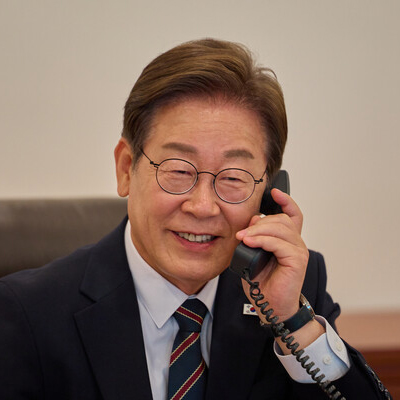
이재명 대통령은 9월 30일 자신의 글에서 “SNS는 저와 국민과의 직접 소통 통로”라고 분명히 밝혔다

단상斷想
칼럼
jeffrey
The Illusion of Traditional Media

0
2026. 10. 13
- Legacy media criticizes the President's SNS communication as "excessive," but this reveals their discomfort with the President directly communicating with the public.
- The media downplays and distorts the President's direct communication because it threatens their gatekeeping role and shakes the inertia of the existing power structure that has conditioned the public into passive information consumers.
- The President's frequent SNS communication is a political survival strategy and an expression of democratic dignity, aiming to directly inform the public of the truth amidst media distortion and obstruction from hardliners within the party.
- More important than the frequency of the President's SNS communication is the public's opportunity to judge directly through original sources; criticizing this as "excessive communication" is the media's way of shirking responsibility for creating a low-quality information environment.
The traditional media seized on the president's SNS communication numbers—'116 times in September alone'—and framed it as 'excessive communication, micromanagement, catering to supporters,' and 'concerns from some within the ruling party,' pushing the narrative beyond facts into a realm of interpretive controversy. When Moon Jae-in pursued secretive policies without communicating, there was no word, but it's obvious they'll criticize if he communicates and criticize if he doesn't, so communicating is the right thing to do. Given the president's nature, it's very exciting for the public to have a president who directly checks what the people are thinking and what they want, rather than asking the Senior Secretary for Civil Affairs.
However, this narrative of dissatisfaction, repeated by legacy media including [Sisa Fact Plus], is not simple. It is an attitude that is uncomfortable with the president's direct communication with the public, and at the same time, it is a deliberate downplaying and collaborative public opinion campaign against the president's chosen communication method in a situation where obstruction from hardliners within the party and persistent media attempts to undermine the president are occurring simultaneously.
Behind this downplaying lies the inertia of a structure that has long conditioned the public to be passive consumers of information. To tame Lee Jae-myung, a man who doesn't listen to them, they want to maintain a distance between voters and the president, under the guise of 'dignity,' creating space for silence and for themselves to mediate, thereby sustaining their livelihoods. Those who only talk about dignity are, in fact, the main culprits of a low-quality public opinion environment. We only need to reflect on how backward the public's political awareness has become over the past few decades, thanks to the survival of Kim Eo-jun, Yoo Si-min, and Joo Jin-woo.
On September 30, President Lee Jae-myung clearly stated in his post, 'SNS is a direct communication channel between me and the public.' The part where he said, 'When all media vested interests came forward to isolate me, distort facts, slander me with false information, and attack me, it was SNS that connected me with the public, informed them of the truth, and led me to where I am today,' is not just an excuse but is deeply connected to his experience of political survival.
The experience of direct communication being the only channel amidst repeated selective reporting and distortion since his time as Seongnam mayor is forcing the same choice in the current situation, where approval ratings are falling and internal conflicts are overlapping. The number 116 is an extension of that. From the purpose of prosecutorial reform, the direction of real estate normalization, the specific content of policy achievements, and sometimes even expressing positions on internal debates, it differs from the summaries presented by the media after cutting and reinterpreting them. While there is a risk in delivering the original text as is, the choice to directly show it to the public, even at that risk, is a fundamental stance as a representative of the sovereign people.
However, two barriers simultaneously exist before this choice. One is the persistent framing of legacy media. They define the president's direct communication as 'SNS addiction' or 'confrontational politics,' emphasizing frequency over content and rough expression over achievements. The view that criticizes a single expression like '좌아하게' (roughly, 'bluntly' or 'crudely') as 'only caring about the supporters' is a typical example. The attitude of being uncomfortable with the public directly encountering and judging diverse language and contexts is no different from viewing the public as immature. If we look back at how anti-national actors lived 'elegantly' for 81 years since liberation, it might be difficult to dare criticize '좌아하게,' but we need to reflect on whether we ourselves, accustomed to third-rate public opinion, are failing to think critically.
The longer that gaze persists, the lower the political dignity of the people becomes. This is because opportunities to read, compare, and refute directly are diminished. The business model and power structure of legacy media rely on gatekeeping. In a system where information reaches the public only after being filtered and processed, if the president bypasses that process, their raison d'être weakens. For decades, the Korean media has functioned either as a propaganda tool for the regime or, conversely, as a weapon to attack it, repeatedly adopting the attitude of 'it's complicated, so we'll sort it out for you.' The result is not the active judgment ability of sovereign citizens, but the habit of consumers accustomed to sensational and simplified frames. The current 'killing of the president' is an extension of that habit. Attributing the cause of declining approval ratings not to policy shortcomings or external factors, but to the president's 'excessive remarks,' reflects an attitude that the public cannot tolerate encountering the original text itself.
Another barrier is the obstruction by hardliners within the party. Internal debates surrounding prosecutorial reform, appointments, and the reform agenda are not merely policy differences. Public criticism from some figures, including Yoo Si-min, the controversy over the appointment of the head of the Central Investigation Agency, and the emotional conflicts within the camp revealed in the process, continuously shake the president's state administration. Whenever the pace or direction of reform differs from their expectations, hardliners publicly raise issues, providing material for the media to amplify and reproduce the conflict. The president's direct response to internal debates on social media can be interpreted as an attempt to deliver messages without distortion amidst such obstruction. However, legacy media frames this attempt as 'communication bogged down in internal factional infighting.' When the obstruction of hardliners meets the media's framing, the president's direct communication is attacked on two fronts. On one side, they criticize 'inability to manage internal affairs,' and on the other, they criticize 'only caring about the support base.' Caught in between, the public loses the opportunity to judge between the original text and the processed version.
In this double bind, the president's struggle to communicate directly with the people is regrettable. In a situation where approval ratings are falling and internal conflicts are becoming public, having to simultaneously deal with the distortion of the media establishment and the obstruction of hardliners is by no means comfortable. The president's statement that “the more difficult it is, the more severe the distorted attacks, the more I must communicate directly with the people” is a result of his own recognition of that regret. The number 116 is a product of that recognition. The frequency itself cannot be a problem. There are cases where leaders of major countries post more, and what is important is the content.
A significant portion of the September posts consists of policy promotion, explanations of current issues, and direct refutations of distortions. To reduce this to addiction or a fight reveals the limitations of the media, which cannot distinguish between the president's act of explaining state affairs and a war of public opinion. Some concerns within the ruling party are similar. While it may be uncomfortable to publicly address internal debates, that does not necessarily mean a failure of state affairs. Rather, it should be remembered that the method of making decisions in closed-door meetings and then unilaterally conveying them through the media has created greater distrust.
Dignity, in the end, is a matter of whom it is directed at. Authoritarian dignity considers keeping a distance, speaking sparingly, and managing the public from a certain distance as virtues. Democratic dignity is different. It includes the attitude of providing information to the sovereign as close to the original text as possible, and enduring the noise and debate that arise in the process. The method chosen by President Lee Jae-myung is closer to the latter. Of course, that method also has its limitations. The background of the author of the quoted text may become controversial, or the expression may seem rough. However, the demand to reduce direct communication itself due to these limitations is, in the end, the logic of traditional media saying, 'we will filter it for you again.' Every time that logic is repeated, the public loses the opportunity to judge between the original and the processed version, and consumes politics as a story arranged by others. That is the starting point of an undignified political environment.
In a situation where obstruction from hardliners within the party and the legacy media's attempts to undermine the president are occurring simultaneously, the president's attempt to communicate directly with the public is a regrettable struggle. Reporting that labels this struggle as 'excessive' or 'a decline in dignity' is merely the meddling of a system that has made the public low-quality consumers. The concerns reiterated by narratives like Sisa Fact Plus are therefore not new. They are the reactions of a system that has long confined the public to the role of information consumers, reacting whenever that system is shaken. How many posts the president makes in a day is secondary.
The more important questions are whether those posts exist in a form that the public can read and judge directly, and how much the media and internal party forces respect that space for judgment. If traditional media wants to talk about dignity, they must first reflect on the low-quality information environment they have created and the way they use that environment to attack the president. Otherwise, the number 116 will remain an uncomfortable number. The responsibility for that discomfort lies more with those who cannot tolerate the public directly encountering those posts, rather than with the person who posted them. In a situation where obstruction from hardliners and media attacks overlap, the attempt not to give up direct communication with the public is regrettable, but that very regret might be the minimum condition for democratic dignity.
댓글
( 0 / 500 )
purple
8
대통령이 국민과 직접 소통하면 과잉이라 하고, 소통하지 않으면 불통이라 비판하는 언론의 이중잣대부터 돌아봐야 합니다. 116건이라는 숫자보다 그 안에 담긴 정책과 설명의 내용을 평가하는 것이 언론의 본분입니다. 국민이 원문을 읽고 스스로 판단할 권리를 존중해야 합니다.
( 0 / 500 )
철수네
9
국민과 대통령 사이에 반드시 언론이라는 중간 단계를 거쳐야 한다는 생각부터 낡았습니다. 대통령의 SNS를 직접 읽고 언론의 해석과 비교할 수 있다면 오히려 국민의 판단력은 높아질 것입니다. 재래식 언론이 지켜야 할 것은 정보 독점권이 아니라 사실을 정확히 전달하는 책임입니다.
( 0 / 500 )
Tomson
6
소통의 횟수를 문제 삼기 전에 왜 대통령이 직접 설명해야 하는 상황이 반복되는지부터 살펴야 합니다. 정책의 취지는 사라지고 표현과 빈도만 부각된다면 국민은 무엇을 믿어야 합니까? 언론은 대통령의 말을 대신 해석하기보다 국민이 정확한 사실에 접근하도록 돕는 역할에 충실해야 합니다.
( 0 / 500 )
충식
6
대통령의 SNS 소통에도 분명 장단점은 있습니다. 표현이 거칠거나 설명이 부족하면 비판받을 수 있고, 정책 성과에 대한 검증도 필요합니다. 그러나 횟수만으로 과잉 소통이라는 낙인을 찍는 것은 합리적 비판이 아닙니다. 원문과 사실을 근거로 평가하는 것이 민주주의에 걸맞은 언론의 자세입니다.
( 0 / 500 )
alpha_k
5
국민과 직접 소통하려는 대통령을 고립시키려 하기보다 그 소통이 국정의 투명성과 책임성을 높이는지 살펴야 합니다. 당내 갈등도 언론의 프레임도 결국 국민의 판단을 대신할 수는 없습니다. 대통령은 설명하고, 언론은 검증하고, 국민은 직접 판단하는 것, 그것이 진정한 민주적 소통의 출발점입니다.
( 0 / 500 )
paran26
5
언론이 말하는 품격이 국민과 거리를 두고 권위만 지키는 것이라면, 그것은 민주주의의 품격이 아닙니다. 국민에게 설명하고 질문받으며 때로는 비판까지 감수하는 것이 진정한 민주적 품격입니다. 대통령의 SNS 게시물 숫자만 세지 말고 정책의 내용과 성과를 따져 묻는 언론이 되어야 합니다.
( 0 / 500 )
筆才
4
대통령의 직접 소통이 불편한 사람들은 국민이 원문을 읽고 스스로 판단하는 상황을 두려워하는 것은 아닌지 돌아봐야 합니다. 언론의 해석도 하나의 의견일 뿐 진실 그 자체는 아닙니다. 대통령의 글도 무조건 옳다고 믿을 필요는 없지만, 직접 읽고 비교하며 판단할 기회만큼은 누구도 빼앗아서는 안 됩니다.
( 0 / 500 )
seeu79
4
대통령이 국민과 직접 소통하려 애쓰는 현실이 안타깝다는 대목에 공감합니다. 정책을 추진하는 일만으로도 벅찰 텐데, 왜곡된 보도와 내부의 공개적 갈등까지 일일이 상대해야 하니 얼마나 답답하겠습니까. 다만 직접 소통이 진정한 힘을 가지려면 비판도 경청하고 정책의 성과와 한계까지 투명하게 설명해야 합니다.
( 0 / 500 )
天上天下
2
대통령이 국민에게 직접 설명하는 시대에 아직도 언론만이 진실을 해석하고 전달할 수 있다고 믿는다면 그것이야말로 낡은 특권의식입니다. 국민은 누군가가 가공해 준 정보만 소비하는 수동적인 존재가 아닙니다. 원문을 읽고 판단하고 비판할 능력이 있습니다.
( 0 / 500 )
aladdin
1
국민과 직접 소통하는 대통령이 못마땅한 세력, 그 소통을 흠집 내는 언론, 개혁의 방향을 흔드는 당내 강경파가 서로 다른 이유로 같은 결과를 만들어 내는 것은 아닌지 생각해 봐야 합니다. 대통령도 비판에서 자유로울 수는 없지만, 비판은 사실과 근거 위에 서야 합니다.
( 0 / 500 )
신고내용
신고내용을 선택해주세요
회원비난/비하/욕설글 및 댓글도배성 게시물저작권 침해/불법자료 유출허위사실유포개인정보 유출.사생활 침해무단광고/홍보음란물 및 도박 불법 광고물범죄행위 관련 글불법행위 관련 소개물품 판매 및 사기글악성코드 및 스파이웨어 유포기타 사유 및 운영진 판단


비밀번호를 잊으셨나요?
Sign in with Google


All information provided by us is free of charge and is for the public good.