品

Corea든 Korea든, 품격은 이름보다 먼저다
Whatever the name—Corea or Korea—dignity comes first.
Whatever the name—Corea or Korea—dignity comes first.
Now
지금
751 Diaspora
Heritage
유산
Humanity
인문
Mirengsi
未冷尸
Politics
정치
Media
언론
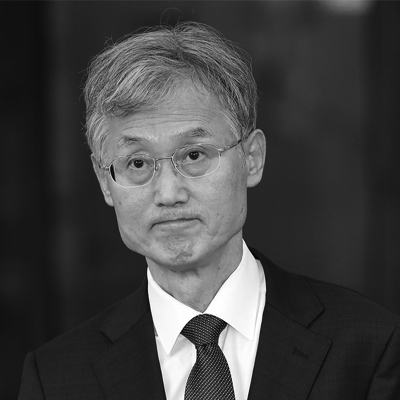
10월 6일 국감에서 조희대 대법원장이 보여 준 것은 해명의 실패가 아니라, 책임의 언어가 아예 작동하지 않는 사고의 회로였다.

단상斷想
칼럼
Savant
The moment Cho Hee-dae's grammar becomes the grammar of the entire court

0
2026. 10. 09
- Chief Justice Cho Hee-dae, during the parliamentary audit, asserted the absolute nature of the Chief Justice's nomination power, interpreting parliamentary consent and presidential appointment as subordinate procedures, focusing on reaffirming his authority rather than providing accountable answers as the head of the judiciary.
- He displayed an autocratic mindset, perceiving external criticism and questions as infringements on his authority, by either sticking to his own judgment or shifting responsibility to working-level staff regarding various issues such as prolonged vacancies for Supreme Court justices, alleged false reporting of activity expenses, and refusal to testify at the parliamentary audit.
- The author warns that Chief Justice Cho's attitude—delaying court appointments, neglecting public fund management, and monopolizing constitutional interpretation—demonstrates a lack of the minimum qualifications required of a Chief Justice, and that the entire judiciary risks losing public trust by being captured by one individual's self-interest.
What Chief Justice Cho Hee-dae showed at the National Assembly audit on October 6 was not a failure to explain, but a thought process in which the language of responsibility did not function at all. Despite being selected as a general witness, he refused to take an oath and testify, instead reading 'unconstitutional' four times from a prepared paper, and interpreting Article 104 of the Constitution as the exclusive territory of the Chief Justice alone. Those six minutes were not an answer from the head of the judiciary, but a reaffirmation of his own authority. His logic was that the National Assembly and the President cannot be involved in the nomination, that consultation is not a constitutional obligation but merely cooperation that has been voluntarily carried out, that there is no constitutional problem even if there is no consultation, and that since the Chief Justice's authority and duty ended with the nomination, he had no choice but to refuse to take an oath or testify. Within this circuit, questions, vacancies, and public concern are all outside the scope of authority.
Legal responsibility begins precisely at this point. Article 104 of the Constitution is a provision that stipulates that Supreme Court justices are to be appointed in the order of nomination by the Chief Justice, consent by the National Assembly, and appointment by the President; it is not a provision that suspends the authority of the other two institutions with a single nomination. It is true that the nomination is the starting point. However, interpreting the starting point as the end point, and demoting the subsequent consent and appointment to procedures subservient to the will of the nominator, goes beyond the literal text of the provision. The remark that it was difficult to proceed with subsequent procedures because the Blue House's official request for re-nomination lacked specific reasons and constitutional grounds is also part of the same circuit. While expressing regret for causing public concern due to the prolonged vacancy, it does not reach the point that his own decision to stick with the already nominated candidate was the decision that maintained the vacancy.
The Democratic Party publicly stated that it considers this rejection and the vacancy, which has lasted over 200 days, to be a violation of the Constitution and laws, and that there are sufficient grounds for impeachment. They also listed the convening of a meeting immediately after the December 3rd emergency martial law and the controversy over electoral neutrality surrounding the remand before the presidential election. Impeachment is not yet a decided responsibility. However, the reason why the responsibility cannot simply be dismissed as a political attack is that the entity that halted the formation of the court is explaining that halt solely as a flaw in the opposing official document. The independence of the judiciary is the principle that the content of trials must be free from the directives of power; it is not an immunity that pushes the delay in formation, the formality of attendance, and the inadequacy of materials outside the scope of the duty to explain.
The procedures of the parliamentary audit are an extension of the same responsibility. It was pointed out that after being selected as a witness, he refused to take an oath, answered only the questions he wanted to answer in the morning, then left without the chairman's permission when the audit resumed in the afternoon, and only returned late at night to make a concluding statement. The Democratic Party's floor spokesperson viewed this as an act of disrespect towards the National Assembly and the public and demanded his resignation. Even members of the National Assembly take an oath and leave according to procedure when summoned by the court. If the head of the judiciary can arbitrarily choose that procedure, then oaths and answers become obligations only for those with less power. He stated that he had no choice but to refuse because there is no constitutional basis for the parliamentary audit and the demand for testimony. The judgment that there is no basis and the attitude of the person who made that judgment refusing scrutiny because they are the party to that judgment are different levels. The moment the latter is packaged as the former, responsibility disappears behind interpretation.
Business promotion expenses show how this disappearance is repeated in financial records. It was the head of the National Court Administration who admitted and apologized for reports that documents were prepared with false information about the number of attendees at meals. Several allegations of falsehood were raised regarding the first half's execution details, and the ruling party claimed it was an inflation to circumvent the Improper Solicitation and Graft Act. Cho Hee-dae himself stated that he had never seen the card, did not drink a single drop of alcohol, and had no knowledge of budget allocation, execution, or the cost of meals on those days. He said it seemed there were instances where the amount was exceeded and that he expected the administration to correct it, adding that he was sorry to the public. The institution admitted that the records of public funds executed in the name of its head were false, yet the head steps back behind the expenditure officer and responsible staff. If a defendant made the same explanation in court, it would sound like an evasion of responsibility in a trial he presides over. If such a statement only grants immunity in his own case, then equality before the law is first broken within the walls of the court.
What can only be called abnormal here is not the clinical diagnosis. Concluding a person's mental state with a medical diagnosis based solely on public statements goes beyond the scope of facts, and such a conclusion blurs the point. The core of the problem lies in the fact that the thought process cannot receive external sentences as questions and translates everything into an infringement of authority. A request for re-recommendation is an unwarranted interference, a demand for testimony is unconstitutional, and when asked about declining trust, a conference presentation stating that judicial trust has improved according to international organization data is returned. Regarding 12/3, he says he gave instructions not to provide personnel and lists, so he did not cooperate at all, and regarding the Western District Court incident, he says he has never been silent or negligent.
To the question, 'Do you dream of becoming the next Yoon Suk-yeol?', they respond that it is insulting and sad. Each sentence is complete within itself. However, that completeness does not meet the meaning that citizens hear. It's not a mistake made due to a lack of understanding of words, but rather a state where the responsibility that words carry when they go out into the world does not exist as an item within the grammar. It is the inability of someone who has exercised final interpretive authority their entire life to accept within language that their interpretation has now become the subject of interpretation – that is the thought process revealed by the parliamentary audit. A normal legal professional speaks on the premise that their reading of a provision can be subject to dispute. An interpretation without that premise is not legal principle but self-affirmation.
The qualifications of a Supreme Court Justice are not filled solely by years of experience and appointment procedures. The fact that one meets the formal requirements and has been seated through nomination, consent, and appointment is separate from the fact that one is currently performing the judgments required by that position. There are three minimum qualifications required of a Chief Justice of the Supreme Court: not to halt due to court composition, to answer as the head regarding public funds and public records, and to endure within due process the possibility that one's constitutional interpretation may be wrong. Cho Hee-dae's parliamentary audit emptied these three, one by one. Vacancies became flaws in opposing official documents, apologies for false entries were left to the chief, and disputes over interpretation were sealed with the word 'unconstitutional'.
A normal Supreme Court Justice, when their nomination does not lead to consent and appointment, seeks other avenues to restore the composition. A normal head of an institution does not attribute false information in documents under their name solely to the mistakes of subordinates. A normal legal professional does not refuse to take an oath and then, with the same mouth, definitively confirm the justification for that refusal. If all three of these are missing simultaneously, what remains is not a letter of appointment but a human-shaped placeholder filling the void of the office.
If the judiciary protects this circuit simply because it is the head, then the protector is approving his grammar as the institution's grammar. The fact that the National Court Administration apologized for the attendance record is proof that the institution can still correct its words in the face of facts. When that correction remains with the director and the head's language is not shaken, the impression the public receives is that the entire judiciary has been captured by one person's self-interest. Responsibility then shifts from the individual to the institution. The independence of trials and the infallibility of the head are different things. To protect the former, one must be able to doubt the latter, and doubt must come not only in words but also in procedures, whether it be impeachment, resignation, or correction of records. While those procedures are not visible, the thought system of one person, Cho Hee-dae, determines both the speed of the Supreme Court's composition and the limits of the judiciary's language. The reality that approaches the public is thus summarized in one sentence: The person who ultimately speaks the law cannot send the responsibility for his words outside his own grammar, and the institution cannot yet call that inability a matter of qualification.
댓글
( 0 / 500 )
최진석
8
사법부 독립은 대법원장 개인의 무제한 재량을 보장하는 특권이 아닙니다. 자신의 헌법 해석만 옳고 다른 기관의 문제 제기는 위헌이라고 밀어붙인다면, 법치주의의 핵심인 견제와 균형은 어디에 있습니까? 법을 해석하는 권한만큼 그 해석에 대한 책임도 무거워야 합니다.
( 0 / 500 )
santa
6
대법원장은 헌법 위에 군림하는 자리가 아닙니다. 제청권은 강조하면서 그로 인해 발생한 사법부 공백에는 책임지지 않고, 국회의 증언 요구마저 위헌이라며 거부한다면 국민은 무엇을 믿어야 합니까? 법을 누구보다 엄격하게 적용해야 할 사람이 자기 문제에서만 예외를 주장한다면 사법부의 권위는 스스로 무너지는 것입니다.
( 0 / 500 )
moran
4
법원 구성의 공백이 장기화하는데도 자신의 제청권만 강조한다면, 국민은 누구에게 책임을 물어야 합니까? 제청은 권한이지만 사법부를 정상적으로 운영하는 것은 책무입니다. 권한은 앞세우면서 결과에 대한 책임은 다른 기관에 돌리는 태도가 사법부에 대한 신뢰를 무너뜨립니다.
( 0 / 500 )
박나경
6
조희대 대법원장에 대한 탄핵을 더 이상 미룰 이유가 없습니다. 헌법을 해석하는 최고 책임자가 국회의 정당한 책임 추궁을 거부하고, 사법부 공백 사태에도 책임 있는 해명을 내놓지 않는다면 누가 그 책임을 물을 수 있습니까? 사법부 독립은 대법원장 개인의 면책특권이 아닙니다. 국회는 탄핵 절차를 통해 그 책임을 엄정하게 물어야 합니다.
( 0 / 500 )
동해바다
4
사법부의 독립을 지키겠다면서 정작 국민의 신뢰를 무너뜨리는 행동을 반복한다면, 그것은 독립의 수호가 아니라 독립이라는 이름 뒤에 숨는 것입니다. 헌법은 대법원장 한 사람을 위한 방패가 아닙니다. 제청권도, 증언 거부도, 공적 기록에 대한 해명도 모두 헌법과 법률의 테두리 안에서 설명되어야 합니다.
( 0 / 500 )
ironworks
3
일반 시민이 법정에서 선서와 증언을 거부한다면 법원은 어떤 판단을 내리겠습니까? 법을 집행하고 해석하는 최고 책임자에게만 다른 기준이 적용되어서는 안 됩니다. 사법부의 권위는 지위에서 저절로 생기는 것이 아니라, 누구에게나 같은 절차와 원칙을 적용할 때 비로소 국민의 신뢰를 얻습니다.
( 0 / 500 )
joonwoo
1
법을 어긴 국민에게는 엄벌을 요구하면서 자신에게 쏟아지는 책임 추궁은 위헌이라는 말로 피해 가는 대법원장, 국민이 이런 이중잣대를 언제까지 지켜봐야 합니까? 사법부의 권위는 직함으로 유지되는 것이 아니라 책임지는 자세로 지켜지는 것입니다. 조희대 대법원장은 국민 앞에 책임을 지고, 국회는 탄핵소추로 그 책임을 물어야 합니다.
( 0 / 500 )
신고내용
신고내용을 선택해주세요
회원비난/비하/욕설글 및 댓글도배성 게시물저작권 침해/불법자료 유출허위사실유포개인정보 유출.사생활 침해무단광고/홍보음란물 및 도박 불법 광고물범죄행위 관련 글불법행위 관련 소개물품 판매 및 사기글악성코드 및 스파이웨어 유포기타 사유 및 운영진 판단


비밀번호를 잊으셨나요?
Sign in with Google


All information provided by us is free of charge and is for the public good.