品

Corea든 Korea든, 품격은 이름보다 먼저다
Whatever the name—Corea or Korea—dignity comes first.
Whatever the name—Corea or Korea—dignity comes first.
Now
지금
751 Diaspora
Heritage
유산
Humanity
인문
Mirengsi
未冷尸
Politics
정치
Media
언론
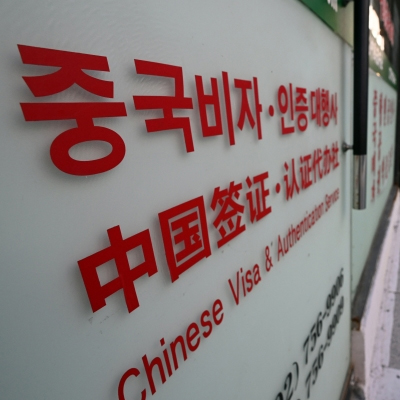
한족(漢族)은 누구일까. 그 질문을 밀어낸 자리에서 요란한 선동 채널들은 정부가 정리해야 한다.

단상斷想
칼럼
andy74
Chinese residents reported by KNN

0
2026. 10. 08
- Ministry of Justice statistics show that the number of Chinese nationals residing in Korea is nearing 1 million, and it's true that more of them are acquiring long-term residency status.
- However, media reports of a "million Chinese era" fail to distinguish between Korean-Chinese (Joseonjok) and Han Chinese, creating the misconception that 1 million Han Chinese immigrants are encroaching upon society.
- In reality, about two-thirds of Chinese nationals residing in Korea are of Korean descent, and their increase in permanent residency is more about existing residents converting visas than new inflows; their home ownership and voting participation are also negligible compared to their overall numbers.
- The media, chasing views and catering to certain sentiments, omits the complex context of statistics, thereby fostering a distorted perception based on facts.
According to the Ministry of Justice's Immigration and Foreigner Policy Headquarters, there were 2,783,247 foreign residents in Korea at the end of 2025, and Chinese nationals, including those of Korean descent, numbered 980,670, accounting for 35.2% of the total. Therefore, the figure of 1 million residents is not fabricated. As of the end of June 2026, the total number was 2,874,278, with 994,023 Chinese nationals. The figure of approximately 1.02 million reported by Hankook Ilbo as of July is not significantly inconsistent with this upward trend. It is also true that after first exceeding 1 million in April 2016, the number decreased to around 800,000 during COVID-19, then rose again to approximately 840,000 in 2022, 940,000 in 2023, 950,000 in 2024, and 980,000 in 2025.
It is therefore difficult to categorize as false reporting the fact that on October 5, 2026, Hankook Ilbo published an article titled 'The Era of 1 Million Chinese,' and around the same time, KNN broadcast a video with the theme '1 Million Chinese Settled in Korea, Buying Homes and Even Voting.' The sources trace back to the Ministry of Justice, the Ministry of Land, Infrastructure and Transport, and the National Assembly Budget Office. The problem lies in what follows. The image conveyed by the title is closer to 1 million Han Chinese immigrants buying homes and casting votes, thereby encroaching on society. The statistics only capture half of that image, and the other half disappears before the title. The distortion arises not from fabricating numbers, but from erasing classifications and concealing denominators.
Of the 994,023 Chinese nationals at the end of June 2026, 644,464 are ethnic Koreans. Approximately 350,000 are non-Korean Chinese. Two out of three are Joseonjok/ethnic Koreans. When only '1 million Chinese' is used, viewers interpret it as Han Chinese immigrants. This is where headlines create distorted concepts. These words incite hatred.
It is true that the quality of settlement has changed. The number of H-2 (visiting employment) visas decreased from around 230,000 in 2016 to approximately 20,000 in July 2026, and that gap has been filled by F-5 (permanent residency) and F-4 (overseas Koreans) visas. Hankook Ilbo reports that the number of Chinese nationals with permanent residency increased by about 90% from around 100,000 in 2016 to approximately 190,000 in July 2026, and F-4 visas increased from around 270,000 to 420,000. Combined, about 60% of Chinese nationals residing in Korea hold long-term settlement statuses. According to Ministry of Justice statistics, the total number of permanent residents also increased from 168,118 in 2021 to 221,021 at the end of 2025.
However, the actual content of that increase is not an influx of new people. Of the 67,538 increase in permanent residents from the end of 2020 to June 2026, 55,242 (81.8%) were Korean-Chinese, and the total number of residents in this group actually decreased by 3,112 during the same period. It's not a new influx, but rather a settlement where existing residents changed their visas to permanent residency. The increase in permanent residents who are not Korean-Chinese was only 4,768 during the same period. The phrase “settled down” can be used to refer to a change in residency status. It cannot be used to refer to the infiltration of external populations.
The same goes for housing. It is true that 'Chinese nationals own the majority of foreign-owned homes,' but it is an exaggeration to say that 'real estate big hands are swallowing up the market.' According to Ministry of Land, Infrastructure and Transport statistics at the end of 2025, foreign-owned homes numbered 108,231, which is 0.55% of the total 19.65 million homes. Among these, Chinese nationals own 61,439 homes, accounting for 56.8%, ranking first, followed by the United States with 23,187 homes and Canada with 6,542 homes. The 72% share of Chinese nationals in foreign transactions in the Seoul metropolitan area cited by the Korea Economic Daily, which is 4,397 cases from September 2025 to June 2026, and the concentration in Bucheon, Ansan, and Siheung, are all within the context of foreign transactions. If the denominator is changed to total housing transactions, the numbers change significantly.
The more important denominator is the number of people. The proportion of home ownership among long-term residents is 27.4% for the US, 24.3% for Canada, 22.2% for Australia, 17.8% for Taiwan, and 7.5% for China, which is the lowest among major countries. The reason for the large number of homes is not a particularly strong propensity to buy, but rather a large denominator. 93.4% of owners own one home, and only 1.3% own three or more. The regional concentration, where 72% of foreign-owned homes are concentrated in Gyeonggi, Seoul, and Incheon, is real. The encroachment of the national housing market is not real.
The right to vote exists. The conditions and scope are narrower than the headlines suggest. Only those who are 18 years or older, have obtained permanent residency (F-5) and have resided for three years, and are registered in the foreign resident registry of the relevant local government, can vote in elections for local government heads and local councils, according to the Public Official Election Act. They cannot vote in presidential or National Assembly elections. The system originated from a bipartisan agreement in 2001 and a law amendment in 2005, with the first exercise involving 6,726 people in the 2006 local elections. For the 9th local elections on June 3, 2026, the number of foreign voters is 151,532, which is 0.34% of the total electorate of approximately 44.65 million, the highest ever. This is about 22 times more than in 2006.
The National Election Commission did not disclose the list by nationality for 2026, but according to data from the National Assembly Budget Office in January 2025, out of 141,000 eligible foreign voters, 113,500, or 81%, were of Chinese nationality. In 2022, approximately 78.7% of 127,623 foreign voters were of Chinese nationality. Since the proportion of Chinese nationals among permanent residents themselves exceeds 80%, the composition of voters is inevitably skewed towards Chinese nationality, and the vast majority of those Chinese nationals are ethnically Korean. The headline of the Korea Economic Daily, '110,000 participants in voting,' is already a step off at this point. 110,000 is an estimate of eligible voters, not actual voters.
This scale is not enough to overturn national public sentiment. 0.34% is not present in presidential or general elections, and it is unlikely to be a decisive factor in the overall vote count of local elections. However, in close races for basic local government heads, the arithmetic changes. The 2022 Ansan mayoral election was decided by a margin of 179 votes, and at that time, there were over 8,000 foreign voters in Ansan. Approximately 78% of foreign voters are in Seoul, Gyeonggi, and Incheon, and in cities with high concentrations of Korean-Chinese, such as Ansan, Siheung, and Bucheon, the possibility of a casting vote is structurally open. There is no reciprocity. China does not grant any level of voting rights to foreigners. This asymmetry is not a conspiracy but a result of the 2005 law. There are reports that the number of voters is increasing while voter turnout is low, which is far from the picture of '110,000 systematically casting their votes.'
The reason why there are so many Chinese people is due to the system rather than the geographical proximity to the border. Korean-Chinese are descendants of those who immigrated to Manchuria from the late 19th century to the Japanese colonial period. The Overseas Koreans Act in the 2000s and the H-2 visa system in 2007 opened a path for them that other nationalities do not have. The F-4 visa has low barriers to employment and residency, and it is easy to transition to an F-5 visa after a certain period. Vietnamese residents rank second with 337,183 people by the end of 2025 and 376,224 by June 2026, surpassing China in the number of international students, but permanent residents are around 3,000. This is because the Employment Permit System (E-9) is not a settlement visa. Nepal, Myanmar, and Cambodia have also seen a surge in residents, but only hundreds are permanent residents. The existing Korean language and kinship networks have led to the reproduction of concentrated communities in Ansan, Yeongdeungpo, Daerim, and Bucheon, and the wage gap and economic downturn in Northeast China have pushed for settlement. Non-Korean Chinese are increasing due to study abroad, business, visa-free tourism in Jeju, and some investment purchases, but they are not the main force for permanent residency and voting rights. Consumption figures such as 2 trillion won in card sales and 330 billion won in dermatology should not be interpreted as living expenses for 1 million settled residents, as they include short-term tourist and medical demand.
There is no evidence to conclude that KNN's repetition of this framework is a directive from the party. The ownership structure also does not suggest this. Nexen is KNN's largest shareholder, holding about 39% of the shares as of 2026, while Taeyoung and SBS affiliates hold less than 1% of the remaining shares. The explanation that SBS network program partnerships and news editorial stances are dictated by the same capital does not align with the current shareholding. While there have been controversies in the past, such as collusion with local powers and disciplinary actions for manipulating interview audio, these are not evidence connected to the current reporting. The verifiable motives are more mundane. KNN's YouTube short news videos related to China easily gain views, and the petition video for visa-free entry to Jeju has exceeded 300,000 views. Busan and Gyeongnam have strong conservative support, and favorability towards China is only 28% according to surveys. In this market, '1 million, homes, votes' are headlines with low explanation costs and high reactions. If you separate Korean and non-Korean, and include the proportion of total housing and voter turnout, the video becomes longer. Local private broadcasters do not choose that length. The fact that Hankyung placed an article about 28% favorability side-by-side on the same day is based on the same calculation.
Political utility comes next. Local election rights without reciprocity, the conversion of compatriot visas to permanent residency, and the concentration of some cities in the metropolitan area constitute policy issues. If these issues are translated into 'China buys votes,' the responsibility shifts from the 2005 legislation and the overseas Koreans system to external forces. It is cheaper to consolidate grievances accumulated in housing, health insurance, and public security into a single nationality than to explain how to fix the visa system. There is no need to look for KNN's ulterior motives separately. The ulterior motive of this reporting style is views and targeted anxiety, and the missing sentence is always the same: two out of three are of Korean descent, homes are around 0.3% of the total, and votes are 0.34% in local elections. Articles that include that sentence talk about the results of the system, and articles that omit it talk about the narrative of infiltration. The numbers are the same, only the perception changes.
Who are the Han Chinese? The government should deal with the noisy propaganda channels that have emerged in response to that question.
댓글
( 0 / 500 )
moonjung
6
숫자 자체가 틀렸다고 몰아붙이는 것보다 같은 숫자가 어떤 맥락에서 제시됐는지를 따져야 한다는 지적이 설득력 있습니다. 중국 국적 100만 명이라는 숫자만 강조하면 한국계 중국인과 비한국계 중국인의 구분이 사라지고, 외국인 주택 보유와 전체 주택 보유의 차이도 감춰집니다.
( 0 / 500 )
grace45
5
언론이 사실을 전달하는 데서 그치지 않고 특정 국적이나 집단에 대한 불안을 자극한다면 그것은 단순한 선정성을 넘어선 문제입니다. 특히 정확한 통계와 분모를 알고도 자극적인 제목만 앞세운다면 언론의 사회적 책임을 스스로 저버리는 것입니다.
( 0 / 500 )
now59
5
외국인 정책의 문제점을 비판하는 것과 특정 국적 사람들을 잠재적 위협으로 묘사하는 것은 구분해야 합니다. ‘중국인 100만, 집 사고 투표까지’ 같은 프레임은 사실의 일부를 확대해 집단에 대한 경계심을 부추길 수 있습니다. 언론이라면 갈등을 키우기보다 정확한 맥락을 제공해야 합니다.
( 0 / 500 )
koa
4
‘중국인 100만 명이 눌러앉았다’는 표현은 체류자격의 장기화와 신규 유입을 혼동하게 만듭니다. 특히 영주권 증가의 상당 부분이 이미 국내에 거주하던 한국계 중국인의 자격 전환이라면 이를 외부 인구의 대규모 침투처럼 묘사하는 것은 지나친 해석입니다
( 0 / 500 )
nadaniel
4
조회 수를 올리기 위해 혐오와 공포를 자극하는 제목을 반복한다면 언론사 역시 그 책임에서 자유로울 수 없습니다. 외국인 주택 소유, 지방선거권, 영주권 문제는 얼마든지 비판적으로 다룰 수 있습니다. 그러나 국적 하나로 사람들을 묶어 ‘잠식’의 이미지를 만드는 순간 보도는 사실 전달이 아니라 혐오의 확산이 됩니다.
( 0 / 500 )
Jane
3
혐오를 부추기는 보도는 결국 사회적 갈등의 비용을 국민에게 떠넘깁니다. ‘중국인 100만’이라는 숫자만 던져놓고 한국계 중국인의 비중이나 전체 주택·유권자 대비 규모를 생략한다면 독자가 객관적으로 판단할 기회를 빼앗는 것입니다. 자극적인 제목보다 정확한 맥락을 전달하는 것이 언론의 본분입니다.
( 0 / 500 )
김웅
2
언론의 자유는 혐오를 생산할 자유와 같은 말이 아닙니다. 외국인 정책의 허점을 지적하는 것은 언론의 역할이지만, 특정 국적을 하나의 위협 집단처럼 묘사해 불안을 팔아서는 안 됩니다. 숫자를 보도했다면 그 숫자의 분모와 구성까지 함께 보여주는 것이 책임 있는 보도입니다.
( 0 / 500 )
박나경
1
외국인의 지방선거권은 충분히 논쟁할 수 있는 제도입니다. 중국에는 상호주의가 없다는 점도 정책적으로 검토할 문제입니다. 그러나 ‘중국인 11만 명이 투표한다’는 식으로 전국 선거를 좌우할 세력처럼 묘사하는 것은 다른 문제입니다. 선거권자와 실제 투표자를 구분하고 전체 유권자 대비 비율까지 보여주는 것이 언론의 기본 아닐까요
( 0 / 500 )
신고내용
신고내용을 선택해주세요
회원비난/비하/욕설글 및 댓글도배성 게시물저작권 침해/불법자료 유출허위사실유포개인정보 유출.사생활 침해무단광고/홍보음란물 및 도박 불법 광고물범죄행위 관련 글불법행위 관련 소개물품 판매 및 사기글악성코드 및 스파이웨어 유포기타 사유 및 운영진 판단


비밀번호를 잊으셨나요?
Sign in with Google


All information provided by us is free of charge and is for the public good.