品

Corea든 Korea든, 품격은 이름보다 먼저다
Whatever the name—Corea or Korea—dignity comes first.
Whatever the name—Corea or Korea—dignity comes first.
Now
지금
751 Diaspora
Heritage
유산
Humanity
인문
Mirengsi
未冷尸
Politics
정치
Media
언론
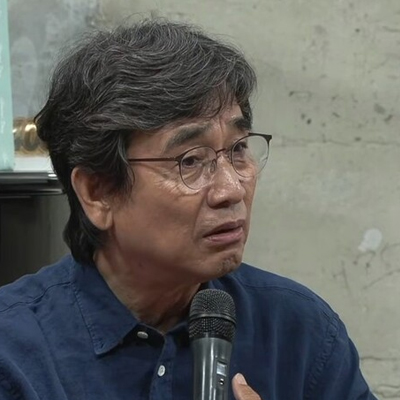
채널A 취재와 보수 유튜브를 중심으로 ‘여권 로비’, ‘유시민 차명 투자’ 의혹이 퍼졌다. 그리고 신라젠은 그 빈칸에 붙어 있는 이름이다.

단상斷想
칼럼
HumanX
Yoo Si-min, Public Records That Refused Explanation

0
2026. 10. 06
- Suspicion towards Yoo Si-min stems from his statements deriving power from authority rather than information, and from uncertain assertions being accepted as facts.
- His definitive claim that he, holding no public or party office, "deceived" the incumbent president, borders on incitement rather than commentary, causing rifts within his faction and drawing criticism.
- His opaque explanations regarding his wealth accumulation and suspicions of involvement in the ShillaJen incident amplify doubts, making it unclear whether his avoidance of a political comeback is due to conviction or assets.
- Once the face of intellectuals in the Roh Moo-hyun administration, his repeated cycles of cynicism and comebacks have led to him being perceived even within his own camp as "unrestrained," raising questions about the credibility and influence of his remarks.
- His authority, maintained outside of public office while refusing to provide explanations, forces listeners to bear the cost of even false information, making suspicion the only public record he leaves behind.
Suspicion about Yoo Si-min did not arise suddenly one day. However, in the fall of 2026, that suspicion is growing again, not from outside the ruling party, but from within. On September 22nd, on Media Today's YouTube channel, he described President Lee Jae-myung's explanation of prosecutorial reform as "deceiving the public until now." This was the part where President Lee, in a press conference on the 18th, initially spoke of the maximum possible plan as the separation of investigation and prosecution within the Ministry of Justice. The President then placed those words as the initial discussion of the past, adding that now prosecutors do not investigate at all and investigative agencies belong to the Ministry of Interior and Safety. Four days later, Yoo Si-min cut off the beginning and end of that statement, claiming it was completely different from the reform and presidential pledges of the Democratic Party he knew, and used the word "deception." The Blue House expressed regret, calling it a distortion of facts, and while rumors of legal action emerged, it was later settled with "nothing has been decided." In July, on Maebul Show, he had already said, "The reason reform has not happened for over a year is because the President does not want complete separation." As the same words were repeated, some of his supporters heard it as frank advice, while others heard it as irresponsible bombardment.
It's not surprising that critics are concerned about his remarks. Yoo Si-min's words have always drawn their power from authority rather than information. When his background as Minister of Health and Welfare, chairman of the Roh Moo-hyun Foundation, and commentator for 'Alileo' preceded his statements, unverified assertions sounded like facts. During the Cho Kuk situation, he almost daily provided commentary that framed the prosecution's investigation as a political maneuver. Whether that commentary was right or wrong, separate from court records, it was already a conclusion for the listeners. This time, the structure is the same. There's a difference between scrutinizing the gap between pledges and policies, and definitively stating that the public has been deceived. The former is commentary, the latter is closer to incitement. When someone with no public office, party position, or election responsibility brands a sitting president as deceitful, those words spread within the camp without verification. Kim Min-seok's call for restraint and the Blue House's first expression of regret are part of that crack. The concern isn't about disagreeing with his conclusion, but about the lack of a brake on how he reaches conclusions. Wrong statements can simply be corrected, but the word 'deception' remains even if corrected.
One of the reasons why there seems to be no brake is the property controversy. In the last days when public officials' assets were disclosed, his declared assets when he was appointed minister in 2006 were approximately 186 million won, and the cash in his name was around 15 million won, which was the sum of his wife's apartment in Goyang and his debts. This was less than other appointees in the same cabinet reshuffle. In 2007, his declared assets as minister were in the 260 million won range, and in 2008, his declared assets as a lawmaker went down to minus 270 million won if debts were excluded. After that, he left public office, and the obligation to disclose assets disappeared. The "100 billion won wealthy person" circulating online is not a confirmed figure. No land registry, stock balance, or tax data has ever been disclosed. In 2024, he directly denied the rumor of living in Seocho Acro River Park and said he lives in a villa in Bangbae-dong. The article that he lived in that apartment, where a dedicated 84 square meters exceeded 4 billion won, was, according to him, a misreport by a real estate media outlet that simply copied company information, and it remained uncorrected with only his name omitted. In July 2026, lawmaker Park Sun-won said on a broadcast that Yoo Si-min himself said that he "has accumulated so much wealth that it is difficult to do politics, and he pays a lot of income tax." This is a politician's statement, not a property statement disclosed in his own voice. There is no amount, only an impression.
However, that impression fuels suspicion. A person who earns tens of millions of dollars for decades solely from best-selling royalties, lecture fees, and YouTube revenue, and a person who has accumulated enough assets to give up politics, are not in the same category. It is true that books like 『My Contemporary Korean History』 and 『What is a Nation?』 have sold well for a long time, and it is also true that 'Alileo' was once a channel for explaining political camps. There is no basis to say that legal channels are entirely impossible. However, the claim that this path leads to 100 billion won cannot be explained without separate investment income or undisclosed asset movements. No matter how substantial the royalties, for an annual income in the hundreds of millions to accumulate to 100 billion over ten years, the remainder after taxes and living expenses would have to be almost entirely compounded. He does not provide that explanation. As he is not a public official, he has no obligation to do so. Silence without obligation, when combined with the authority of his statements, turns into suspicion. The observation that he cannot enter politics because he does not disclose his assets is therefore closer to a structural issue than a conspiracy. The moment he returns to the National Assembly, his assets will again be subject to disclosure, and his lecture fees, copyright income, and the gaps in between will become questions at a hearing. As long as he remains a writer, those questions are rumors, not records. Park Sun-won's remark that 'politics is difficult due to high taxes,' when read in reverse, is indistinguishable from saying that he is afraid of disclosure.
And ShillaJen is the name attached to that blank. At the 2015 Pexavec technology briefing at Yangsan Pusan National University Hospital, he gave a congratulatory speech as a former minister, stating that the fact that it had received US FDA approval and reached global phase 3 trials was proof that its efficacy had been largely demonstrated. Phase 3 clinical trials are not proof of efficacy, but rather tests to prove it. It is easy to imagine how that one sentence sounded to the ears of the victimized investors later on. At the time, on the side of the largest shareholder, there was Lee Cheol, former CEO of Value Invest Korea, who had ties to Nosamo and the People's Participation Party. Lee Cheol's VIK was the largest shareholder, holding 14 percent of ShillaJen's shares from September 2014 until the end of the following year, and Lee Cheol was later sentenced to 12 years in prison for large-scale investment fraud, among other charges. It was also revealed in court that illegal political funds had been handed over to Kim Chang-ho, former head of the Government Information Agency. After its listing in 2016, ShillaJen briefly ranked high in Kosdaq market capitalization but collapsed due to the suspension of clinical trials, and its management was prosecuted on charges of illegally profiting 190 billion won by acquiring bond with warrants without their own funds. Hundreds of billions of won of CEO Moon Eun-sang's assets were preserved for 추징.
What remains unconfirmed is broader. Allegations of "ruling party lobbying" and "Yoo Si-min's nominee investment" spread, primarily through Channel A's reporting and conservative YouTube channels. During the investigation, recordings and letters mentioning Yoo Si-min's name dozens of times led to separate legal battles, the conclusion of which was not the proof of lobbying but rather a dispute over the investigation methods. In June 2020, the Seoul Southern District Prosecutors' Office announced that after analyzing ShillaJen's accounts, they found no flow of funds leading to Yoo Si-min or the Roh Moo-hyun Foundation, and that the allegations of political lobbying were unconfirmed. The prosecution limited the scope, stating that they did not directly open the foundation's accounts but rather could not find a connection from ShillaJen's accounts. The following year, Yoo Si-min's side raised an issue with the answer, which included the phrase "related to ShillaJen," arguing that the foundation's financial information had been provided for other matters. Yoo Si-min himself stated, "No matter how much you dig, no water comes out," and "I don't know anything about it other than greeting them once at an event." The legal conclusion is close to a finding of no charges. However, the suspicion has not died. This is because a former minister gave a congratulatory speech prejudging the success or failure of clinical trials, a person from the same political community was among the major shareholders of that company, and after the company collapsed, only the management was punished while the surrounding network remained unexplained. The statement that the prosecution could not find money in the accounts and the statement explaining why he was there are different sentences. When the company was delisted in 2022, that congratulatory speech reappeared on investor forums.
So this controversy pits conspiracy theories and facts against each other in one sentence. 100 billion won is not a fact. At least, it's not a fact based on publicly available evidence. ShillaJen's involvement in profits is also not a fact according to the investigation's conclusion. At the same time, the statement that he is avoiding a political comeback without explaining the source of his wealth, the congratulatory speech that spoke of phase 3 clinical trials as proof of efficacy, and the habit of using the word 'deception' towards the incumbent president from an irresponsible position are facts. It may be a leap of logic for the public to connect these three. However, if such leaps are repeated, they become part of a person's image. He was once the face of the Participatory Government's intellectuals. After Roh Moo-hyun's retirement, he said he would go home but returned with the People's Participation Party, and was also on the periphery of the Justice Party's founding. His trajectory repeatedly alternated between cynicism and comeback. Now, that face is perceived even within his own camp as 'someone who doesn't exercise restraint.' The structure where someone who declared they wouldn't do politics continues to produce political statements seems to overlap with suspicions about his wealth. There is no data to distinguish whether the reason he isn't entering politics is conviction or assets, other than himself.
It's not strange that many critics are concerned about his remarks. What is strange is that this concern no longer comes only from the opposing side. Authority outside of public office is maintained solely by words, without public disclosure of assets, electoral responsibility, or the constraints of party doctrine. Even if those words are wrong, the cost is borne not by him, but by those who listen. This was the case for investors who suffered losses from ShillaJen, and this autumn, it is happening to his supporters who took his words as fact. Suspicion is not a judgment. However, it is the only public record left for someone who refused to explain.
댓글
( 0 / 500 )
龍首
9
유시민에게 필요한 것은 침묵이 아니라 설명이라고 봅니다. 재산설도, 신라젠도, 검찰개혁에 대한 비판도 사실과 추측을 명확히 구분해서 설명하면 됩니다. 오랫동안 공적 영향력을 행사해 온 사람이라면 ‘나는 책임질 공직자가 아니다’라는 말만으로 모든 설명 책임에서 벗어날 수는 없습니다.
( 0 / 500 )
오리온74
7
유시민의 가장 큰 자산은 결국 말의 힘일 것입니다. 그런데 말의 힘이 큰 사람일수록 그 말에 대한 책임도 커야 합니다. 특히 정치권 밖에서 자유롭게 발언하면서 정치권에 막대한 영향을 미친다면, 최소한 사실관계만큼은 누구보다 엄격하게 확인해야 하지 않을까요.
( 0 / 500 )
alexander_k
8
1,000억 재산설이나 차명 투자설처럼 확인되지 않은 이야기는 경계해야 합니다. 그렇다고 의혹을 제기하는 것 자체를 음모론으로 몰아서도 안 됩니다. 중요한 것은 사실과 추측을 분리하고, 당사자가 설명할 수 있는 부분은 설명하는 태도라고 봅니다.
( 0 / 500 )
임필립
6
유시민의 비판 자체를 문제 삼을 필요는 없다고 봅니다. 다만 대통령의 설명을 비판하려면 공약과 실제 추진안의 차이를 구체적으로 짚어야지, 곧바로 ‘국민을 속였다’고 단정해서는 안 됩니다. 강한 표현일수록 그만큼 근거와 책임이 따라야 합니다.
( 0 / 500 )
soop77
6
신라젠 문제에서 가장 아쉬운 것은 유죄냐 무죄냐의 이분법만 남았다는 점입니다. 계좌에서 돈이 나오지 않았다는 사실은 중요하지만, 당시 어떤 맥락에서 축사를 했고 왜 그런 표현을 사용했는지까지 설명된다면 불필요한 의심도 훨씬 줄었을 것입니다.
( 0 / 500 )
기억속으로
5
유시민은 오랫동안 말의 영향력이 큰 사람이었습니다. 그렇다면 일반 논객보다 더 높은 수준의 사실 확인과 표현의 절제가 필요합니다. 특히 ‘기만’처럼 상대의 의도를 단정하는 말은 정치적 책임이 없는 사람이 사용할수록 훨씬 신중해야 한다고 생각합니다.
( 0 / 500 )
한마음
4
유시민은 이제 ‘지식인’이라는 권위를 방패 삼아 아무 말이나 던지는 습관부터 버려야 한다. 대통령을 향해 국민을 속였다고 단정할 만큼 확실한 근거가 있다면 공개적으로 제시하면 된다. 근거는 흐릿한데 단어만 과격하다면 그것은 비판이 아니라 무책임한 정치적 선동이다.
( 0 / 500 )
gongjoo
4
유시민이 현 정부를 비판할 수 없다는 뜻은 아닙니다. 오히려 같은 진영일수록 더 날카롭게 검증할 필요도 있습니다. 다만 비판과 단정은 다릅니다. 공약과 정책의 차이를 설명하는 것과 대통령을 ‘국민을 속인 사람’으로 규정하는 것은 전혀 다른 차원의 문제입니다.
( 0 / 500 )
君王
4
정치적 책임은 지지 않으면서 정치적 영향력은 누구보다 누리려는 태도가 가장 큰 문제다. 현직 대통령을 함부로 ‘기만’했다고 몰아붙이면서 정작 자신의 과거 발언과 논란에는 충분한 설명을 하지 않는다면, 남에게는 엄격하고 자신에게는 관대한 전형적인 내로남불로 보일 수밖에 없다.
( 0 / 500 )
donghyug
3
결국 이 글이 묻는 것은 유시민의 재산이 얼마냐는 문제가 아니라 공적 권위를 가진 사람이 자신의 말에 얼마나 책임을 지느냐인 것 같습니다. 비판할 자유는 누구에게나 있지만, 확인되지 않은 의혹과 사실을 섞지 않고 자신의 판단 근거를 끝까지 설명하는 자세가 진짜 지식인의 덕목 아닐까요?
( 0 / 500 )
89철민
3
과거의 공적 경력 때문에 지금의 발언까지 자동으로 신뢰받아서는 안 됩니다. 반대로 과거의 논란 때문에 현재의 모든 발언을 거짓이라고 몰아서도 안 됩니다. 사람을 믿거나 미워하기보다 발언 하나하나를 기록과 사실관계로 검증하는 문화가 필요합니다.
( 0 / 500 )
최유미
1
신뢰했던 사람 중에 한명였는데 최근 많이 실망스러워요. 그 분의 비판은 더이상 이성적이지도 상식적이지도 않은데 다른 시각에는 귀를 막는 것 같아요.
( 0 / 500 )
신고내용
신고내용을 선택해주세요
회원비난/비하/욕설글 및 댓글도배성 게시물저작권 침해/불법자료 유출허위사실유포개인정보 유출.사생활 침해무단광고/홍보음란물 및 도박 불법 광고물범죄행위 관련 글불법행위 관련 소개물품 판매 및 사기글악성코드 및 스파이웨어 유포기타 사유 및 운영진 판단


비밀번호를 잊으셨나요?
Sign in with Google


All information provided by us is free of charge and is for the public good.