品

Corea든 Korea든, 품격은 이름보다 먼저다
Whatever the name—Corea or Korea—dignity comes first.
Whatever the name—Corea or Korea—dignity comes first.
Now
지금
751 Diaspora
Heritage
유산
Humanity
인문
Mirengsi
未冷尸
Politics
정치
Media
언론
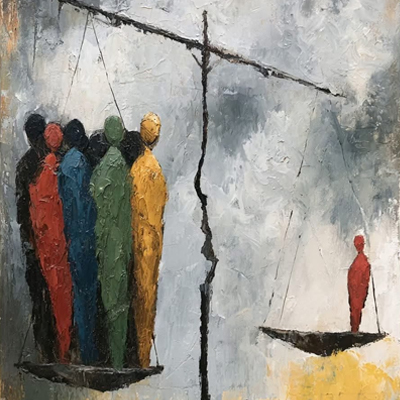
민주화 이후의 정당사는 다양성의 확대가 아니라, 다양성을 양당 안으로 흡수·배제하는 과정에 가깝다.

단상斷想
칼럼
Korman
The de facto parliamentary system of the two major parties: no accountability, only vested interests remain.

0
2026. 10. 04
- Despite being a constitutional presidential system, Korean politics operates as a "de facto parliamentary system" where party nominations and party lines override individual representation.
- This distorted parliamentary system lacks the accountability of a true parliamentary system, instead fostering an "adversarial symbiosis" where two major parties criticize each other while cooperating to maintain their vested interests.
- Institutional mechanisms like the single-member district system, parliamentary group thresholds, state subsidies, and nomination rights solidify the two-party system, blocking diverse voter voices from being reflected in the assembly.
- Within this structure, minor parties or genuine progressive forces struggle to enter the mainstream, and voter dissatisfaction only manifests as shifts in seats between the two major parties, failing to lead to systemic change.
- Ultimately, the major parties refuse institutional reform to protect their vested interests, and "turning a blind eye" becomes not just a moral failing but a core operating principle that sustains this system.
The Korean constitution adopted a presidential system. However, the actual operating principles within the National Assembly are different. In a structure where nomination rights, party lines, negotiating groups, and state subsidies overwhelm the individual conscience and regional representation of members, the presidential system's exterior is overlaid with a parliamentary-style party discipline. What voters elect is a single regional representative, but after being elected, that member is reduced to a voting unit of the party leadership. This is the core of the diagnosis of a 'de facto parliamentary system.' The problem is that this parliamentary system lacks the responsible politics of a parliamentary system. Instead of a structure where the prime minister and cabinet are dependent on parliamentary confidence and can fall, an 'adversarial symbiosis' operates, where the two major parties demonize each other but jointly uphold the rules of their vested interests.
The history of political parties since democratization is not so much an expansion of diversity as it is a process of absorbing and excluding diversity within the two major parties. After the direct presidential election in 1987, the politics of the Three Kims (Kim Young-sam, Kim Dae-jung, Kim Jong-pil) briefly appeared to be a multipolar competition. However, the three-party merger of the Democratic Justice Party, the Democratic Party, and the Republican Party in 1990 sealed regionalism and anti-communist order within one large ruling party. On the other side, the democratic faction, based in Honam, reorganized, and 'two large catch-all parties' took root. The party names changed from Democratic Liberal Party, Grand National Party, Saenuri Party, People Power Party, to Party for Peace and Democracy, Millennium Democratic Party, Uri Party, Democratic Party of Korea, but the core remained the same. It was about organizations holding nomination rights, funds, and regional bases surviving by merely changing their signboards. Since the 2000s, general elections have generally converged on the division of seats between these two factions. Even what seemed like exceptions, such as the Uri Party's majority, the reversal in 2016, and the swings of the large ruling and opposition parties in 2020 and 2024, did not lead to the institutionalization of a third force. The winners changed, but the winners' rules remained.
There are multiple mechanisms supporting that rule. The first is the single-member district system. The winner-take-all system for 254 regional seats does not translate the will of voters who cast their ballots for the second-place candidate into actual seats. The second is the threshold for parliamentary negotiation groups. The doors to parliamentary speaking rights, committee assignments, and legislative negotiations effectively depend on a size of around 20 seats. The third is government subsidies, ballot order, and eligibility for broadcast debates. Already large parties receive more resources, while smaller parties have to prove their existence from scratch. The fourth is the power of nomination. In Korea, what often determines the likelihood of election is the nomination, more so than the voters. If nominations are in the hands of the leadership and mainstream factions, lawmakers pay more attention to party sentiment and the leadership than to their constituents. Nominations become a sword of reward and punishment, and ethics and policy are relegated to a lower priority in the face of that sword. This is why criticisms of 'regional clan-ification,' where incumbent lawmakers monopolize aides, banners, text messages, and party positions, are repeated even by new entrants within the party.
The 2024 general election starkly revealed this structure. In regional constituencies, the Democratic Party bloc secured 161 seats, and the People Power Party bloc took 90 seats. In proportional representation, satellite parties reappeared. The Democratic Alliance and the People's Future served as conduits to return seats to their parent parties, and the Rebuilding Korea Party, with 24.25% of the proportional vote, secured 12 seats, appearing like a third party. However, the Green Justice Party was pushed out of the National Assembly with only 2% of the proportional vote, and the New Reform Party, Progressive Party, and New Future were limited to single-digit seats. As of mid-2026, the National Assembly is divided between the Democratic Party with 161 seats and the People Power Party with around 109 seats, forming two major negotiation groups, with the Rebuilding Korea Party holding 12 seats, the Progressive Party 4 seats, the New Reform Party 3 seats, and other parties and independents scattered. The meaning of these numbers is clear. The speed of legislation and the priority of agendas are determined by the party lines of the two major parties, and the rest either protest, concur, or are ignored.
The more blatant scene was the redistricting. The two major parties agreed to reduce one proportional representation seat to protect their vested interests in Jeonbuk and Busan constituencies. Forces that usually accused each other of deep-rooted evils, civil war, dictatorship, and internal party corruption became one when it came to their core interests and strongholds. Preventing satellite parties and expanding proportional representation are promised every general election and then evaporate once the election is over. Pledges to give up privileges abound, but the electoral system that reproduces privileges remains untouched. Political strife is fierce, and institutional reform is jointly abandoned. This is hostile symbiosis. It's not a competition to do better, but a competition to do less poorly, a politics of pulling down the opponent to gain reflected benefits.
It is necessary to separately examine how this logic operates within the Democratic Party. When in power or holding a majority in the National Assembly, the party uses 'defending the government' and 'party unity' almost synonymously. Factional conflicts, controversies over nomination purges, ethical issues of individual lawmakers, and arbitrary operation of standing committees are patched up under the logic that 'shaking things up now only benefits the opponent.' It's not just for one or two years that non-mainstream figures are filtered out during the nomination process, and those who curry favor with the mainstream survive. It is also repeatedly pointed out that the more party members' sovereignty is emphasized, the less deliberation there is, leaving only mobilization and voting. Even if the number of party members increases, it does not become a policy party, but rather a structure where 'party members who want to dominate' and the leadership use each other as needed. Internal criticism is easily defined as betrayal, and external criticism as an offensive by the prosecution, media, and opposition. Turning a blind eye is not a moral failure but a survival strategy. The cheapest way to solidify vested interests is to replace the flaws of one's own camp with attacks from the opposing camp.
The People Power Party does not have a different grammar. The methods are symmetrical: pretending to innovate through factional nominations, showcasing youth politics, and recruiting external stars while preserving internal vested interests, and covering up government failures with a show of leadership change. Both parties greatly exaggerate the other's corruption and minimize their own. In front of the public, they are enemies. In front of the National Assembly Act, the Election Act, and the Political Funds Act, they are partners. The financial scale of the large parties, which have accumulated buildings, land, cash assets, and rental income, shows that this partnership is not about ideology but about organizational reproduction.
So, have minor parties and 'true progressives' disappeared? They haven't completely vanished. What has disappeared is not their existence itself, but the channel to push that existence into the system. The memory of the Democratic Labor Party even vying for a negotiating body in the National Assembly, the dissolution of the Unified Progressive Party, the establishment and collapse of the Justice Party in the National Assembly, the survival of the Progressive Party in regional strongholds, and the Jo Guk Innovation Party's proportional representation surge followed by a drop in approval ratings are all connected. In 2024, the Jo Guk Innovation Party garnered over 6 million votes in proportional representation, but its approval ratings frequently fell to the 2-3% range in 2025-2026. The disparity between 12 seats and approval ratings shows that a third party can be consumed and extinguished as a balloon for judging large parties, rather than establishing itself as an independent ideological party. The Progressive Party slightly increased its seats, but its national party approval rating is around 1%. The Reform Party also remains a minority in the National Assembly. The unaffiliated voter base fluctuates in the mid-to-late 20s, but there is no party to embrace that void. Voter defection exists, but there is no institutionalization of alternatives.
The practical harms of the parliamentary system are completed here. In a parliamentary system, coalitions and policy deals are commonplace, minor parties become kingmakers, and responsibility for failure leads to the collapse of the cabinet. The Korean variation is the opposite. Because it's a presidential system, executive responsibility converges on the Blue House (Presidential Office), and the National Assembly operates on party-line votes of large parties. Individual lawmakers are tied to their parties like in a parliamentary system, but they don't share the fate of the government like in a parliamentary system. Privileges such as immunity, inviolability, support staff, and sponsorships remain, while the cost of policy failures is dispersed. The repeated delays in forming the National Assembly over standing committee chair positions, boycotts, and unilateral selections are not about legislation for the public good but about a struggle for shares. The scene where the formation of the latter half of the National Assembly in 2026 dragged on for dozens of days is not an exception but the norm.
Why, then, should politics be dominated by the two major parties? It's not because voters want it; it's because the system rewards it. Single-member districts produce wasted votes, satellite parties betray the spirit of proportional representation, and negotiating blocs and subsidies increase the fixed costs for new entrants. The media sells the two-party confrontation as the cheapest narrative, and fandom politics shuts down internal criticism with a betrayal framework. The two parties don't need an opponent; they only need the 'mirror of fear' that an opponent provides. A mirror allows them to cover up internal discord, package nomination conflicts as unity, and postpone reforms until the next National Assembly.
The solution is not a moral declaration. It's laws to block satellite parties, a substantial expansion of proportional representation seats, easing the requirements for negotiating blocs, opening up the nomination process and institutionalizing incumbent evaluations, transparency in political funding, and the practice of conscience voting that makes party-line voting an exception. This list has long been reiterated by civil society and minority parties. The point where it consistently gets blocked is the same: the fact that the parties who should fix the rules are the beneficiaries of those rules. For the two major parties, a multi-party system is not the maturation of democracy but a loss of their share.
It's not that minority parties have disappeared; the mechanisms that made them disappear remain. It's not that true progressivism has become extinct; rather, large parties claiming to be progressive have occupied the space of progressivism, and the progressivism that couldn't occupy that space has been pushed out into slogans outside of parliamentary seats. The pathology of Korean politics is not that the confrontation between left and right is too fierce, but that the rules of confrontation are too collusive. Even if the public judges the two parties, the two-party system survives. This is because the arrow of judgment only targets the movement of seats between parties, and not the monopolistic structure of the party system. Unless a de facto parliamentary system is returned to the accountability of a parliamentary system, or the personal representativeness of the presidential system is returned to the legislators, turning a blind eye becomes not an ethical scandal but the normal operating mode of this system.
댓글
( 0 / 500 )
youngsoo
9
대통령제와 내각제의 장점을 섞은 것이 아니라, 책임은 대통령에게 집중시키고 정당의 권한은 내각제처럼 강화한 구조라는 지적이 인상적입니다. 특히 공천권이 의원의 독립성을 제약한다는 대목은 한국 정치의 고질적인 문제를 정확히 짚었다고 봅니다.
( 0 / 500 )
박광철
6
양당이 선거 때는 서로를 향해 극단적인 언어를 쏟아내면서도 선거제도나 정치자금처럼 자신들의 기득권과 직결된 문제에서는 쉽게 손을 대지 않는다는 지적에 공감합니다. 결국 유권자가 선택할 수 있는 정당은 많아 보여도 실제로 의석으로 연결되는 통로가 좁다면 다당제는 구호에 머물 수밖에 없습니다.
( 0 / 500 )
민수네
9
정당개혁을 말할 때마다 정치인의 의식부터 바꾸자고 하지만, 사람의 선의에 기대는 개혁은 오래가기 어렵습니다. 공천권을 분산하고 비례성을 높이며 소수정당의 진입장벽을 낮추는 등 정치인이 다른 행동을 할 수밖에 없는 제도를 만드는 것이 훨씬 근본적인 접근이라고 생각합니다.
( 0 / 500 )
man88
6
특히 ‘소수정당이 사라진 것이 아니라 존재를 제도 안으로 밀어 넣을 통로가 좁아졌다’는 관점이 중요해 보입니다. 제3당이 선거 때마다 등장했다 사라지는 현상을 유권자의 변덕만으로 설명하기는 어렵습니다. 선거제도와 교섭단체 요건, 비례대표제의 설계까지 함께 살펴봐야 한국 정치의 반복되는 양당 구조를 제대로 이해할 수 있을 것 같습니다.
( 0 / 500 )
李秀
6
모든 양당 정치가 담합이라고 단정하기보다는, 경쟁과 공통 이해가 동시에 존재하는 구조라고 보는 것이 더 정확할 수도 있겠습니다. 실제로 거대 정당 사이에는 정책과 이념에서 상당한 충돌도 있습니다.
( 0 / 500 )
아무래도_좋아
5
제3정당이 선거 때마다 돌풍을 일으키고도 오래 버티지 못하는 현상을 유권자의 변심으로만 설명해서는 안 됩니다. 소선거구제와 교섭단체 중심의 국회 운영, 공천 구조가 신규 정당에 높은 진입장벽으로 작용하기 때문입니다. 다양한 정치적 선택이 살아남을 제도적 통로가 필요합니다.
( 0 / 500 )
bigBOY
5
양당이 서로를 향해 독설을 퍼붓는다고 해서 경쟁이 제대로 작동하는 것은 아닙니다. 오히려 선거제도와 공천제도처럼 자신들의 생존과 직결된 문제에서는 이해관계가 맞아떨어질 수 있습니다. 국민이 봐야 할 것은 말싸움의 강도가 아니라 제도를 어떻게 운영하는가라는 지적에 공감합니다.
( 0 / 500 )
soomin
4
결국 핵심은 정당을 없애거나 정치인을 도덕적으로 비난하는 데 있지 않고, 의원이 당 지도부와 지역구 유권자 사이에서 누구에게 더 책임을 져야 하는지를 제도적으로 다시 묻는 데 있다고 봅니다.
( 0 / 500 )
HonorSociety
4
공천권 분산, 비례성 강화, 교섭단체 문턱 완화 같은 개혁이 실제로 이루어져야 유권자의 다양한 선택이 국회 구성에 제대로 반영될 것입니다.
( 0 / 500 )
grand_k
4
한국 정치의 답답함을 단순히 정치인 개인의 자질 문제로만 볼 수 없는 이유가 여기에 있습니다. 선거에서는 국민이 주권자지만 당선되는 순간 의원은 공천권과 당론이라는 또 다른 권력에 묶입니다. 결국 책임은 분산되고 권한만 집중되는 구조를 바꾸는 것이 핵심이라고 봅니다.
( 0 / 500 )
diamond
3
‘실질적 내각제인데 책임은 내각제처럼 지지 않는다’는 표현이 핵심을 찌릅니다. 의원은 당론에 묶여 있으면서도 정책 실패의 최종 책임은 대통령과 행정부가 떠안는 구조이기 때문입니다. 권한과 책임이 같은 곳에 모이지 않는다면 정치에 대한 국민의 불신이 계속될 수밖에 없습니다.
( 0 / 500 )
최유미
1
이제서야 조금 감이 오네요. 최근의 민주당이 왜 분열하는지요. 문재인 대통령 때 거대 여당이었지만 개혁에 민기적 거리는 것이 이상했고 또 같은 당 대권 후보였던 이재명 당 대표를 내부에서 앞장서서 궁지에 모는 것을 보면서 단순히 일부의 정의롭지 못한 사람들의 이탈이라고 생각했던 적이 있었지요.
( 0 / 500 )
신고내용
신고내용을 선택해주세요
회원비난/비하/욕설글 및 댓글도배성 게시물저작권 침해/불법자료 유출허위사실유포개인정보 유출.사생활 침해무단광고/홍보음란물 및 도박 불법 광고물범죄행위 관련 글불법행위 관련 소개물품 판매 및 사기글악성코드 및 스파이웨어 유포기타 사유 및 운영진 판단


비밀번호를 잊으셨나요?
Sign in with Google


All information provided by us is free of charge and is for the public good.