品

Corea든 Korea든, 품격은 이름보다 먼저다
Whatever the name—Corea or Korea—dignity comes first.
Whatever the name—Corea or Korea—dignity comes first.
Now
지금
751 Diaspora
Heritage
유산
Humanity
인문
Mirengsi
未冷尸
Politics
정치
Media
언론
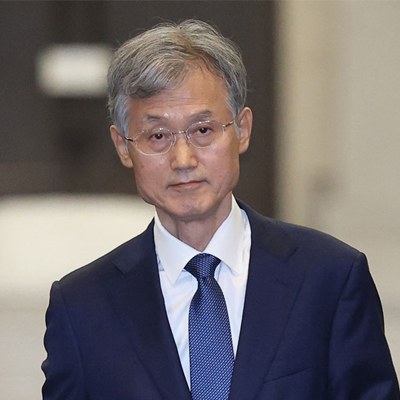
2026년 9월 28일 뉴스타파 보도 이후 법원행정처는 참석 인원이 사실과 다르게 적힌 사실을 인정했다.

단상斷想
칼럼
飛上
Chief Justice Cho Hee-dae's price matching

0
2026. 10. 03
- The Chief Justice's alleged inflation of business expenses isn't just an accounting issue; it's a serious matter where the head of the judiciary has personally undermined the fairness of the law.
- The judiciary, which strictly disciplined lower-level officials for even minor regulatory violations, now attempts to exonerate its own leader with a mere apology and an explanation blaming "working-level staff."
- This act undermines the principle that the law should apply equally regardless of status and severely damages public trust in the judiciary, deserving strong criticism.
- Attempting to gloss over clear illegal acts, such as the alleged fabrication of official documents, with just an apology, without thorough audits and investigations, is to deny the judiciary's own justice and impartiality.
If an institution that speaks of justice in a country without justice cannot stop the practice of limiting its standards to its own ledgers, then those standards are not law but status. The record of Chief Justice Cho Hee-dae's official discretionary expenses is a crime precisely at that point. For frontline public officials, a meal exceeding the standard by a thousand won was a disciplinary offense, and the excuse that there was no solicitation did not prevent dismissal. It is also the same crime for the government and ruling party to merely pretend to chase a chicken when the head of the judiciary tries to explain away a ledger with inflated numbers with a single line of apology. Since these two scenes coexist within the same nation, a national crime is established, even including rebellion and the endorsement of rebellion.
After the NewsTapa report on September 28, 2026, the National Court Administration admitted that the number of attendees was incorrectly recorded. Noh Kyung-pil, head of the National Court Administration, stated in the National Assembly, “I apologize for the part where the number of attendees was recorded differently from the facts,” and attributed the cause to “a working-level official arbitrarily recording it.” According to the report, there were at least 13 such entries in the first half of 2026 alone. Meals costing up to 200,000 won per person were made to appear as if they cost less than 50,000 won per person by inflating the number of attendees, and then these records were submitted to the National Assembly for parliamentary inspection. A restaurant in Bangbae-dong is even clearer. The records state that on November 25, 2025, 38 people spent 1,152,000 won, but the maximum capacity of the largest room in that restaurant is 19 people. Non-existent people were seated on paper to lower the per-person cost. The scale is also out of sync. The Chief Justice's official discretionary expenses jumped nearly thirtyfold from approximately 4.59 million won in 2023 to approximately 136.52 million won in 2024, the year after Cho Hee-dae took office. Cho Hee-dae took office on December 8, 2023. What is more significant than the amount spent is the ledger after the spending. The core issue is not the fact of having expensive meals with public funds, but the act of altering public records and submitting them to the National Assembly to hide the unit cost.
The front lines of this country did not handle the unit cost this way. In December 2016, twelve firefighters from a fire station in Incheon had dinner at a barbecue restaurant. An employee who had recently gotten married hosted the dinner as a thank-you and year-end party, and the total bill was 541,000 won. The groom's side paid 200,000 won, and four off-duty employees covered the rest. The problem was the seven section chiefs and team leaders who did not pay for their meals. The Anti-Corruption and Civil Rights Commission (ACRC) determined that the cost per person, approximately 45,000 won, exceeded the 30,000 won limit for meals. The disciplinary committee then recalculated, subtracting the 200,000 won thank-you portion, bringing the cost per person to 31,000 won. This meant they exceeded the limit by 1,000 won. The seven individuals received a reprimand, and a disciplinary surcharge ranging from 31,000 won to 54,000 won was imposed. There was no solicitation, no permits or licenses involved, and no personal embezzlement. It was a thank-you dinner for a colleague's wedding, and the excess amount was 1,000 won. Nevertheless, it resulted in a disciplinary record. Phrases like 'it was customary,' 'it was a private gathering,' and 'it wasn't money I personally pocketed' could not erase that 1,000 won.
A more stringent line has already been drawn. An official from Ganghwa-gun, Incheon, who was in charge of building permit applications in 2017 and 2018, received meals and alcohol worth approximately 8.5 million won on seventeen occasions from individuals related to his duties. In a criminal trial in September 2023, he was sentenced to one year in prison, suspended for two years, a fine of 18 million won, and forfeiture. In August 2024, the personnel committee resolved to dismiss him and impose a disciplinary surcharge five times the amount received. He filed an administrative lawsuit, claiming he had never received or granted any solicitations and that these were meals with people he knew. On June 29, 2025, the 1st and 2nd Administrative Divisions of the Incheon District Court upheld the dismissal as lawful. The reason given was that even without clear malicious intent, it was a serious matter that severely undermined the integrity of a public official, and dismissal was a public interest measure to establish public discipline. Only the disciplinary surcharge portion was canceled due to an abuse of discretion. His argument that there was no solicitation did not prevent his dismissal. The standard confirmed by the court is simple: repeated meals related to one's duties can, in themselves, lead to the loss of one's position.
The same standard first led to the dismissal of an official at an overseas mission. In October 2018, a South Korean ambassador to Vietnam brought his family to a local golf course opening ceremony and received airfare and accommodation from a local company. The Ministry of Foreign Affairs audit deemed this a violation of the Improper Solicitation and Graft Act and filed a complaint along with his dismissal in 2019. He argued that all his activities were work-related and that he had not personally embezzled any money. His defense did not save his position. In August 2022, the prosecution summarily indicted him with a fine of 5 million won. Dismissal is a severe disciplinary action that also impacts one's pension. Even if the quid pro quo for the solicitation is not specified, if benefits exceeding the value are confirmed, the position is immediately lost. This case is sufficient to demonstrate the legal interpretation applied by the state to heads of missions. That legal interpretation, however, shrinks to a single apology in front of the head of the judiciary.
In the ledger of the head of the judiciary, who applied those standards, thirty-eight people who cannot enter the room are only listed on paper. A meal costing 200,000 won per person was disguised as less than 50,000 won and submitted to the National Assembly. When caught, the excuse given was the exact same sentence that was not accepted for seven firefighters and a Ganghwa-gun public official: "The working-level staff arbitrarily wrote it down. They incorrectly recorded the figures. We apologize." This was a budget under the name of the head of the institution, for meals accompanying the head of the institution, and the result is a parliamentary audit document. Without confirmation of whether the end-user was aware, who instructed the unit price to be adjusted to around 50,000 won, or why thirteen cases were repeated in the same manner, it is being closed as a clerical error by a low-level employee. For subordinates, a single meal exceeding the limit by 1,000 won resulted in a reprimand, and seventeen meals without solicitation led to dismissal. For superiors, repeated inflation of personnel numbers is about to end with a single line of apology. This is where fairness has collapsed.
Using the difference in charges as an indulgence cannot be allowed. The Improper Solicitation and Graft Act originally prevents receiving money and entertainment from those related to one's duties. The limits are 30,000 won for food, 50,000 won for gifts, and 100,000 won for congratulatory/condolence money. If the amount exceeds 1 million won per instance or 3 million won annually, it is subject to imprisonment of up to 3 years or a fine of up to 30 million won, regardless of job relevance. Money paid by public institutions to their officials can be an exception. Therefore, not all meals from the Chief Justice's business promotion expenses immediately fall under the same charge as receiving under the Kim Young-ran Act. However, this difference does not lighten the responsibility. The reason why the tactic of inflating the number of attendees at the front line became an issue was precisely to make the per-person cost appear below the standard. Meal expenses are judged by dividing the total amount by the number of attendees if there is no separate proof. If you increase the number of attendees, it falls within the limit; if you decrease it, it goes beyond the limit. What the Supreme Court data did was manipulate that calculation in reverse. Furthermore, there is a more serious layer here. It's not money that went into a pocket, but money that came out of a tax account, and the details were altered and submitted to the National Assembly. An issue where the creation of false official documents could be investigated cannot be taken lightly just because the receiving limits and provisions are different. Even if the charges are different, what was attempted to be hidden is the same: the per-meal cost exceeding the standard.
Equity is not an emotion. It is the same state holding the same kind of deviation to the same degree of accountability. The court did not accept the excuse 'it was the working-level staff who wrote it' from public officials who were dismissed and reprimanded. It considered the circumstances, the value, and the repetition, and declared the final disciplinary action legitimate even without a request, solely based on the violation of the integrity duty. However, if that statement is only explained in the ledger of the head of the judiciary, then the previously confirmed disciplinary actions become selectively enforced retroactively. In front of a firefighter who was reprimanded for a thousand won, and a public official whose dismissal was deemed justified even without a request, if a record of inflating a 200,000 won meal with documents ends with an apology, then those rulings become rules that only apply to subordinates. If, within the same state, subordinates calculate their seats to avoid exceeding 30,000 won, and superiors inflate a 200,000 won meal to make it appear under 50,000 won and then end with an apology, then the law carries different weight depending on rank, not action.
Justice is not about showing special mercy to special people. It is about the same standards applying regardless of status. The moment standards stop working, what remains is not law but hierarchy. The attitude towards disclosure also shows the same crack. Courts have broadly recognized the right to know about the business promotion expenses and special activity expenses of other agencies. They included when, where, and how much was spent in the scope of disclosure, excluding personal information such as attendees' names. They ruled that others should open their ledgers, but their own ledgers only disclosed total amounts and meeting names, and then it was revealed that the number of people was inflated. The admission that the concealed ledger was false turned that contradiction into misconduct. It is a structure where the institution that speaks of standards exempts itself from the application of those standards.
This is also why an apology cannot resolve the issue. The core of the wrongdoing is not the meal cost, but the manipulation of records and their submission to external parties. To attribute responsibility to the working-level staff, an investigation must determine who, under what instructions or practices, altered how many records at what unit price. This verification has never been omitted for frontline public officials. Even a firefighter's 1,000 won or a Ganghwa-gun official's seventeen instances did not close with their own protests but went through disciplinary action and trials. If this process is omitted only for the head of the judiciary, that omission itself is a destruction of fairness. Government audits and investigations must come first. The fabrication of official documents, the appropriateness of budget use, and the instructions and awareness within the reporting system must be uncovered. The results of that will determine criminal liability; an apology cannot replace that decision.
Impeachment is the subsequent political responsibility. The Constitution demands more from the head of the judiciary than just independence of judgment. It demands the trust that the standards applied to that position also apply to themselves. The political context in which the ruling party's conflict over the nomination of Supreme Court justices is used as leverage in this matter is clear. However, that context cannot erase the 38 people in a 19-person room and the 13 instances of price matching. Even if there had been no dispute over the nomination, the falsification of ledgers would remain. To move past this with an apology without uncovering the truth is a betrayal of public officials who received a reprimand for 1,000 won and were dismissed for a meal without solicitation, and a betrayal of the standards the court itself has established. Justice is only justice when the same standards are applied. If those standards stop at Cho Hee-dae's ledger, then the person who stopped them is subject to judicial processing and has no reason to retain their position. We are suffering this hardship as the country becomes one where rebellion is easy. Long live Cho Hee-dae, long live Yoon Seok-yeol, long live the whores!
댓글
( 0 / 500 )
bigChoi
6
조희대에 대한 탄핵 청원은 단순한 정치적 공방으로 치부할 일이 아닙니다. 최근 업무추진비 자료에서 실제 참석 인원과 다른 기재가 최소 13건 확인됐고, 법원행정처도 사실과 다르게 작성된 부분을 인정했습니다. 사법부 수장에게 요구되는 책임과 투명성이 무엇인지 국회가 끝까지 따져야 합니다.
( 0 / 500 )
vivian
9
조희대는 법의 잣대를 남에게 들이대는 자리에서 자기 조직의 장부부터 제대로 설명해야 합니다. 참석 인원이 사실과 다르게 작성된 사실이 대법원 스스로 인정된 만큼, “실무자가 임의로 적었다”는 말로 끝낼 일이 아닙니다. 최소 13건이 확인된 만큼 누가 알고 있었고 왜 반복됐는지 철저히 밝혀야 합니다.
( 0 / 500 )
soonmi
7
공무원에게는 몇천 원의 초과도 징계 사유가 되고, 청탁이 없었다는 해명도 책임을 면하게 해주지 않았는데 사법부 수장에게만 다른 잣대가 적용된다면 법치의 신뢰가 흔들릴 수밖에 없습니다. 같은 기준을 적용하자는 요구는 정치적 공격이 아니라 상식의 문제입니다.
( 0 / 500 )
blue77
6
결국 핵심은 식사 한 끼의 가격이 아니라 장부를 왜 그렇게 작성했느냐는 문제라고 봅니다. 참석 인원을 실제와 다르게 적은 일이 반복됐다면 누가 작성했고 누가 확인했는지부터 명확히 밝혀야 합니다. 실무자 실수라는 말만으로는 국민이 납득하기 어렵습니다.
( 0 / 500 )
문상준
6
사법부 수장이 업무추진비 기록의 허위 작성 문제에 휘말렸다는 것 자체가 국민에게 매우 무거운 문제입니다. 법원은 다른 기관의 잘못에는 엄격한 법적 기준을 적용하면서 자기 장부 앞에서는 실무자 탓과 사과로 넘어가려 한다는 인상을 줘서는 안 됩니다. 조희대 대법원장 본인이 국민 앞에 직접 설명해야 합니다.
( 0 / 500 )
64Marco
5
사법부는 다른 기관에 투명성과 정보공개를 요구해 온 기관입니다. 그렇다면 자기 조직의 업무추진비에도 똑같은 기준을 적용해야 한다고 봅니다. 법을 집행하고 판단하는 기관일수록 스스로에게 더 엄격해야지, 직위가 높다는 이유로 설명 책임이 가벼워져서는 안 됩니다.
( 0 / 500 )
Emily
5
대법원 업무추진비 자료에서 실제 참석 인원과 다른 숫자가 반복적으로 확인됐다면, 국민이 묻는 것은 식사값 몇 푼이 아니라 “법을 판단하는 사람들은 자기 자신에게 어떤 기준을 적용하느냐”입니다. 조희대는 사과 뒤에 숨을 것이 아니라 사실관계와 책임 소재를 투명하게 밝혀야 합니다.
( 0 / 500 )
auto70
4
이 글에서 가장 뼈아픈 대목은 ‘법이 행위가 아니라 직급에 따라 다른 무게를 갖는다’는 지적입니다. 실제로 위법 여부와 징계 수위는 별도로 따져야겠지만, 적어도 사실관계와 책임 소재를 철저히 조사해야 한다는 데에는 이견이 없어야 합니다. 사과 한마디로 끝낼 사안인지부터 검증해야 합니다.
( 0 / 500 )
purple
4
업무추진비 문제가 사실관계와 책임 소재를 충분히 규명하지 않은 채 실무자 실수와 사과로 끝난다면 국민의 사법부 신뢰를 회복하기 어렵습니다. 탄핵 청원 역시 감정적 구호가 아니라 그동안 제기된 의혹과 책임을 헌법과 법률에 따라 철저히 검증하자는 요구로 이어져야 합니다.
( 0 / 500 )
이만재
3
조희대 대법원장에게 묻고 싶습니다. 법원이 국민에게 요구해 온 엄격한 기준을 왜 자기 업무추진비 앞에서는 느슨하게 적용합니까? 실제 참석 인원과 다른 숫자가 최소 13건 확인됐다면 실무자 탓으로 끝낼 일이 아닙니다. 누가 작성했고 누가 확인했는지 끝까지 밝혀야 합니다.
( 0 / 500 )
오리온
2
사법부의 수장이라면 누구보다 먼저 책임지는 모습을 보여야 합니다. 그런데 허위 기재가 인정됐는데도 ‘실무자가 임의로 적었다’는 해명만 반복된다면 국민 입장에서는 책임 회피로 볼 수밖에 없습니다. 탄핵 청원이 나오는 이유도 바로 이런 불신에 있다고 봅니다.
( 0 / 500 )
최동혁
1
와! 일반 공무원들, 심지어 대사까지 그렇게 처리하면서 조희대는 무슨 특권층이라고 저렇게 봐주는 건지. 정말 사법개혁과 조희대 탄핵은 필요하다고 봅니다. 부디 이나라에 좋은 날이 오길 기도합니다.
( 0 / 500 )
신고내용
신고내용을 선택해주세요
회원비난/비하/욕설글 및 댓글도배성 게시물저작권 침해/불법자료 유출허위사실유포개인정보 유출.사생활 침해무단광고/홍보음란물 및 도박 불법 광고물범죄행위 관련 글불법행위 관련 소개물품 판매 및 사기글악성코드 및 스파이웨어 유포기타 사유 및 운영진 판단


비밀번호를 잊으셨나요?
Sign in with Google


All information provided by us is free of charge and is for the public good.