品

Corea든 Korea든, 품격은 이름보다 먼저다
Whatever the name—Corea or Korea—dignity comes first.
Whatever the name—Corea or Korea—dignity comes first.
Now
지금
751 Diaspora
Heritage
유산
Humanity
인문
Mirengsi
未冷尸
Politics
정치
Media
언론
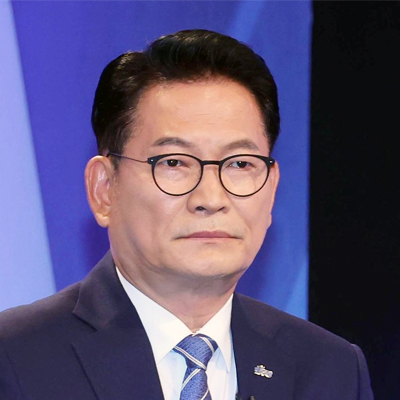
2026년 10월 1일, 이재명 대통령이 송영길 의원을 평화외교 특별보좌관으로 위촉

단상斷想
칼럼
HumanX
Song Young-gil's Special Advisor Role, Wartime Operational Control, and the Test of Northern Diplomacy

0
2026. 10. 02
- President Lee Jae-myung's appointment of Song Young-gil as Special Envoy for Peace Diplomacy signals a strong commitment to breaking the deadlock in inter-Korean relations and addressing Korean Peninsula peace issues practically and strategically.
- Special Envoy Song Young-gil's diverse diplomatic experience and linguistic skills suggest an intent to pursue a multifaceted approach to North Korea diplomacy, linking it with Northern diplomacy amidst the complex international landscape surrounding North Korea.
- This move elevates the issue of wartime operational control transfer from a mere military-technical matter to one of sovereignty and diplomacy, reflecting the government's long-term vision to mature the ROK-US alliance and strengthen self-reliant defense capabilities.
- This appointment is interpreted as part of a practical strategy to seek alternative channels for the closed inter-Korean dialogue and secure momentum for resolving Korean Peninsula issues through pragmatic cooperation with the four surrounding powers.
- The Special Envoy's role is to overcome challenges like North Korea's response, cooperation from neighboring countries, and bipartisan domestic support, balancing ideals with reality to achieve a tangible breakthrough for peace on the Korean Peninsula.
On October 1, 2026, President Lee Jae-myung's appointment of Assemblyman Song Young-gil as Special Advisor for Peace Diplomacy is akin to a declaration that the Blue House intends to re-align its diplomatic and security fronts. Given that Assemblyman Kim Byung-joo was appointed as Special Advisor for Defense Policy on the same day, and the Chief of Staff was also replaced, this personnel change is not a one-off appointment. At a time when the international order is in flux and official inter-Korean dialogue has virtually ceased, the decision to place a sitting six-term veteran close to the President signifies an intention to elevate 'peace' from mere rhetoric to a practical task. The position of special advisor does not involve leading an organization like a minister. However, it can serve as a channel to directly convey the President's intentions to working-level officials in neighboring countries and bring their responses back to the Blue House. Granting this position to a sitting assemblyman is a design that also considers building a bridge between the executive and legislative branches.
Song Young-gil's background explains the nature of this appointment. Born in Goheung, Jeollanam-do, he entered Yonsei University's Business Administration department and served as the first directly elected student council president in 1984. He then engaged in labor activism in Incheon, passed the bar examination in 1994, and worked as a labor and human rights lawyer. He entered politics in 1999 after being recruited by former President Kim Dae-jung, and after being elected in Gyeyang, Incheon in 2000, he served as Mayor of Incheon, General Campaign Manager for candidate Moon Jae-in, Special Envoy to Russia, Chairman of the Northern Economic Cooperation Committee, Party Leader, and Chairman of the National Assembly's Foreign Affairs and Unification Committee. His fluency in English, Chinese, Russian, and Japanese is not mere rhetorical embellishment but a practical asset that allows him to deal with both Northeast Asia and Eurasia simultaneously. His path back to a sixth term through strategic nomination in the Incheon Yeonsu-gap by-election last June, after temporarily leaving the party due to allegations of a cash-for-favors scandal and subsequently being acquitted, is also significant. Appointing an individual who has experienced both failure and recovery as a special advisor is interpreted as a decision to utilize a field-oriented coordinator rather than a remnant of political strife. This is why even some members of the opposition party acknowledge his gravitas.
The first meaning of the appointment is to bring peace on the Korean Peninsula back to the center of diplomacy. Immediately after his appointment, Song Young-gil stated, “Resolving the strained inter-Korean relations and reopening the door to dialogue is a national task that can no longer be delayed.” This statement is not sentimental pacifism. It is closer to a declaration to break the structure where South Korea passively waits while official channels are closed. He has previously pointed out that peace has not been achieved even after 73 years since the armistice agreement, and has proposed a package of restoring the September 19 military agreement, institutionalizing inter-Korean agreements, transitioning to a peace treaty, and promptly regaining wartime operational control. This special envoy appointment effectively brings that vision into the Blue House. If the Korean Peninsula issue is consumed only as a subject of partisan strife, the door to dialogue will narrow further. The underlying meaning of this appointment is an order for the most senior veteran politician to knock on that door again.
The second meaning is that North Korea diplomacy will not be separated from Northern diplomacy. The approach of dealing with inter-Korean relations in isolation has already shown its limitations. North Korea's options are intertwined not only with South Korea but also with the interests of China, Russia, and the United States. Song Young-gil's past experience as a special envoy to Russia and chairman of the Northern Economic Cooperation Committee comes into play precisely at this point. He is likely to choose to open indirect channels through Beijing and Moscow, especially when direct contact with North Korea is blocked. He would present to China the logic that stability on the Korean Peninsula is directly linked to the economy of the Northeast region and border security, and to Russia the justification for Far East development and energy and logistics cooperation. While the success or failure of dialogue will depend on how North Korea handles the denuclearization issue, creating the 'space' for dialogue itself is impossible without cooperation from neighboring countries. His strategy is closer to a balance that maintains the alliance with the United States while requesting constructive roles from China and Russia, rather than dividing pressure and dialogue into a dichotomy.
Russia, in particular, is his core network. If South Korea abandons Moscow in the face of strengthened North Korea-Russia ties, the diplomatic space surrounding North Korea will narrow further. Conversely, if even limited economic and humanitarian cooperation can be revived, it sends an indirect message to North Korea. He knows better than anyone that the past Northern Economic Initiative foundered due to sanctions and geopolitics. Therefore, this time, rather than grand declarations of economic cooperation, he will likely try to restore small channels to create a pretext for resuming dialogue. In relations with Japan, he will not seek to gloss over historical conflicts but rather broaden the scope of dialogue by bringing realistic agendas such as Northeast Asian security and supply chains to the forefront. The job of a special envoy for peace diplomacy is not to write statements, but to make officials in partner countries feel that 'South Korea is moving again.'
Third, and the most sensitive axis, is the transfer of wartime operational control. Song Young-gil has already stated, “Wartime operational control is not a matter of military command structure, but a matter of whether the Republic of Korea can take responsibility for its own defense and fully exercise its sovereignty and command over its armed forces.” His expression, “A mature alliance is when countries with the ability and will to take responsibility for their own security join forces,” also aims not at dismantling the ROK-US alliance but at redefining it. As President Lee Jae-myung has also stated that he will push for the transfer of wartime operational control without fail during his term, the special envoy’s remarks do not conflict with the president’s stance. Rather, the special envoy’s repeated mention of wartime operational control indicates an intention to elevate this issue from a military technical matter to a sovereign and diplomatic issue.
The method of enforcement cannot be a unilateral notification. Wartime operational control is intertwined with the ROK-US combined defense posture, intelligence, surveillance, and reconnaissance capabilities, nuclear deterrence and extended deterrence, and the conditions for the stationing of US forces in Korea. If political slogans are prioritized without fulfilling the conditions, alliance trust will be shaken, and conversely, if it is postponed indefinitely due to conditions, the logic of sovereignty becomes hollow. Therefore, Song Young-gil's role is closer to building political confidence in Washington that 'Korea is ready.' Domestically, he will share roles with Kim Byung-joo, his special advisor for defense policy, but externally, he will repeatedly instill in the US Congress, State Department, and Department of Defense that the return of wartime operational control is not anti-American but a maturation of the alliance. At the same time, he must persuade China and Russia that Korea's process of regaining sovereignty is not a sign of regional instability but a normalization of responsibility for managing the Korean Peninsula. His task will be to link the resumption of dialogue with the logic of self-reliant defense, without separating them, so that North Korea cannot use the discussion of wartime operational control as a source of internal conflict in the South and division between South Korea and the US.
There are three anticipated courses of action. First, to tap on the periphery of the closed inter-Korean channels. Even if direct talks are not immediately possible, low-level agenda items such as humanitarian cooperation, separated families, and military tension reduction can be floated through neighboring countries. Second, to simultaneously activate working-level lines with the four major powers. To the United States, he must speak of the stability of the alliance and extended deterrence; to China and Russia, the common interest in managing the Korean Peninsula; and to Japan, practical cooperation in security and economy, each in a different language. His ability to speak four languages can be truly effective here. Third, to buffer domestic politics. Peace on the Korean Peninsula and wartime operational control are topics that both the ruling and opposition parties easily use as targets for attack. The fact that the special envoy is a veteran member of his party and a sitting lawmaker can help create a minimum common language between the National Assembly and the Blue House.
The expectations are clear. The human network he has built will turn into actual contacts, a breathing space will open up even in the periphery of the closed inter-Korean channels, and the discussion on wartime operational control will move to the stage of 'how, not when.' This is why experts view this appointment as a signal for the peace process. Russia and the Northeast Asian network are variables that can shake the surrounding environment of the North Korean nuclear issue. However, there are three prerequisites for success. North Korea's response, cooperation from neighboring countries, and at least a bipartisan language within South Korea. If even one of these is missing, the special envoy's role will quickly be reduced to a symbol. The limitations are also clear. The special envoy is not the final decision-maker. If even one of the US domestic politics, China and Russia's calculations of interests, North Korea's provocation cycle, or South Korea's internal security debates goes awry, the pace will slow down. The moment northern economic cooperation is brought up again, criticisms of 'sanctions violation' and 'security laxity' will follow simultaneously. The moment wartime operational control is pushed forward, the frames of 'premature' and 'alliance cracks' await. He must adjust the temperature of his words between ideals and reality.
Nevertheless, the message this appointment sends is simple. The Lee Jae-myung administration intends to treat peace on the Korean Peninsula not as a diplomatic ornament, but as a national strategy connecting northern economy and self-reliant defense. Song Young-gil is a working-level special envoy at the forefront of that strategy. Whether he can fulfill his promises depends on future contact records, the progress of wartime operational control discussions, and whether the ruling and opposition parties can keep this issue out of political contention. Whether a politician who returned after failing can now achieve results on the larger stage of the Korean Peninsula is the real point of interest in this appointment. Peace does not come with declarations. There must be someone to knock on the door again where it is closed. The task given to Special Envoy Song Young-gil is to find that door.
댓글
( 0 / 500 )
manhee
8
송영길 특보의 역할을 단순한 정무직 인사가 아니라 남북관계·북방외교·전작권을 하나의 전략으로 묶는 시도로 해석한 점이 흥미롭습니다. 특히 평화외교가 선언에 그치지 않으려면 미국과의 동맹을 안정적으로 관리하면서 중국·러시아와도 소통 공간을 확보해야 한다는 지적에 공감합니다.
( 0 / 500 )
AI720
6
전작권 환수와 한미동맹을 대립하는 개념으로만 보는 시각에서 벗어나야 한다는 대목이 인상적입니다. 중요한 것은 환수 자체를 정치적 구호로 소비하는 것이 아니라 실제 군사능력과 연합방위체계를 어떻게 갖출 것인지일 겁니다. 외교와 국방의 역할 분담도 중요해 보입니다.
( 0 / 500 )
Emily
6
평화외교를 다시 추진하더라도 과거 방식의 반복이어서는 안 된다고 봅니다. 남북대화와 전작권 환수, 북방외교를 연결하되 한미동맹과 확장억제의 현실도 동시에 관리해야 합니다. 이번 인사가 의미 있으려면 ‘평화’라는 좋은 말보다 긴장을 낮추고 대화의 통로를 실제로 하나씩 복원하는 결과가 나와야 할 것입니다.
( 0 / 500 )
모모짱
4
이번 인사를 보면 남북관계만 바라보는 좁은 평화정책에서 벗어나려는 의도가 읽힙니다. 한반도 문제는 결국 미국·중국·러시아·일본의 이해관계와 함께 움직입니다. 송영길의 과거 외교 경험이 실제 네트워크 복원으로 이어진다면 특보라는 자리가 의외로 큰 역할을 할 수도 있겠습니다.
( 0 / 500 )
曲筆
4
송영길 특보의 과거 러시아 특사와 북방경제협력위원장 경험을 생각하면 이번 인사가 남북관계만을 겨냥한 것은 아니라는 분석에 일리가 있습니다. 북한과 직접 대화하기 어려운 상황일수록 주변국과의 외교 공간을 넓혀 놓는 것이 필요합니다. 다만 러시아·중국과의 관계에는 국제 제재라는 현실적 제약도 함께 봐야겠습니다.
( 0 / 500 )
kimyoon
4
송영길 개인의 정치적 부침보다 지금 필요한 역할에 주목해야 한다는 글의 관점에 공감합니다. 과거의 논란이나 정치적 평가와 별개로 러시아와 북방외교 경험, 국회에서의 외교통일 분야 경험을 실제 정책에 활용할 수 있는지가 중요합니다. 결국 성과로 평가받을 자리라고 봅니다.
( 0 / 500 )
komodo
3
글의 마지막 문장처럼 평화는 선언보다 통로의 복원이 중요하다고 생각합니다. 인도적 문제든 군사적 긴장 완화든 작은 의제부터 실무 접촉을 만들어가는 것이 현실적인 출발점일 수 있습니다. 이번 인사가 실제 접촉과 협상으로 이어질지, 아니면 정치적 상징에 머물지는 앞으로의 행보가 말해줄 것입니다.
( 0 / 500 )
철수네
2
전작권 문제를 단순히 ‘자주냐 동맹이냐’의 구도로 몰아가는 것은 생산적이지 않습니다. 한국군의 능력을 높이고 미국과의 협의 구조를 안정적으로 만들면서 단계적으로 추진하는 것이 핵심일 것입니다. 송영길 특보가 외교적 언어로 이 문제를 설명하는 역할을 맡는다면 의미가 있을 수 있습니다.
( 0 / 500 )
강보라
2
가장 현실적으로 다가오는 부분은 특보에게 결정권이 있는 것이 아니라는 지적입니다. 아무리 좋은 인적 네트워크와 구상이 있어도 북한의 호응, 미국과의 조율, 중국·러시아의 이해관계가 맞물리지 않으면 성과를 내기 어렵습니다. 결국 중요한 것은 특보의 말보다 앞으로 실제로 어떤 접촉과 협의가 이루어지는가일 것입니다.
( 0 / 500 )
신고내용
신고내용을 선택해주세요
회원비난/비하/욕설글 및 댓글도배성 게시물저작권 침해/불법자료 유출허위사실유포개인정보 유출.사생활 침해무단광고/홍보음란물 및 도박 불법 광고물범죄행위 관련 글불법행위 관련 소개물품 판매 및 사기글악성코드 및 스파이웨어 유포기타 사유 및 운영진 판단


비밀번호를 잊으셨나요?
Sign in with Google


All information provided by us is free of charge and is for the public good.