品

Corea든 Korea든, 품격은 이름보다 먼저다
Whatever the name—Corea or Korea—dignity comes first.
Whatever the name—Corea or Korea—dignity comes first.
Now
지금
751 Diaspora
Heritage
유산
Humanity
인문
Mirengsi
未冷尸
Politics
정치
Media
언론
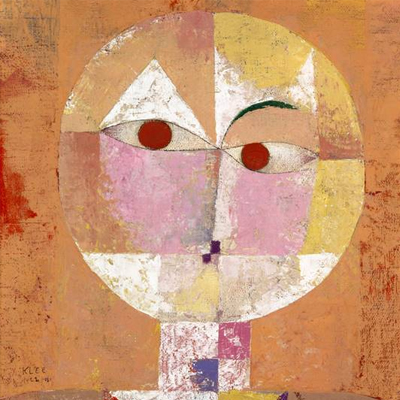
알렉상드르 코제브(Alexandre Kojève, 1902–1968), 본명은 알렉산드르 코제브니코프이고, 삼촌이 추상화가 바실리 칸딘스키다.

단상斷想
칼럼
baba77
Hegel's Decline of the World Spirit and Geopolitics

0
2026. 10. 01
- The early to mid-20th century was an era of ideologies and revolutions, where philosophers directly influenced real-world politics and ideas reshaped national borders.
- Alexandre Kojève, exiled to Europe after the Russian Revolution, interpreted the culmination of history as 'administration' through Hegelian philosophy, viewing European integration as the embodiment of the Hegelian spirit.
- Kojève saw the self-transformation of the slave through labor in Hegel's master-slave dialectic as the driving force of history, arguing that the end of history would be the advent of a 'universal and homogeneous state' where all humans are equally recognized.
- However, the liberated slave, instead of universal recognition, sought the master's position and pursued selfish interests, demonstrating how Kojève's ideal crumbled and Carl Schmitt's distinction of 'friend and enemy' regained power.
- In South Korean judicial politics, Chief Justice Cho Hee-dae's act of invoking the spirit of the law while concealing hostility towards specific groups is a dangerous attitude, disguising Schmittian politics of enmity with the language of justice.
The early to mid-20th century was a time when there were many philosophers. This was because it was a century of ideologies and revolutions. A philosopher from academia could become a revolutionary and then a politician who directly shaped reality. Ideas became treaties, not papers, and treaties redrew borders. Hegel's world spirit was the march of reason, moving forward through the selfishness of individual states. That conviction drove the 20th century. The geopolitical landscape of today is where that conviction collapsed.
Alexandre Kojève (1902–1968) was a figure who embodied that transition. Born into a wealthy Russian merchant family, he fled to Europe after the revolution. His real name was Aleksandr Kozhevnikov, and his uncle was the abstract painter Wassily Kandinsky. In 1936, he wrote an essay on Kandinsky's aesthetics. This was a work of a different caliber than Jin Joong-kwon's "Aesthetics Odyssey," which was a compilation of various things he had picked up here and there. He studied in Berlin and Heidelberg, and in Heidelberg, under the supervision of Karl Jaspers, he wrote his dissertation on Vladimir Solovyov's philosophy of religion. The topic was the union of God and man in Christ. A person who started with mysticism later became the architect of customs duties and the common market. For Kojève, the completion of history is not ecstasy but administration.
In the autumn of 1933, in a small classroom at the École Normale Supérieure, where Paris's geniuses attended, French with a Russian accent resonated. The thirty-one-year-old exile, Alexandre Kojève, read and interpreted Hegel's "Phenomenology of Spirit" line by line. Among the audience were Jacques Lacan, Georges Bataille, Maurice Merleau-Ponty, Raymond Aron, and Raymond Queneau. Hegel's philosophy is Kantian philosophy driven by the dynamics of history. It is a philosophy that can never be understood without German. The seminar continued for six years, and 20th-century French thought learned Hegel anew in that room. Sartre and Camus were not sitting there, but they grew up inhaling the interpretation that spread like air. The one chapter Kojève held up like a lamp from the thick book was the core: the dialectic of master and slave. Sartre and Merleau-Ponty went to Germany to learn more about German philosophy and studied phenomenology from Husserl.
To understand Kojeve, one must first look at the city that raised him. He was born in 1902 into a wealthy merchant family in Moscow. His uncle was Wassily Kandinsky. Later, the nephew would write an aesthetic essay on his uncle's abstract paintings. There was an uncle who tried to express spirit through color and line alone on a canvas devoid of objects, and there was a nephew who tried to see the completion of spirit on the grand canvas of history. This is a work on a different level from Jin Joong-kwon's 『Aesthetic Odyssey』.
In the early 20th century, Russia was an unusually rich land of intellect and art. Kandinsky, Chagall, Rachmaninoff, Stravinsky, Diaghilev, and Nabokov all came from that land. This is often attributed to the depth of the Russian soul or Slavic mysticism. However, the soul alone cannot buy canvases or maintain an orchestra. Behind it was money.
After Count Witte's industrialization, Russia was a country that was laying railways and building factories, growing at the fastest rate in Europe. The Moscow textile magnates Shchukin and Morozov bought Matisse and Picasso, whom Parisian art dealers had not yet even recognized. Tretyakov built an art museum with paintings by Russian artists, and the railway magnate Mamontov turned his Abramtsevo estate into an artists' workshop. It was also thanks to the money of patrons that the poor Jewish youth Chagall from Vitebsk was able to go to Paris. The melancholy of the steppe permeating Rachmaninoff's melodies was drawn from the Ivanovska estate in Tambov, from the summer of the landlord class. Art is a flower bloomed by accumulated capital. Russia's Silver Age bloomed on those rubles.
In 1914, after investigating the Russian economy, French economist Edmond Théry predicted that, if this trend continued, Russia would dominate Europe politically, economically, and financially by the mid-20th century. Had there been no war and revolution, that statement might not have been an exaggeration. It had a vast territory and resources, an exploding population, a newly ignited industry, and even a cultural elite who knew how to enjoy it. Russia was on the verge of becoming the strongest and wealthiest country in Europe.
But then 1917 came. The revolution confiscated capital and scattered the people it had nurtured beyond the borders. Kandinsky went to Bauhaus, Chagall to Paris, and Rachmaninoff to America. He composed little after his exile. As the steppes of his homeland disappeared, so did his melodies dry up. The young Kojeve, caught in the chaos of the revolution, was arrested by the Cheka, then released, and crossed the border in 1920. He studied in Berlin and Heidelberg, and under the guidance of Karl Jaspers, wrote a thesis on Vladimir Solovyov's religious philosophy, specifically on the unity of God and man. That the son of a bourgeois, driven out by the revolution, spent his life grappling with the historical philosophy of revolution is the kind of irony the 20th century enjoyed.
Here is the story of Hegel as read by Kojeve. In the beginning, two self-consciousnesses meet and engage in a life-and-death struggle for recognition. The one who does not fear death becomes the master, and the one who retreats in the face of death becomes the slave. The master merely enjoys what the slave's labor produces. However, the secret of history is reversed here. The master becomes stagnant in enjoyment, but the slave transforms nature through labor and, in the process, transforms himself. By enduring the fear of death and shaping things, the slave understands the world and finally reaches universal consciousness. It is not the master's sword but the slave's hand that pushes history forward.
For Kojève, history was a long process of slaves being liberated. At its end, a "universal and homogeneous state" would be born where all humans recognized each other as equals, and then history would come to an end. It would be a world where there was no longer any reason to fight to the death, a world with neither enemies nor allies. He put this belief into practice. After the war, he left academia to become an official in the French Ministry of Economy, working at the negotiating table for the General Agreement on Tariffs and Trade and in the back rooms designing the European Economic Community. His attitude was that philosophy's work was done, and now it was time to manage the end of history. For him, European integration was the process of Hegel's spirit incarnating into Brussels' administrative documents. It was reason, built up by the labor of slaves, melting away borders and the European nations, who had fought for hundreds of years, reconciling into a single homogeneous community.
His old friend Leo Strauss warned across the Atlantic that a universal and homogeneous state would not be liberation but an unprecedented tyranny, and that humans within it would become beasts no longer dreaming of greatness. The two debated through letters their entire lives but ultimately failed to persuade each other. That lineage later branched off into American neoconservatism and Fukuyama's 'End of History.' The Hegel of a Russian émigré philosopher who affirmed Stalin fed, on one hand, the European integration bureaucracy, and on the other, the worldview of American conservative intellectuals. In the Korean context, he is closer to a distant spiritual ancestor of the Gangnam Left.
In 1957, Kojève gave a lecture in Düsseldorf. The person who invited him was Carl Schmitt. He was a jurist who had once justified the constitutional law of the Third Reich, and after the war, an old man who had been expelled from public office and was living in seclusion in his hometown of Plettenberg. A philosopher who believed in the end of history and a jurist who believed that history was an eternal struggle met in one place.
Schmitt's world was the exact opposite of Kojève's. For him, the essence of the political lies in distinguishing between friend and enemy. The sovereign is the one who decides on the state of exception, and above the law there is always a power that makes decisions. The term 'universal humanity' is merely rhetoric to brand enemies as enemies of humanity and annihilate them. In 1939, he developed the 'Großraum' theory, modeled after the American Monroe Doctrine. The logic was that a great power declares its sphere of influence and does not allow external interference within it. This became the logic for Germany to claim Eastern Europe as its backyard. For half a century after the war, this theory was relegated to the darkest corner of bookshelves as a dangerous ideology serving dictatorship. The world seemed to be on Kojève's side. When the Cold War ended, his American reader, Francis Fukuyama, declared the end of history.
However, Kojeve misjudged one thing: the fact that what the slave achieves through labor is not necessarily universality. The slave was liberated. Workers gained the right to vote, formed unions, and became shareholders in the welfare state. But what the liberated slave wanted was not mutual recognition among all humans. What he wanted was the master's position. The worker was as selfish as the capitalist. To protect their wages, they closed the door to immigrants, and to protect their jobs, they called workers in poorer countries competitors, and even enemies. Their political actions followed self-interest, not justice. The grand experiment of the Soviet Union already showed its outcome. In a state built in the name of the slave, new masters called the nomenklatura were born.
The struggle for recognition did not end. It did not disappear within homogeneous states but reappeared in the form of resentment and jealousy. Workers in the European Rust Belt now vote not for social democratic parties but for parties that promise borders and walls. The slave, who was supposed to become the protagonist of history, became Schmitt's most loyal disciple. They too begin politics by distinguishing between friend and foe.
Look at Europe today. Rich countries and poor countries resent each other, and even within one country, the wealthy minority and the struggling majority are divided. As energy prices soared in the wake of the war, the ideal of integration became powerless in the face of livelihood issues. Europe cannot even solve the problems at its own doorstep, facing the barbed wire of Ceuta, Spain's isolated territory embedded in the African continent. From late July 2026, 70,000 to 80,000 people poured in from Morocco. In a city of 80,000, a crowd the size of its population crossed the border in a few days. Yet, the talk of a dream of expansion to embrace Ukraine makes it seem as if Kojeve's ghost is haunting the meeting rooms of Brussels. This dream is noble but cannot bear the weight of reality. This is where Kojeve's world collapses. At this point, Schmitt returns. The revival of the Monroe Doctrine across the Atlantic and the judicial politics of Korea, where judges in robes distinguish enemies, follow suit.
Cho Hee-dae truly dislikes Lee Jae-myung. Recently, I had a drink with a former judge who used to work with Cho Hee-dae. Since he was my junior from high school, I felt comfortable asking him, “What’s wrong with Cho Hee-dae?” He replied, “Sir, Cho Hee-dae made a mistake. But he really dislikes Lee Jae-myung.” Logically, judges should be free from prejudice. However, the more successful judges are, the more they are people who have successfully bet on one side while hiding their prejudices. The judicial robe is a symbol of neutrality, but the pinnacle of the Supreme Court is already a political high ground.
The current refusal to re-nominate Supreme Court justices reveals its true colors. The position of successor to former Supreme Court Justice Roh Tae-ak has been vacant for over half a year. Cho Hee-dae nominated Chief Judge Son Bong-ki in writing without consulting the Blue House, and as soon as President Lee Jae-myung embarked on his overseas trip, he refused the request for re-nomination. On the surface, it's about the separation of powers and the spirit of the law. It's Kojevean language. Beneath it, it's Schmitt, who has fixed the opponent as an enemy. It's maintaining the hostility accumulated during the Yoon Seok-yeol administration, hidden behind the judicial robe. It's worse than Schmitt. Schmitt revealed who the enemy was. Cho Hee-dae launders hostility with the language of justice. When the court engages in politics and insists it's not politics, that insistence itself is politics.
Cho Hee-dae should abandon grand abstract nouns like the spirit of the law and the separation of powers. Either come out into the jungle of politics and acknowledge your enemies, or keep your iron rice bowl and remain silent. Don't try to reap political dividends without getting hurt, like an eel. If you're going to play politics like Trump, come out as a politician. If you're going to remain a bureaucrat, don't act out the afterimage of Yoon Seok-yeol in front of the public with the sensitivity of a girl whose heart flutters even at the sight of falling leaves. Kojeve was wrong. History has not ended. In an unfinished history, Schmitt in a judicial robe is the most convenient attire.
댓글
( 0 / 500 )
Evaluation
9
코제브와 슈미트를 한 축에 놓고 오늘의 지정학과 사법정치까지 연결한 발상이 흥미롭습니다. 역사의 종언이라는 낙관이 무너지고 다시 이해관계와 적대의 정치가 전면에 등장했다는 문제의식이 글 전체를 관통하네요.
( 0 / 500 )
종필
9
헤겔의 주인과 노예의 변증법을 노동자와 국가, 유럽 통합의 문제까지 확장한 대목이 인상적입니다. 해방된 인간이 반드시 보편적 인간으로 나아가는 것은 아니라는 지적은 지금의 국제정세를 바라보는 데도 생각할 거리를 줍니다.
( 0 / 500 )
donghyug
7
“역사는 끝나지 않았다”는 결론이 글 전체를 압축하는 것 같습니다. 냉전 종식 이후 세계가 하나의 보편적 질서로 수렴할 것이라는 기대와 달리 국가·계층·민족·권력의 이해관계가 다시 전면에 등장하고 있습니다. 코제브와 슈미트의 오래된 논쟁이 오히려 지금 더 현실적으로 읽히는 이유일 듯합니다.
( 0 / 500 )
오동철
6
조희대 부분은 결국 법복이라는 제도적 권위와 한 인간의 정치적 판단을 어디까지 분리할 수 있느냐는 질문으로 읽힙니다. 사법부 독립을 말하더라도 대법원장의 결정 역시 헌법과 법률, 절차라는 공적 기준 위에서 설명되고 검증되어야 한다는 지적에는 귀 기울일 필요가 있습니다.
( 0 / 500 )
이리오너라
6
코제브가 꿈꾼 ‘보편적이고 동질적인 국가’와 슈미트가 말한 ‘적과 동지’의 구별을 대비시키니 오늘날 세계가 왜 다시 지정학의 시대로 돌아가는지 선명하게 보입니다. 철학사가 현실정치와 따로 떨어져 있지 않다는 사실을 보여주는 글입니다.
( 0 / 500 )
Pyoseon
5
코제브와 슈미트의 대립을 조희대 대법원장의 행보와 연결한 부분이 상당히 날카롭습니다. 특히 법의 언어와 정치적 판단이 실제 현실에서 어떻게 맞물리는지를 묻는 대목은 생각해볼 만합니다.
( 0 / 500 )
남부군
5
특히 마지막의 법복에 대한 비판이 강렬합니다. 사법부가 정치적 판단을 하느냐 마느냐의 문제와 별개로, 법적 언어가 정치적 갈등을 가리는 수단으로 사용될 가능성은 끊임없이 경계해야 한다고 봅니다. 삼권분립도 결국 권력을 가진 사람들이 어떻게 행사하느냐의 문제니까요
( 0 / 500 )
박종철
4
철학사를 단순히 사상가들의 계보로 설명하지 않고 자본과 노동, 전쟁과 국가, 유럽 통합과 지정학의 변화 속에서 읽어낸 점이 좋습니다. 특히 코제브의 ‘역사의 종언’이 현실에서는 행정과 제도로 구현되었다는 설명이 인상적입니다.
( 0 / 500 )
Carolina
4
“법원이 정치를 하면서 정치가 아니라고 우길 때 그 우김 자체가 정치다”라는 문제의식이 이 글에서 가장 강하게 남습니다. 사법부의 독립은 반드시 지켜져야 하지만, 독립이라는 이름으로 중요한 권한 행사의 이유와 절차까지 설명하지 않아도 된다는 뜻은 아닐 것입니다.
( 0 / 500 )
sol7
3
대법관 제청 문제를 단순한 인사 갈등으로 보지 않고 ‘적과 동지’라는 슈미트의 정치철학과 연결한 것이 이 글의 독특한 지점입니다. 결국 중요한 것은 조희대 개인의 감정이 아니라, 사법부의 권한 행사가 정치적 갈등 속에서 어떤 원칙과 기준으로 이루어졌는지를 국민이 납득할 수 있게 설명하는 일이라고 봅니다.
( 0 / 500 )
Eulji6
3
코제브와 슈미트의 대립을 단순히 진보와 보수의 싸움으로 읽지 않고 ‘보편적 질서’와 ‘적대적 정치’의 충돌로 본 것이 핵심인 것 같습니다. 지금 국제정세를 이해하는 데도 상당히 유용한 틀이라고 봅니다.
( 0 / 500 )
최유미
3
러시아 출신 철학자 코제브가 역사를 바라보는 시각이 흥미롭네요. 선출직도 아닌 조희대가 대한민국 사법 시스템과 대통령을 쥐고 흔들며 국민 꼭대기 위에서 무소불의 힘을 휘두르는데도 민주주의 사법 시스템이 아이러니하게도 사악하고 음흉한 조희대를 보호해주고 있는 현실이 슬프네요.
( 0 / 500 )
달빛
2
주인과 노예의 변증법을 오늘날의 노동자와 정치공동체 문제까지 끌고 온 것이 흥미롭습니다. 인간이 해방되었다고 해서 욕망과 경쟁, 집단 간 이해관계까지 사라지는 것은 아니라는 점에서 헤겔에 대한 코제브의 해석을 다시 생각하게 합니다.
( 0 / 500 )
genius74
2
이 글의 질문은 ‘역사는 정말 하나의 방향으로 수렴하는가’인 것 같습니다. 냉전 이후 세계가 자유주의적 보편질서로 수렴할 것이라는 기대와 달리 민족국가와 세력권, 국익의 논리가 다시 강해지고 있습니다. 역사의 종언보다 역사의 복귀라는 표현이 더 어울리는 시대인지도 모르겠습니다.
( 0 / 500 )
신고내용
신고내용을 선택해주세요
회원비난/비하/욕설글 및 댓글도배성 게시물저작권 침해/불법자료 유출허위사실유포개인정보 유출.사생활 침해무단광고/홍보음란물 및 도박 불법 광고물범죄행위 관련 글불법행위 관련 소개물품 판매 및 사기글악성코드 및 스파이웨어 유포기타 사유 및 운영진 판단


비밀번호를 잊으셨나요?
Sign in with Google


All information provided by us is free of charge and is for the public good.