品

Corea든 Korea든, 품격은 이름보다 먼저다
Whatever the name—Corea or Korea—dignity comes first.
Whatever the name—Corea or Korea—dignity comes first.
Now
지금
751 Diaspora
Heritage
유산
Humanity
인문
Mirengsi
未冷尸
Politics
정치
Media
언론
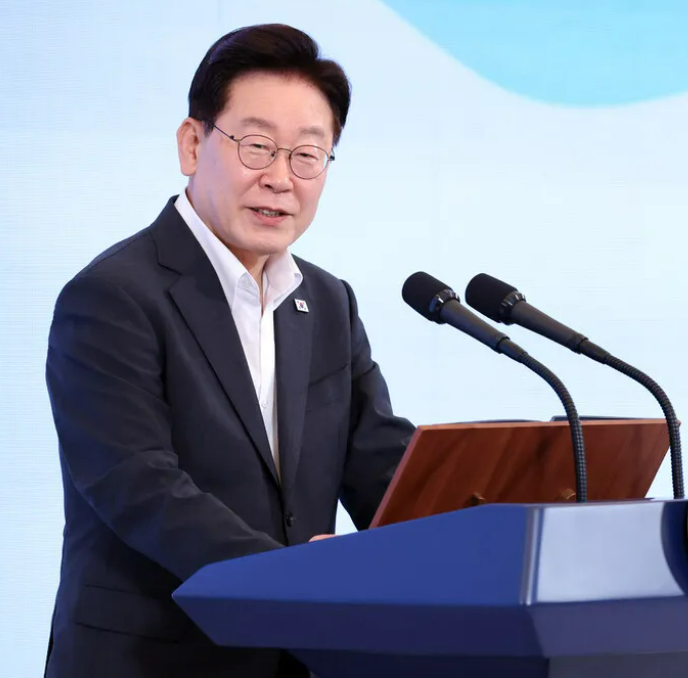
이재명 대통령의 안보 전략이 시험대에 오르고 있다. 사진은 8월 28일 청와대에서 열린 ‘청년예산 언박싱 2027’ 행사에서 이 대통령이 발언하고 있는 모습.

단상斷想
칼럼
뉴크로스
Landmine explosions and a question from a North Korean prisoner... Is Lee Jae-myung's North Korea policy an 'old textbook'?

0
2026. 09. 28
President Lee Jae-myung's foreign policy and security strategy is facing a precarious test. With the public dispute over the repatriation of North Korean prisoners of war and the DMZ landmine explosion incident overlapping, some point out that 'this is an opportunity to redefine the government's North Korea policy itself.'
The issue of North Korean prisoners of war arose when Ukrainian President Zelensky publicly announced the transfer of two North Korean prisoners of war to South Korea during his UN General Assembly speech. The South Korean government claims that the two countries agreed to keep it confidential, but Ukraine violated it, while Ukraine counters that there was no such agreement.
The opposition party is pressing the government, asking if it hid the information to appease North Korean Chairman Kim Jong-un. Even within the ruling party, there is confusion, with Assemblyman Park Jie-won pointing out that there was no reason not to disclose it.
There is also a basis for the government's logic. The Third Geneva Convention stipulates that prisoners of war must be protected not only from violence and threats but also from 'insults and public curiosity.' The government's decision not to disclose the identities and repatriation process of the North Korean prisoners of war was partly due to these international legal protection principles and considerations for the safety of the individuals involved and their families in North Korea.
However, North Korean prisoners of war are treated as citizens of the Republic of Korea within the framework of our Constitution and precedents. Even if the repatriation process was conducted privately for personal safety, after the repatriation was completed, the government should have proudly explained the circumstances and its principles within the scope of what could be disclosed.
If the government only considers the sensitivity of inter-Korean relations without setting such a precedent, its judgment criteria could waver in much more complex situations, such as North Korean residents defecting, large-scale defections, or the surrender and treatment of North Korean soldiers, when the situation on the Korean Peninsula changes rapidly in the future.
While North Korea's reaction is important, it is necessary for our government to establish a firm standard and follow that manual, maintaining consistency and principles internally. Furthermore, this is an opportunity to re-examine the clear national principle of who the government of the Republic of Korea considers its citizens and to what extent it will protect them.
Witness accounts of North Korean wooden box landmines emerge at the DMZ landmine explosion site
There are many suspicious aspects to the landmine explosion accident in the Demilitarized Zone. On the 21st, an explosion occurred in the DMZ under the jurisdiction of the 25th Division in Paju, severely injuring a search battalion commander whose ankle was severed. This is the first time in 11 years since the 2015 wooden box landmine incident that a serious injury has occurred due to a landmine explosion in the DMZ south of the MDL.
The JCS explained that they did not operate in the area where terrain changes were identified, and the accident site was separate from that area. The Minister of National Defense also stated that it was outside the line of sight, so it was impossible to confirm whether the North Korean minefield and the accident site coincided, and the on-site investigation by the military and the UNC on the 27th could not reach the accident site. The cause has not yet been determined.
그런데 28일 군 당국의 발표로 새로운 정황이 하나 추가됐다. 서부전선 비무장지대 폭발사고 지점 인근에서 목함지뢰와 유사한 물체를 봤다는 장병의 진술이 나온 것으로 확인된 것이다. 군은 현장조사와 국립과학수사연구원 감식 결과를 토대로 폭발 원인을 규명할 방침이다.
Hwang Joo-bong, head of the Operations 1 Division of the Joint Chiefs of Staff, stated at a regular Ministry of National Defense briefing on the 28th that "we received statements that it was similar to a wooden box mine near the explosion site." He explained that while soldiers made statements based on the shape and color of the object, it has not been confirmed whether it was actually a wooden box mine.
Chief Hwang did not answer how many witnesses there were or how many objects there were. He also said that "accurate confirmation is needed" regarding whether the objects were buried in the ground or exposed on the surface. However, the situation is rapidly changing as statements have emerged from witnesses who saw North Korean wooden box mines near the accident site.
Meanwhile, the military and the UN Command began an on-site investigation on the 27th, six days after the accident, but were unable to access the explosion site. Chief Hwang stated that it took time for the investigation personnel to move due to wearing heavy protective gear, and that additional investigations would continue.
Reports by some conservative media outlets on the 28th are also causing controversy. Chosun Ilbo, citing military sources, reported that the military had detected signs of North Korea creating a minefield south of the MDL since last year but responded passively. Although it seems to require verification as it is based on anonymous sources, suspicions of 'dereliction of duty' by high-ranking field commanders or complicity in North Korean provocations are emerging. Regardless of how the cause of the accident is concluded, the suspicion that the military knew about North Korea's mine-related activities near the MDL but failed to take effective action must be thoroughly investigated.
Thus, both the controversy over the public repatriation of North Korean prisoners of war and the mine explosion accident in the demilitarized zone are mired in suspicions that our government, out of concern for North Korea, failed to do what it should have and was quick to cover up the incidents.
North Korea upgrades its strategy toward South Korea, while the Lee Jae-myung government responds with outdated textbooks?
These two incidents raise a question: How effective is the Lee Jae-myung government's appeasement strategy toward North Korea against North Korea's current strategy toward South Korea? While North Korea is upgrading its strategy toward South Korea and its 'unification tactics' to suit the new era, I want to examine whether the Lee Jae-myung government is still stuck in old patterns and thinking, content with an unrealistic North Korea policy.
The Roh Moo-hyun government pursued a Peace and Prosperity Policy, continuing the Kim Dae-jung government's Sunshine Policy. The idea was to institutionalize economic cooperation through the Kaesong Industrial Complex and the Mount Kumgang tourism project, leading North Korea to reform and open up. Even after the nuclear test in 2006, the Kaesong Industrial Complex was maintained, and the 10.4 Inter-Korean Summit Declaration in 2007 promised expanded economic cooperation.
This policy operated on two premises. North Korea was desperate for South Korea's support amidst economic difficulties and had not officially abandoned the goal of unification. Both North and South Korea were within the framework of a special relationship aiming for unification.
The Moon Jae-in government also inherited the Roh Moo-hyun government's North Korea policy. In addition, it added military tension reduction and mediation between North Korea and the US. Through three summit meetings in 2018, the Panmunjom Declaration, and the September 19 military agreement, border tensions were lowered, and inter-Korean dialogue was led by the 'driver's seat' theory of the Korean Peninsula.
However, when the Hanoi summit collapsed in 2019, North Korea completely turned its back. It completely abandoned its trust and expectations in our government. The collapse of Hanoi can be seen as one of the decisive turning points where North Korea no longer viewed South Korea as a useful mediator in North Korea-U.S. relations. Eventually, in June 2020, it blew up the inter-Korean joint liaison office in Kaesong and completely excluded the South from dialogue partners.
Since then, North Korea's strategy toward the South has fundamentally changed. At the end of 2023, Chairman Kim Jong Un defined the two Koreas as hostile states and completely abolished the concept of national unification. In 2024, it blew up the Gyeongui and Donghae railway lines and sent troops after signing a treaty equivalent to a military alliance with Russia.
For North Korea, South Korea was no longer a compatriot to cooperate with, nor an economic partner to rely on. The value of the South's economic card significantly decreased for North Korea, which is closely aligned with Russia and China. For our government's appeasement policy to work, there needs to be a minimum structure of reciprocity where what is given is returned, but that premise has collapsed.
Inherited the North Korea policy of the Roh Moo-hyun and Moon Jae-in administrations, but the security situation is rapidly changing.
In this situation, let's briefly look at the current Lee Jae-myung administration's North Korea policy. The Lee Jae-myung administration's North Korea strategy is fundamentally quite similar to the previous two progressive governments. Just looking at the fact that President Lee Jae-myung reappointed Jeong Dong-young, who was the Minister of Unification during the Roh Moo-hyun administration, shows that the current administration's North Korea policy is a 'twin' of the past.
Immediately after its inauguration, the Lee Jae-myung administration abruptly halted anti-North Korea loudspeaker broadcasts and leaflet scattering. In his Liberation Day congratulatory speech last year, President Lee announced that he would preemptively and gradually restore the September 19 military agreement. To secure North Korea's trust, he continued a highly sensitive North Korea policy to avoid offending them, including strict enforcement against leaflet scattering to North Korea. This was based on the expectation that if concessions were made first without North Korea's response, they would eventually reciprocate.
However, the results were different from expectations. Although the government abruptly halted loudspeaker broadcasts and even prevented leaflet scattering, North Korea remained cold and did not respond to the offer to repatriate drifting residents. The government later formalized its plan to find a breakthrough by restoring the September 19 military agreement, including the establishment of no-fly zones.
Earlier this year, North Korea claimed that a South Korean drone had infiltrated its airspace, escalating tensions. In response, South Korea considered proactively proposing the restoration of the no-fly zone to North Korea. However, from the outset, there were doubts about whether North Korea, which has adopted a hostile two-state policy and turned its back on South Korea, would respond to such a proposal.
The September 19th military agreement was signed in 2018 with the aim of preventing accidental clashes in border areas by halting hostile acts on land, sea, and air between the two Koreas. In particular, it established a no-fly zone around the MDL, which also partially restricted our military's aerial reconnaissance and surveillance activities.
The problem is that such military confidence-building measures are based on reciprocity. When both North and South Korea abide by them, they act as a safety net to prevent conflicts, but if only one side adheres to them, it can create military asymmetry. The concern is that if we unilaterally restore the agreement without North Korea's response, especially after North Korea has already declared its abrogation and our government has suspended its effect, North Korea would be free to act while our military's reconnaissance and operations would be restricted.
The recent landmine explosion in the Demilitarized Zone (DMZ) brings these concerns about 'inter-Korean security asymmetry' back to mind. In fact, it is difficult to directly link the DMZ landmine explosion to this asymmetry. The cause of the accident has not yet been determined, and the no-fly zone that the government considered restoring is an aerial provision, so it is not directly related to an accident that occurred during ground search operations.
However, the questions raised by this incident stem from the same root. If the suspicion that the military failed to effectively respond despite identifying signs of North Korea's landmine installation is true, then the background might not be the provisions of the September 19th military agreement, but rather the impact of the government's conciliatory stance, aimed at not provoking North Korea, on border operations.
The weakening of border operations due to the Lee Jae-myung administration's conciliatory policy towards North Korea could be the asymmetric reality that unreciprocated preemptive concessions might create. Whether the landmine explosion incident is true must be determined through military investigation and parliamentary verification. If North Korea's involvement is proven, this issue would not only be a casualty incident for the South Korean military but could also escalate into a controversy over the Lee Jae-myung administration's current North Korea policy and military readiness.
Must present a new North Korea strategy beyond the existing dichotomy of 'hardline or appeasement'
A more fundamental problem is that if the Lee Jae-myung administration applies the old North Korea policy textbook of past progressive governments as is, there could be a serious disconnect with the changed reality of North Korea. North Korea has already changed the test questions, and we must reflect on whether we are still preparing answers with an outdated textbook.
In fact, the Lee Jae-myung administration's unification policy has some differences from past progressive governments. President Lee stated that he respects the North Korean system and does not pursue any form of absorption unification. This year's Unification White Paper for the first time mentioned 'peaceful two-state theory,' which acknowledges the reality that the two Koreas virtually exist as two states and aims to alleviate distrust and hostility. Unlike past governments that prioritized unification as a given, this is interpreted as an attempt to reflect the changed reality of inter-Korean relations in policy, emphasizing peaceful coexistence after North Korea's declaration of 'hostile two states.'
The problem is that the goal has changed, but the method remains the same. While acknowledging the reality that North Korea has reorganized inter-Korean relations into 'two states,' the actual North Korea policy remains stuck in the progressive government's optimistic view that preemptive concessions and patience will eventually elicit a response from the other side.
If it is a state-to-state relationship, reciprocity is fundamental, and the principle that military provocations must be met with corresponding responses must also be clear. It is inexplicable what South Korea gains from sending signals alone when North Korea has branded the South as an enemy state. The concern that appeasement without North Korea deterrence could send the wrong message to the other side is not only coming from the conservative camp.
That is not to say that a hardline approach is the answer. The progressive camp would argue that the hardline policy already failed during the Lee Myung-bak and Park Geun-hye administrations. Indeed, after the May 24th Measures and the complete shutdown of the Kaesong Industrial Complex, North Korea's nuclear and missile capabilities grew, and provocations like the Cheonan incident and the Yeonpyeong Island shelling could not be prevented. However, the failure of the hardline approach does not prove the effectiveness of a conciliatory approach. What is needed is not a return to one-sided dogma, but a redesign of a new, third North Korea policy that fits the reality of the two states.
If the Lee Jae-myung administration still treats North Korea as 'one nation' and a partner for eventual reunification, it must first clarify how much patience and cost it is willing to bear for improving relations. A social consensus is needed on how far to tolerate repeated military tensions and limited provocations to prevent a larger conflict, and conversely, what line, if crossed, would trigger a firm response. This baseline must be roughly established.
Conversely, if we actively reflect North Korea's declared reality of 'two hostile states' in our North Korea policy, another question arises. We must consider what practical benefits treating North Korea as a separate state would bring to our security and inter-Korean relations, and how it would harmonize with the principle of peaceful reunification stipulated in the constitution. This is because we should not be the first to close off the possibility of reunification just because we are responding to North Korea's strategic changes.
Now, the Lee Jae-myung administration must also propose a new North Korea strategy that goes beyond the existing dichotomy of 'hardline or appeasement.' It must directly confront the question of whether to go into the examination room with the same textbook of unification and North Korea policies created by past progressive governments, even though North Korea has changed the game, or to bring a 'new playbook' written to adapt to the changed reality. Whichever path is chosen, the government must honestly explain to the public what we gain and what we lose, and seek their consent.
This issue is not for the government alone to decide. The Lee Jae-myung administration is at a point where it needs to rebuild national consensus and agreement on the basic direction of its North Korea policy. I believe that is the essential mission for President Lee Jae-myung's security reform agenda.
댓글
( 0 / 500 )
jindong
8
북한의 전략이 과거와 달라졌다면 우리도 과거의 경험만으로 대북정책을 설계해서는 안 된다는 지적에 공감합니다. 유화와 강경 중 하나를 선택하는 것이 아니라, 북한의 호응 여부와 무관하게 작동할 수 있는 원칙과 기준을 세우는 것이 중요해 보입니다.
( 0 / 500 )
manhee
9
포로 송환 문제와 DMZ 지뢰 사고는 성격이 전혀 다른 사건이지만, 국가가 위기 상황에서 어떤 원칙으로 판단하고 국민에게 어떻게 설명할 것인가라는 공통된 질문을 던집니다. 북한을 자극하지 않는 것보다 더 중요한 것은 대한민국의 원칙과 절차가 흔들리지 않는 것이라고 생각합니다.
( 0 / 500 )
kyoungmin
6
9·19 군사합의든 대북 확성기 중단이든 평화를 위한 조치 자체가 잘못됐다고 단정할 수는 없습니다. 다만 상대가 같은 약속을 지키지 않는 상황에서도 우리가 일방적으로 제약을 감수해야 하는지는 별개의 문제입니다. 상호주의와 검증 가능한 안전장치가 반드시 필요합니다.
( 0 / 500 )
東方77
6
이번 글에서 가장 눈에 들어오는 대목은 ‘강경이냐 유화냐’의 이분법을 넘어서야 한다는 주장입니다. 북한이 적대적 두 국가를 공식화한 현실도 인정하면서 헌법상의 평화통일 원칙도 놓치지 않는 새로운 접근이 필요합니다. 결국 중요한 것은 감정이 아니라 현실에 맞는 전략입니다.
( 0 / 500 )
sol7
5
대북정책은 정권의 성향만으로 결정할 문제가 아니라 국가안보와 국민의 생명에 직결된 장기 전략이어야 합니다. 북한의 변화가 사실이라면 정부 역시 과거의 성공과 실패를 모두 냉정하게 복기할 필요가 있습니다. 무엇을 양보하고 무엇을 지킬 것인지 명확한 기준을 국민에게 제시해야 할 때입니다.
( 0 / 500 )
이주영
4
포로 문제에서 중요한 것은 공개냐 비공개냐의 단순한 선택이 아니라 국가가 어떤 원칙으로 판단했는지를 국민에게 설명하는 일이라고 봅니다. 보안을 이유로 비공개할 수 있지만, 그 결정의 근거와 책임까지 비공개가 되어서는 안 됩니다. 국가의 신뢰는 설명에서 나옵니다.
( 0 / 500 )
bora90
4
DMZ 지뢰 사고는 원인이 아직 확인되지 않은 만큼 섣불리 북한의 도발이나 정부의 책임으로 단정해서는 안 됩니다. 다만 사고 원인과 별개로 군이 사전에 어떤 정보를 파악했고 어떤 대응을 했는지는 철저히 확인할 필요가 있습니다. 안보 문제일수록 추측보다 검증이 우선입니다.
( 0 / 500 )
홍민준
3
북한이 남북관계를 적대적 두 국가로 규정한 상황에서 과거의 민족공동체 논리만 반복해서는 현실을 설명하기 어렵습니다. 그렇다고 우리까지 통일의 가능성을 닫을 필요도 없습니다. 당장의 평화공존과 장기적 통일 원칙을 어떻게 함께 가져갈지 새로운 설계가 필요해 보입니다.
( 0 / 500 )
Lavender
1
결국 핵심은 북한을 어떻게 바라보느냐보다 대한민국이 어떤 기준으로 행동할 것인가에 있는 것 같습니다. 대화할 때의 원칙, 도발이 발생했을 때의 대응, 인도적 사안에서의 보호 기준을 명확히 만들어 놓아야 정권이 바뀌어도 대북정책의 일관성을 유지할 수 있을 것입니다.
( 0 / 500 )
Jeong Byeon_72828
0
개성 공단을 재개하기 위해서 제삼국을 제안해봅니다. 지구상에 한반도 말고도 얼마나 많은 나라가 있습니다. 서로 윈윈하면서 개성 공단 운영을 복원하며 얼마든지 가능성을 찾아볼 수 있습니다. 정부 혼자 할 수 없는 문제 해결을 위해 절실하고 간절한 자들의 제안을 들어봅니다. 절망은 없습니다.
( 0 / 500 )
신고내용
신고내용을 선택해주세요
회원비난/비하/욕설글 및 댓글도배성 게시물저작권 침해/불법자료 유출허위사실유포개인정보 유출.사생활 침해무단광고/홍보음란물 및 도박 불법 광고물범죄행위 관련 글불법행위 관련 소개물품 판매 및 사기글악성코드 및 스파이웨어 유포기타 사유 및 운영진 판단


비밀번호를 잊으셨나요?
Sign in with Google


All information provided by us is free of charge and is for the public good.