品

Corea든 Korea든, 품격은 이름보다 먼저다
Whatever the name—Corea or Korea—dignity comes first.
Whatever the name—Corea or Korea—dignity comes first.
Now
지금
751 Diaspora
Heritage
유산
Humanity
인문
Mirengsi
未冷尸
Politics
정치
Media
언론
「대법관은 대법원장의 제청으로 국회의 동의를 얻어 대통령이 임명한다.」

단상斷想
칼럼
HumanX
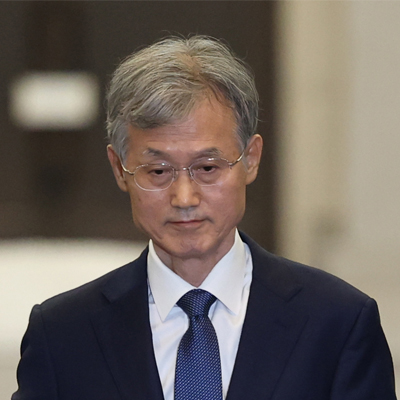
Impeach Cho Hee-dae, who trampled on the President's appointment power under the guise of the right to recommend.

0
2026. 09. 27
- Chief Justice Cho Hee-dae's refusal to re-nominate Supreme Court justices, citing the absence of "re-nomination" in the Constitution, is seen as an attempt to undermine the President's power to appoint justices.
- This stance by the Chief Justice, using judicial independence as a pretext to hold vacancies hostage and force the President's hand, ultimately infringes upon the public's right to a fair trial.
- The Chief Justice's tendency to exclusively exercise the power to nominate Supreme Court justices and appoint judges, using judicial appointments as a means of self-replication, could lead to unchecked abuse of power within the judiciary.
- The Chief Justice's misuse of nomination power and the prolonged vacancies can be interpreted as a deliberate violation of constitutionally allocated powers, potentially constituting legitimate grounds for impeachment.
- In conclusion, Chief Justice Cho Hee-dae's actions appear to be an attempt to maintain the influence of a specific regime under the guise of judicial independence, necessitating active oversight and impeachment discussions by the National Assembly.
Chief Justice Cho Hee-dae is rewriting the Constitution of the Republic of Korea in his office right now. What he said is simple: “I will not recommend Supreme Court justices again. There is no basis for re-recommendation in the Constitution.” What that one sentence means is even simpler: If I recommend someone, neither the National Assembly nor the President should refuse. If they refuse, leave the position vacant and let the people's trials be delayed. Vacancies become my weapon. This is the ultimatum the Supreme Court presented to the Blue House in the fall of 2026.
First, let's ask. Who appointed the person in that position? The Chief Justice is appointed by the President with the consent of the National Assembly. Yoon Suk-yeol nominated and appointed Cho Hee-dae. The person Yoon Suk-yeol put in place is now insisting, in the face of the appointment power of the President elected after Yoon Suk-yeol, that 're-recommendation is not in the Constitution.' The position he holds is a product of the President's appointment power, but he intends to make that appointment power a scarecrow when it comes to the Supreme Court justice positions that others will fill. The moment the separation of powers is mentioned, separation transforms not into checks and balances, but into a sanctuary for one side. Article 104, Paragraph 2 of the Constitution is short.
“Supreme Court justices are appointed by the President upon the recommendation of the Chief Justice and with the consent of the National Assembly.”
Here, three powers are placed side by side: recommendation, consent, and appointment. None of them are written to swallow the others. If the National Assembly refuses consent, that candidate is rejected. If the President does not send the appointment consent bill to the National Assembly or does not appoint, that candidate cannot become a Supreme Court justice. If the demand for re-recommendation, the first in 69 years since Syngman Rhee in 1957, is an 'unprecedented outrage,' then a unilateral written recommendation without consultation is also an unprecedented notification that breaks constitutional custom. To say that one side is unprecedented and the other is sacrosanct is a sophistry that should not come from the mouth of a legal professional.
The core of Cho Hee-dae's logic is this: Since the word 're-nomination' is not explicitly stated in the Constitution, even if the President rejects a nomination, I will not propose another person. If that is the case, I ask: The Constitution also does not explicitly state 'prohibition of appointment refusal.' Nor does it state that 'the President must unconditionally appoint the person nominated by the Chief Justice.' The moment we base arguments on what is not explicitly stated, then what is not stated applies to both sides. But why is what is not stated only disadvantageous to the President, and what is read as if it were stated only advantageous to the Chief Justice? The interpretation that 'my nomination is final' elevates the right to nominate to a royal prerogative above the right to appoint. As the Blue House stated, it is an interpretation that neutralizes the appointment power of an elected authority. The Chief Justice's attempt to protect the right to nominate and the attempt to hold a vacancy hostage to force the President to yield are not the same act.
The vacancy since the retirement of former Supreme Court Justice Roh Tae-ak has already exceeded half a year. In a system where thousands of cases accumulate per Supreme Court Justice annually, a single vacancy is not just a statistic; it is the time of the individuals involved. Delayed rulings, delayed remands, delayed finalizations. The cost of that time is paid not by the Chief Justice's office, but by the citizens awaiting lower court decisions. The independence that shouts 'judicial independence' while neglecting a vacancy is independence from the people. This is where independence turns into impunity.
The bigger problem is not just one Supreme Court justice position. We need to re-read Article 104, Paragraph 3 of the Constitution.
「Judges who are not Supreme Court Justices shall be appointed by the Chief Justice of the Supreme Court with the consent of the Council of Supreme Court Justices.」
Who nominates the 14 Supreme Court Justices? The Chief Justice. With the consent of the Council of Supreme Court Justices, composed of those Justices, who appoints all other judges? Again, the Chief Justice. The threshold for consent is a majority. If the hand that nominates the Supreme Court Justices who form that majority is the same hand that fills the positions of Chief Judges of High Courts, Chief Judges of District Courts, and Chief Judges of High Court Divisions, then it is not an appointment system with checks and balances, but a ladder of self-replication. There's no need to give daily instructions even to rookie judges. It's enough to control the presiding judges, the chief judges, and the breathing room of transfers and assignments. Bureaucracy is completed not by command, but by personnel. Even after the scene of express fees exchanged at registry office counters disappeared, the saying that courts are more bureaucratic than administrative agencies did not disappear. The reason is simple: the personnel at the apex are almost a closed circuit.
In February 2026, the National Assembly passed an amendment to the Court Organization Act, increasing the number of Supreme Court Justices from 14 to 26. Starting in 2028, four new justices will be appointed each year, reaching 26 by 2030. Including both new appointments and replacements for retirees, dozens of positions will be filled within the current president's term. It is at this very threshold that Cho Hee-dae firmly states, 'Nomination is my inherent authority; there will be no re-nomination.' As the number grows, the weight of the nomination power also increases. The longer a vacancy is prolonged, the more time there is to push for candidates aligned with one's own vision. This is a double-dealing approach: lamenting backlogs to the public, while using backlogs as a shield in front of the Blue House.
Power without checks inevitably shows in financial management. The Board of Audit and Inspection discovered that the Supreme Court Justices and the Chief of the Court Administration Office regularly received monthly incentive payments in cash without legal basis. Since Cho Hee-dae took office, business entertainment expenses have accumulated in the hundreds of millions. High-end restaurants, inflated headcounts, lack of evidence — the direction pointed to by parliamentary audits and opposition party revelations is consistent. This attitude seeks to use the independence of trials as an excuse for the independence of the budget. The moment the separation of powers becomes a shield that bypasses audits, disciplinary actions, and information disclosure, separation becomes a privilege. This is why there is ridicule about discussing taxpayers' money while having wine. The issue is not one or two receipts, but the question of who oversees this organization.
Cho Hee-dae's counterargument has already been made. The right to nominate is the last bastion of judicial independence. If the president only appoints people he likes, the Supreme Court will become a branch of the executive branch. I recall that in past administrations, the presidential office tried to exclude specific candidates before nomination. That counterargument cannot be ignored. However, independence is not the right to a vacancy, and nomination is not a substitute for appointment. If independence is correct, then they should consult within the multiple candidates proposed by the recommendation committee and proceed to the stage of parliamentary approval. Whether to put Son Bong-gi's candidacy to a vote in the National Assembly and have it rejected, or to nominate another recommended candidate again, the path is not blocked. The path he chose is neither of these. Either accept my nomination entirely, or leave the position vacant. The moment this is called independence, independence becomes another name for refusing dialogue.
Impeachment is not an emotional execution. It is the only democratic check on unelected constitutional bodies, as provided for in Article 65 of the Constitution. Two-thirds of the National Assembly's total members. That threshold is high. It should be high. However, a high threshold does not mean 'someone who should not be touched.' If these three things overlap—a serious violation of the law related to duties, intentional abuse of powers allocated by the Constitution, and a long-term vacancy that jeopardizes the people's right to a trial—then impeachment is not an exaggeration but the original purpose of the system. Even if a special court cannot be immediately formed, the argument that a dedicated court can be established by law is a separate matter. What the people should first ask now is not the name of the court, but whether the highest authority forming the court can block the Constitution with its own interpretation.
Discussing only the expansion of Supreme Court justices while keeping Cho Hee-dae in this position is like expanding the room for someone who has locked the door. The structure where a Chief Justice appointed by Yoon Suk-yeol blocks the appointment power of the Lee Jae-myung administration cannot be covered up with the phrase 'political neutrality.' The moment neutrality places the legacy of one administration above the constitutional authority of the next, it is no longer neutrality. The day of reckoning does not come with slogans. It comes when the National Assembly impeaches, the Constitutional Court deliberates, and the people watch the process. Until then, vacancies will continue, the appointments of lower court judges will circulate in a closed loop, and the phrase 'there is no such provision in the Constitution' will become a governing technique.
That circuit must be broken immediately. Impeach Cho Hee-dae.
댓글
( 0 / 500 )
khj
9
핵심은 결국 제청권이 임명권을 사실상 대체할 수 있느냐는 문제라고 봅니다. 헌법이 제청·국회 동의·대통령 임명을 나눠 놓았다면, 어느 한 기관의 권한이 다른 기관의 권한을 무력화하지 않는 해석이 필요합니다.
( 0 / 500 )
park_nadan
5
제청권이 독립의 상징이라고 해서 그것이 무제한의 거부권으로 변질되어서는 안 됩니다. 반대로 대통령의 임명권 역시 제청 절차를 뛰어넘을 수 없습니다. 이번 논란은 바로 이 권한의 경계를 헌법적으로 따져볼 계기라고 생각합니다.
( 0 / 500 )
조성철
7
대법원장 역시 헌법기관인 만큼 권한 행사의 책임에서 예외일 수 없습니다. 제청권을 둘러싼 논란과 장기 공석의 책임까지 객관적으로 확인하고, 탄핵 사유에 해당하는 위법이 있다면 헌법 절차에 따라 책임을 묻기를 바랍니다.
( 0 / 500 )
sukdo
6
공석이 길어질수록 가장 먼저 영향을 받는 사람은 권력기관이 아니라 재판을 기다리는 국민입니다. 사법부 독립이라는 원칙도 결국 국민의 재판받을 권리를 보장하기 위해 존재하는 만큼, 장기 공백을 당연한 것으로 받아들여서는 안 됩니다.
( 0 / 500 )
nathan
5
대법원장이 제청권을 행사하는 것과 대통령의 임명권을 사실상 제약하는 것은 별개의 문제입니다. 헌법이 여러 기관에 권한을 나눠놓았다면 각 기관이 자신의 권한만 강조할 것이 아니라 서로의 권한을 인정하는 절차가 작동해야 합니다.
( 0 / 500 )
papa
5
이 사안에서 정말 중요한 것은 조희대 개인에 대한 호불호가 아닙니다. 앞으로 어떤 대통령이 집권하더라도 대법원장이 제청권을 이유로 대통령의 임명권을 장기간 무력화할 수 있는 선례가 만들어지는가의 문제입니다. 제도적 기준을 분명히 해야 합니다.
( 0 / 500 )
77jaemin
4
탄핵이라는 결론에 앞서 헌법 제104조의 제청·동의·임명 구조를 어떻게 해석할 것인지부터 치밀하게 따져야 합니다. 동시에 대법원 역시 사법부 독립을 주장한다면 국민의 재판받을 권리와 사법행정의 책임성까지 함께 설명해야 합니다. 이번 논란은 그 원칙을 다시 묻고 있습니다.
( 0 / 500 )
automan
4
사법부 독립은 대통령의 간섭을 막기 위한 장치이지, 대법원장이 자신의 제청안을 끝까지 관철할 수 있는 권리를 의미하는 것은 아닐 겁니다. 반대로 대통령 역시 제청권을 무시할 수는 없습니다. 결국 헌법상 권한의 균형을 어떻게 해석할지가 핵심입니다.
( 0 / 500 )
동준84
4
조희대 대법원장의 제청권 행사가 헌법상 권한의 범위를 넘어섰는지 철저한 검증이 필요합니다. 의혹이 사실로 확인된다면 국회가 헌법이 정한 절차에 따라 탄핵소추 여부를 엄중하게 판단해야 할 사안이라고 봅니다.
( 0 / 500 )
길준
2
탄핵을 주장하려면 정치적 불만을 넘어 헌법이나 법률 위반이 구체적으로 무엇인지, 그리고 그것이 탄핵 사유에 이를 정도로 중대한지에 대한 법적 검토가 선행되어야 합니다. 이 글은 바로 그 쟁점을 국회와 헌재가 검토해야 한다는 문제를 던지고 있습니다.
( 0 / 500 )
2000ksh
2
대법관 공석 문제를 단순한 정치적 대립으로만 볼 수 없는 이유가 있습니다. 대법원의 사건 처리와 국민의 재판받을 권리에 직접 영향을 줄 수 있기 때문입니다. 제청권 논쟁과 별개로 장기 공석이 초래하는 사법서비스의 공백도 함께 따져봐야 합니다.
( 0 / 500 )
hakajin
1
삼권분립은 어느 한 기관에게 무제한의 권한을 주는 원리가 아니라 서로 다른 권한이 견제와 균형을 이루도록 하는 원리입니다. 대법원장의 제청권과 대통령의 임명권이 충돌하는 이번 사안도 결국 어느 쪽의 승패보다 헌법이 정한 권한 배분을 어떻게 구현할 것인지가 중요해 보입니다.
( 0 / 500 )
신고내용
신고내용을 선택해주세요
회원비난/비하/욕설글 및 댓글도배성 게시물저작권 침해/불법자료 유출허위사실유포개인정보 유출.사생활 침해무단광고/홍보음란물 및 도박 불법 광고물범죄행위 관련 글불법행위 관련 소개물품 판매 및 사기글악성코드 및 스파이웨어 유포기타 사유 및 운영진 판단


비밀번호를 잊으셨나요?
Sign in with Google


All information provided by us is free of charge and is for the public good.