品

품격있는 정치, 품위있는 정치인과 함께 하는 세상이어야 하는데
All Koreans are refugees like animals in the zoos. Corea, Korea, Corean, Korean, Coreans and Koreans. Whatever they are!
All Koreans are refugees like animals in the zoos. Corea, Korea, Corean, Korean, Coreans and Koreans. Whatever they are!
Now
지금
751 Diaspora
Heritage
유산
Humanity
인문
Mirengsi
未冷尸
Politics
정치
Media
언론
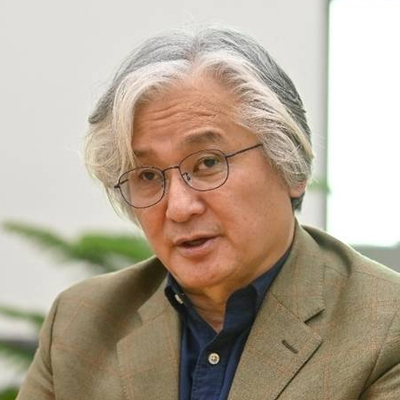
주권자 국민이 정작 싸워야 할 대상은 누군가? 내란세력과 미국이 공작해온 “분할통치구도”를 해체해야 한다. 조희대 탄핵과 미국의 압박 규탄 투쟁으로 총집결해야 / 김민웅 (촛불행동 상임대표)

단상斷想
칼럼
blueSky
After the President's Press Conference: Changes Made by the Sovereign People

0
2026. 09. 19
음성으로 듣기
0:00 / 0:00
음성 변환 진행 중입니다...
- President Lee Jae-myung aims to turn the tide by expressing his commitment to humbly govern and listen to the people amidst the national crisis.
- The government's crisis stems from its failure to transition the momentum of suppressing internal rebellion into national reform early in its term, and its pragmatic approach weakening reformist unity, thereby shrinking its support base.
- To overcome the crisis, the article urges a strategic response, emphasizing the punishment of those responsible for the internal rebellion cartel, resistance against US pressure, and vigilance against the 'divide and rule structure' fostered by the US.
1. President Lee Jae-myung's Press Conference
Today, September 18, 2026, President Lee Jae-myung's press conference held significant meaning for both the Lee Jae-myung administration itself and for all citizens. This was because an emergency response was made to a situation where the momentum of state affairs could rapidly fall into crisis, allowing rebellious forces to further run rampant.
The President clearly stated his readiness to listen as much as possible to the issues raised by the sovereign people and to approach state affairs with a more humble and renewed determination. He was serious throughout, and his awareness of the crisis and his desperate desire to overcome it were evident. This is commendable.
Rather than discussing each issue individually, the overarching theme was the President's agonizing reflection on the gap between his sincerity and public sentiment. This is how it should be. And it is the only way to rectify the fundamentals of politics.
How the practices based on this will unfold remains to be seen before an evaluation can be made, but for now, it seems a turning point has been created. Personnel issues are key. Of course, there are other aspects that seem to require further discussion, but isn't this how politics, which fulfills its historical mission, is built up by re-evaluating the situation at each juncture?
This is a change brought about by the sovereign people.
2. The Crisis of State Affairs, Its Essence
The essence of the crisis is that the ruling power, while strengthening the momentum and drive of suppressing rebellion in the early days of its administration, failed to expand and reproduce this into a driving force for national reform. The sovereign people, who had placed their hopes on bold reform efforts, began to deviate from the trajectory of support from that point.
The Lee Jae-myung administration's belief and attitude that it could deal with all these situations through "a strategy of minimizing reform resistance and performance-based pragmatism" led to today's reality. Integration is not simply about embracing everyone; there is a grand principle of "reformist integrative power" that did not function properly. The historical foundation of the Lee Jae-Jae-myung administration must be constantly recognized.
In particular, the last local election, by abandoning the policy of eradicating rebellion, gave a free pass to the rebellious forces, which in turn led to a reduction in the support base. As a result, division and contraction, not integration and expansion, became the reality. This is a reality contrary to the intention. This is proof that the existing method was wrong.
At this very moment, a strategic shift was urgently needed, but the initial inertia could not be overcome. Then, taking advantage of this gap, the divisive schemes that had already been operating before came in more strongly and deeply, regardless of political faction, and the front line moved inward.
As a result, it led to the disappearance of the key tasks of this era. The “divide and rule structure” that the rebellious forces and the United States had been working on became more overwhelmingly operational.
Therefore, dismantling this is the top priority for overcoming the crisis. From the moment we focus on internal hostile struggles rather than external enemies, the front line for eradicating rebellion, which must be protected, collapses, and we fall into the contradiction of self-producing and expanding the divide and rule structure. We fall into a trap.
Our front line must be exclusively drawn with “rebellious forces and the United States” as one package. If we miss this, we will fall into self-destructive political strife, and the entire front-line system that must be protected will collapse. The sovereign people must firmly establish the basic principle of struggle centered on this point.
3. So, what should be done?
First, the most powerful spearhead of the sovereign people who suppressed the rebellion must be directed at the rebellion cartel and the main culprits operating based on it. The impeachment of Cho Hee-dae, the maximum legal punishment for Yoon Seok-yeol and his gang, the investigation and trial of Han Dong-hoon, a disguised rebel, and the dissolution of the rebel party, the People Power Party, are the targets of this attack.
Second, the struggle against various pressures from the United States. The president has firmly refused to dispatch troops for war. Although concerns about the role of the Cheonghae Unit remained, the president's public declaration not to get involved in acts of war is very important. At least on this issue, we must unite without controversy to protect the Lee Jae-myung government and block various pressures and schemes from the United States. At the same time, all forces advocating for troop dispatch must be concentratedly attacked.
Third, we must engage in struggle with extraordinary vigilance against the "divide and conquer structure" manufactured by the forces of internal rebellion, and especially by the United States. Meaningful criticism of the Lee Jae-myung government and attacks with other ulterior motives diverge at this point. If one criticizes Lee Jae-myung more than Cho Hee-dae or Han Dong-hoon, who are targets of impeachment and investigation, then that is an attack desired by the forces of internal rebellion and the United States. The same applies if one criticizes the government more strongly than the United States regarding issues such as troop deployment, tariff pressure, or wartime operational control. (Not mentioning the United States at all also falls into this category.) If such things continue, they will achieve their goals without lifting a finger.
Our struggle demands a more meticulous and precise strategy. A wise struggle is urgently needed.
댓글
( 0 / 500 )
백진철
7
이번 기자회견을 단순한 지지율 반전용 메시지로만 볼 것이 아니라, 대통령이 민심과 국정 사이의 간극을 인정하고 국정 운영의 방향을 다시 점검했다는 점에서 봐야 한다고 생각합니다. 결국 변화의 출발점은 주권자인 국민의 요구를 제대로 듣는 데 있습니다.
( 0 / 500 )
jonghoon
6
글에서 말하는 ‘분할통치구도’라는 표현에는 여러 해석이 있을 수 있지만, 정치권이 서로를 적으로 규정하는 데 몰두하면서 정작 국민이 요구한 개혁과 민생의제가 뒤로 밀리는 현상에 대한 지적은 새겨들을 필요가 있습니다. 내부의 소모적인 갈등보다 국정의 핵심 과제를 분명히 하는 것이 중요합니다.
( 0 / 500 )
moonlight
6
외교·안보 문제 역시 대한민국의 국익과 주권을 기준으로 판단해야 합니다. 미국과의 동맹을 존중하는 것과 모든 요구를 그대로 받아들이는 것은 전혀 다른 문제입니다. 파병, 관세, 전작권 등 중요한 사안일수록 정부가 국민에게 충분히 설명하고 독자적인 판단의 근거를 제시해야 합니다.
( 0 / 500 )
김태훈
4
대통령에게 필요한 것은 지금부터 말보다 실천으로 보여주는 것입니다. 기자회견에서 민심을 경청하겠다고 밝힌 만큼 인사와 정책, 개혁과제에서 실제 변화가 나타나는지를 국민이 지켜볼 것입니다. 이번 계기가 일회성 메시지에 그치지 않기를 바랍니다.
( 0 / 500 )
소망
3
한미관계나 외교·안보 문제도 감정적인 구호보다 국익과 주권의 관점에서 차분하게 따져봐야 한다고 봅니다. 어느 한쪽을 무조건 배척하거나 추종하는 것이 아니라 대한민국의 선택권과 국익을 어떻게 지킬 것인지가 핵심입니다. 그 원칙을 중심으로 논쟁해야 합니다.
( 0 / 500 )
sung_Lee
3
결국 정치의 주인은 정당도 정치인도 아니라 국민입니다. 정부가 초심을 잃지 않고 개혁을 추진하도록 요구하는 것도 국민의 몫이고, 잘못된 부분을 비판하고 바로잡도록 만드는 것도 국민의 역할입니다. 이번 기자회견이 국민의 목소리를 국정에 다시 연결하는 전환점이 되기를 기대합니다.
( 0 / 500 )
비단
1
정치의 전선이 내부의 진영싸움으로만 좁아지면 국민이 원하는 변화는 사라집니다. 누가 어떤 정책을 주장하는지, 민주주의와 헌정질서를 지키는 데 어떤 행동을 했는지를 기준으로 냉정하게 판단해야 합니다. 국민이 정치의 중심을 다시 잡아야 합니다.
( 0 / 500 )
윤영채_90204
0
'개혁적' 통합성이 부재한 상황과 '분할통치전략'에 대한 진보세력의 정확한 인식의 부재가 오늘날의 이런 상황을 가져온 것이라 여깁니다. 지혜로운 투쟁을 하고 있는 촛불행동의 존재가 더욱 소중합니다.
( 0 / 500 )
신고내용
신고내용을 선택해주세요
회원비난/비하/욕설글 및 댓글도배성 게시물저작권 침해/불법자료 유출허위사실유포개인정보 유출.사생활 침해무단광고/홍보음란물 및 도박 불법 광고물범죄행위 관련 글불법행위 관련 소개물품 판매 및 사기글악성코드 및 스파이웨어 유포기타 사유 및 운영진 판단


비밀번호를 잊으셨나요?
Sign in with Google


All information provided by us is free of charge and is for the public good.