品

품격있는 정치, 품위있는 정치인과 함께 하는 세상이어야 하는데
All Koreans are refugees like animals in the zoos. Corea, Korea, Corean, Korean, Coreans and Koreans. Whatever they are!
All Koreans are refugees like animals in the zoos. Corea, Korea, Corean, Korean, Coreans and Koreans. Whatever they are!
Now
지금
751 Diaspora
Heritage
유산
Humanity
인문
Mirengsi
未冷尸
Politics
정치
Media
언론
연임 포기 선언은 그 점에서 정치적 자기제한이자 내부 공격에 대한 선 긋기다.

단상斷想
칼럼
HumanX
Standing before a closed door, yet still looking to Lee Jae-myung, here's why

0
2026. 09. 18
- The President's weary appearance isn't just for show; it reflects deep anguish and a sense of responsibility over complex challenges like falling approval ratings, internal party conflicts, and issues surrounding re-election and indictment withdrawals.
- The primary reasons for the President's declining approval ratings aren't solely attacks from the conservative opposition, but also persistent internal criticism from the progressive camp and distrust among the ruling powers, which have accelerated the alienation of swing voters.
- The declaration to forgo re-election is a response to opposition pressure and an effort to dismantle the "power extension conspiracy" narrative from within the progressive camp, demonstrating a resolve to focus on the role of head of state.
- Internal criticism against the President and the controversy over indictment withdrawals are not merely policy differences; they are self-destructive acts that hinder state administration and undermine the ruling party's legitimacy, amplified by distorted media and partisan reporting.
- Now that the President has closed the door on re-election and declared a focus on administration, the progressive camp must break its self-destructive habits, hold those responsible for falsehoods and distortions accountable, and secure the momentum for state governance.
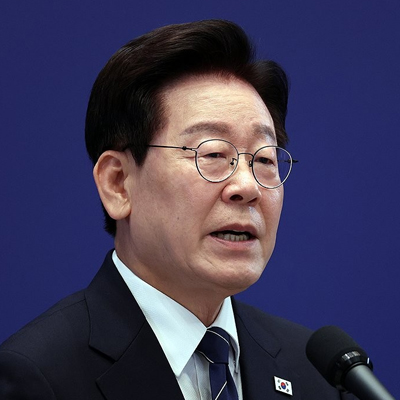
The face of President Lee Jae-myung, who stood in the Blue House Yeongbingwan today, was not the confident speaker's face we were accustomed to. The fact that the press conference was delayed by thirty minutes itself explains its gravity. The Blue House took this occasion very seriously, and said they postponed the schedule to refine the statement until the very end. That single line already contains anguish. With positive job performance ratings plummeting to near their lowest since his inauguration, the party divided internally and externally, and sensitive words like re-election, dismissal of charges, personnel appointments, and troop deployment simultaneously tightening around his neck, the President must have spent the night meticulously crafting his words, wondering what kind of face to present to the nation. If the corners of his eyes and mouth captured by the camera looked pitiful, it was not staged pity, but rather the result of the weight of responsibility seeping into his face. Seeing that face, what we should do first is not ridicule, but a willingness to share that burden.
It is insufficient to interpret today's press conference merely as an explanation to rebound approval ratings. The opposition's offensive clearly existed. However, the deeper cutting blade came from within the progressive camp. If we honestly look at the process by which the approval rating plummeted, it is undeniable that, along with the conservative opposition's attacks, the continuous tarnishing by the so-called "Moon-Jo-Teol-Rae-Yu-Chu" (former ruling party, pro-Moon, Jo Guk faction, Yoo Si-min discourse, and propaganda line) accelerated the public's disaffection. The reason the centrist voters left is not just the failure of a single policy. It is because the signal that the ruling power did not trust each other was reproduced internally every day. The responsibility for this lies not in an ambiguous situation, but in the forces that actually widened the cracks, and some media outlets, partisan YouTube channels, and social media that expanded these forces. If one supports the President, this point should not be avoided. The habit of undermining one's own government from within is not criticism, but self-harm.
The declaration to forgo re-election is, in that sense, a political self-limitation and a drawing of a line against internal attacks. The statement that there is no intention to seek re-election is both a response to the opposition's pressure and an attempt to directly cut off the narrative of a power extension conspiracy that has been constantly circulated within the progressive camp. Even though the current constitution already stipulates a single five-year term, and a sitting president is not allowed to push for constitutional amendments that affect their own term, suspicions did not easily subside. Whenever the president spoke of institutional reforms such as a four-year two-term system, a four-year re-election system, or a partial transfer of presidential powers, interpretations that reduced it to a conspiracy for his own re-election first spread internally. The tactic of intentionally making it seem as if those discussing institutions are the same as those trying to extend power is not scrutiny, but stigmatization. The fact that the president today drew a line by explicitly stating the subject means he intends to leave no embers of that stigma. Supporters should read this declaration not as a 'retreat' but as a 'decision to step down from politics and focus on administration.' Encouragement is what upholds that decision.
The controversy over the withdrawal of prosecution also operated with the same logic. The existing stance of law and principle, and minimal truth-finding, somehow morphed into an evasion of trial. It's not surprising that the opposition used that framework. The problem is that the same narrative was repeated within the broader progressive camp and even within the party. The context in which the president stated that he had no intention of directly directing or negotiating the prosecution of a specific case, nor of abusing such authority, was cut off, and only the accusations were repeatedly replayed. The impression left on the public was not the details of the facts, but the emotional afterimage that the government was trying to hide its own affairs. Those who created that afterimage are trying to escape responsibility by shifting it solely to the president. That is no different from an arsonist applying for immunity. If it is a message of support, it must go a step further. Supporters must first trust the president's words that he will uphold principles within the bounds of the law, and then clear the surroundings to ensure those principles are not shaken.
The core problem with the trend exemplified by the 'Moon-Jo-Teol-Rae-Yu' (Moon-Jo-Hair-Pulling-Game) is not a difference in political lines. Differences in political lines are possible within a democracy. Different judgments, different speeds, and different priorities can certainly be debated. However, if those differences act in a way that chokes off the operation of state affairs, then it is no longer a debate over political lines but an internal veto. Despite advocating for prosecutorial and judicial reform, there was a repeated pattern of publicly obstructing every appointment, branding the president's talk of pragmatism and unity as betrayal, and immediately turning sensitive foreign and security policy choices into material for ideological trials. The unsealed cracks within the party after the national convention, public opposition during the personnel vetting process, and the war of interpretation surrounding reappointments and the withdrawal of charges all appeared to the public as internal strife rather than the substance of policy. It is entirely different for progressives to check their own government than to internally undermine the very legitimacy of their rule. The latter is not a check but self-destruction. If you want to save the Lee Jae-myung government, you must now break that habit of destruction.
The heavier responsibility lies with some media outlets and factions that packaged these internal attacks as news. The reporting practice where frames are faster than fact-checking, and accusations precede context, is not a new phenomenon. However, what stood out in this downturn was that media outlets and channels claiming to be progressive repeatedly replayed suspicions under the guise of monitoring the government, thereby internally eroding the trust of their supporters. Scrutiny is necessary. Power must be monitored. But the mass distribution of false suspicions, the repetition of unconfirmed transaction rumors, and the editing that selectively presents only parts of personnel facts to make the whole appear corrupt, are closer to incitement than monitoring. Freedom of the press does not grant immunity for falsehoods, defamation, or indiscriminate stigmatization of public officials. If reform is needed, its targets should include not only conservative media but also factions disguised as progressive. When the blade points in only one direction, it is no longer journalism but a weapon of a political camp.
The responsibility mentioned here is not retaliation. It is about clearly demanding corrections and necessary legal accountability for the dissemination of false information, repeated reporting of unconfirmed transaction rumors, and the act of turning personnel hearings into a stage for partisan struggle. As long as selective silence and selective exposure alternate, the public will not trust the words of any camp. If the Lee Jae-myung administration fails to establish principles regarding false and distorted reporting, today's anguish will only be repeated. Since the President has stated that he will pay more attention to the will and lives of the people, he must first address the structures that distort those lives. Saying that he will only heed public sentiment while neglecting falsehoods is not much different from saying that he will follow the public sentiment created by falsehoods. Supporters should not just tell the President to "do better," but should also work together to remove the structures of distortion.
The future change in roles also aligns with this point. For a president who has closed the debate on re-election himself, the remaining path is not the next as a politician, but the present as the head of administration. The vision to develop Sejong into an economic capital to decentralize the concentration in Seoul, the commitment to make real estate and people's livelihoods the standard for state affairs, and the caution in stating that nothing has been decided regarding the Hormuz issue and that readiness on the Korean Peninsula and national interests will be prioritized – all these are languages of action rather than symbolism. The statement that he will continue the reform momentum even while acknowledging flaws in the verification system during personnel controversies also reflects the recognition that it is no longer possible to rely solely on the logic of one's own camp. As long as internal ideological trials continue, these tasks cannot move forward. As long as some forces within the progressive camp treat the president as someone to be managed, the government will always remain on the defensive, and the public will interpret that defense as incompetence.
The increasing role of the head of government does not mean a softening of tone. It means not accepting the demands of party factions as national priorities, not being swayed by narratives, and proving the achievements of the remaining term in the lives of the people, not in the next election. Balanced development, stable housing prices and supply, industrial strategies including semiconductors and artificial intelligence, and cautious contributions in diplomacy are not slogans but matters of execution. Execution cannot be achieved amidst noisy interpretive battles. Therefore, holding accountable for internal attacks and sanctioning distortions are not emotional outbursts but prerequisites for national governance. Holding accountable is not a purge of specific individuals. It is a demand to clearly distinguish between cause and effect regarding overt internal sabotage of national affairs and its amplification.
오늘 그 얼굴이 안쓰럽게 보였던 이유는, 야당의 공격보다 동지의 칼이 더 깊게 들어갔기 때문일 수 있다. 고뇌는 그 자체로 미덕이 아니다. 고뇌 뒤에 내부 균열에 대한 분명한 진단과, 왜곡에 대한 제재, 그리고 민생으로의 실행이 따라올 때라야 그 고뇌는 공감의 대상이 된다. 문조털래유추로 상징되는 내부 공격이 지지율 하락을 유도했다면, 그 세력은 이제 비판의 주체가 아니라 책임의 대상이다. 대통령이 연임의 문을 닫고 행정에 집중하겠다고 한 이상, 진보 진영 역시 자기 정부를 내부에서 허무는 습관을 끊어야 한다. 그렇지 않다면 오늘의 회견은 또 한 번의 해명이 되고, 국민의 삶은 또 한 번 정파의 소음 뒤로 밀려날 것이다.
결국 오늘의 자리는 정치인 이재명이 행정수반 이재명에게 자리를 넘기는 의식처럼 보였다. 그 넘김이 얼마나 고통스러웠는지는 얼굴이 이미 말해 주었다. 남은 것은 그 고통이 국민의 삶 쪽으로 흘러가는지 지켜보는 일이다. 내부의 칼과 왜곡을 방치한 채 국민만 더 살피겠다는 말은 성립하지 않는다. 국민을 살핀다는 것은, 국민의 판단을 흐리는 내부 파괴와 허위부터 걷어 내는 일에서 시작되어야 한다.
So today is not the day to direct all criticism solely at the President. For someone who has closed the door on re-election and intends to fill the remainder of their term with administration, it is now time to give them strength. Flaws in the personnel system must be fixed, and the report card on real estate and people's livelihoods must be strictly scrutinized. However, that whip should be a whip to save the government, not a whip to break the regime from within. The tired expression we saw today is not pity, but a trace of the agony that someone entrusted with the administration of a nation must bear. Instead of mocking that trace, it is the role of support and encouragement to stand by and ensure that this agony transforms into achievements for the people's livelihoods. The promise the President made to further consider the lives and will of the people must now be upheld by progressives themselves.
The statement that there is no intention of seeking re-election is clear. However, beyond those words, the people exist. There is also a desire for this person to persevere a little longer, not just for the remaining term. That desire is not a lust for power, but a thirst not to lose someone who will take responsibility in a wavering nation. The people do not want President Lee Jae-myung to follow the path of Roh Moo-hyun. They do not want to see again the path of being isolated by a comrade's knife, and collapsing after enduring alone amidst internal divisions. The president we need is not one with a longer term, but one who stops the internal knives and implements policies for the people's livelihoods. If the door has been closed, then now is the time to protect the country from behind that closed door.
댓글
( 0 / 500 )
ak56
10
대통령의 표정에서 단순한 정치적 피로감보다 국정을 책임진 사람의 무게가 느껴졌다는 대목에 공감합니다. 이제는 연임이니 계파니 하는 정치적 소음보다 민생과 경제, 국가의 미래를 위해 일할 수 있도록 힘을 모아줄 때라고 봅니다.
( 0 / 500 )
monalisa
6
이재명 대통령이 오늘 보여준 모습에서 권력을 더 누리려는 정치인의 모습보다 맡은 책임을 끝까지 감당하려는 행정수반의 고뇌가 느껴졌습니다. 연임 논란을 스스로 정리한 만큼 이제는 국민의 삶과 민생을 위해 일할 수 있도록 힘을 실어줘야 한다고 생각합니다.
( 0 / 500 )
李秀
8
이재명 대통령을 지지하는 이유는 완벽해서가 아니라 어려운 상황에서도 국정을 놓지 않고 앞으로 나아가려 하기 때문입니다. 내부의 갈등과 정치적 공세가 아무리 거세도 결국 국민이 체감하는 경제와 민생의 성과로 답해주기를 기대합니다.
( 0 / 500 )
낭랑18세
6
정치인 이재명이 아니라 대통령 이재명의 시간을 열어야 한다는 글의 취지에 공감합니다. 연임 논란도 스스로 선을 그은 만큼 이제는 권력 이야기를 내려놓고 민생과 경제, 국가의 미래를 위해 성과를 보여주는 데 집중했으면 합니다. 저도 이재명 정부가 흔들리지 않기를 바랍니다.
( 0 / 500 )
park_SJ
6
대통령에게 필요한 것은 더 많은 권력이 아니라 주어진 임기 동안 국민을 위해 제대로 일할 수 있는 시간과 여건이라고 생각합니다. 연임 의사가 없다는 뜻을 분명히 밝힌 만큼 이제 소모적인 논쟁은 내려놓고 이재명 정부가 민생과 국가 개혁에 집중하도록 응원하고 싶습니다.
( 0 / 500 )
Buddha77
5
같은 진영 안에서 서로를 적으로 규정하고 의혹을 확대 재생산하는 정치가 계속되면 결국 피해를 보는 것은 대통령 개인이 아니라 국민입니다. 정부가 잘못한 부분은 냉정하게 지적하되, 근거 없는 공격과 정파적 갈등은 이제 멈추고 국정이 제대로 돌아가도록 해야 한다는 글의 취지에 공감합니다.
( 0 / 500 )
lovepoem
4
오늘의 지친 표정을 보며 오히려 대통령이 짊어진 책임의 무게를 생각하게 됩니다. 잘못한 부분은 당연히 고쳐야 하지만, 근거 없는 의혹과 내부의 정치적 갈등으로 국정 전체가 흔들리는 일은 없어야 합니다. 지금은 이재명 대통령에게 힘을 보태야 할 때라고 생각합니다.
( 0 / 500 )
Jeong Byeon_72828
4
성군의 고뇌
사익형이 아니라 오로지 민생
( 0 / 500 )
kth69
4
대통령도 사람이기에 국정의 무게가 얼굴에 드러날 수밖에 없다고 봅니다. 중요한 것은 그 고뇌를 어떻게 결과로 바꾸느냐일 것입니다. 이재명 대통령이 내부 갈등과 정치적 공방을 넘어 국민이 먹고사는 문제에 집중하고, 임기 마지막까지 책임 있게 국정을 이끌어가기를 응원합니다.
( 0 / 500 )
백현이
3
이재명 대통령에게 지금 필요한 것은 더 이상의 정치적 소모전이 아니라 국정을 추진할 수 있는 힘이라고 생각합니다. 부족한 부분은 비판하되 잘하는 일에는 분명하게 박수를 보내야 합니다. 남은 임기 동안 국민이 체감할 수 있는 변화를 만들어내기를 응원합니다.
( 0 / 500 )
747kor
3
이재명 대통령이 연임 논란에 분명히 선을 긋고 국민의 삶과 국정 성과에 집중하겠다는 뜻을 밝힌 만큼, 이제는 그 진정성을 믿고 지켜볼 필요가 있다고 생각합니다. 어려운 시기일수록 대통령이 흔들리지 않고 민생을 챙길 수 있도록 국민도 힘을 보태야 합니다.
( 0 / 500 )
sr84
2
이재명 대통령에게 필요한 것은 진영 내부의 끝없는 공방이 아니라 국정을 안정적으로 이끌 수 있는 신뢰와 지지라고 봅니다. 잘못은 바로잡고 성과는 제대로 평가하면서, 남은 임기 동안 국민이 체감하는 변화와 개혁을 만들어낼 수 있도록 응원하겠습니다.
( 0 / 500 )
신고내용
신고내용을 선택해주세요
회원비난/비하/욕설글 및 댓글도배성 게시물저작권 침해/불법자료 유출허위사실유포개인정보 유출.사생활 침해무단광고/홍보음란물 및 도박 불법 광고물범죄행위 관련 글불법행위 관련 소개물품 판매 및 사기글악성코드 및 스파이웨어 유포기타 사유 및 운영진 판단


비밀번호를 잊으셨나요?
Sign in with Google


All information provided by us is free of charge and is for the public good.