品

품격있는 정치, 품위있는 정치인과 함께 하는 세상이어야 하는데
All Koreans are refugees like animals in the zoos. Corea, Korea, Corean, Korean, Coreans and Koreans. Whatever they are!
All Koreans are refugees like animals in the zoos. Corea, Korea, Corean, Korean, Coreans and Koreans. Whatever they are!
Now
지금
751 Diaspora
Heritage
유산
Humanity
인문
Mirengsi
未冷尸
Politics
정치
Media
언론
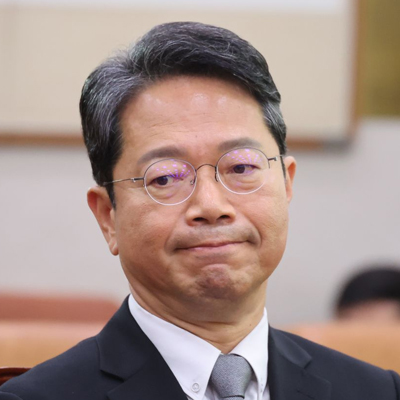
김승원은 1969년생, 서울대 공법학과, 사법연수원 28기다. 전주지법·수원지법 판사와 변호사를 거쳐 문재인 정부 청와대 정무수석실 행정관을 지냈고, 2020년 수원갑 초선, 2024년 재선에 성공했다.

단상斷想
칼럼
飛上
Why are the People Power Party and Han Dong-hoon targeting Kim Seung-won?

0
2026. 09. 18
- Han Dong-hoon and the People Power Party's attacks on Justice Minister nominee Kim Seung-won are largely a defensive maneuver against the Lee Jae-myung administration's perceived takeover of justice and prosecutorial power, and an attempt to shield the President from legal risks.
- However, questions arise about whether the People Power Party, which isn't free from responsibility for the December 3rd internal strife, and Han Dong-hoon, who symbolizes the Yoon Seok-yeol prosecution's power, are qualified to judge Kim Seung-won's 'justice' and 'fairness'.
- Because Kim Seung-won was the architect of prosecutorial reform and part of the legal team handling the Lee Jae-myung case, the opposition views him as a 'dangerous combination' and fears that the prosecution's inertia and personnel logic from the Yoon Seok-yeol era will be shaken.
- Han Dong-hoon's offensive was an attempt to prevent the dismantling of the prosecutorial system he sought to protect, but specific criticisms, such as the Genencell allegations, coupled with suspicions of leaked prosecutorial data, undermined the legitimacy of his political attacks.
- Ultimately, due to the People Power Party's questionable qualifications and the asymmetry of their attacks, they failed to unseat nominee Kim Seung-won, demonstrating the National Assembly's majority opinion that those who have used investigative powers as a political weapon cannot prevent the appointment of someone who will reclaim that weapon.
Han Dong-hoon and the People Power Party's attack on Kim Seung-won, while framed as personnel verification, is essentially a battle over the direction of the second Lee Jae-myung administration's legal and prosecutorial power and the president's judicial risks. However, to evaluate this offensive, a question must first be asked. Do the lawmakers of a party not free from responsibility for the December 3rd internal rebellion and Han Dong-hoon, who has symbolized the Yoon Seok-yeol prosecution and legal power, truly have the right to judge Kim Seung-won's 'justice' and 'fairness'? The scene where the party whose qualifications are shaky speaks as if prosecuting the other's morality is precisely the distorted starting point of this dispute.
On August 30, 2026, when President Lee Jae-myung nominated Kim Seung-won as Minister of Justice, succeeding Jeong Seong-ho, Han Dong-hoon characterized him as "the representative of the Lee Jae-myung indictment withdrawal group, who will shamelessly invoke investigative command to withdraw indictments more than anyone else." The People Power Party demanded his withdrawal, stating, "The defendant's seat is where he belongs." The hearing without witnesses on September 15 and the Democratic Party's sole adoption of the suitability report on the 17th show that the offensive did not lead to his downfall and the appointment process moved forward. The issue is not the firepower of the attack, but the position of the attacker.
Kim Seung-won, born in 1969, graduated from Seoul National University with a degree in public law and completed the 28th class of the Judicial Research and Training Institute. He served as a judge in the Jeonju District Court and Suwon District Court, then as a lawyer, and later as an administrative official in the Office of the Senior Secretary to the President for Political Affairs during the Moon Jae-in administration. He was elected as a first-term lawmaker for Suwon Gap in 2020 and re-elected in 2024. As the ruling party's 간사 (chief secretary) on the Legislation and Judiciary Committee, he virtually designed the amendment to the Criminal Procedure Act, which included the complete abolition of direct investigative powers for prosecutors, the separation of investigation and prosecution, and the establishment of a public prosecution office and a central investigation agency. During Lee Jae-myung's leadership, he served as the chairman of the Committee for Countermeasures against Prosecutorial Dictatorship and Political Suppression and was also a co-representative of the indictment withdrawal group. The reason the opposition views him as a 'dangerous combination' is clear: if the architect of prosecutorial reform also holds executive power, the inertia of case handling and personnel logic accumulated by the Yoon Seok-yeol era's prosecution could be shaken.
한동훈의 공세가 격렬한 이유도 같은 자리에 있다. 그는 윤석열 정부의 법무부 장관이었고, 검찰 직접수사권과 조직 논리를 지키려 했던 인물이다. 10월 2일 개정 형소법 시행과 공소청 출범을 앞두고 김승원을 장관에 앉히는 것은, 한동훈이 지키려 한 체계의 해체를 현장에서 완성하는 인사다. 론스타 항소 반대, 대장동 남욱 변호 이력을 꺼내 “나라를 망칠 사람”이라고 부르는 것은 그 상실감을 도덕 언어로 번역한 것이다. 그러나 한동훈이 말하는 ‘나라’와 ‘검찰의 공정’이, 윤석열 검찰의 선택적 수사와 정치 사건 몰이와 얼마나 다른지는 별개의 검증을 요구한다. 자신이 속했던 권력의 수사 관행을 기준으로 상대를 재단하는 일은, 정의의 언어가 아니라 기득 검찰권의 자기변호에 가깝다.
The People Power Party's qualification issue is more direct. In the process of legally resolving the controversy surrounding former President Yoon Suk-yeol's responsibility for insurrection and insurrection-related acts, such as emergency martial law and obstruction of arrest, it is an inverted scene for the party that was the ruling power of that regime to refer to the opposing candidate as being in the 'defendant's dock'. When a force that stood in the midst of an insurrection attempts to exclusively judge the morality of the Minister of Justice, that judgment can no longer speak of universal justice. One can raise issues with Kim Seung-won's suspended indictment for Genencell, the family cooperative recording, and the complaint messages. However, the moment that questioning transforms into a narrative of 'the party responsible for insurrection upholding justice,' the legitimacy of the offensive collapses on its own.
The Genencell controversy was the key sword in that inverted narrative. In October 2021, Kim Seung-won, at the request of broker Yang, sent texts and made calls to then-MFDS Commissioner Kim Kang-lip requesting expedited processing, and the MFDS approved it in about two weeks. The prosecution raised the issue of quid pro quo, such as a promise of 5 million won in donations, but the case was closed with a suspended indictment in 2024. Han Dong-hoon repeatedly disclosed remarks like “Seung-won oppa,” “It’s stuck at the manager level? Okay,” and that hundreds of billions could be earned if approved, as well as suspicions of home visits. The fact that the court in the first trial of the Genencell founder found it difficult to conclude the nature of the request and the quid pro quo, and that the review for a suspended indictment began before the declaration of martial law, contradicts Han Dong-hoon's claim that 'the disposition was overturned by external pressure.' Nevertheless, the circumstances under which materials close to investigation records leaked outside the hearing have not been explained. He could not answer how different the method of using Yoon Seok-yeol's prosecution's internal data as a weapon for political attacks is from the 'political prosecution' that Han Dong-hoon has criticized.
The September 15 hearing merely moved that offensive to the courtroom and failed to restore its legitimacy. The People Power Party requested 44 witnesses, but the Democratic Party refused, and about 14 hours passed without witnesses. Kim Seung-won called Genencell a difficult grievance, shed tears over the family cooperative, and apologized for the staff's filming of documents. The opposition relentlessly pursued the 93 clinical trial participants, the recorded conversation favoring Suwon City, and the hiring of the son of the judge who dismissed the warrant. However, what the hearing proved was not the 'confirmation of suspicions,' but the asymmetry in which parties to the internal political struggle elevated the other's grievance texts and family care to evidence of national corruption.
The relevance to the Lee Jae-myung case should be viewed through the same lens. The Supreme Court overturned the election law violation case with a guilty verdict, but the trial is currently suspended due to presidential immunity from prosecution. The same applies to other cases, such as the Daejang-dong case. It is structurally difficult for a minister to dismiss a case that has already been indicted and gone all the way to the Supreme Court through a withdrawal of prosecution. What the opposition fears is not the immediate dismissal of the retrial, but the possibility that personnel appointments, assignments, command, and supervision will change after the launch of the Public Prosecution Office, unlike during the Yoon Suk-yeol era. Kim Seung-won distinguished between his claims for withdrawal of prosecution when he was a lawmaker and his duties as a minister, and drew a line on the prosecutor general's command and the special prosecutor's artificial power to withdraw prosecution. His answer may be ambiguous. However, it is inconsistent for those who were involved in the way the Yoon Suk-yeol prosecution handled political cases to now only raise issues with the 'politicization of command authority.'
On the 17th, the Legislation and Judiciary Committee confirmed the procedural limitations of that offensive. After all the People Power Party members withdrew, the Democratic Party unilaterally adopted the personnel hearing report as appropriate. The Blue House stated that there were “no confirmed factual suspicions,” and the threshold for appointment was opened. The opposition is talking about street protests, but it is difficult to institutionally block the president's appointment after the report is adopted. This is the result of unqualified attacks failing to cause a downfall.
The reason for targeting Kim Seung-won is clear. He is the architect of prosecutorial reform and was on the legal team responding to the Lee Jae-myung case. If he becomes a minister, reform will shift from legislation to execution. The motive to check that change is politically understandable. However, understanding and qualification are different. The moment a party at the center of the debate over responsibility for insurrection and Han Dong-hoon, who has represented the Yoon Suk-yeol prosecution and Ministry of Justice, become the sole arbiters of justice, the verification of Kim Seung-won is already a biased court. The remaining issue is not whether he is a perfect candidate. It is whether a force that has used investigative powers as a weapon for politics can, in the name of justice, block an appointment that would reclaim that weapon. The unilateral adoption on the 17th is the National Assembly majority's initial answer to that question.
댓글
( 0 / 500 )
김성수
6
정확한 관점과 팩트를 근거로 한 주장이 돋보입니다. 쓰레기같은 언론과 차원이 다른 분석입니다.
( 0 / 500 )
magma
8
핵심은 김승원 개인에 대한 호불호보다 검찰개혁의 방향을 둘러싼 정치적 충돌에 있다고 봅니다. 입법을 주도했던 사람이 법무부 장관 후보자가 됐으니 야권이 강하게 경계하는 것도 이해할 수 있습니다. 다만 공소 취소 문제는 실제 법적 권한과 절차를 따져 판단해야지 정치적 구호만으로 결론낼 사안은 아닙니다.
( 0 / 500 )
kim_minsoo
8
한동훈과 국민의힘의 김승원 공격을 단순한 도덕성 검증으로만 보면 이 글이 지적한 본질을 놓치게 됩니다. 결국 핵심은 수사와 기소를 분리하는 새로운 검찰체제가 실제로 어떻게 운영되느냐에 있습니다. 김승원이 의원 시절 주장했던 개혁과 장관으로서 행사할 수 있는 권한을 구분해서 평가할 필요가 있습니다.
( 0 / 500 )
안동댁
7
한동훈이 김승원을 향해 온갖 의혹을 쏟아내지만, 결국 핵심은 검찰개혁 자체를 막아보려는 정치적 공세 아니냐는 의문이 듭니다. 수사와 기소를 분리하고 검찰의 직접수사권을 축소하는 것이 입법으로 결정됐다면, 이제는 그 제도가 제대로 작동하도록 하는 논의가 우선돼야 합니다.
( 0 / 500 )
소망
5
청문회에서 가장 눈여겨볼 대목은 의혹의 숫자가 아니라 장관이 된 뒤 권한을 어떻게 행사할 것인가에 대한 답변이었다고 봅니다. 김승원은 의원 시절의 정치적 입장과 장관의 직무는 다르다고 선을 그었습니다. 그렇다면 이제는 말보다 실제 인사와 지휘, 검찰개혁의 집행 과정으로 평가해야 할 것입니다.
( 0 / 500 )
nadan
4
국민의힘의 김승원 공격은 인사 검증이라기보다 검찰개혁에 대한 거부감이 먼저 보입니다. 특히 의원 시절의 발언을 장관 취임 이후 실제 행사할 수 있는 권한과 뒤섞어 공소 취소를 기정사실처럼 말하는 것은 법적 절차와 정치적 주장을 구분할 필요가 있어 보입니다.
( 0 / 500 )
sung_Lee
4
한동훈이 청문회장 밖에서까지 김승원 공격에 나선 모습을 보면 이번 싸움의 본질이 무엇인지 오히려 선명해집니다. 검찰의 수사권을 내려놓는 개혁이 현실화되자 기존 검찰 권한을 지키려는 반발이 거세지는 것으로 보입니다.
( 0 / 500 )
hojin
3
한동훈과 국민의힘이 김승원 후보에게 제기하는 의혹은 하나하나 사실관계를 따져야겠지만, 이를 곧바로 ‘이재명 사건을 마음대로 처리할 사람’이라는 결론으로 연결하는 것은 지나친 정치공세입니다. 법무부 장관의 권한과 검사의 공소유지 권한을 구분해서 이야기해야 합니다.
( 0 / 500 )
moondo
2
야당이 김승원의 과거 발언과 이재명 사건을 집중적으로 문제 삼는 것은 정치적으로 이해할 수 있지만, 의원 시절의 주장과 장관으로서 행사할 수 있는 법적 권한은 구분해서 봐야 합니다. 공소 취소가 실제로 가능한지, 누가 어떤 절차로 결정할 수 있는지를 따지는 것이 먼저입니다.
( 0 / 500 )
신고내용
신고내용을 선택해주세요
회원비난/비하/욕설글 및 댓글도배성 게시물저작권 침해/불법자료 유출허위사실유포개인정보 유출.사생활 침해무단광고/홍보음란물 및 도박 불법 광고물범죄행위 관련 글불법행위 관련 소개물품 판매 및 사기글악성코드 및 스파이웨어 유포기타 사유 및 운영진 판단


비밀번호를 잊으셨나요?
Sign in with Google


All information provided by us is free of charge and is for the public good.