品

품격있는 정치, 품위있는 정치인과 함께 하는 세상이어야 하는데
All Koreans are refugees like animals in the zoos. Corea, Korea, Corean, Korean, Coreans and Koreans. Whatever they are!
All Koreans are refugees like animals in the zoos. Corea, Korea, Corean, Korean, Coreans and Koreans. Whatever they are!
Now
지금
751 Diaspora
Heritage
유산
Humanity
인문
Mirengsi
未冷尸
Politics
정치
Media
언론
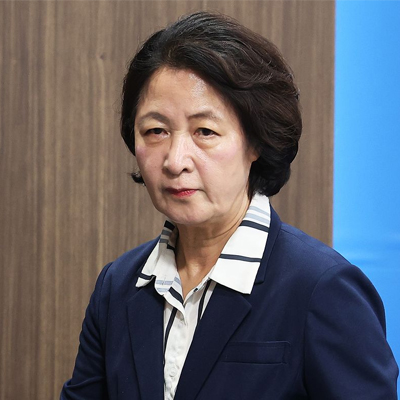
추미애의 최근 발언 속내는 권력의 해석권 쟁탈이다

단상斷想
칼럼
Savant
Crossing the line as governor, Choo Mi-ae's overreaching politics

0
2026. 09. 15
- Governor Choo Mi-ae's remarks are a political act, using reform as a pretext to publicly pressure the President and seize interpretive power within the party.
- While it may please hardline supporters, it ultimately burdens the party and government by weakening national governance and alienating moderate voters.
- As governor, her focus on central politics, while neglecting Gyeonggi Province's financial emergency and pending issues, is seen as an attempt to shirk administrative responsibility and gain political advantage.
- Such actions deepen divisions within the Democratic Party, weaken the ruling power's overall support base, and ultimately risk harming both provincial residents and party members.
- Forgetting her duties as governor and solely engaging in a competition for party distinctiveness is a catalyst for division, not justice, and she must bear the responsibility for it.
Choo Mi-ae's recent remarks are not about the governor's conscience, but a political act of openly pressuring the president within the ruling party, using her clear stance as a weapon. On September 10, on Kim Eo-jun's YouTube channel, she asserted that 'there is no other reason' for the decline in President Lee Jae-myung's approval ratings. She argued that prosecutorial reform is more important than constitutional amendment, and that supporters would become skeptical the moment concerns about backlash arose. Two days later, at the memorial service for victims of the democratization movement at Moran Park in Namyangju, she was even more explicit. 'If people united to overcome rebellion and restore constitutional order, shouldn't the president punish these forces? Why is he clinging to these forces, constantly worried?' Regarding the candidate for the head of the Serious Crimes Investigation Agency, she asked, 'Is it democratization or upholding the will of the sovereign people for someone who is in the same boat as Han Dong-hoon to become the first head?' The governor publicly judged the president's personnel appointments and state affairs policy, using the pretext of a memorial ceremony for provincial residents.
The surface of these words is reform. The true intention is a struggle for the interpretation of power. Differences between hardliners and moderates regarding the speed of reform in the early stages of a government exist in any administration. However, Choo Mi-ae transformed that difference not into policy debate, but into moral stigmatization. Adjusting the pace is weakness, balancing personnel is contradiction, and being mindful of the departure of centrist voters is clinging to rebellious forces, constantly worried. Speaking this way is exhilarating for hardline supporters. However, the price of that exhilaration is paid not by the president, but by the party and the government. Lee Jae-myung's remarks after his visit to France, 'We must also be wary of radical incitement that causes resistance and counter-mobilization, thereby hindering reform,' and 'If you have authority, you must bear corresponding unlimited responsibility,' were not abstract admonitions. They were a realistic diagnosis that the competition for a clear stance pushes away centrist voters and erodes the momentum of state affairs. Choo Mi-ae directly rejected that diagnosis. The key point is that the position from which she rejected it was that of Gyeonggi Province Governor.
The most generous interpretation of his intentions is 'completion of prosecutorial reform.' More honestly, it's an attempt to establish his and the hardline bloc's raison d'être on the President's hesitation. His agreement with Cho Kuk's distinction between dismissal and withdrawal of charges, saying '100% correct,' is along the same lines. The moment a provincial governor publicly asserts how a criminal case related to the President should be handled as if it were a straightforward matter, it ceases to be about provincial administration and becomes a megaphone for an intra-party factional struggle. A megaphone always cloaks itself in conscience. However, when conscience borrows the title of governor, that conscience is already politics. His statement at the memorial service, 'I came today not as a governor, but as a conscience who lived in this era,' is a self-absolution. If he wants to speak without the title, he should resign the title. To claim conscience while retaining the title is to avoid responsibility while only reaping the benefits of authority.
On the other other side of that benefit lies the reality of Gyeonggi Province. Choo Mi-ae declared a financial emergency and cut expenditures by hundreds of billions of won. Postpartum care benefits were cut after the last applications, and petitions far exceeded the response criteria. Credit guarantee contributions decreased, medical center personnel expenses were omitted, and projects related to opportunity income and youth were cut. At the same time, there was virtually silence on the controversy surrounding the 1.2 billion won jeonse for her official residence. When a financial emergency and the luxury of her own residence overlap on the same screen, what the residents read is not a structural explanation but a distortion of priorities. The concentration of tax revenue in acquisition tax and the stagnation of transactions due to land transaction permits and public housing policies may be structural problems. The expansionary fiscal policy and repeated issuance of local bonds by the previous provincial administration can also be examined. However, if the person speaking about that structure dedicates more passion to the President's prosecutorial appointments and approval rating analysis in the same week, it is not an administrator's diagnosis but a politician's evasion. The attitude of trying to solve difficult provincial administration solely through central tax reform and increased national funding is also the same. Reaching out to the central government while publicly criticizing it is not negotiation but pressure. If pressure doesn't work, all that remains is reduced welfare for residents and increased distrust.
The statement 'It is wrong to attack the government' does not mean that one should remain silent unconditionally if they belong to the same party. It means asking whether one's position allows for such an attack. A member of the National Assembly can fight. A party leader can dispute policies. A critic can push the president. The Governor of Gyeonggi Province is the administrative head of 14 million residents. That position is not a platform for publicly admonishing the Blue House, but rather a position that actually manages revenue, welfare, transportation, housing, disasters, and conflicts between cities and counties. To say 'just take good care of provincial affairs' is not an emotional insult but an order of duty. In a home where postpartum care expenses have been cut off, in a provincial office where the controversy over official residences has not been clarified, and in a situation where cities and counties perceive tax reform as 'financial plunder,' if the governor elevates the punishment of rebellious forces as the top priority of the era, the message is one: The center of this provincial administration is not Gyeonggi Province.
The fatal thing is that this deviation from the center divides the Democratic Party internally. Hardliners take Choo Mi-ae's direct attacks as a sign of legitimacy. Pragmatists and the working line of state administration interpret it as public sabotage. The moment one concludes that the only reason for the president's declining approval rating is 'nothing but prosecutorial reform,' the complex factors of real estate, people's livelihoods, diplomacy, finance, and personnel failures are erased. The erased space is filled with a narrative of conspiracy and betrayal. That narrative does not unite the party. It transforms into the language of purges, determining who the true reformists are. If the language of purges becomes normalized within the ruling party, it will fracture on its own even without attacks from the opposition. Choo Mi-ae does not seem to intend to take responsibility for that fracture. She has already raised the shield of 'conscience' and 'historical task.' Behind that shield, the failure of provincial administration and internal party division become someone else's responsibility.
The unlimited responsibility of those in power does not apply only to the president. It also applies to the provincial governor. Choo Mi-ae exercises power but shirks responsibility. She claims to have the right to speak about the contradictions in prosecutorial appointments, but she blames the system, her predecessors, and the central government for the political costs of suspending postpartum care benefits, official residences, conflicts between cities and counties, and expenditure cuts. This is not firmness but asymmetry. An asymmetry where the standards used to condemn others are not applied to oneself. If this asymmetry persists, the party will have two moralities. One is a morality that targets the president and the government, and the other is a morality that covers up the failures of local power. A party where two moralities coexist cannot last long.
What Choo Mi-ae needs is not direct attacks from the memorial stage, but the silent administration that actually manages Gyeonggi Province's affairs. If prosecutorial reform is important, she should return to being a member of the National Assembly and make laws. If purging forces of rebellion is a task of the times, she should do it in the arena of the party's official policy struggle. Branding the president as an 'anxious' figure while maintaining the governorship is not reform but an overreach of power. Overreach can temporarily rally hardline supporters. However, that rally pushes away moderates, distorts the pace of state affairs, turns practical factions within the party into enemies, and ultimately erodes the support base of the entire ruling power. If Choo Mi-ae then turns around and says, 'I said what I had to say,' the remaining people are left to deal with the division and the responsibility for the diminished numbers.
Will she take responsibility for the division within the Democratic Party that excessive political interference will bring? Given her current attitude, the answer is closer to no. She has already replaced responsibility with conscience. If this replacement is repeated, the party will become a contest of clarity, not a reform party. The winner of the contest receives applause for a moment. The losers are the government, the provincial residents, and the party members who must face the next election. The reason Choo Mi-ae's remarks are dangerous is not because her words are harsh. It's because her words are misplaced, their target is the lifeline of a fellow government, and she is unwilling to bear the cost of her words. Clarity that fails to take responsibility for provincial administration is not justice, but a catalyst for division. Will she continue to sprinkle this catalyst, or will she belatedly return to her position as governor? That choice is almost the only political responsibility left to Choo Mi-ae now.
Recently, a petition for Governor Choo Mi-ae's resignation is underway.
https://petitions.gg.go.kr/view/?uid=28276
댓글
( 0 / 500 )
김동수
7
도지사라는 직함에는 그에 맞는 책임이 따릅니다. 검찰개혁이나 내란세력 청산에 대한 의견을 밝힐 수는 있지만, 도정 현안보다 중앙정치와 대통령을 공개적으로 압박하는 데 앞장선다면 도민 입장에서는 불편할 수밖에 없습니다.
( 0 / 500 )
manbok
11
추미애의 발언을 단순히 ‘개혁을 위한 소신’이라고만 평가하기에는 지나친 부분이 있다. 같은 민주당 정부 안에서도 정책과 인사를 놓고 비판할 수 있지만, 대통령을 공개적으로 몰아세우는 방식이 반복되면 결국 개혁의 동력이 아니라 당내 갈등만 키울 수 있다.
( 0 / 500 )
hummer
8
양심을 말할수록 자신의 행정부터 돌아봐야 한다고 생각합니다. 경기도 재정과 복지사업, 관사 문제 등 도민들이 궁금해하는 현안에는 충분한 설명이 필요합니다. 그런 상황에서 중앙정부의 검찰개혁과 인사 문제를 더 강하게 비판한다면 ‘도지사로서 해야 할 일은 무엇인가’라는 질문이 나오는 것이 당연합니다.
( 0 / 500 )
닥터82
6
도지사 사퇴 청원까지 등장했다면 추미애도 이를 단순한 정치적 공격으로 치부하지 말고 도민들이 왜 이런 문제를 제기하는지 냉정하게 돌아볼 필요가 있습니다. 민주당 내부의 개혁 방향을 둘러싼 논쟁은 당의 공식적인 정치 공간에서 하면 됩니다.
( 0 / 500 )
반달님
6
경기도민에게 위임받은 행정권을 당내 노선투쟁의 수단처럼 보이게 해서는 안 됩니다. 도지사직을 유지하면서 중앙정치의 선명성 경쟁에 깊숙이 뛰어드는 모습은 결국 민주당에도, 경기도에도 도움이 되지 않는다고 생각합니다.
( 0 / 500 )
pandora
6
추미애가 정말 검찰개혁을 걱정한다면 대통령을 공개적으로 몰아붙이는 것보다 국회와 당의 공식적인 논의 구조에서 대안을 제시하는 것이 훨씬 책임 있는 방식이라고 봅니다. 도지사라는 자리는 중앙정치의 투사가 아니라 1,400만 도민의 생활을 책임지는 자리입니다.
( 0 / 500 )
이철민
5
지지율 하락을 검찰개혁의 속도 문제 하나로 설명하는 것은 민심을 너무 단순하게 보는 것 같습니다. 국민의 삶에는 물가와 부동산, 일자리, 외교와 안보, 세금과 복지 등 수많은 문제가 얽혀 있습니다. 집권세력이 민심의 다양한 목소리를 ‘개혁에 대한 저항’으로만 해석하기 시작하면 오히려 국민과 멀어질 수 있습니다.
( 0 / 500 )
jindong
5
추미애 지사가 대통령에게 무한책임을 요구했다면 자신에게도 똑같은 기준을 적용해야 한다고 생각합니다. 도정의 재정 문제와 복지사업 조정, 관사 논란 등에 대해서도 충분히 설명하고 책임지는 모습을 보여야 합니다.
( 0 / 500 )
8502park
4
대통령이나 정부를 비판하지 말라는 뜻은 아닙니다. 오히려 집권세력 내부의 비판은 필요합니다. 하지만 비판과 공개적인 압박, 그리고 당내 분열을 부추기는 선명성 경쟁은 구분해야 합니다. 지금 추미애 지사의 행보는 정책적 대안 제시보다는 ‘누가 더 개혁적인가’를 겨루는 모습으로 비칠 수 있다는 점이 우려스럽습니다.
( 0 / 500 )
백현이
4
남에게는 개혁과 책임을 요구하면서 자신에게는 정치적 소신이라는 이름으로 면죄부를 준다면 도민들이 납득하기 어렵습니다. 개혁은 목소리의 크기가 아니라 국민이 체감하는 결과로 평가받아야 합니다.
( 0 / 500 )
Elastic9
3
민주당이 지금 가장 경계해야 할 것은 외부의 공격보다 내부에서 서로를 ‘진짜 개혁세력’과 ‘개혁을 방해하는 세력’으로 나누는 정치라고 봅니다. 추미애의 강한 발언이 지지층 일부에게는 시원하게 들릴 수 있겠지만, 집권세력이 장기적으로 국민의 신뢰를 얻으려면 선명성보다 통합과 성과가 중요합니다.
( 0 / 500 )
Pink6
3
이번 논란의 핵심은 추미애 지사가 대통령을 비판했느냐 아니냐가 아니라, 어떤 위치에서 어떤 방식으로 정치적 메시지를 냈느냐에 있다고 봅니다. 국회의원이나 당직자라면 충분히 할 수 있는 발언도 도지사의 위치에서는 다르게 받아들여질 수 있습니다.
( 0 / 500 )
안병주
2
추미애 지사가 지금 우선해야 할 것은 정치적 선명성이 아니라 경기도 행정의 성과와 책임이라고 봅니다. 특히 지지율 하락 원인을 하나의 문제로만 규정하는 것은 너무 단순한 접근 아닐까요.
( 0 / 500 )
신고내용
신고내용을 선택해주세요
회원비난/비하/욕설글 및 댓글도배성 게시물저작권 침해/불법자료 유출허위사실유포개인정보 유출.사생활 침해무단광고/홍보음란물 및 도박 불법 광고물범죄행위 관련 글불법행위 관련 소개물품 판매 및 사기글악성코드 및 스파이웨어 유포기타 사유 및 운영진 판단


비밀번호를 잊으셨나요?
Sign in with Google


All information provided by us is free of charge and is for the public good.